What Does IP65 Mean for an Ebike Battery? Rain, Washing, Connectors and Storage
IP65 means a dust-tight battery case that resists low-pressure water jets from any direction. That covers rain and road spray with the charge port capped. It does not cover pressure washing, submersion, the plugs or the rest of the bike.
AK
Andy Kirby
Reviewed by the KirbEbike conversion-support team
Delen
Op deze pagina
BATTERY CAREIP65 EXPLAINEDUK + US
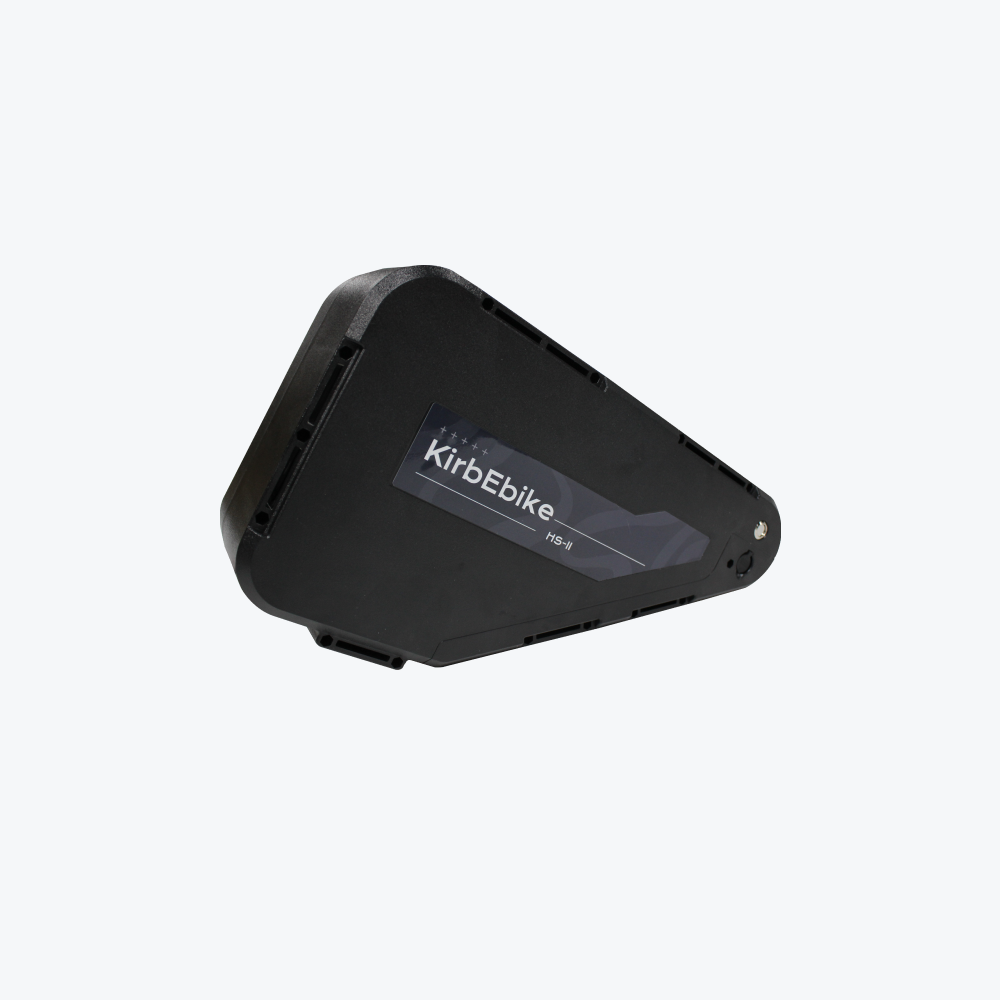
HS-II charge port with its hinged cap open. The case can be rated IP65, but this socket is only protected when that cap is shut.
The Short Answer
IP65 means the battery case is dust-tight and should not let in harmful amounts of water from low-pressure jets sprayed from any direction. In practice that covers riding in rain and road spray with the charge port cap closed.
It does not cover pressure washing, hosing the connectors, riding through deep water or submerging the pack. The rating applies to the battery enclosure, not to the plugs, the controller or the rest of the bike.
Our Taishan, HS-II and entry down-tube batteries are listed at IP65. That is the manufacturer’s stated rating; we do not hold a published lab report for it.
What Does IP65 Mean for an Ebike Battery?
IP stands for ingress protection. The code comes from IEC 60529, published in the UK as BS EN 60529, and it grades an enclosure on two things: solid objects and dust (first digit), then water (second digit). Each digit is a pass at a defined test, not a general promise. Nowhere does the standard say “waterproof”; that word comes from marketing.
What Each IP Digit Means
Digit
Name in IEC 60529
How it is tested
First digit 5
Dust-protected
Some dust may enter, not enough to interfere with operation
First digit 6
Dust-tight
No dust enters
Second digit 4
Splashing
Water splashed from any direction
Second digit 5
Water jets
6.3 mm nozzle, 12.5 L/min ±5%, 2.5–3 m away, from all practicable directions, 1 min per m² of sprayed surface, at least 3 min
Second digit 6
Powerful water jets
12.5 mm nozzle, 100 L/min ±5%, same distance and timing
Second digit 7
Temporary immersion
Lowest point 1 m under water (for enclosures under 850 mm tall) for 30 min
Second digit 8
Continuous immersion
Conditions agreed with the manufacturer, harsher than digit 7
Second digit 9
High-pressure, high-temperature jets
Water at 80 °C (added in the 2013 amendment)
From IEC 60529 edition 2.2 (2013), tables 2, 3 and 8 and clause 14. The standard sets nozzle size and flow; water pressure is adjusted to reach that flow. For digit 5 it is commonly quoted at about 30 kPa (0.3 bar) at 3 m.
So an IP65 battery is claimed to pass two things: no dust at all, and a 12.5 litre-per-minute stream from a hose-sized nozzle a couple of metres back. Up to digit 6 a rating also implies the lower water digits, so IP65 includes dripping, spraying and splashing. It does not include immersion. An IPX7 test is a different test, and IP65 tells you nothing about it.
What the IP Test Does Not Include
Read the conditions and the gaps become obvious. The test uses fresh water. For the jet tests the water should be within 5 K of the unit’s own temperature. The sample has to be clean and new, with every part in place and mounted as the maker intends. And the pass criterion is not “bone dry inside”: some water may enter, as long as it does not affect operation or safety, reach live parts or collect where it can do harm.
None of that resembles a five-year-old pack on a January commute: salt spray, grit, a dried-out seal, a warm pack hit by cold rain, a charge port left open. The standard itself warns that protection may not be satisfactory if high-pressure, high-temperature cleaning or solvents are used. IPX9K, the 80–100 bar hot-water test you see on some vehicle parts, comes from road-vehicle standards (DIN 40050-9, now ISO 20653), not from IEC 60529, and our batteries are not listed with it.
From each product page, checked November 2026. These are the manufacturer’s stated ratings. We have no published third-party certificate or test report for them.
The HS-II and entry pages go further and recommend avoiding heavy rain, deep water and direct pressure washing to protect the pack and extend its life. That is sound advice whatever the rating says.
You will also see IP66 on some kit pages, for example against the LCD81F display on the 48V 250W kit and the LCDS6 display on the 2000W kit. That figure belongs to the display or harness it sits next to, not to the battery. The kits’ “Waterproof Cables: Yes” line is likewise about the wiring. This article deals with the battery’s IP65 only.
Battery Rating vs Whole-Bike Protection
An IP rating describes one enclosure, tested closed. On a converted bike, the battery case is only one of several places water can get in:
the charge port, which is sealed only while its cap is shut
the discharge lead and its plug (XT60 or XT90 on our triangle packs), for which no IP rating is published
the mount and any contacts between pack and rail
the controller, display, throttle and every harness joint
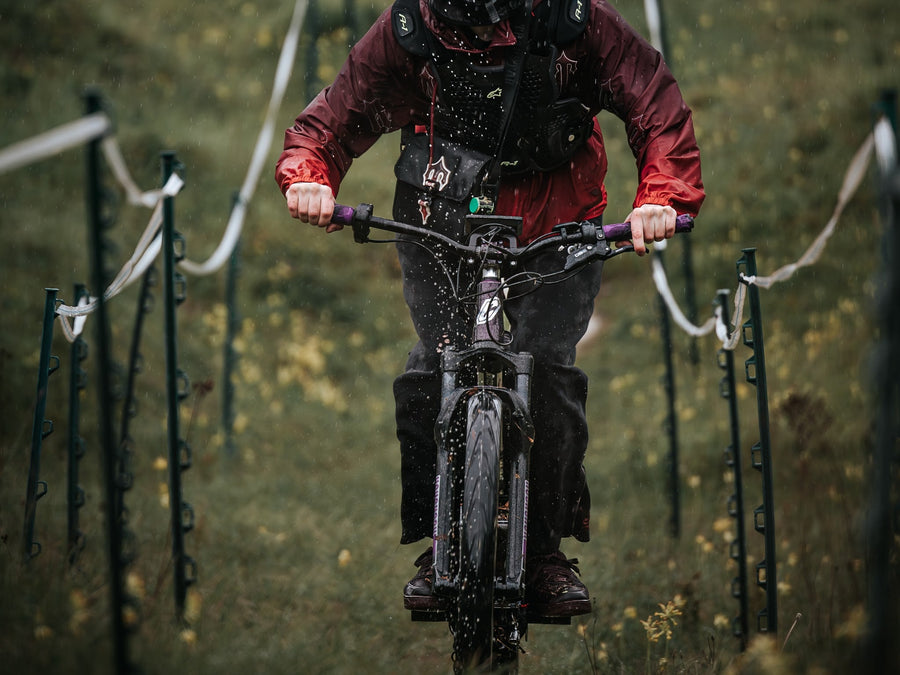
Riding in rain is what IP65 is for. The jet test hits the case from every practicable direction, which matters on a bike because the worst water does not fall from above. It comes up off the front tyre at the down tube and the bottom of the pack, carrying grit with it. A mudguard does more for a down-tube battery than any rating.
Keep the scale in mind, though. The test runs for minutes; a wet commute can run an hour, twice a day, all winter.
Drainage and the Mount
Water that reaches the case should run off it. Check that nothing holds water against the pack: a bag strapped over the charge port, a cover that stays wet, or a mount position where the port faces up into tyre spray. The standard expects any water that gets in to drain away without harm, and Bosch, for one, designs its battery mounts so water runs off and the contacts can dry. Do not block that path.
Washing a Bike With an IP65 Battery
Take the battery off before you clean the bike. Wipe the case with a damp cloth, and wash the frame with a bucket, a soft brush and a gentle rinse kept away from the motor, display and harness joints. Bosch gives its own riders the same advice: remove the battery, and never use a steam cleaner or high-pressure cleaner on eBike components.
A pressure washer puts a hard, narrow jet right against seals and connector faces, far closer than the 2.5–3 m in the IPX5 test. London Fire Brigade says plainly: do not wash an e-bike with high-pressure water. A garden hose aimed straight at the charge port or the discharge plug is not much better.
The discharge lead and its yellow XT plug sit outside the sealed case. Keep them mated or covered, and never aim a hose at them.
Connectors and the Charge Port
The charge port is the weak point on most packs. Keep its cap shut except while charging, and check the cap still seats fully; a cap that has stretched or split lets water sit right on the pins. On the HS-II, the USB-C output has its own rubber flap, which should also stay closed.
Keep the discharge plug mated to the controller lead; one left hanging in the rain collects water and road dirt. If the battery is off the bike, cover the bike-side plug. When you inspect connectors, look for green or white corrosion, pitted contacts or a loose fit. Bosch notes that a thin film of technical vaseline on contacts helps against corrosion. If a contact is pitted or heat-marked, replace it rather than cleaning it and carrying on.
After a Wet Ride: Drying and Charging
London Fire Brigade’s advice is simple: dry the bike and battery if they get wet, and remove and dry the battery if possible before charging. Wipe the case, open the charge port cap indoors and let it air-dry, and give it time. Also let a pack that is cold from a winter ride warm to room temperature before charging; LFB warns that charging an extremely cold battery can damage it.
Never charge a battery that is wet, has been submerged, or shows water inside the charge port. LFB says a battery that has been submerged should not be used at all. GOV.UK’s e-cycle battery guidance adds: if you suspect damage, replace the battery, and do not charge or use it.
Do and Don’t With an IP65 Battery
Situation
Do
Don’t
Rain and road spray
Ride, with the charge port cap closed and a mudguard fitted
Leave the cap open or the discharge plug unmated
Deep water and floods
Go round, or walk the bike through shallow water
Ride through water deep enough to reach the battery
Cleaning
Remove the battery, wipe it with a damp cloth
Pressure wash, steam clean or hose the pack, port or plugs
After a wet ride
Dry the case and port, let a cold pack warm up indoors
Charge it wet or straight from freezing
Submerged or water inside
Stop using it and contact support
Dry it out and charge it to “see if it works”
Seals and caps
Check the port cap, case joints and lead entry regularly
Open the case or reseal it yourself
Storage
Indoors, cool, dry, part-charged, off the bike
Leave it outside overnight in winter or in a damp shed
Based on London Fire Brigade and GOV.UK guidance, Bosch eBike care advice and KirbEbike’s product-page FAQs. Opened batteries are excluded from the KirbEbike warranty.
Storage, Winter and Road Salt
Store the battery off the bike, somewhere cool and dry. Bosch suggests 10–20 °C for winter storage, with the pack between 30 and 60 percent charged; Battery University puts the ideal at about 40 percent and shows packs kept full lose capacity faster. In practice, aim for roughly 40–60 percent and top it up every few weeks if it drops low. Our off-season storage guide covers the rest of the bike.
Where you store matters for safety too. GOV.UK suggests a shed or garage separate from the house if possible, never an escape route or communal hallway, and warns against damp areas, especially for charging. If the battery lives in a cold shed, bring it inside to warm and dry before charging; LFB advises against leaving batteries outside overnight in winter. See our charging and storage safety guide and temperature guide.
Road salt deserves extra care on UK and northern US roads. IP tests use fresh water, so the rating says nothing about salt. Salty spray dries onto connectors and keeps attacking them. After salted-road rides, wipe the case, the mount and the plug bodies with a damp cloth and let everything dry. Bosch’s advice for its own riders is the same: remove the salt after riding and let the bike dry well.
What the KirbEbike Warranty Says About Water
Our warranty policy does not use the words “water damage”. It covers manufacturing defects for one year: free repair of the system and battery in the UK, and free battery repair in the US and the Netherlands. Among its exclusions are misuse, negligence and improper storage; damage from fire, flooding, storms or other external causes; improper charging or incompatible chargers; and batteries that have been opened or modified. If water has got into a pack, email support@kirbebike.com with photos before attempting any repair.
Product touchpoint
Choosing a pack for wet-weather riding
The Taishan, HS-II and entry down-tube batteries all carry the same listed IP65 rating, so choose between them on voltage, capacity and frame fit. Our Taishan vs HS-II comparison covers that. Not sure? Send support your controller voltage and a photo of your frame.
IP65 on an ebike battery is a real, useful rating. A dust-tight case that has shrugged off a low-pressure jet from every side will cope with rain and road spray. It is a test of a clean, new case in fresh water, though, and it covers the case only.
Look after what the rating leaves out: keep the charge port capped and the plugs mated, take the battery off to clean the bike, stay out of deep water, dry it before charging, wipe off road salt and store it indoors part-charged. Do that, and the rating will do its job.
Rain is fine. Pressure washers and puddles are not.
It is water-resistant to a defined standard: dust-tight, and protected against low-pressure water jets from any direction. It is not rated for immersion, pressure washing or hot high-pressure water.
Can I ride in heavy rain with an IP65 battery?
Rain and spray are what IP65 covers, provided the charge port cap is closed. Our HS-II and entry battery pages still recommend avoiding heavy rain where you can, to extend battery life.
Can I pressure wash my ebike if the battery is IP65?
No. Remove the battery and clean the bike gently. IEC 60529 warns that high-pressure, high-temperature cleaning can defeat the protection, and London Fire Brigade and Bosch both say not to pressure wash an e-bike.
What is the difference between IP65, IP66 and IP67?
IP65 is tested with a 6.3 mm nozzle at 12.5 L/min. IP66 uses a 12.5 mm nozzle at 100 L/min. IP67 is 30 minutes 1 m under water. All three are dust-tight. IP67 does not automatically include the jet tests, and IP65 does not include immersion.
Does IP65 on the battery mean the whole ebike is IP65?
No. The rating covers the battery case. The charge port when open, the discharge plug, the controller, display and harness are separate, and some carry their own ratings.
Can I charge my battery after riding in the rain?
Dry it first. Wipe the case, let the charge port dry and let a cold pack reach room temperature indoors. Never charge a battery that is wet, has water in the port, or has been submerged.
Does the KirbEbike warranty cover water damage?
The policy does not mention water damage by name. It covers manufacturing defects and excludes misuse, improper storage, flooding and storms, improper charging and opened batteries. Contact support with photos before any repair.
A note on safety. Charge only with the charger supplied for your pack, while you are awake, in a dry place away from escape routes. Stop using any battery that has been submerged, is swollen, damaged, unusually hot or smells unusual, and do not open or reseal a pack yourself (GOV.UK; London Fire Brigade). The IP65 figures in this guide are KirbEbike’s stated ratings for the battery enclosure only.
About this guide
Author: Andy Kirby. Last reviewed: November 2026. IP test conditions come from IEC 60529 edition 2.2 (BS EN 60529). Battery ratings and wording come from KirbEbike’s live Taishan, HS-II and entry battery pages; warranty wording from KirbEbike’s warranty policy. Care and safety advice comes from GOV.UK, London Fire Brigade, Bosch eBike Systems and Battery University.
Stay in the know
Conversion guides, fitting advice and the deals worth knowing about. No spam.
Door je aan te melden ga je akkoord met ons Privacybeleid.