XT90 vs MT60 vs Julet Ebike Connectors: What Each Cable Carries and How to Match It
These are not three grades of the same thing. They serve different circuits carrying very different currents — so the first question is never which connector looks right, but which circuit you are working on.
AK
Andy Kirby
Reviewed by the KirbEbike conversion-support team
Delen
Unlock £10 off today
Op deze pagina
CIRCUIT FIRST, SHAPE SECONDSHAPE ≠ COMPATIBILITYUK + US
Three circuits on one bike. Battery power, motor phases and low-current signals each use their own connectors.
The Quick Answer
XT90 is a high-current two-conductor connector used on battery and power connections. MT60 is a three-conductor connector used for motor phase wires. Julet and Higo-style waterproof families are used for low-current signals — display, throttle, pedal assist, brakes and hall sensors — and, in some motor plugs, for combined phase and hall connections.
The rule underneath all three: connector shape, colour and pin count do not prove electrical compatibility. Pinout, wire gauge, current and voltage rating, mating family and the system documentation all have to agree before you connect anything. Our installation mistakes guide covers the crimping and routing side.
The Short Comparison
Three circuits, three jobs. Identify which one you are working on before you look at any connector.
Connector family
Typical circuit
Conductors
What decides compatibility
XT90
Battery and power
Two, high-current DC
Polarity, current rating, wire gauge
XT60
Battery and power, lower current
Two, high-current DC
Same checks at a smaller size
MT60
Controller to motor
Three, motor phases
Pin order, gauge, mating half
Julet / Higo, 2–6 pin
Signals
Low-current
Family, keying, pin count, pinout
Julet / Higo, 8–10 pin
Main or motor harness
Mixed
Exact pinout and documented pairing
Families, not grades. A connector belongs to a circuit before it belongs to a product.
Match the circuit, then the family, then the pinout. Doing it in any other order is how people end up with a plug that mates and a system that does not work.
What Each Cable Actually Carries
Every lead has one job. Identify the circuit before the plug.
Battery to controller carries high-current DC. Polarity matters absolutely, the conductors are heavy, and the wire gauge and crimp quality are part of the circuit rather than incidental to it. Controller to motor carries three-phase power on three conductors, and the order in which those phases connect affects how the motor runs. Controller to accessories carries low-current signals for display, throttle, pedal-assist sensor, brake cut-offs and hall sensors, where the risk is not heat but getting a function on the wrong pin. Our guide to hub motor internals covers how phases and hall signals work together.
The reason to separate them mentally is that they fail differently. A high-current connection fails through resistance and heat. A phase connection fails through wrong order, producing rough running or reverse rotation. A signal connection fails through wrong pin function, producing anything from no response to a supply voltage arriving somewhere it should not.
XT90: Battery and Power Connections
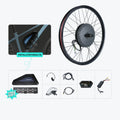
Official harness diagram. This controller uses an XT90 battery lead; each signal plug is labelled by function, not colour.
XT90 is the larger sibling of XT60 in the same family, and the two are not interchangeable — the physical size differs and so does the current the contacts and wire are built to carry. If you are unsure which you have, compare the housings side by side rather than guessing from a photograph, because the proportions look similar in isolation.
XT90-S anti-spark deserves a mention because it exists for a real reason. Connecting a battery to a controller with large input capacitors produces an inrush current as those capacitors charge, which is the spark and click you hear on connection. An anti-spark version includes a resistance path that pre-charges the capacitors before full contact, reducing arcing and the pitting it causes over time. It is a durability feature rather than a performance one, and it is worth having on a system you connect and disconnect often. Our battery range lists which connector each pack uses.
💡
THE NUMBER IN THE NAME IS NOT A DATASHEET RATING
People routinely quote a current figure for XT90 based on the name. Treat that as a family designation rather than a specification. The current a connection can actually carry depends on the specific manufacturer’s part, the wire gauge attached to it, the quality of the crimp or solder joint, and how much heat the installation can shed. Use the manufacturer’s data sheet for the exact part you are buying, and size the wire for the current your controller will actually draw — the connector is only one element of the circuit.
Before plugging in a battery connection, check polarity, look for damaged or discoloured housings, check the contacts are clean and unspread, and confirm the wire gauge suits the current. Our BMS amps guide covers establishing what that current is.
MT60: Motor Phase Connections
An MT60 carries the three motor phase wires between controller and motor. All three conductors carry substantial current, so the same gauge and crimp considerations apply as on the battery side, and a poor phase connection produces heat exactly where you cannot see it.
Phase order changes behaviour. Swapping which phase connects where can reverse motor direction or make the motor run roughly, because the controller is energising windings in a sequence that no longer matches the motor. That is why a controller or motor swap is not simply a matter of making the plug mate. On systems with a self-learning function, the correct route after a swap is to run the documented learning routine rather than experimenting with phase combinations by hand.
Signs of a poor phase connection are consistent: heat at the connector after a ride, discoloration of the housing, intermittent power under load, rough running that comes and goes, or a connector that feels different to insert than its pair. Any of those means stop and investigate rather than continuing to ride.
Julet and Higo: Waterproof Does Not Mean Universal
These are families of waterproof connectors used across the industry for signal wiring, in sizes from two pins up to eight, nine or ten pins on main and motor harnesses. Their appeal is sealing and a positive locking action, and their trap is that a family is not a wiring standard. Two connectors from the same family, with the same pin count, can carry entirely different functions on the same physical contacts. Julet and Higo-style parts can also look close enough to be confused while differing in keying or contact arrangement. Our displays and controllers range lists what our own harnesses use.
On waterproofing itself, be precise about what an IP rating covers. It describes a correctly mated, undamaged connector with its seal intact. It is not permission to leave an unmated half exposed to weather, to force two halves together when the keying resists, or to pressure-wash the system. An unmated connector should be capped or protected, and a connector that has been forced is usually a connector with a displaced seal.
How to Match a Connector Without Guessing
💡
Six steps, in order
Identify the circuit — battery power, motor phase, or low-current signal — this decides everything after it
Record the family and pin count — plus keying and gender, from the part itself rather than a listing photo
Verify the pinout — from documentation for both halves, with the viewing orientation stated
Check voltage and current — against the manufacturer data sheet for the exact part
Check wire gauge — sized for the current the circuit actually carries, not the connector name
Confirm the exact mating part — the specific half that pairs with yours, in writing where possible
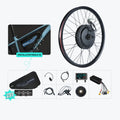
Another controller, another battery plug. This one uses XT60 — check yours rather than assuming.
Never identify a pin function by wire colour. Colour conventions vary between manufacturers, generations and production runs, and the same colours appear in different roles across parts that look identical. If you cannot establish a function from documentation, ask the supplier before connecting. Government guidance identifies modification or repair with non-compatible parts as a factor that raises fire risk (GOV.UK), and connectors are where that most often happens.
KirbEbike Connector Map: What to Ask For
Phase connections. Our kits use 5.5mm bullets or XT150 here, depending on the controller.
Our harness diagrams label each connector by its job — battery lead, phase cables, hall sensor, throttle, PAS, display, e-brake and self-learning — and the battery plug differs by controller: the official diagrams show XT90 on one controller and XT60 on another, and our phase extensions use 5.5mm bullets and XT150. Pinouts and wire gauges are not printed on them, and harnesses change between controller generations, so ask us for the fields below for your exact system before you order a part.
Connection
Fields a complete map must record
1T4 main cable
Controller generation, main connector family, branch count, which branch serves display, throttle, brake and PAS, exact pinout, wire gauge, the basis of any waterproof rating, and approved mating parts
Phase connection
Applicable controllers and motors, exact pin order, phase-wire gauge, the documented current and voltage basis, the mating half, and whether a self-learning routine is required after a motor or controller change
Battery connection (XT90 or XT60)
Which battery and controller families use it, polarity, wire gauge, the basis of the current rating, XT90 versus XT90-S usage, the mating part, and the approved adapter list
Ask for these fields for your exact controller generation rather than inferring them from a similar-looking part.
Common Connector Problems
The connector fits but nothing works. Usually a pinout or protocol mismatch rather than a fault. The shells mate because they belong to the same family; the functions behind them do not line up. Recheck the pinout for both halves before suspecting a component.
Motor judders or runs backward after a controller swap. Phase order, most likely. On a system with self-learning, run the documented routine rather than swapping phase wires to find a combination that works.
Connector gets hot under load. Treat this as a fault, not a characteristic. Heat at a connection means resistance there, and resistance at high current means a loose contact, a poor crimp, corrosion or undersized wire. Power lost in a joint rises with the square of the current, so a connection that is merely warm at moderate load can be a serious problem at full draw. Stop riding and investigate (GOV.UK).
Water or corrosion inside a waterproof connector. Means the seal has been compromised, usually by a damaged housing, a forced mating, an unmated half left exposed, or pressure washing. Do not simply dry it and carry on — inspect the contacts for corrosion and pitting, and replace rather than clean if the contact surfaces are damaged.
Connector and Cable Options to Compare
Same shells, different jobs. Several plugs share a family and pin count but carry different functions.
Four routes, listed alphabetically and judged on the same criteria: what they supply, how compatibility is established and the main limitation.
1. AMASS XT and MT Connectors
AMASS is the manufacturer behind the XT60, XT90 and MT60 families, and genuine parts come with a published data sheet for each variant — standard, anti-spark XT90-S, panel-mount and PCB versions. That is exactly the evidence this article asks for: a current and voltage rating for the specific part rather than the number in the name. Buy through an authorised electronics distributor, check the variant code against the data sheet, and remember the wire and crimp still set the real limit.
2. Generic Marketplace Connectors
The large category of XT-family, MT-family and Julet-style connectors and pigtails sold loose. They are cheap, widely available and often exactly what you need for a repair. The cautions are consistent: listings frequently give a family name without a manufacturer, current ratings are quoted without a data sheet, pin arrangements vary between production runs of visually identical parts, and crimp quality on pre-terminated pigtails is variable. Buy on the manufacturer part where you can.
3. Higo Waterproof Connectors
Higo makes waterproof e-bike connectors and cable assemblies used by major drive-system brands, which makes it the reference point for sealed signal and harness plugs. Higo and Julet-style plugs can mate physically while carrying a different pin sequence, so a Higo part is not automatically a drop-in for a Julet one. Confirm the series, pin count and pinout for both halves before ordering.
4. KirbEbike Harnesses and Cables
Our kits are supplied with matched harnesses, and replacement cabling is available through the displays and controllers range. Our official harness diagrams label every plug by function, and the battery plug varies by controller (XT90 or XT60), so request the connector map for your exact controller generation rather than working from a similar part. Buying a complete kit avoids the question entirely, since the harness arrives matched to the controller and motor.
Option
Supplies
Compatibility established by
Main limitation
AMASS
XT60, XT90 and MT60 families
Published data sheet per variant
Buy genuine; wire and crimp still set the limit
Generic marketplace
Loose connectors and pigtails
Seller-stated, often thin
Ratings without data sheets
Higo
Waterproof signal and harness plugs
Series and pinout per part
Not a drop-in for Julet
KirbEbike
Matched harnesses and cables
Labelled harness diagrams plus support
Ask for the map for your generation
Listed alphabetically. In every case, confirm the specific mating part rather than the family.
Final Matching Checklist
Confirm before you connect
Stop if unknown
Which circuit the connector belongs to
Any item on this list you cannot answer
Connector family, pin count, keying and gender
Whether the pinout matches at both ends
Pinout with viewing orientation stated
Whether the current rating comes from a data sheet
Voltage and current rating from the data sheet
Whether the wire gauge suits the actual current
Wire gauge and crimp quality
Whether a self-learning routine is needed after a swap
The exact mating part
Whether a previous wrong connection may have caused damage
One unknown is enough to stop and ask. A connector is cheap; a controller is not.
Product touchpoint
Ask for the connector map, not the part number
Give us your controller model and generation and ask which connectors it uses on each circuit, with the mating parts. We will send the confirmed answer for any KirbEbike system rather than a family name. If you are building rather than repairing, a complete kit arrives with the harness already matched to the motor and controller, which is the reliable way to avoid every problem in this article.
Conclusion: Match the Circuit, Rating and Pinout — Not the Shape
XT90, MT60 and Julet are not competing options. XT90 handles high-current battery and power connections, MT60 carries three motor phases, and Julet and Higo families handle low-current signals and some combined motor harnesses. Choosing between them is not a decision — it follows from which circuit you are working on.
What is a decision is whether you verify before connecting. Identify the circuit, record the family, pin count, keying and gender, verify the pinout with orientation stated, check the rating against the manufacturer data sheet rather than the number in the name, size the wire for the current, and confirm the exact mating part. Never match by wire colour, never force a plug that resists, and treat any warm connector as a fault. Use only components specified for each other (GOV.UK).
The plug is the last check, not the first
Identify the circuit, verify the pinout, size the wire, confirm the mating part.
A family of waterproof connectors used widely on e-bikes for low-current signal wiring such as display, throttle, pedal assist and brakes, and on some larger main or motor harnesses. It is a family, not a wiring standard.
What is an XT90 connector?
A high-current two-conductor connector used on battery and power connections. It is the larger member of the same family as XT60, and the two are not interchangeable.
What is an MT60 connector used for on an ebike?
It carries the three motor phase wires between controller and motor. All three conductors carry substantial current, and the order in which the phases connect affects motor direction and smoothness.
Is XT60 bigger or smaller than XT90?
Smaller. XT90 is the larger connector in the family, built for higher current. Compare the housings side by side rather than judging from a photograph, since proportions look similar in isolation.
How much current can an XT90 handle?
Use the manufacturer’s data sheet for the exact part rather than the number in the name. The real limit depends on the specific connector, the wire gauge, the crimp quality and how well the installation sheds heat.
Are Julet connectors waterproof?
They are designed to seal when correctly mated and undamaged. That rating does not cover an unmated half left exposed, a connector forced together against its keying, or pressure washing.
How can I tell XT60 and XT90 apart?
By physical size, comparing them directly. If you are working from a listing rather than the part, ask the seller to confirm which family it is rather than judging from an image.
Can I replace an ebike connector with one that has the same number of pins?
No, not on pin count alone. The same shell and pin count can carry different functions on different contacts, so the pinout must be verified for both halves before connecting.
Why does my motor run backwards after changing the controller?
Most likely phase order. On systems with a self-learning function, run the documented routine rather than swapping phase wires by hand to find a combination that works.
What should I do if an ebike connector gets hot or melts?
Stop riding and investigate. Heat means resistance, which usually indicates a loose contact, poor crimp, corrosion or undersized wire. Replace damaged parts rather than cleaning and continuing.
A note on safety & legality. General information, not a substitute for the manufacturer’s documentation. Disconnect the battery before working on any connector. Never identify a pin function by wire colour, never force a connector that resists its keying, and never assume that matching pin count means matching pinout. Take current and voltage ratings from the data sheet for the exact part, and size wire for the current the circuit actually carries rather than for the connector name. Treat a warm or discoloured connector as a fault: stop riding, investigate, and replace damaged parts rather than cleaning and continuing. An IP rating applies to a correctly mated, undamaged connector and is not permission to leave contacts exposed or to pressure-wash the system. Use only components specified for each other, and stop using any system showing heat, melted insulation or a burning smell (GOV.UK).
About this guide
Author: Andy Kirby. Technical review: KirbEbike conversion-support team. Last reviewed: October 2026. Methodology: safety guidance is cited to GOV.UK, OPSS and London Fire Brigade, all cited inline. This article publishes no pinout, wire gauge, approved mating part or current rating for any product; the connector-map section lists the fields such a map must record so readers can request them. Connector current ratings are deliberately not quoted, because the figure in a family name is a designation rather than a data-sheet specification and the achievable current depends on the specific part, wire gauge, crimp quality and thermal conditions. No wire-colour-to-function mapping is given. Supplier details are their own published claims.
Stay in the know
Conversion guides, fitting advice and the deals worth knowing about. No spam.
Door je aan te melden ga je akkoord met ons Privacybeleid.