How the EZ Rider Dual Battery Ebike Conversion Kit Works: Range, Weight and Charging
Two 36V packs, 792 Wh between them, one 250W front motor. Here is what the second battery adds, what it costs you in weight and charging time, and how to tell whether your ride needs it.
AK
Andy Kirby
Reviewed by the KirbEbike conversion-support team
Delen
Unlock £10 off today
Op deze pagina
DUAL BATTERYUK ROAD-LEGAL 250WUK + US
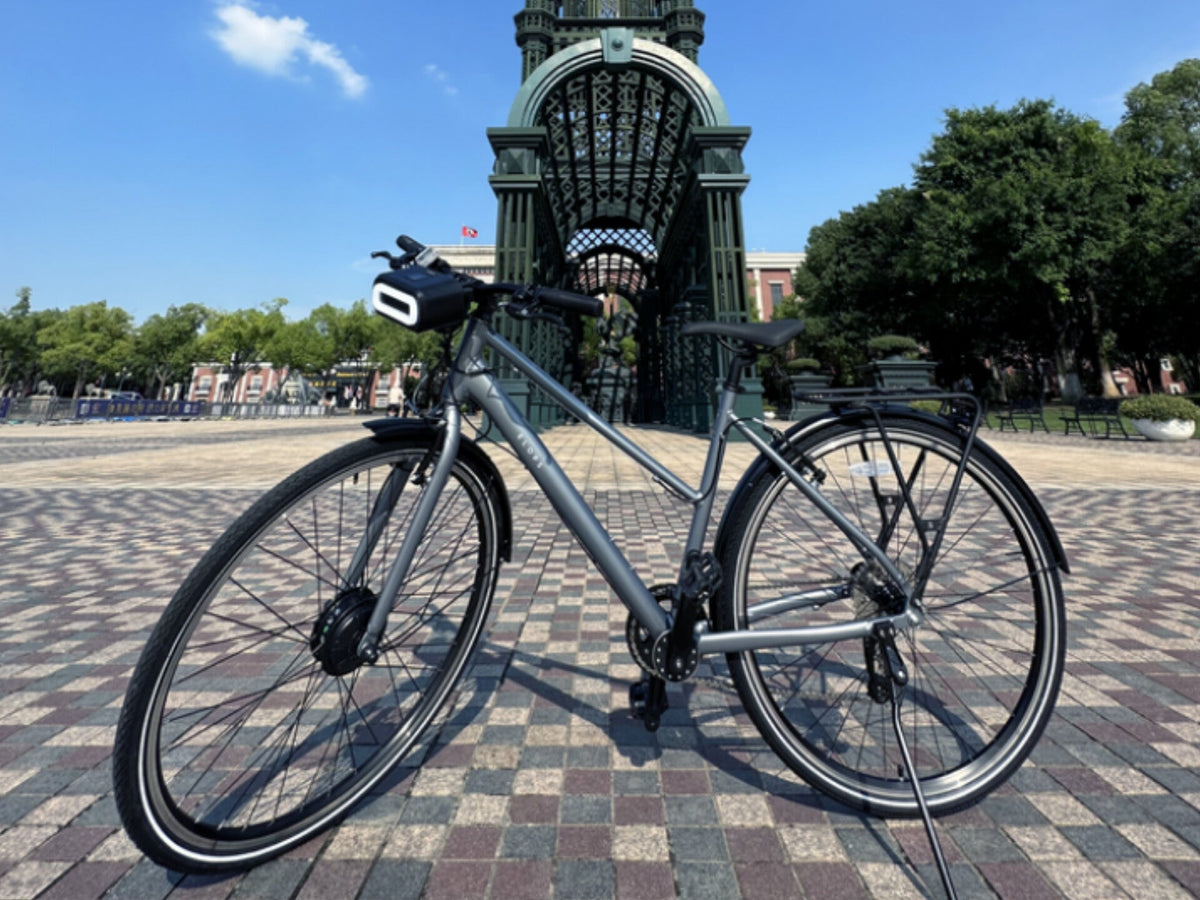
A converted hybrid with the EZ Rider front motor and handlebar unit.
The Quick Answer
The EZ Rider is a 36V, 250W front-hub kit that ships with two LG-cell packs: a 7Ah unit and a 15Ah unit, 22Ah in total. That is 252 Wh plus 540 Wh, or 792 Wh nominal. Both packs are 36V, so the second one adds stored energy, not voltage or speed.
KirbEbike quotes 40–60 miles with both packs fitted, using pedal assist at the 15.5mph limit on mixed terrain. That works out at about 13–20 Wh per mile. Use that band, not two added-up range claims, to decide whether your ride needs one pack or both.
How Does the EZ Rider Dual-Battery System Work?
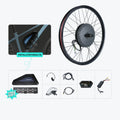
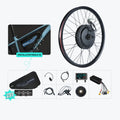
The front wheel is replaced by an EZ Rider 36V 250W geared hub motor (50 Nm, 3.8 kg as a wheel), which is powered by a 36V 14A smart FOC controller and TFT colour display. The power is provided by two 36V lithium-ion packs with LG cells: a 7Ah pack and a 15Ah pack. Fitting is a front wheel swap which includes both batteries and clicking two waterproof connectors together, and the installation bracket already has both connectors integrated.
Logical map of the published components. Every part runs at 36V.
7Ah + 15Ah: What the Two Battery Sizes Mean
Amp-hours measure charge; watt-hours measure energy, and energy is what decides range. Multiply voltage by amp-hours:
In KirbEbike’s product photos, the 7Ah pack is the handlebar unit, the same unit used on the original single-battery EZ Rider. It carries the colour display, the charging port, an activate button and the system connector, and the display shows battery voltage, speed, assist level and mileage. The 15Ah pack is a separate locking case for the frame.
The handlebar unit: system connector, TFT display, charging port and activate button.
Why Both Packs Must Be the Same Voltage
Two packs can only share one controller if the system is designed for it, and both packs must sit on the same voltage platform. On the EZ Rider both are 36V and both come in the kit, wired through KirbEbike’s own harness. Do not add, swap or combine packs from other systems, and do not attempt your own parallel wiring.
Dual Battery vs Single Battery: What Changes for Range?
The second pack triples the stored energy of the original 7Ah kit: 792 Wh against 252 Wh. Whether that triples your range depends on how you ride.
252 Wh vs 540 Wh vs 792 Wh Combined
Arithmetic from KirbEbike’s own 40–60-mile claim. Only the both-packs band is KirbEbike’s published figure.
Why Two Range Claims Should Not Simply Be Added
Range is energy divided by consumption, and consumption changes with speed, hills, wind, temperature, rider weight and how hard you pedal. Two range claims made under different conditions cannot be added. Work in Wh per mile instead: at 13.2 Wh per mile the full 792 Wh lasts 60 miles; at 19.8 Wh per mile it lasts 40.
What Conditions Support the 40–60-Mile Claim?
KirbEbike states the conditions: both batteries fitted, pedal assist at the 15.5mph limit, mixed terrain, with rider weight, hills, wind and temperature changing the result. It is a pedal-assist figure; you are contributing effort the whole way. Two owner reviews line up with it: one reports “around 60 miles” from the dual setup, and one rider on the older 7Ah-only kit reports 20–30 km (12–19 miles) per charge with a child seat at assist levels 2–3, which is about 13.5–20 Wh per mile.
Range Scenarios for Real Commuting
Energy needed with a 20% reserve, at the low and high ends of the 13.2–19.8 Wh-per-mile band.
Round trip
Energy needed (+20% reserve)
Packs that cover it
6 miles
95–143 Wh
7Ah alone
10 miles
158–238 Wh
7Ah alone, with little spare at high use
20 miles
317–475 Wh
15Ah alone, or both
30 miles
475–713 Wh
15Ah at low use; both at high use
40 miles
634–950 Wh
Both packs at low-to-moderate use
50 miles
792–1,188 Wh
Both packs only at the lowest use; plan a charge
Short Urban Commute: Carry One Pack or Both?
Up to about 10 miles round trip, the 7Ah handlebar pack covers the ride with a reserve at typical consumption. One owner uses the original single-pack kit for a 6 km ride to a train station with a big climb home, and takes the unit off to carry onto the train.
20–30 Mile Round Trip: Where the Second Pack Helps
Here the 7Ah pack alone is not enough. The 15Ah pack covers 20 miles comfortably; at 30 miles it is enough only at low consumption. Fitting both turns a tight margin into a comfortable one, which matters on cold days and against headwinds.
40–60 Mile Day: What Has to Be True?
You need both packs and steady, efficient riding: moderate assist, sensible pedalling and few hard climbs. At the top of the consumption band, 792 Wh runs out at 40 miles. Plan a charge stop for longer days rather than relying on the 60-mile figure.
Range vs Weight: Is the Second Battery Worth Carrying?
What the Kit Weighs
The motor wheel weighs 3.8 kg. KirbEbike does not publish separate weights for the 7Ah and 15Ah packs. As reference points, KirbEbike’s other 36V 15Ah pack (sold with its 500W/750W kit) is listed at 2.5 kg, and Swytch lists its MAX+ handlebar pack at 2.1 kg. A second pack is a real addition to carry, so leave it off for rides that do not need it.
Where the Batteries Sit on the Bike
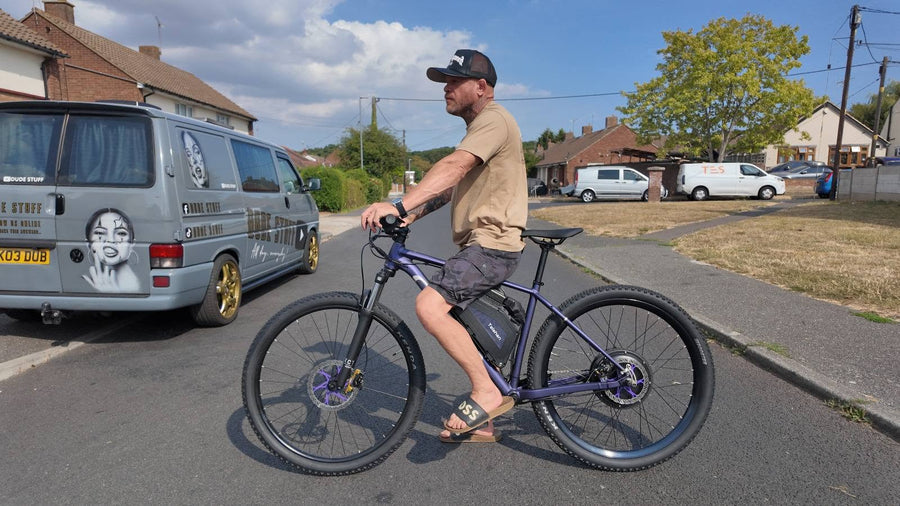
The 7Ah unit sits on the handlebar bracket, so its weight is part of the steering. The 15Ah pack goes on the frame, where its mass sits lower and more centrally. Check the frame space and the removal path before fitting; our frame-fit guide covers the three checks.
The EZ Rider kit: 250W front motor wheel, 15Ah frame pack, handlebar unit with colour display, charger and mounting bracket.
Low and Central Weight vs Handlebar Weight
Weight low in the frame affects handling least; weight on the bars or high on a rack is felt more in steering and when lifting the bike. Leaving the frame pack off for short rides keeps the bike light; leaving the handlebar unit off is not an option, as it carries the display and controls. See our battery guide for placement trade-offs.
How Charging the Two EZ Rider Batteries Works
One Charger, Two Packs
The kit includes one 36V 4A charger with a 100–240V input and UK, US, EU and AU plugs. Use only that charger, and charge each pack as KirbEbike’s instructions describe; do not use splitters or third-party chargers.
7Ah vs 15Ah Charging Time
Pack
Floor at 4A (Ah ÷ 4)
7Ah
1.75 h
15Ah
3.75 h
Both, one after the other
5.5 h
From empty, a charger cannot finish faster than Ah ÷ amps. Lithium-ion charging slows near full, so real times are a little longer; top-ups are proportionally quicker.
Charging Checklist
Use only the supplied or KirbEbike-authorised charger
Charge on a hard, dry, ventilated surface away from escape routes
Stay nearby while charging; do not charge while asleep
Do not charge a damaged, swollen, unusually hot or wet battery
Let a warm pack cool before charging
From UK government and US CPSC battery guidance (GOV.UK; CPSC).
EZ Rider System: Fit, Installation and Road Use
Universal vs Brompton Fit
Universal kit
Brompton kit
Front dropout
100 mm
74 mm
Wheel sizes
20", 24", 26", 27.5", 28", 29", 700C
16" 1 3/8
Motor wheel colour
Black
Silver
Brakes
Rim or disc (choose the matching wheel)
Rim or disc (choose the matching wheel)
Fork
Any non-carbon fork
Brompton fork
Price (November 2026)
£487.99
£557.99
Tyre and inner tube are not included. Gears and rear wheel stay as they are. Maximum load is listed as 100 kg. Measure first with our wheel and dropout guide.
250W Front Hub + 36V 14A FOC Controller
The motor is rated 250W with assistance stopping at 15.5mph (25 km/h), which is the Great Britain limit for an electrically assisted pedal cycle (DfT). A bike fitted this way needs no registration, tax or insurance, and riders must be 14 or over (GOV.UK). The optional thumb throttle is not road-legal in the UK, as KirbEbike notes. In the US, the federal definition covers motors under 750W and 20mph on motor power alone (16 CFR § 1512.2); state and local rules on where you can ride vary.
The display: assist level, speed, mileage, voltage and battery, with level-up, level-down and on/off buttons.
What the 20-Minute Installation Involves
KirbEbike puts fitting at about 20 minutes: swap the front wheel, mount both batteries and click the two waterproof connectors together. Fitting the pedal-assist sensor can mean removing a crank, which takes longer on some bikes. The kit includes tyre levers, a wrench, hex keys and cable ties, and it is fully reversible.
In the box: bracket, handlebar unit, connection cables, charger, pedal-assist sensor and the 15Ah frame pack.
For a factory benchmark, Bosch’s DualBattery for its smart system combines up to two batteries for a maximum of 1,600 Wh (Bosch). According to Bosch, the battery with the greatest charge is used first until the two batteries are equal, after which both discharge at the same rate, and charging operates in reverse (Bosch). It's a full bike system, not a conversion kit, but it demonstrates the level of detail to which you can expect to be able to ask any dual-battery system supplier.
Dual Battery vs Bigger Single Battery: Which Is Better?
Need
Two smaller packs
One larger pack
Carry only what today’s ride needs
Advantage: leave a pack at home
Always carry the whole pack
Simple wiring and charging
More connectors; two packs to charge
Advantage: one pack, one charge
Fit on small or folding frames
Two smaller cases can be easier to place
Depends on case size
Total range
Set by total Wh
Set by total Wh
Taking power indoors
Split the load between two lighter items
One heavier item
When Dual Batteries Make Sense
Variable commutes, weekend rides much longer than weekday ones, and riders who want to take the handlebar unit off and carry it indoors or onto a train.
When a Single Battery Is Simpler
Short, predictable routes, minimal cable management, or riders who never need more than one pack’s energy. Our battery collection lists single-pack options.
What to Check Before Buying a Dual Battery Ebike Conversion Kit
Electrical Compatibility
Both packs must be on the same voltage platform, the controller must accept the full-charge voltage, the battery current rating must cover the controller, and the method of combining the packs must be the manufacturer’s own. See our BMS amps guide.
Mounting Space and Removal Path
Template both packs, check steering and fold clearance on folding bikes, and make sure each pack can be removed without loosening its mount.
Charger Compatibility
Use only the charger approved for those exact packs. A matching plug does not prove electrical compatibility.
Your Real Route
Multiply your round trip by a realistic Wh per mile, add 20% for hills, wind, cold and battery ageing, and compare it with each pack’s Wh. Our range calculator does this for you.
Product touchpoint
Is the EZ Rider right for your ride?
If your usual round trip is 10 miles or less, the EZ Rider’s handlebar pack alone will often do; the frame pack covers longer days. For more power than 250W, compare our conversion kits with battery. Not sure about fit? Send support your fork dropout width and wheel size.
Conclusion: Two Packs Are Worth It When the Second One Solves a Real Problem
The EZ Rider’s second pack takes the kit from 252 Wh to 792 Wh, three times the stored energy of the original, on the same 36V, 250W, road-legal system. At the 13–20 Wh per mile implied by KirbEbike’s claim, that covers 40–60 miles; the handlebar pack alone covers shorter rides.
Carry both when your ride needs more than about 250 Wh, leave the frame pack off when it does not, and charge with the supplied 4A charger only. Measure your fork and your route before ordering.
Match the packs to the ride
252 Wh for short trips, 792 Wh for long days. Same legal 250W system.
Yes, if the system is for 2 packs. Both must be on the same voltage and the controller, battery management and wiring must be from or approved by the manufacturer. The EZ Rider ships with two 36V packs and the harness to use them.
How does a dual battery ebike work?
The two packs feed one controller, either one after the other or sharing the load, depending on the system. Bosch’s DualBattery, for example, uses the fuller battery first and then both evenly. In any case the energy is added up, the voltage remains constant.
Are dual battery ebikes worth it?
They're a good option if you require more energy on your longest rides than you could fit in a single pack and you don't want to leave a pack at home on shorter days. A single pack is lighter and easier to use in case of short and predictable trips.
Does a dual battery ebike double the range?
Not automatically. Range is total watt-hours divided by consumption. The second pack on the EZ Rider raises stored energy from 252 Wh to 792 Wh, but the miles you get depend on speed, hills, weather and effort.
How do you charge two ebike batteries safely?
Use the manufacturer’s charger and its approved sequence, on a hard, dry surface, while you are nearby. Do not use splitters or mix chargers. The EZ Rider comes with one 36V 4A charger.
How do I wire up a dual battery system?
Follow the wiring directions for a two-pack system with the provided wiring. Never make your own parallel connection between packs, otherwise they may interact, pushing current into each other.
What is the lifespan of an e-bike battery?
It will depend on the quality of the cells, the number of times the pack has been charged, heat, storage and the pack's hard usage. Store packs part-charged, cool and dry, and avoid running them completely flat.
Which is better for an ebike, 48V or 52V?
Neither on its own. The voltage must match the controller and motor. The EZ Rider is a matched 36V system, so only its own 36V packs should be used.
Can I put a 60V or 72V battery on a 48V ebike?
No, unless every part is rated for it. A 60V pack reaches about 71.4V when full and a 72V pack about 84V, far above a 48V system’s 54.6V. A connector that fits proves nothing.
What is the cheapest eBike conversion kit with a battery?
There is no single answer; compare the complete-system price, including battery Wh, charger, fit and warranty. In November 2026 the EZ Rider with both packs was £487.99 for the Universal kit and £557.99 for the Brompton kit.
A note on safety & legality. Charge only with the supplied charger, in a dry, ventilated place away from escape routes, and stop using any pack that is damaged, swollen, hot or smells unusual (GOV.UK; OPSS). Never combine packs or chargers from different systems. In Great Britain, a bike with this kit is an EAPC at 250W and 15.5mph; fitting the optional throttle changes that (DfT). Battery capacity does not affect legal classification. US rules vary by state and city; see our UK legal kit guide for the UK.
About this guide
Author: Andy Kirby. Last reviewed: November 2026. Specifications come from KirbEbike’s live EZ Rider product page and product photos. Watt-hours, the Wh-per-mile band and the charge-time floors are calculated from those figures. Owner experiences are from reviews published on the product page. Swytch and Bosch details are each maker’s published figures.
Stay in the know
Conversion guides, fitting advice and the deals worth knowing about. No spam.
Door je aan te melden ga je akkoord met ons Privacybeleid.