Taking a break from riding doesn't mean taking a break from caring for your kit. Whether you're storing your ebike conversion kit through the UK winter, pausing for a holiday, or simply stepping away for a few months, what you do before putting the bike away determines how well it performs when you return.
Neglected storage leads to corroded connectors, degraded batteries, seized components, and seized-up drivetrains—all of which are preventable with a structured pre-storage routine. This guide covers everything from battery chemistry to bearing lubrication, tailored specifically for conversion kit owners.
Why Off-Season Storage Matters More for Conversion Kits
![]()

Standard bicycles forgive neglect reasonably well. E-bike conversion kits don't. The lithium battery chemistry undergoes continuous degradation even when not in use, electrical connectors corrode when left exposed to UK humidity, and lubricants dry out and attract moisture in unheated storage spaces.
The consequences of poor storage aren't always immediately obvious either. A battery stored fully charged through winter may appear fine at first glance but will have lost measurable capacity before the first spring ride. Corroded connectors cause intermittent faults that take hours to diagnose. Seized brake cables make the first ride back genuinely dangerous.
Kirbebike customers regularly achieve extraordinary longevity from their kits—nearly 14,000 miles from one 1500W kit, close to 20,000km from another—and disciplined off-season care is a significant contributing factor to that kind of lifespan.
Part 1: The Pre-Storage Clean and Inspect
![]()

Never store a dirty kit. Road salt, grit, and moisture accelerate corrosion dramatically over static storage periods. A thorough clean before putting the bike away takes 30-45 minutes and prevents months of unseen damage.
Cleaning Sequence
The bike and motor wheel:
- Remove the battery before any cleaning—never clean with battery installed
- Rinse the bike frame, wheels, and motor housing with a low-pressure hose or bucket and sponge (never a pressure washer near electrical components)
- Use a soft brush and mild bike cleaner on the motor casing, paying attention to the motor axle area and spoke interfaces
- Dry thoroughly with a clean cloth, then allow to air dry in a ventilated space for at least one hour
- Apply a light film of silicone spray or corrosion inhibitor to the motor casing exterior, axle surfaces, and spoke nipples
The drivetrain:
- Degrease the chain, cassette, and chainring with dedicated bicycle degreaser
- Rinse and dry completely
- Apply fresh chain lubricant appropriate for wet conditions (wet lube for UK storage environments)
- Wipe off excess lubricant—accumulated lube attracts grit during storage
Pre-Storage Inspection Checklist
Use this opportunity to identify issues before they develop further over winter:
|
Component
|
What to Check
|
Action if Problem Found
|
|
Brake pads
|
Thickness remaining
|
Replace if below 1.5mm
|
|
Tyres
|
Cuts, bulges, tread depth
|
Replace if worn or damaged
|
|
Spokes
|
Tension, any broken
|
True wheel, replace broken spokes
|
|
Motor cable
|
Insulation cracks at exit point
|
Apply silicone sealant if cracked
|
|
Torque arm
|
Security and bolt tightness
|
Re-tighten, apply thread lock
|
|
Controller housing
|
Seal integrity, no cracks
|
Reseal with silicone if compromised
|
|
Display
|
Screen condition, cable entry seal
|
Cover with protective wrap if loose
|
Part 2: Battery Storage — The Most Critical Step
![]()

Lithium-ion batteries are the most storage-sensitive component in any ebike conversion kit with battery. Getting battery storage right directly determines how much range you'll have when spring arrives.
The Storage Charge Level
The single most important rule: Never store a lithium battery fully charged (100%) or fully depleted (0%).
The ideal storage charge for lithium-ion cells is 40-60% capacity. At this charge level, the cells experience minimal electrochemical stress, reducing both calendar aging and capacity loss during the storage period.
How to achieve the correct storage charge:
- If your battery is above 80% when you stop riding, go for a short ride on a low assist level to bring it down to approximately 50-60% before storage
- If your battery is below 30%, charge briefly to reach the 40-60% range
- Most battery indicators show 2-3 bars out of 5, or 40-60% on a percentage display, as the target range
Charge level quick reference:
|
Battery Indicator
|
Approximate Charge
|
Storage Suitability
|
|
5/5 bars (100%)
|
Full charge
|
Too high
|
|
4/5 bars (80%)
|
Near full
|
Still too high
|
|
3/5 bars (60%)
|
Moderate
|
Ideal
|
|
2/5 bars (40%)
|
Moderate-low
|
Ideal
|
|
1/5 bars (20%)
|
Low
|
Borderline
|
|
0/5 bars (0%)
|
Empty
|
Never store here
|
Temperature Requirements
UK winters present a specific challenge: unheated garages and sheds regularly drop below 0°C, which causes lithium cells to degrade significantly faster than at room temperature.
Storage temperature guidelines:
-
Optimal range: 10°C to 20°C (a spare room, wardrobe, or heated utility space)
-
Acceptable range: 5°C to 25°C
-
Avoid: Below 5°C (accelerates capacity loss) and above 30°C (accelerates chemical degradation)
-
Never: Store below 0°C — this causes permanent cell damage
Practical solution for UK riders: Remove the battery from the bike and store it indoors, even if the bike stays in the garage. This one step—costing no money—preserves more battery capacity than any other action.
Battery Maintenance During Storage
Lithium cells self-discharge slowly even when disconnected. Over a storage period of 3-6 months, a battery left completely unattended may drop below safe voltage levels.
Recommended monitoring schedule:
- Check battery charge level every 6-8 weeks during storage
- If charge has dropped below 30%, give a brief top-up charge back to 40-50%
- Never allow any lithium battery to sit discharged for more than 2-3 months — cells that reach extremely low voltages suffer permanent capacity loss
Part 3: Storing the Bike and Remaining Components
With the battery safely stored indoors, focus turns to the bike itself and the electrical components that remain attached.
Ideal Storage Environments
Not all riders have the same storage options. This ranked guide helps make the best of available space:
Specific Component Care During Storage
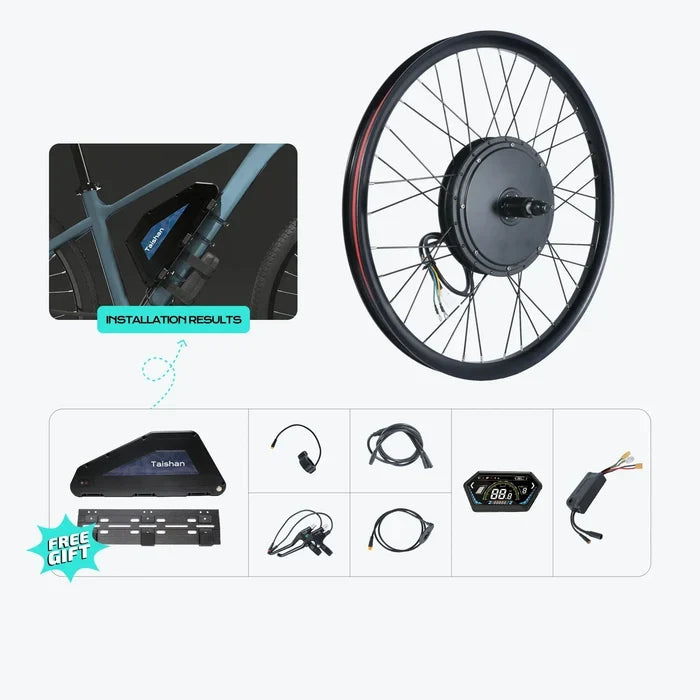
Motor wheel hub motor: The brushless hub motors used across Kirbebike's range—from the 250W front wheel systems to the high-power 2000W+ rear hub motors—are sealed units requiring minimal special attention for storage. The key actions are ensuring the motor casing is dry before storage and that the motor cable exit point is sealed against moisture. If storing in a damp environment, apply a thin layer of corrosion-inhibiting spray to the motor casing exterior.
Mid-drive motor (Tongsheng TSDZ8): The Tongsheng TSDZ8 mid-drive kit benefits from removing the drive chain during extended storage to relieve tension from the chainring and rear cassette. Clean and lightly oil the bottom bracket mounting area before storage, and ensure the motor housing bolts are correctly torqued before putting the bike away.
Part 4: Pre-Season Re-Commissioning
The end of storage requires as much attention as the beginning. Bringing the kit back into service correctly after months of disuse prevents first-ride failures.
Step-by-Step Spring Recommission
Two weeks before riding:
-
Retrieve the battery from indoor storage. Allow it to warm to room temperature for 2-3 hours before charging—never charge a cold battery straight from a cold environment.
-
Full charge the battery using the original charger. Note the time to reach full charge—significantly longer than normal suggests capacity loss during storage.
-
Inspect battery contacts on both battery and bike mounting rails. Clean any corrosion with a dry cloth and apply fresh dielectric grease.
Part 5: Storage Duration and Seasonal Considerations
Different storage durations require different levels of preparation.
|
Storage Duration
|
Battery Prep
|
Electrical Prep
|
Mechanical Prep
|
|
2-4 weeks
|
50-60% charge, cool location
|
Cover connectors
|
Inflate tyres
|
|
1-3 months
|
50-60% charge, indoors
|
Dielectric grease all connectors
|
Full drivetrain lube
|
|
3-6 months
|
50-60% charge, monthly checks
|
Disconnect and cover all connectors
|
Full clean, lube, and rust prevention
|
|
6+ months
|
50-60% charge, bi-monthly checks
|
Remove display, cap all ports
|
Full service before storage and before return
|
Off-Season Opportunity: Upgrades and Maintenance Planning
The off-season provides the ideal window for component upgrades and proactive maintenance that's difficult to schedule during regular riding periods.
Consider during winter storage:
-
Battery capacity upgrade — If range has noticeably declined over the riding season, the off-season is perfect timing to source and test a higher capacity replacement battery before spring arrives
-
Spoke tension check — Hub motor wheels with higher spoke loads benefit from a full tension check and any required truing during storage when the wheel can be removed and worked on without interrupting riding plans
-
Bearing service — Hub motor bearings on high-mileage kits are best serviced proactively in winter rather than reactively mid-ride in spring
-
Brake upgrade — If your riding kit expansion plans include more powerful options, installation and bedding-in of new brakes is easier and safer to do before the season than during it
-
Controller or display upgrade — System upgrades are best tackled with no time pressure; winter provides the unhurried environment needed to make changes, test thoroughly, and resolve any issues before relying on the system for regular commuting
Conclusion
Proper off-season storage isn't an optional extra for e-bike conversion kit owners—it's one of the most impactful maintenance decisions you make all year. The combination of correct battery storage charge, indoor temperature-controlled battery storage, thorough cleaning before putting the bike away.
That longevity doesn't happen by accident—it comes from riders who treat their kit with the same care between rides as during them. Whether you're currently protecting a kit through its first winter or planning upgrades for next season, explore the full range of Kirbebike conversion kits to find everything you need to start the next season stronger than ever.
Frequently Asked Questions
What charge level should I store my e-bike conversion kit battery at?
Store lithium batteries at 40-60% charge—typically 2-3 bars on a 5-bar indicator. This charge level minimises electrochemical stress on the cells. Never store fully charged (100%) or fully depleted (0%), as both extremes accelerate permanent capacity loss during the storage period.
Can I store my e-bike conversion kit in an unheated garage over winter?
The bike itself can stay in a clean, dry garage, but the battery must come indoors. Lithium batteries stored below 5°C experience accelerated capacity degradation, and storage below 0°C causes permanent cell damage. B
How often should I check a stored e-bike battery?
Check the charge level every 6-8 weeks during storage. If it has dropped below 30%, give a brief top-up charge back to 40-50%. Allowing lithium cells to remain at very low voltages for extended periods—particularly over 2-3 months—causes irreversible capacity reduction.
Should I remove the motor wheel from my bike for storage?
Removing the motor wheel isn't necessary for standard storage periods. Keep the wheel installed, ensure the motor casing is clean and dry, and store the bike upright. Removal is only beneficial if you need to service bearings or are storing in very limited space.
Do mid-drive conversion kits need different storage care than hub motor kits?
The battery storage rules are identical for both. Mid-drive systems like the Tongsheng TSDZ8 benefit from removing the chain to relieve tension from chainring and cassette during long storage periods, and from ensuring the bottom bracket mounting bolts are correctly torqued before storage.
: invalid url input)
usmile
Liquid error (snippets/blog-best-product line 36): product form must be given a product
Liquid error (snippets/blog-best-product line 59): product form must be given a product