Published 10 July 2026 · Updated 15 July 2026
· 16 min read
Elektrische Fiets Ombouwset met Accu VK: Kopersgids 2026
Ontvang vandaag nog €10 korting
kirbEbike10
Copy successful
Elektrische Fiets Ombouwset met Accu NL: 2026 Koopgids | KirbEbike
Bestseller · weg-legaal
EZ Rider 250W Kit
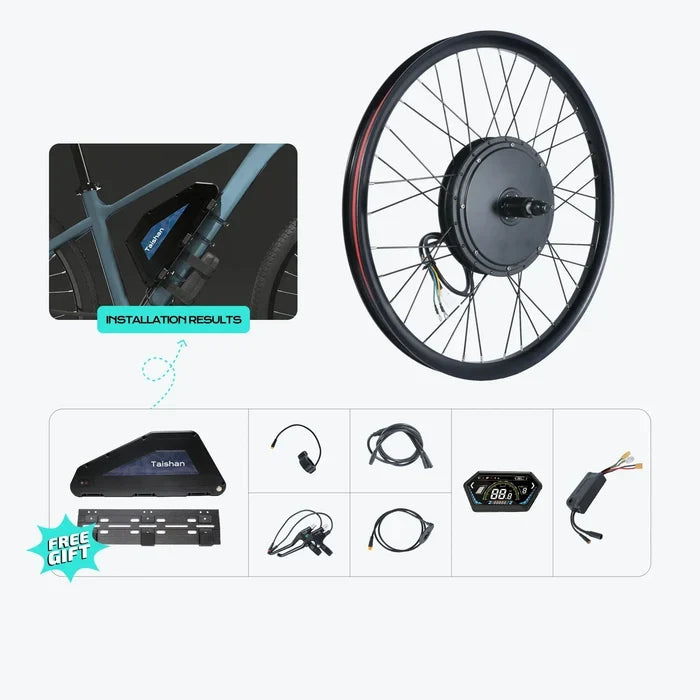
De oplossing voor legaal woon-werkverkeer: een 36V 7Ah + 36V 15Ah dubbele accu brengt je tot wel 96 km op één lading, veel verder dan de meeste 250W kits met één pakket. Voeg daar een omkeerbare installatie van ~20 minuten, een 3,8 kg systeem met 50 Nm koppel, en optioneel ~5 uur snelladen aan toe — alles weg-legaal met de 25 km/u afslag vanaf dag één.
Nederlandse e-bike wetgeving in 2026: Wat kopers moeten weten
Het juridische plaatje is eenvoudiger dan het online rumoer doet vermoeden, en het is voor 2026 niet veranderd. Als de afgewerkte constructie correct is, wordt je omgebouwde fiets precies behandeld als een gewone fiets.
Een 250W trapondersteuningsset met de 25 km/u afslag is de enige categorie die als EAPC weg-legaal is. Dat zijn de EZ Rider en 250W voorkits.
Gebruik krachtige kits alleen waar lokale regels en privé-terrein toestemmingen dit toestaan
1000W, 2000W, 3000W en 4000W kits horen thuis op privé-terrein of off-road, met toestemming van de grondeigenaar. Het zijn uitstekende hulpmiddelen op de juiste plek – alleen niet op de openbare weg.
Ga er niet van uit dat hoog vermogen legaal is op de weg
Een kit boven de 250W of die kan assisteren boven de 25 km/u is wettelijk gezien een motorvoertuig. Rijden hiermee op de weg zonder registratie, verzekering, belasting en een motorhelm kan leiden tot boetes of inbeslagname van de fiets. Voor de volledige, eenvoudig uitgelegde informatie, zie KirbEbike's gids voor legale e-bike ombouwsets in Nederland.
⚠️
De situatie in 2026: een overheidsconsultatie in 2024 stelde voor om de limiet te verhogen naar 500W en vol gas toe te staan tot 25 km/u, maar die voorstellen zijn in januari 2025 niet doorgevoerd. De regels blijven 250W continu en 25 km/u. Alles daarboven is alleen voor off-road/privé-terrein — controleer altijd de wetgeving waar je rijdt.
Is 48V 1000W legaal in Nederland?
Niet als een standaard EAPC voor openbare wegen. Een 1000W motor overschrijdt de continue nominale limiet van 250W, dus zelfs als je de snelheid begrenst, kwalificeert het niet als EAPC. Beschouw 48V 1000W als een privé-terrein/off-road kit, tenzij de fiets is geregistreerd en typegoedgekeurd als motorvoertuig.
Wielmaat eerst: waarom pasvorm belangrijker is dan vermogen
De meest voorkomende fout bij ombouw is het kopen op basis van wattage voordat gecontroleerd wordt of het wiel past. Een naafmotor kit vervangt één van je wielen, dus het nieuwe wiel moet overeenkomen met je bestaande maat, uitvalnaaf en remtype. Vermogen is een latere beslissing.
Hoe controleer je je wielmaat
Kijk naar de zijwand van je huidige band. Je vindt een markering zoals 700×38C of 26×1.95 — dat is je maat. KirbEbike bouwt motorwielen in alle gangbare maten: 20", 24", 26", 27.5", 28" en 700C (plus 16" voor Bromptons op de EZ Rider). Je geeft je maat aan bij het afrekenen en het wiel wordt op maat gemaakt.
700c vs 29 Inch: wat Britse hybride fietsers vaak fout doen
Deze twee labels beschrijven dezelfde velgdiameter (ISO 622) maar worden in verschillende contexten gebruikt: 700c op smallere weg- en hybridebanden, 29" op bredere mountainbikebanden. Een 700c en een 29" wiel passen dus fysiek in hetzelfde frame, maar u moet de velgbreedte van het motorwiel afstemmen op uw rijgedrag — een smalle wegvelg voor een hybride, een bredere velg voor een MTB. Als uw fiets 700c aangeeft, is het bestellen van de 700C optie correct.
Voorwiel vs achterwiel kit
Voorwiel: eenvoudigere installatie, goede optie voor forenzen
Het vervangen van het voorwiel laat uw versnellingen en ketting onaangeroerd, wat het de gemakkelijkste montage maakt — de aanpak die de EZ Rider gebruikt.
Achterwiel: natuurlijker rijgevoel, meer controles
Achterwielaandrijving voelt meer aan als een normale fiets omdat de kracht vandaan komt waar u al trapt, maar u moet de pasvorm van de vrijloop/cassette en de breedte van de achternaaf controleren.
Een middenmotor drijft via de versnellingen van uw fiets voor een natuurlijk, koppelgevoelig gevoel bij het klimmen, ten koste van een complexere installatie en meer slijtage aan de aandrijflijn.
Controlelijst voor uitvaleinde, as en remcompatibiliteit
Als de wielmaat eenmaal goed is, zijn dit de pasvormdetails die bepalen of de motor daadwerkelijk op uw fiets past.
Voorvorkbreedte en -type
De meeste voornaafkits, inclusief het universele wiel van de EZ Rider, zijn gebouwd voor voorvorken van 100 mm (de Brompton-versie is 74 mm). Bevestig uw asstandaard — snelspanner, moer of steekas — voordat u bestelt, aangezien dit verandert wat past.
Breedte achternaaf, versnellingen en vrijloop/cassettepassing
Achternaafkits vereisen meer controles dan voorkits: de breedte van de achternaaf is gewoonlijk 135 mm of 142 mm, en u moet weten of uw fiets een schroefvrijloop of een cassette op een vrijloopnaaf gebruikt, omdat de achterkant van de motor uw versnellingen moet accepteren. Daarom zijn achterconversies geschikt voor iets meer zelfverzekerde bouwers.
Velgrem vs schijfrem compatibiliteit
Stem wiel- en remtype af voordat u koopt
Een fiets met velgremmen heeft een motorwiel met velgremmen nodig; een schijffietser heeft de schijfversie met de juiste rotormontage nodig.
Controleer het type rotormontage voor schijfopstellingen
Controleer of uw rotors 6-bouts of centerlock zijn, zodat het nieuwe wiel overeenkomt.
Controleer de remkracht na het toevoegen van gewicht
Een motor en batterij voegen gewicht en snelheid toe, dus zorg ervoor dat uw remmen en remblokken in goede staat zijn — ze upgraden is een goedkope verzekering.
Vergelijking motorvermogen: 250W vs 1000W vs 2000W vs 3000W vs 4000W+
Meer watt betekent meer snelheid en koppel — en, boven de 250W, alleen geschikt voor off-road gebruik. Hier is hoe de niveaus daadwerkelijk verschillen in gebruik.
Vermogen
Het beste voor
Typische topsnelheid*
Legaal op Britse wegen?
250W
Woon-werkverkeer, vlakke tot lichte heuvels
25 km/u
Ja — EAPC
1000W
Steilere heuvels, zwaardere rijders
45–50 km/u
Nee
2000W
Prestaties, fat-tyre builds
50–60 km/u
Nee
3000W
Lading, zware lasten, steil terrein
45+ km/u
Nee
4000W+
Extreem trail / privéterrein
75–85 km/u
Nee
250W: legaal vermogen voor forenzen
Ruim voldoende voor een zweetvrije rit naar het werk en gematigde heuvels. Eén EZ Rider-recensent beschreef het beklimmen van een Devonse heuvel met 24 km/u "zonder een druppel zweet", waardoor een rit van 25 minuten werd omgezet in een rit van 11 minuten. Dit is de categorie voor legaal, dagelijks gebruik.
1000W: sterkere heuvelondersteuning voor niet-weggebruik
Een duidelijke sprong in klimkracht voor beladen of heuvelachtig off-road rijden — capabel en betaalbaar, maar niet legaal op de weg.
2000W en 3000W: prestatie- en cargobouw
Voor privéterrein, zware lasten en fatbike's waar snelheid en kracht gewenst zijn. Direct drive motoren zijn hier stil en duurzaam.
4000W+ en 12000W: extreme builds
Mensen vragen "hoe snel gaat een 12000W e-bike?" — en er is geen eerlijk getal. De snelheid hangt af van spanning, controllerstroom, gewicht van de rijder, versnelling, banden en terrein, dus een kopcijfer is zinloos als aankoopbelofte. Wat zeker is: alles met dit vermogen valt ver buiten de Britse EAPC-limieten en hoort strikt op privéterrein thuis. Ter context: vlaggenschip 72V 4000W naafkits van merken zoals KirbEbike halen off-road ongeveer 75–85 km/u — al extreem, en ver buiten alles wat legaal is op de weg.
Spanning en batterijkeuze: 36V vs 48V vs 52V vs 60V vs 72V
Spanning bepaalt het maximale vermogen van het systeem; capaciteit bepaalt de actieradius. De gouden regel: de batterijspanning moet overeenkomen met de motor en controller. 36-52V is de band voor woon-werkverkeer; 60-72V is het terrein voor hoog vermogen.
36V batterij: lichte pendelsetup
Compact en licht, ideaal voor legaal woon-werkverkeer. Het 36V 7Ah LG-pakket van de EZ Rider is klein genoeg om in een rugzak te passen — één rijder rijdt 6 km woon-werkverkeer met een grote klim en draagt een tweede batterij voor 50–60 km weekendbereik.
48V en 52V batterijen: sterkere alledaagse kracht
Meer kracht voor heuvels, zwaardere rijders en langere ritten. KirbEbike's Taishan-pakketten zijn verkrijgbaar in 48V, 52V, 60V en 72V met een 52V 25Ah vlaggenschip, premium cellen en stabiele spanning onder belasting.
60V en 72V accu's: high-output privéterrein-builds
Het meeste vermogen en de meeste warmte, dus een bijpassende controller en lader en veilige montage zijn van belang. De HS-II pakketten voegen een beugelbevestiging met antidiefstalbeveiliging en een 60A BMS toe voor systemen van 500-4000W.
Batterijcapaciteit: Ah vs Wh uitgelegd
Dit is het getal dat de actieradius bepaalt, en het is de moeite waard om de twee manieren te begrijpen waarop het wordt uitgedrukt:
Ah toont capaciteit bij een bepaalde spanning
Ampère-uur geeft u de capaciteit, maar alleen zinvol als u ook de spanning weet.
Wh geeft een duidelijkere energievergelijking
Watt-uur (volt × ampère-uur) laat u accu's van verschillende spanningen eerlijk vergelijken. De onderstaande tabel laat zien waarom.
Bereik hangt veel meer af dan van de accu alleen
Gewicht van de rijder, heuvels, ondersteuningsniveau, bandenspanning, wind en temperatuur beïnvloeden de werkelijke actieradius meer dan kleine specificatieverschillen.
Opgeslagen energie per pakket — wattuur (Wh)
Hogere Wh betekent een grotere potentiële actieradius. Let op hoe spanning en capaciteit samenwerken.
36V · 7Ah
252 Wh
48V · 20Ah
960 Wh
52V · 25Ah
1300 Wh
60V · 20Ah
1200 Wh
72V · 20Ah
1440 Wh
Commuterband (36–48V)Hoogvermogenband (52–72V)
6
Voltage-opties in het KirbEbike batterijassortiment
15–85km
Typische actieradius van kleinste tot grootste pakketten
1jr
Garantie op elke kit en batterij, met menselijke ondersteuning
Afgestemd & klaar
Taishan & HS-II Batterijen
Premium cellen, stabiele spanning onder belasting, en een bijpassende 5A lader inbegrepen — in 48V, 52V, 60V en 72V om perfect aan te sluiten bij uw kit.
Batterijveiligheid: wat een kit veiliger maakt om te kopen
Batterijbranden halen de krantenkoppen, en zijn bijna altijd terug te voeren op goedkope, niet-overeenkomende of merkloze accu's en laders. De veilige weg is eenvoudig.
Koop kit en batterij als een afgestemd systeem
Een accu, controller en oplader die zijn ontworpen om samen te werken, elimineert de grootste risicofactor. Deze als één gebundeld systeem kopen – zoals KirbEbike en verschillende andere gerenommeerde merken doen – is veiliger dan een merkloze accu van een onbekende verkoper combineren met een niet-overeenkomende oplader.
Compatibiliteit van de lader is van belang
Meng nooit een willekeurige oplader met een batterij. Gebruik de oplader die is gebouwd voor uw pakket; elke KirbEbike-batterij wordt geleverd met een bijpassende oplader.
Montage, kabelgeleiding en waterdichtheid
Houd kabels uit de buurt van spaken, cranks en banden, en bind ze netjes samen met kabelbinders.
Monteer de accu veilig en zo laag mogelijk voor een evenwichtige handling.
Controleer connectoren na natte ritten — KirbEbike kits hebben een waterdicht ontwerp, maar de verbindingen verdienen nog steeds een blik.
Controleer asmoeren en torsie-armen opnieuw na de eerste 50–100 km.
Conversiekit voor elektrische fiets met batterij versus een nieuwe e-bike kopen
Beide zijn valide. Welke wint, hangt af van de fiets die u al heeft en hoe handig u wilt zijn.
Conversiekit + batterij
Nieuwe e-bike
Kosten
Lager — u behoudt het frame
Hoger
Uiterlijk
Zichtbare kabels, opzetstuk
Volledig geïntegreerd
Garantie
Op de kit
Hele fiets
Inspanning
Enige doe-het-zelf (of winkelmontage)
Rijd direct uit de doos
Bekendheid
Uw eigen fiets
Nieuwe geometrie om te leren
Conversiekit met batterij: het beste als u uw fiets al leuk vindt
Lagere kosten, minder afval, een aangepast vermogensniveau, en u behoudt het frame dat u gewend bent. Voor de meeste mensen met een degelijke fiets is dit de voordeligste optie.
Nieuwe e-bike: het beste als u fabrieksintegratie wilt
Een schonere look, verborgen bedrading en één enkele garantie voor de hele fiets — de moeite waard als u geen doe-het-zelf wilt.
Is ombouwen goedkoper dan een e-bike kopen?
Meestal wel, als uw donorfiets in goede staat is. Houd wel rekening met extra kosten: gereedschap, mogelijke rem- of bandenupgrades, montage als u het niet zelf doet, en doorlopend onderhoud. Voor een uitgebreidere vergelijking, zie KirbEbike's gids over kiezen tussen een elektrische fiets en een ombouwkit.
Naafmotor vs middenmotor: welk type kit moet u kiezen?
Drie snelle vergelijkingen om uzelf te positioneren.
Voornaaf vs achternaaf
Voornaaf is eenvoudiger — ongewijzigde aandrijflijn, gemakkelijkste montage. Achternaaf voelt natuurlijker aan omdat de kracht vandaan komt waar u trapt, maar vereist controles van vrijloop/cassette en uitvaleinde.
Achternaaf vs middenmotor
Achternaaf is gemakkelijker voor veel doe-het-zelf-constructies en werkt onafhankelijk van uw versnellingen. Middenmotor geeft een sterker, natuurlijker berggevoel en een betere gewichtsverdeling, ten koste van een moeilijkere installatie.
Middenmotor vs krachtige naafmotor
Middenmotor wint op koppel en versnellingsrendement voor steile, technische beklimmingen — KirbEbike's torsie-gevoelige Z16 48V 1000W middenmotor is precies hiervoor gebouwd. Een krachtige naafmotor biedt een eenvoudigere vermogensafgifte en minder veranderingen aan de aandrijflijn. Voor het begrip van al deze termen is de e-bike conversie woordenlijst een handige referentie.
Bafang middenmotor — een op de crank gemonteerde kit die via uw versnellingen aandrijft; accu wordt meestal apart gekocht.Optie voor krachtige naafmotor: de KirbEbike 72V 4000W fatbike kit bundelt het naafwiel, de HS-II batterij, controller, kleurendisplay en lader — strikt voor privéland en off-road gebruik, niet legaal op de weg zoals de EZ Rider.
Installatietraject: DIY versus professionele montage
Wanneer doe-het-zelf installatie zinvol is
Als u een zelfverzekerde thuismonteur bent met het juiste gereedschap en duidelijke instructies, is een voornaafkit zoals de EZ Rider zeer goed te doen — de meeste recensenten monteren deze in 20-30 minuten. KirbEbike-kits bevatten het basisgereedschap en er zijn stap-voor-stap montagevideo's van Andy Kirbe.
Wanneer een fietsenwinkel of monteur inschakelen
Schakel een professional in voor hydraulische remmen, achternaafversnellingen, een onduidelijke dropout-maat, zwakke remmen, een beschadigd frame of een kit met hoog vermogen. Er is geen schande in — het is vergelijkbaar met het monteren van een nieuwe derailleur.
Veiligheidschecklist na installatie
Remtest vóór uw eerste rit.
Wieluitlijning en rechtheid.
Controle van de spaakspanning.
Koppel van de asmoer volgens specificatie.
Batterijvergrendeling ingeschakeld.
PAS-sensor functioneert.
Assistentie-uitschakeling ingesteld op 25 km/u voor weggebruik.
Opruimen van kabels, vrij van bewegende delen.
Waar te koop: uw opties vergelijken
Zodra u uw pasvorm- en vermogensbehoeften kent, komt het erop aan welk merkpakket u het beste bevalt. Hieronder leest u hoe u een shortlist maakt, waarbij KirbEbike als één voorbeeld wordt gebruikt, naast de eerder besproken alternatieven.
Voor een eenvoudige, legaal woon-werkverkeer constructie
Voor compliant dagelijks rijden is de shortlist een handvol 250W kits. Als bereik belangrijk is — de gebruikelijke zorg bij woon-werkverkeer — is de gebundelde EZ Rider 250W kit de beste keuze: de 36V 7Ah + 36V 15Ah dubbele batterij gaat tot 95 km mee, hij past in ongeveer 20 minuten en hij is vanaf dag één legaal op de weg met de 25 km/u cut-off. Als u in plaats daarvan de lichtst mogelijke constructie wilt en tevreden bent met een kortere actieradius met één pakket, zijn Swytch en Cytronex de premium keuzes.
Als u ook hogere vermogensniveaus wilt overwegen
Bent u van plan om een legale forenzenkit te vergelijken met off-road vermogen op één plek? De KirbEbike kit- en batterijcollectie stelt u in staat om 250W tot 4000W naast elkaar te zien — onthoud wel dat alles boven 250W alleen voor privéland en off-road is.
Voor heuvels, vracht of prestaties op privéterrein
Voor off-road vermogen zijn hoogspanning 48V–72V naafkits (gecombineerd met een Taishan of HS-II pakket) of een Bafang/Tongsheng middenmotor de routes om te vergelijken, afhankelijk van of u rauw vermogen of een natuurlijk koppelgevoel bij het klimmen waardeert.
Wat te controleren bij elk merk voordat u koopt
Welke kant u ook opgaat, doorloop dezelfde checklist voor elke optie die u overweegt — het is de eerlijke manier om appels met appels te vergelijken:
Is de batterij inbegrepen, of apart verkrijgbaar? (KirbEbike bundelt deze; Bafang en Tongsheng niet.)
Welke verzending, garantie en retourmogelijkheden worden geboden, en van waaruit?
Is er echte menselijke ondersteuning als de installatie misgaat?
Is de kit verkrijgbaar in jouw exacte wielmaat, uitvalnaven en remtype?
✅
Let op bij levering: bij veel gebundelde kits wordt de batterij afzonderlijk verzonden voor veilig transport, dus verwacht twee pakketten in plaats van één — het is de moeite waard om hier rekening mee te houden, ongeacht welk merk je kiest.
Veelgemaakte fouten bij de aanschaf van een e-bike conversiekit met batterij
Fout
Waarom het misgaat
Oplossing
Kopen op wattage vóór pasvorm
Wiel past niet
Controleer eerst maat, uitval en rem
Verkeerde wielmaat bestellen
Onbruikbare kit
Lees de zijkant van de band
De Nederlandse wegverkeerswet negeren
Boetes / inbeslagname
250W voor openbare wegen
Niet-overeenkomende batterij/lader mixen
Brandgevaar
Koop een passend systeem
Rem-/bandupgrades vergeten
Slechte remprestaties
Remmen onderhouden vóór het rijden
Volledige e-bike afwerking verwachten
Zichtbare kabels
Stel verwachtingen vooraf bij
Wie moet welke kit kopen?
Het beste voor forenzen
Een wettelijk toegestane 250W-kit met een bereik van 25-40 km dekt de meeste woon-werkverkeer. Geef prioriteit aan een laag gewicht (Swytch, Cytronex) of gebundelde waarde met de inbegrepen batterij (KirbEbike EZ Rider) afhankelijk van je budget.
Het beste voor doe-het-zelf bouwers
Zoek naar een app-instelbare, programmeerbare controller en modulaire onderdelen, zodat je PAS, snelheid en limieten zelf kunt aanpassen. Systemen zoals de Smart Controller van KirbEbike of een Bafang middenmotor met aftermarket ondersteuning passen bij doe-het-zelf bouwers.
Het beste voor off-road rijders
Hogere spanning 52V–72V naafkits geven koppel, koelingsruimte en topsnelheid op eigen terrein; een Bafang middenmotor is het alternatief als je een versnellingsgestuurd klimgevoel wilt. Combineer beide met een grotere batterij.
Het beste voor vracht- en bezorggebruik
Een krachtige kit (bijv. een 60V-naafmotor) met een hoog-Ah-pakket, duurzame bevestiging en sterke remmen is geschikt voor veel dagelijkse kilometers — sommige bezorgers melden 60–70 mijl per dag met dit soort configuraties.
Conclusie: Kies de Kit die past bij jouw Fiets, jouw Rit en jouw Wettelijk Gebruik
Het aankoopkader blijft gelden welk merk je ook kiest: begin met wielmaat, uitvalnaven en remtype; kies dan motorvermogen, voltage en accu; en stem dat altijd af op je wettelijk toegestane gebruik. Voor een legaal woon-werkverkeer kit waarbij bereik belangrijk is, valt de EZ Rider 250W kit op — een dubbele accu die tot 95 km meegaat, gebundeld en vanaf dag één legaal; voor de lichtst mogelijke constructie zijn Swytch en Cytronex sterke keuzes; voor klimmen met middenmotor leiden Bafang en Tongsheng. Vergeet niet dat elke kit boven 250W bedoeld is voor privé-terrein en off-road gebruik, niet voor standaard Nederlands wegverkeer. Koop eerst op pasvorm en legaliteit, en het vermogen regelt zich vanzelf.
Nog steeds aan het wikken en wegen?
Welk merk je ook kiest, stem de kit af op je wielmaat, uitvalnaven en hoe je fietst. Als een gebundeld kit-en-batterijpakket aan de eisen voldoet, kan het KirbEbike-team je helpen de juiste te specificeren – legaal op de weg of off-road.
Ja, wanneer je donorfiets in goede staat is en de kit correct past. Een ombouw kost doorgaans minder dan een nieuwe e-bike, behoudt een fiets die je al prettig vindt, en laat je je eigen vermogensniveau kiezen. De waardepropositie is het sterkst als het frame, de wielen en de remmen vanaf het begin goed zijn.
Hoeveel kost een elektrische fiets conversie?
Het hangt af van het motortype, de accugrootte en -spanning, plus eventuele montage en upgrades. Kits met accu variëren sterk – lichte 250W voorwielkits beginnen rond de £237–£260, terwijl premium wettelijk toegestane systemen zoals de Cytronex C1 beginnen bij ongeveer £983. Controleer altijd de huidige prijzen voordat je koopt.
Wat is de beste e-bike conversiekit?
Er is geen enkele winnaar – de beste kit is degene die op je fiets past en aansluit bij je wettelijk toegestane gebruik. Voor woon-werkverkeer dat legaal is op de weg, zijn de KirbEbike EZ Rider kit en Swytch beide sterke 250W-opties; de dubbele accu van de EZ Rider geeft tot 95 km bereik, terwijl Swytch een van de lichtste kits op de markt is. Cytronex is een andere premium 250W-keuze, en voor middenmotor klimmen zijn Bafang of Tongsheng leidend. Stem de kit eerst af op je fiets en rijgedrag.
Is ombouwen goedkoper dan een e-bike kopen?
Vaak wel, vooral als je al een goede fiets bezit, omdat je dan alleen de elektrische onderdelen koopt. Houd rekening met montage, mogelijke rem- en bandenupgrades en onderhoud, zodat de vergelijking eerlijk is.
Wat zijn de nadelen van een e-bike conversie?
Externe kabels, extra gewicht, de noodzaak van pasvormcontroles, een mogelijke impact op de garantie van de originele fiets, een minder geïntegreerde uitstraling dan een fabriekse-bike, en meer verantwoordelijkheid voor een veilige installatie. Geen van deze zaken zijn dealbreakers als je vooruit plant.
Wat is de levensduur van een e-bike accu?
Dit varieert met de celkwaliteit, laadgewoonten, opslagtemperatuur, hoe zwaar het pakket wordt gebruikt en of de lader overeenkomt. Cellen van hogere kwaliteit gaan langer mee, daarom gebruikt KirbEbike alleen hoogwaardige accucellen van LG en Samsung in zijn accupakketten. Kwaliteitscellen en verstandig opladen verlengen de levensduur aanzienlijk; controleer de garantie en productgegevens voor specifieke details over een bepaald pakket.
Hoe snel kan een 3000W e-bike conversiekit gaan?
Het hangt af van spanning, controller, rijdersgewicht, wielmaat en configuratie – vaak meer dan 45 km/u off-road. Cruciaal is dat een 3000W-kit geen legaal EAPC is voor de Nederlandse openbare weg; het is uitsluitend bedoeld voor privé-terrein en off-road gebruik.
Hoe snel gaat een 12000W e-bike?
Beschouw dit als een extreme, op maat gemaakte bouw voor privé-terrein. Er is geen veilig, eenduidig cijfer — de snelheid hangt af van spanning, controller-ampères, rijdersgewicht, versnelling, banden en terrein — en het valt ver buiten de Nederlandse EAPC-limieten, dus het mag niet op openbare wegen rijden.
Wat is de maximale legale snelheid van een e-bike in Nederland?
Motorondersteuning moet afslaan bij 25 km/u voor een EAPC. Je kunt sneller trappen dan dat op eigen kracht, maar de motor moet boven de limiet stoppen met ondersteunen.
Is 48V 1000W legaal in Nederland?
Niet als een normale EAPC voor openbare wegen, omdat de Nederlandse regels het continue nominale motorvermogen beperken tot 250W. Een 48V 1000W kit is voor privé-terrein of off-road, tenzij de fiets geregistreerd en typegoedkeurd is als motorvoertuig.
Rijksoverheid / Ministerie van Infrastructuur en Waterstaat — Voorgestelde wijzigingen in de EAPC-wetgeving: resultaat. rijksoverheid.nl consultatieresultaat