Die extreem lage vanafprijs van een ombouwset is echt verleidelijk. Voordat u een ebike-ombouwset koopt, is het de moeite waard om te begrijpen wat goedkope sets consequent weglaten, onvoldoende leveren of stilletjes als extra kosten na aankoop doorberekenen. Dit gaat niet over het ontmoedigen van ombouwprojecten, integendeel. Een kwaliteitsset vertegenwoordigt een uitstekende waarde.
Het probleem is dat een goedkope set dat zelden doet, zodra alle werkelijke kosten duidelijk worden. Deze gids documenteert elke verborgen kostencategorie die beginnende kopers verrast, met specifieke richtlijnen over hoe elke categorie te identificeren en te vermijden.
Verborgen kosten #1 De batterij die er eigenlijk niet bij zit
![]()

De meest voorkomende verborgen kosten in het segment van goedkope ebike-ombouwsets is de batterijsituatie. Dit neemt twee vormen aan.
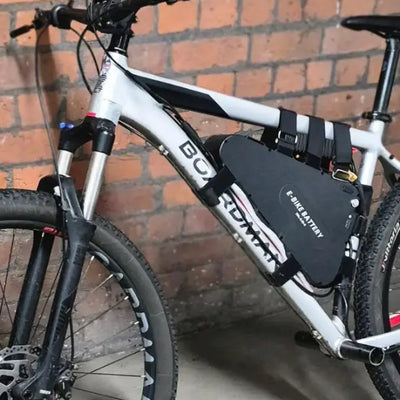
Batterij volledig uitgesloten: Veel aanbiedingen van budgetsets tonen een aantrekkelijke motorprijs die de batterij volledig uitsluit. De aanbieding is technisch correct – het is een motorkit – maar kopers die deze vergelijken met een complete set met batterij, vergelijken onvergelijkbare zaken. Pas bij het afrekenen wordt de werkelijke prijs duidelijk.
Batterij inbegrepen maar onvoldoende: Erger is de set die een batterij bevat met generieke cellen van ongeverifieerde fabrikanten. Deze batterijen brengen meerdere problemen met zich mee die pas na verloop van tijd duidelijk worden. Generieke lithiumcellen leveren in de praktijk een lagere capaciteit dan aangegeven, degraderen aanzienlijk sneller dan kwaliteitscellen, en in gedocumenteerde gevallen vormen ze veiligheidsrisico's vanwege inadequate Battery Management Systems die niet betrouwbaar kunnen reageren op overladen, overontladen of thermische gebeurtenissen.
Wat te controleren:
- Bevat de kit de batterij, of is de batterij apart?
- Welk celmerk wordt gebruikt? Zoek naar LG, Samsung of Panasonic celspecificaties
- Wordt de BMS-specificatie bekendgemaakt?
- Wat is de opgegeven levensduur (cycli)?
De batterijen van Kirbebike in het hele assortiment gebruiken LG-cellen – dezelfde fabrikant die wordt vertrouwd in premium consumentenelektronica – met een intelligent BMS dat real-time monitoring biedt, en een opgegeven levensduur van meer dan 1.000 laadcycli. Het verschil tussen dit en een anonieme batterij van een onbekende leverancier is niet marginaal; het is het verschil tussen een batterij die jarenlang consistent presteert en een die binnen het eerste seizoen aanzienlijk capaciteitsverlies lijdt.
Verborgen kosten #2 Ontbrekende accessoires die je zeker nodig hebt
![]()

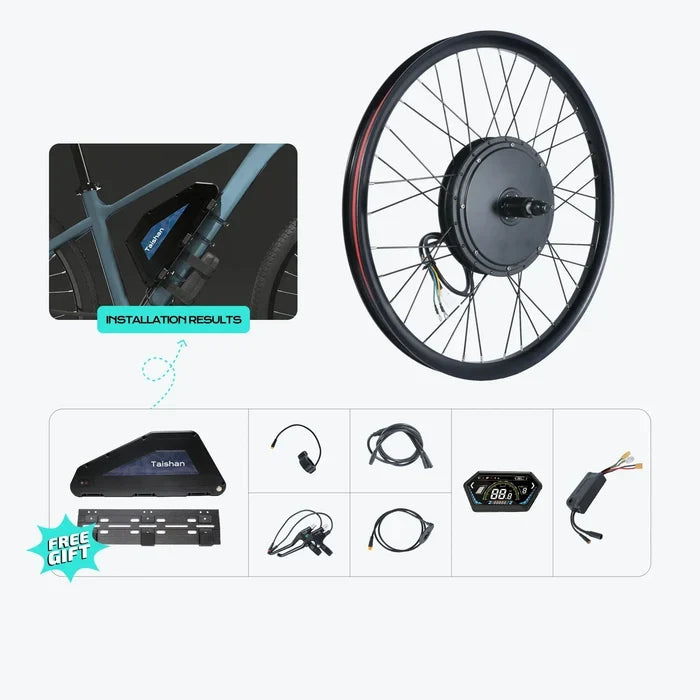
Bestudeer goedkope kitlijsten zorgvuldig en je zult merken wat er ontbreekt. Remsensoren, PAS-cadanssensoren, installatiegereedschap en torsiearmen – componenten die essentieel zijn voor een functionele, veilige installatie – worden vaak apart verkocht of helemaal niet aangeboden.
Vaak ontbrekende componenten in goedkope sets:
|
Component
|
Wat het doet
|
Typische aparte kosten
|
|
Remsensoren
|
Schakelt motorvermogen uit bij remmen
|
£15-25
|
|
PAS/cadanssensor
|
Maakt trapondersteuning mogelijk
|
£10-20
|
|
Torsiearm
|
Voorkomt asrotatie onder belasting
|
£10-15
|
|
Installatiegereedschap
|
Sleutels, inbussleutels, bandenlichters
|
£20-30
|
|
Oplader
|
Laadt de batterij op
|
£15-25
|
Wanneer deze afzonderlijk worden gekocht, verdwijnt de schijnbare besparing op de aangegeven kitprijs. Belangrijker nog, sommige rijders realiseren zich pas op de installatiedag dat deze componenten ontbreken, wat vertragingen en frustratie veroorzaakt.
Kirbebike-kits bevatten dit alles gratis: remsensoren (waarde ~£20), D12L PAS-sensor (waarde ~£10) en een complete installatietoolkit (waarde ~£25) zijn bij elke kit inbegrepen, naast de oplader en alle bedrading. De vergelijking moet altijd worden gemaakt op een gelijkwaardige, volledig uitgeruste basis.
Verborgen kosten #3 Vroegtijdige batterijvervanging
![]()

Dit is de verborgen kostenpost die de waardepropositie van goedkope kits echt tenietdoet, omdat het doorgaans 12-18 maanden na aankoop optreedt, wanneer de aanvankelijke tevredenheid al is weggeëbd.
Een generieke batterij in een goedkope ebike-ombouwset met batterij vertoont vaak meetbare capaciteitsdegradatie binnen het eerste seizoen. Rijders merken een geleidelijk korter bereik op – 20% vermindering, dan 30%, totdat de batterij die 40 km zou moeten leveren, slechts 20 km levert en de kit effectief onbruikbaar is voor het oorspronkelijke doel.
Vervangende batterijen voor goedkope kits creëren extra problemen:
- Eigen aansluitingen of niet-standaard spanningsspecificaties kunnen de vervangingsmogelijkheden beperken
- De vervangende batterij kost vaak evenveel of meer dan de besparing op de originele kit
- Geen garantie dat de vervanging van betere kwaliteit zal zijn dan het origineel
De lange termijn kostenberekening ziet er als volgt uit:
Een goedkope kit met een generieke batterij die na 18 maanden moet worden vervangen, kost in totaal aanzienlijk meer dan een kwaliteitskit met LG-cellen die geschikt zijn voor meer dan 1.000 cycli, zodra de kosten voor batterijvervanging zijn inbegrepen. De schijnbare besparing van de goedkope kit was altijd tijdelijk.
Verborgen kosten #4 Storingen van controller en elektronica
Goedkope controllers worden gemaakt met een lage prijs als uitgangspunt. De gevolgen variëren van frustrerend tot zorgwekkend:
-
Thermische uitschakeling op heuvels: Budgetcontrollers die op of nabij hun nominale capaciteit werken, activeren regelmatig de thermische beveiliging tijdens het rijden, vooral bij langdurige beklimmingen
-
Schokkerige stroomlevering: Basale blokgolfcontrollers produceren een schokkerige, merkbaar onaangename vermogensrespons vergeleken met FOC-controllers
-
Vroegtijdige uitval: Ondergedimensioneerde componenten die dicht bij hun limieten werken, falen eerder dan correct beoordeelde hardware
-
Schermstoringen: LCD-schermen van lage kwaliteit met onvoldoende afdichting van connectoren falen door binnendringend vocht, vooral in Britse omstandigheden
Wanneer de controller van een goedkope kit defect raakt, begint de zoektocht naar een vervanging, en het vinden van een compatibele vervanging voor een generieke kit met ongedocumenteerde specificaties is echt moeilijk. Veel rijders kopen dan een complete kitvervanging in plaats van een enkele controller.
Wat kwaliteitscontrollers bieden:
- Thermische bescherming die de warmte beheert in plaats van simpelweg uit te schakelen
- FOC (Field Oriented Control) technologie voor een soepele, stille vermogensafgifte
- Gedocumenteerde specificaties die gerichte vervanging mogelijk maken indien nodig
- TFT-kleurendisplays met geschikte weerbestendigheid
De EZ Rider kit gebruikt een 36V 14A intelligente FOC controller met TFT kleurenscherm. De Tongsheng TSDZ8 middenmoter kit beschikt over een IP66-geclassificeerd display – een specifieke weerbestendigheidsstandaard geschikt voor Britse rijomstandigheden. Dit zijn geen marketingbeschrijvingen; het zijn technische standaarden die storingen in de praktijk voorkomen.
Verborgen kosten #5 Importvertragingen en invoerrechten
Britse kopers die bestellen bij de goedkoopste online bronnen, doorgaans rechtstreeks van overzeese marktplaatsen, worden geconfronteerd met een reeks extra kosten die niet verschijnen op het moment van aankoop.
Importgerelateerde verborgen kosten:
-
Btw bij import: Bestellingen boven de de-minimisdrempel kunnen leiden tot btw-heffingen bij levering die niet waren inbegrepen in de geadverteerde prijs
-
Douaneafhandelingskosten: Pakketvervoerders brengen vaak afhandelingskosten in rekening voor douaneafhandeling, bovenop eventuele verschuldigde invoerrechten of btw
-
Leveringsvertragingen: Importverwerking en douane kunnen weken aan de levertijden toevoegen, vooral voor batterijen die specifieke documentatie voor het verzenden van gevaarlijke goederen vereisen
-
Gesplitste zendingen: Diverse Kirbebike klantrecensies vermelden dat batterijen apart van de motorkit arriveren – een transparantiepunt dat Kirbebike heeft erkend. Bij het kopen van goedkope kits van overzeese leveranciers zijn gesplitste zendingen zonder duidelijke communicatie nog gebruikelijker
Verborgen kosten #6 Onvoldoende remmen
Deze verborgen kosten zijn tevens een veiligheidsprobleem, wat het de belangrijkste op deze lijst maakt.
Goedkope ombouwsets voegen aanzienlijk gewicht toe aan een fiets – motoren variëren van 2,7 kg tot 6,8 kg in het Kirbebike-assortiment – en maken aanhoudend hogere snelheden mogelijk. Wanneer de kit zonder remsensoren (hierboven besproken) en zonder duidelijke richtlijnen over de adequaatheid van de remmen arriveert, kunnen rijders een motorkit op een fiets monteren waarvan de remmen niet geschikt zijn voor het gecombineerde gewicht en de snelheid van het omgebouwde systeem.
De specifieke storingsmodi:
- V-brakes op een fiets die nu 4-6 kg extra gewicht draagt en 45 km/u kan halen, hebben aanzienlijk langere remafstanden dan de rijder gewend is van vóór de ombouw
- Versleten remblokken die "prima" waren op een onondersteunde fiets, worden echt ontoereikend wanneer motorondersteuning zowel de snelheid als het systeemgewicht verhoogt
- Oververhitte velgremmen bij afdalingen met motorondersteuning veroorzaken remvervaging die rijders van onondersteunde fietsen zelden tegenkomen
Een kwaliteitskit van een gerenommeerde leverancier bevat remsensoren (die de stroom onmiddellijk uitschakelen wanneer de remmen worden geactiveerd), duidelijke richtlijnen voor remvereisten bij verschillende vermogensniveaus en ondersteuning om vragen te beantwoorden. Goedkope kits van onbekende leveranciers bieden dit alles niet.
Adequatheid van remmen per vermogensniveau:
|
Kitvermogen
|
Minimale remstandaard
|
|
250W
|
Goed onderhouden bestaande V-brake of schijfrem
|
|
500W-750W
|
Schijfremmen aanbevolen
|
|
1000W+
|
Hydraulische schijfremmen sterk aanbevolen
|
Verborgen kosten #7 Geen ondersteuning als er iets misgaat
Dit is de verborgen kostenpost die pas na aankoop zichtbaar wordt, en het is echt belangrijk.
Wanneer de controller van een goedkope kit faalt, wanneer een connector niet correct aansluit, wanneer de display-instellingen niet worden uitgelegd in de meegeleverde documentatie, heeft de koper van een budgetkit van een anonieme leverancier nergens nuttigs om zich tot te wenden. Generieke online forums kunnen helpen; ze kunnen ook niet helpen. Een vervangend onderdeel is mogelijk wel of niet beschikbaar; het is mogelijk wel of niet compatibel met de ongedocumenteerde componenten in de kit.
Vergelijk dit met een leverancier met een geverifieerd UK-contact, gedocumenteerde after-sales ondersteuning en een echte garantie:
-
Kirbebike-garantie: 1 jaar fabrieksgarantie op alle kits
-
Ondersteuning contact: support@kirbebike.com met gedocumenteerd reactieproces
-
Documentatie: Geschreven instructies, video-installatiehandleidingen en displayhandleidingen meegeleverd
-
Community: Actieve klantenbestand met praktijkervaring met het volledige assortiment kits
Conclusie
De vanafprijs van een goedkope ombouwset is werkelijk de minst betrouwbare indicator van wat het uiteindelijk zal kosten om deze te bezitten en te gebruiken. Batterijvervanging, ontbrekende accessoires, importkosten, vroegtijdige componentuitval en het ontbreken van ondersteuning transformeren een budgetaankoop routinematig in een dure aankoop.
Kwaliteitskits van gerenommeerde leveranciers houden rekening met al deze kosten vooraf: een compleet systeem met kwaliteitsaccu's, inclusief sensoren en gereedschap, volledige garantie en oprechte after-sales ondersteuning. De totale eigendomskosten over twee of drie jaar vallen bijna altijd aanzienlijk gunstiger uit voor de kwaliteitskit.
Ontdek het volledige assortiment Kirbebike ombouwsets met accu's, elk een compleet, echt all-inclusive systeem gebouwd om jarenlang, niet maandenlang, te rijden en te worden ondersteund.
Veelgestelde vragen
Waarom zijn goedkope e-bike ombouwsets uiteindelijk duurder?
De geadverteerde prijs vertegenwoordigt zelden de totale kosten. Een ontbrekende accu, afwezige accessoires (sensoren, gereedschap, torsiearm), vroegtijdig capaciteitsverlies van de accu waardoor vervanging nodig is, potentiële importkosten en geen ondersteuning bij probleemoplossing, alles draagt bij aan reële kosten die kwaliteitskits vooraf al dekken.
Naar welk merk accucellen moet ik zoeken in een e-bike ombouwset?
LG, Samsung en Panasonic zijn de gevestigde fabrikanten van kwaliteitsaccucellen die worden gebruikt in premium consumentenelektronica en hoogwaardige ombouwaccu's. Het gehele Kirbebike accubereik maakt gebruik van LG-cellen met intelligent BMS, geschikt voor meer dan 1.000 laadcycli.
Zijn goedkope ombouwsets veilig voor gebruik op de Britse weg?
Weglegaalheid en veiligheid zijn twee verschillende vragen. Weglegaalheid vereist EAPC-conformiteit (maximaal 250W, snelheidslimiet 25km/u). Veiligheid vereist adequate remmen, correct geïnstalleerde torsiearmen, deugdelijke afdichting van connectoren en een accu met betrouwbaar BMS dat gevaarlijke laad-/ontlaadcondities voorkomt.
Hoe weet ik of een ombouwset echt compleet is?
Een echt complete set omvat: motorwiel, accu met genoemd celmerk, controller, display, PAS-sensor, remsensoren, lader, installatiegereedschap, torsiearm en gedocumenteerde garantie. Elke advertentie die dit niet allemaal bevestigt, is ofwel onvolledig of niet transparant over wat er is inbegrepen.
Wat is het belangrijkste om te controleren bij de aankoop van een e-bike ombouwset?
De kwaliteit van de accucellen. De accu bepaalt actieradius, levensduur en veiligheid meer dan enig ander onderdeel. Een set met een kwalitatieve LG-accu en een bescheiden motor levert op de lange termijn meer waarde op dan een set met een hoger geclassificeerde motor in combinatie met anonieme generieke cellen. Controleer de specificatie van het celmerk vóór elke andere functie.
: invalid url input)
usmile
Liquid error (snippets/blog-best-product line 36): product form must be given a product
Liquid error (snippets/blog-best-product line 59): product form must be given a product