The choice between purchasing a complete electric bike and converting an existing bicycle isn't straightforward—it depends on what you already own, your mechanical confidence, your budget, and what you actually need the bike to do.
An ebike conversion kit transforms an existing bicycle you know and trust into electric transport, while a purpose-built e-bike delivers integrated design and manufacturer warranty at higher initial outlay. Neither option is universally superior; each suits different circumstances.
Understanding the genuine trade-offs—not the marketing claims—helps determine which approach serves your specific situation better.
The Starting Question: What Bicycle Do You Currently Own?
![]()

The conversion vs purchase decision begins with evaluating what you already have.
When Your Existing Bike Favours Conversion
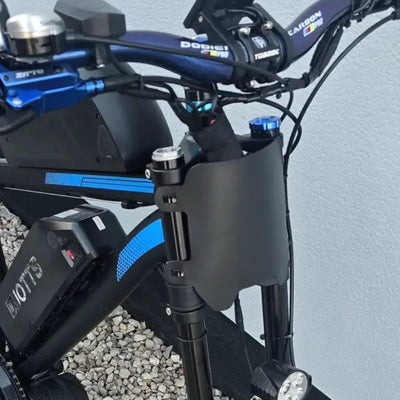
If you own a quality bicycle that fits you perfectly, has components you trust, and represents significant previous investment: Conversion preserves this value while adding electric capability.
One EZ Rider customer describes their kit as "outstanding" and "a much better choice than the big heavy batteries that you fit to your frame"—someone who valued their existing bike enough to enhance rather than replace it.
Specific bike types that convert well:
- Well-maintained hybrid bikes with disc brakes and sturdy frames
- Quality mountain bikes with suspension and robust wheel bearings
- Comfortable touring bikes with reliable drivetrains
- Folding bikes (like Brompton) where purpose-built e-bike versions command premium pricing
- Cargo bikes where integrated e-bikes are rare or expensive
Frame requirements for successful conversion: Kirbebike kits fit 99% of bikes across all 13 industry-standard wheel sizes (16", 20", 24", 26", 27.5", 28", 29", 700C), but the frame must be structurally sound, have adequate brake stopping power, and provide mounting points for battery and controller.
When Your Existing Bike Suggests Purchase Instead
If your current bike has any of these characteristics: Worn drivetrain components, marginal brakes, frame damage or significant rust, incompatible geometry, or budget-level components throughout—conversion invests in a foundation that may not support the added stress and speeds of electric assist.
A verified customer completing nearly 20,000km over two years on a 1500W Kirbebike system (for private land) demonstrates that conversion works when the donor bike is solid. Attempting the same on a deteriorated bicycle risks component failure and safety concerns.
Cost Comparison: The Real Numbers
![]()

Conversion Kit Investment
Kirbebike's range spans road-legal 250W systems through to 4000W performance kits, with costs reflecting power level, battery capacity, and included components.
What conversion actually costs:
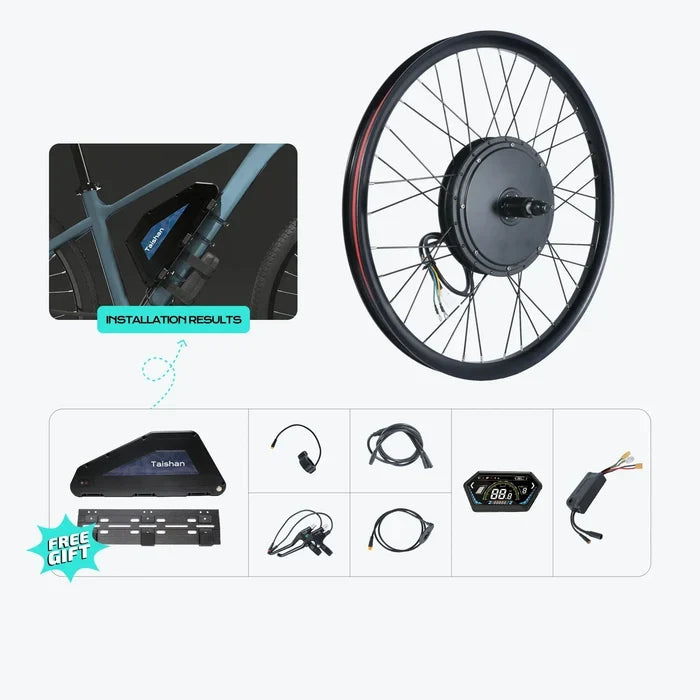
- Entry road-legal: 36V 250W EZ Rider with 7Ah battery, FOC controller, TFT display, brake sensors, PAS sensor, installation tools—complete kit
- Extended range road-legal: 48V 250W with 13-16Ah battery for longer distances
- Off-road capable: 48V 1000W through 72V 4000W systems with larger battery packs
Hidden costs to account for:
- Brake upgrades if current brakes marginal (conversion adds weight and speed)
- Potential new chain if converting to mid-drive and existing chain inadequate
- Professional installation if DIY confidence low (though Kirbebike kits average 20-minute installation)
- No additional costs for Kirbebike systems—brake sensors, PAS sensor, tools included free
Purpose-Built E-Bike Investment
Complete e-bikes in the UK market range from budget models to premium integrated systems. The comparison isn't just headline purchase cost—it's total ownership cost over expected lifespan.
Purpose-built e-bike cost factors:
- Higher initial outlay for equivalent performance level
- Integrated design means less visible wiring, sleeker appearance
- Manufacturer warranty covering complete system
- Potentially higher resale value (though e-bike depreciation is significant)
- Proprietary batteries can be expensive or unavailable for replacement
Technical Capability: Installation and Maintenance Reality
Conversion Kit Installation
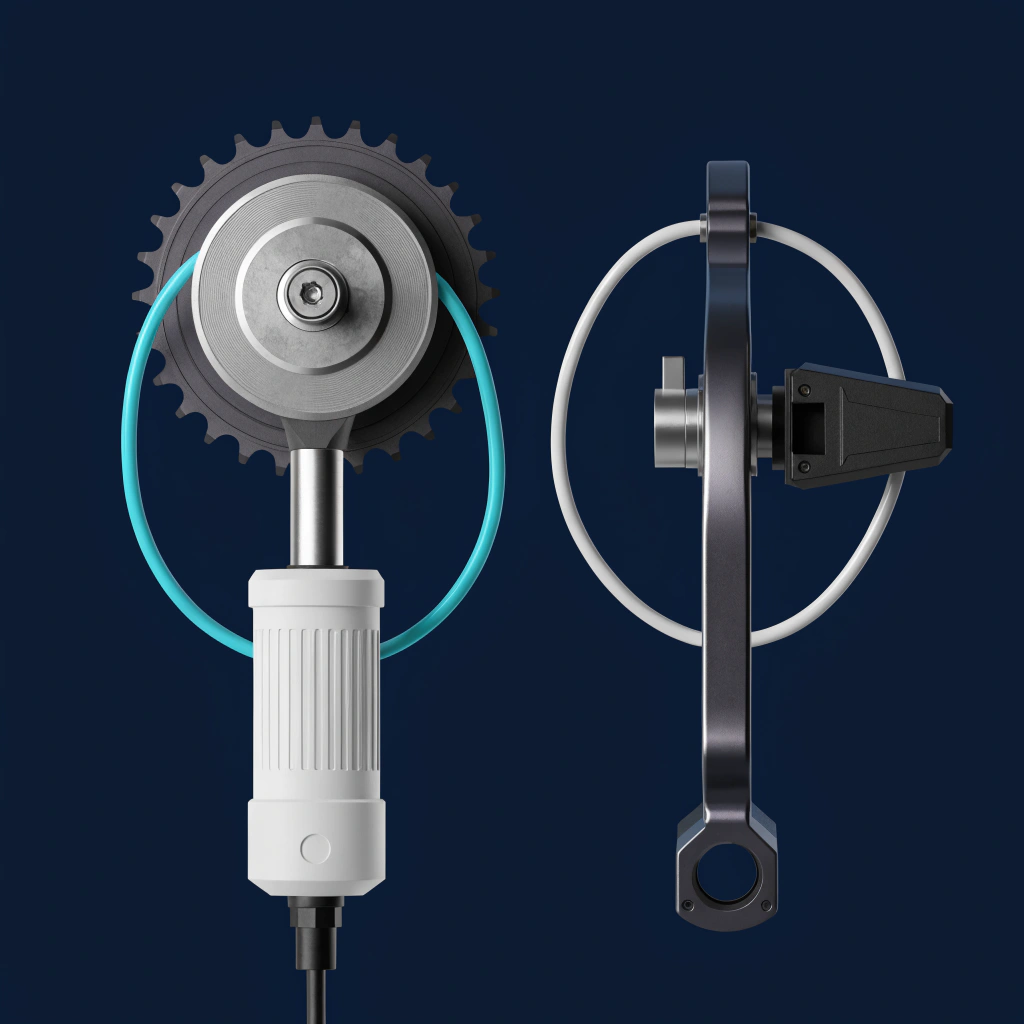
Kirbebike's hub motor kits require minimal mechanical skill—one verified customer notes "easy to follow instructions" and "easy to fit." The Tongsheng TSDZ8 mid-drive is slightly more involved, requiring bottom bracket removal and chainring replacement, but multiple customers confirm installation in under 2 hours.
What installation actually involves:
- Remove existing wheel (front or rear depending on kit)
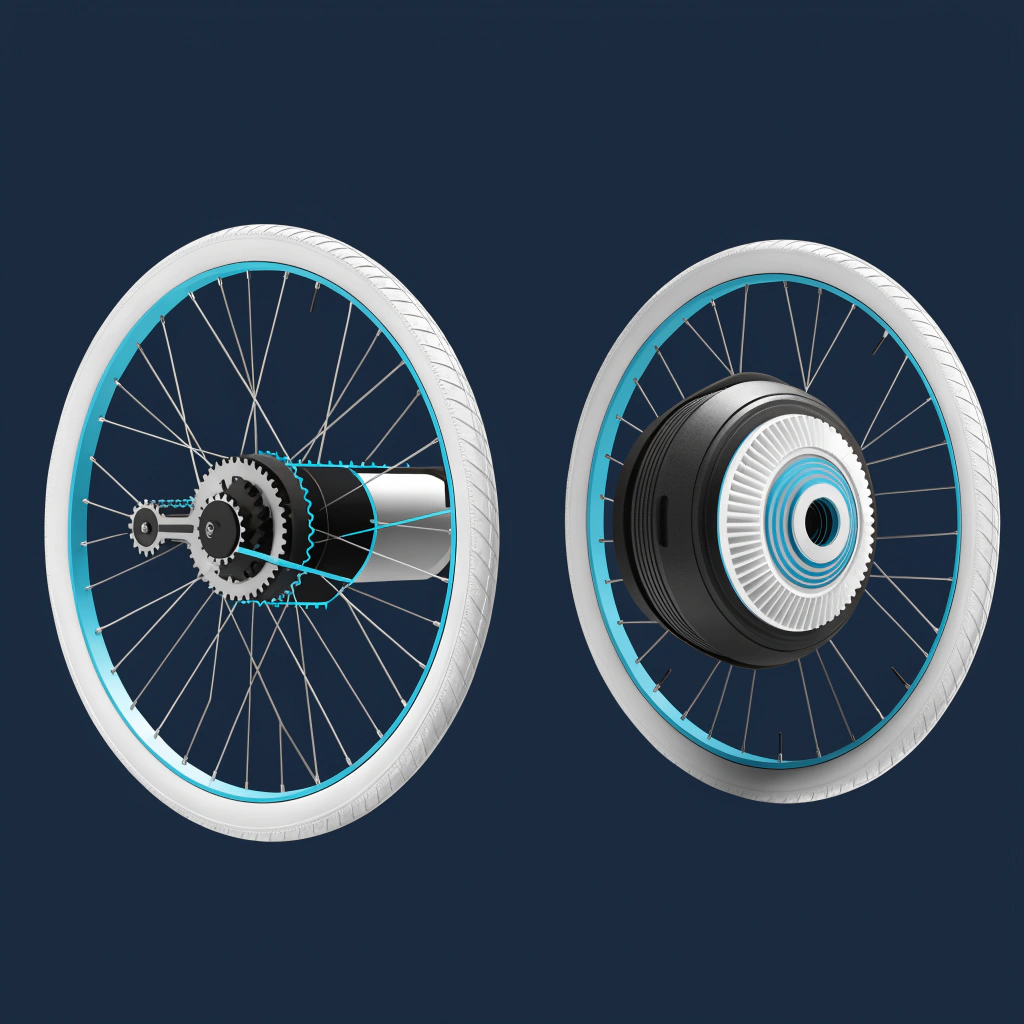
- Install motor wheel (pre-built to your specified wheel size)
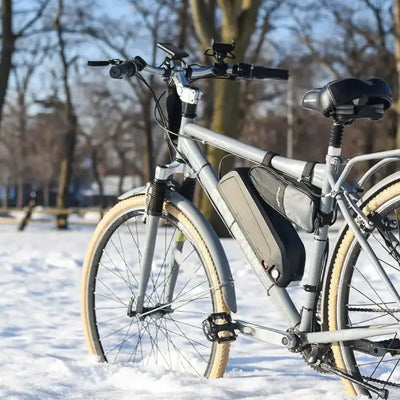
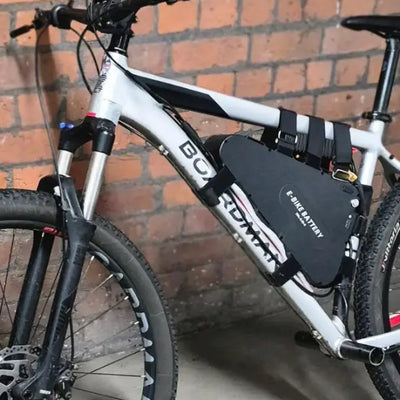
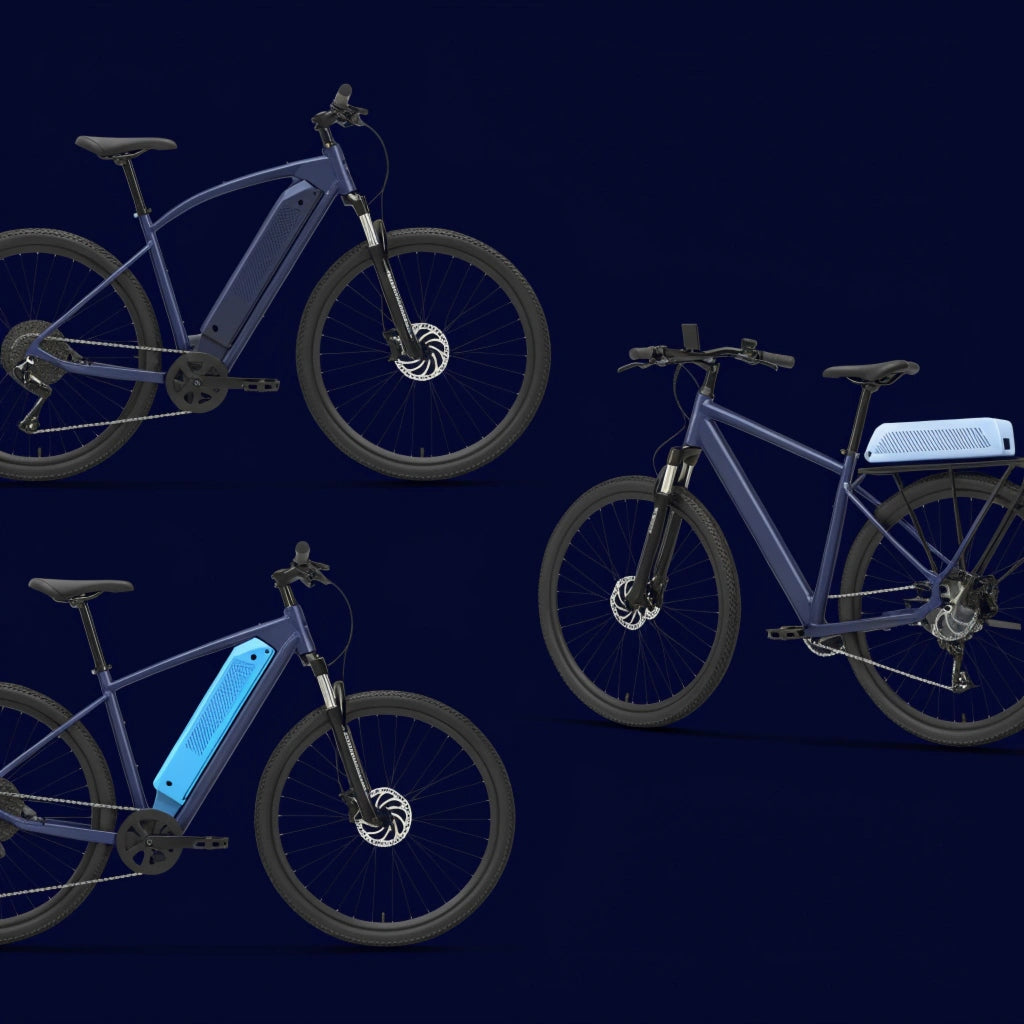
- Mount battery to frame (downtube or rear rack)
- Connect wiring harness (controller, display, motor, battery)
- Install brake sensors and PAS sensor
- Test system and adjust assist levels
Tools required: Included with every Kirbebike kit—tyre removal tools, wrenches, hex keys, cable ties. No specialized bicycle shop tools necessary for hub motor systems.
Mechanical confidence threshold: If you can change a bicycle tyre and adjust brakes, you can install a hub motor kit. One customer describes themselves as "mechanically minded" and notes "very easy to fit"—but others without mechanical background report successful installation following included video guides.
Purpose-Built E-Bike Maintenance
Complete e-bikes require regular bicycle maintenance plus electrical system attention. Integrated systems often mean proprietary components—specific to manufacturer or model.
Maintenance advantages of conversion:
- Battery, controller, motor, display are independent replaceable components
- One customer has replaced controller (second unit) and display (third unit) over 14,000 miles while keeping original motor and battery—targeted component replacement rather than system retirement
- Standard bicycle components (brakes, drivetrain) remain serviceable with normal bicycle shop skills
- LG cell batteries in Kirbebike systems available separately for replacement after 1,000+ cycle life
Performance Comparison Across Use Cases
|
Use Case
|
Conversion Kit Advantage
|
Purpose-Built E-Bike Advantage
|
|
UK road-legal commuting
|
250W kits CE/ROHS certified; familiar bike geometry
|
Integrated battery aesthetics; warranty coverage
|
|
Train station + commute
|
Removable compact battery (EZ Rider); existing bike familiarity
|
Purpose-built folding e-bikes with integrated systems
|
|
Hilly terrain
|
TSDZ8 140Nm torque; motor choice tailored to terrain
|
Mid-drive e-bikes designed around motor from factory
|
|
Off-road private land
|
1000W-4000W power range; upgrade existing MTB
|
Purpose-built e-MTBs with geometry optimized for power
|
|
Long-distance touring
|
Swappable battery capability; existing comfortable bike geometry
|
Integrated frame battery; purpose-designed e-touring frames
|
|
Urban cargo transport
|
Convert existing cargo bike; cost-effective
|
Purpose-built cargo e-bikes with motor-matched frames
|
UK Legal Compliance: No Difference Between Approaches
Both conversion kits and purpose-built e-bikes must comply with identical EAPC regulations for UK road use:
Three mandatory requirements:
- Maximum 250W nominal motor power
- Speed assistance cuts at 15.5mph (25km/h)
- Motor only assists while pedalling (pedal-assist only)
Kirbebike's 36V 250W and 48V 250W systems are CE/ROHS certified for UK road legality. All higher-power systems (500W-4000W) are for private land and off-road use—identical to how purpose-built e-bikes above 250W are also restricted to private land.
Legal equivalence: A 250W conversion kit on a quality bicycle is legally identical to a 250W purpose-built e-bike. Both require the same pedal-assist-only operation, both have the same 15.5mph assistance cut-off, both are legal on UK roads without registration or insurance.
Environmental Consideration: Manufacturing Impact
Converting extends the useful life of an existing manufactured bicycle, avoiding the environmental cost of producing a complete new e-bike.
What conversion saves environmentally:
- Complete bicycle frame manufacturing (aluminium or steel processing, welding, finishing)
- Full component set manufacturing (wheels, drivetrain, brakes, fork)
- Packaging and shipping of complete bike
- Disposal or underutilization of replaced bicycle
One customer notes conversion allows "keeping a comfortable, familiar bike"—environmental benefit isn't just about CO₂ numbers, it's about extracting maximum utility from existing manufactured goods before retirement.
Customization and Future-Proofing
Conversion Kit Modularity
Kirbebike's component independence means riders can upgrade or modify specific elements without replacing entire systems.
Documented upgrade paths:
- Start with 36V 250W road-legal kit for commuting
- Upgrade to higher capacity battery when range needs increase
- Progress to 1000W+ system for private land use while reusing existing donor bike
- Replace individual components (battery, controller, display) as technology improves or components age
Purpose-Built Integration Constraints
Complete e-bikes lock you into the manufacturer's design decisions. Battery proprietary to model, motor integrated into frame, controller matched specifically to system—upgrades often mean complete bike replacement rather than component evolution.
When integration is advantageous: Riders who want turnkey experience without component decisions benefit from manufacturer's integration work. When integration is limiting: Riders who want flexibility to upgrade, modify, or repair independently face proprietary component constraints.
The Decision Framework: Which Route Suits You?
Choose conversion when:
You own a quality bicycle that fits perfectly and you want to keep You're comfortable with basic mechanical work or willing to learn You want flexibility to upgrade components independently over time You value environmental sustainability of extending product life You want specific power level or battery configuration unavailable in complete bikes at reasonable cost You want UK road-legal system at entry cost point
Conclusion
The conversion versus purchase decision isn't about which approach is objectively better—it's about which approach better serves your specific circumstances. Riders with quality existing bicycles they trust, reasonable mechanical confidence, and interest in component-level control consistently report satisfaction with conversion.
Browse the complete Kirbebike conversion kit range spanning UK road-legal 250W systems through performance-oriented 4000W options to understand what conversion can deliver when built on a bicycle you already know works for you.
Frequently Asked Questions
Is it worth buying a conversion kit or a whole new e-bike?
If you own a quality bicycle that fits you well with sound frame and adequate brakes, conversion delivers electric capability while preserving your familiar bike at lower cost than purchasing equivalent complete e-bike..
How much does it cost to convert a bike to electric vs buying an e-bike?
Kirbebike conversion kits range from road-legal 250W systems through 4000W performance options, typically representing substantial savings versus equivalent complete e-bikes. However, hidden costs include potential brake upgrades and professional installation if needed.
Can any bike be converted to electric or should I just buy an e-bike?
Kirbebike kits fit 99% of bikes across all 13 standard wheel sizes (16"-700C), but the donor bike must have structurally sound frame, adequate brakes for increased speed/weight, and mounting points for battery.
Is converting an existing bike more environmentally friendly than buying new?
Yes measurably—conversion avoids manufacturing emissions of complete new bicycle frame, wheels, drivetrain, and packaging, saving approximately 100-300kg CO₂e compared to purchasing new.
Do conversion kits perform as well as purpose-built electric bikes?
Yes when properly matched to donor bike. A Devon commuter transformed "arduous 25-minute" car journey into "11-minute leisure ride" using EZ Rider kit—demonstrating conversion delivers genuine transport capability.
: invalid url input)
usmile
Liquid error (snippets/blog-best-product line 36): product form must be given a product
Liquid error (snippets/blog-best-product line 59): product form must be given a product