Buy the lowest power tier that does the job. Wattage does not set speed, torque or reliability on its own, and the gradient you actually ride decides far more than the number on the motor. Hybrids are among the easiest bikes to convert — which is exactly why the choice between 250W, 500W, 750W and 1000W deserves a structured answer rather than a bigger-is-better guess. This guide compares the four tiers by legality, hills, speed, battery demand, fit and reliability.
The 250W tier is the logical place to start for most hybrid-bike commuters in the UK, because it is the only tier that can legally be treated as an EAPC on public roads. Step up to 500W or 750W only when private-land assistance genuinely demands it — accepting the extra weight and current — and go to 1000W only when the route, load and donor bike really deserve it. Before any motor decision, check the bike: wheel size, dropouts, brakes, gears and battery space all gate what fits. Then compare the conversion kits with battery. Government rules require working pedals, no more than 250W continuous rated power and assistance that stops at 15.5 mph for EAPC treatment in Great Britain (GOV.UK).

Which Power Tier Is Best for a Hybrid Bike?
| Tier | Best use | Main advantage | Main compromise | UK road position |
|---|---|---|---|---|
| 250W | Daily commuting and cycle routes | Lowest weight, legal-assist potential | Less reserve on steep hills | Can qualify as an EAPC |
| 500W | Rolling terrain, stronger private-land assist | Useful balance of weight and power | Higher battery use | Not a standard EAPC |
| 750W | Hills, heavier riders, mixed surfaces | Stronger acceleration and load handling | More weight, current and braking demand | Not a standard EAPC |
| 1000W | Steep hills, cargo, private-land performance | Greater power reserve | Heaviest system, highest safety demands | Not a standard EAPC |
Tendencies for comparable hybrid builds. Choose the lowest tier that meets the route.
Why Hybrid Bikes Make Good Conversion Donors
Hybrids are among the easiest donors. They commonly run 700C, 26, 27.5 or occasionally 29-inch wheels, sit more upright than a road bike while rolling more easily than a mountain bike, and usually have bottle bosses, rack and mudguard mounts, open frame triangles and external cable routing. That makes both the motor wheel and the battery straightforward to fit. One measurement note: 700C and 29″ wheels share the same 622mm bead-seat diameter, but rim width, tyre size and clearance still need verifying separately.
The problem areas cluster together: 12×142 thru-axles, carbon forks, low tyre clearance, flat-mount brakes, internal cable routing, very close step-through frames, press-fit bottom brackets and proprietary rear hubs. Work through the compatibility checks below before selecting a tier — no kit is a bargain if it does not fit.
What Does Motor Wattage Actually Tell You?
Less than the marketing suggests. A wattage label may describe continuous rated output, a nominal rating, electrical input or a short-term peak, and those are not interchangeable. Compare products on the same measurement, and treat any unqualified number with suspicion. Torque matters as much as watts here — a lower-watt geared hub can out-accelerate a heavier direct-drive motor with a bigger number on the box.
That chart is the whole argument. Flat ground asks little; a 10% gradient roughly quadruples the demand. If your commute is flat, extra watts mostly add weight. If it climbs, the tier matters quickly. Treat the markers as rough boundaries, not pass marks.
250W: The Road-Legal Commuting Tier
This is the tier for public roads and cycle paths in Great Britain: primarily flat or rolling routes, riders willing to put in real effort, and anyone who wants to keep the hybrid experience as a bike. It has the least electrical demand of the four — a smaller motor, a smaller battery, less strain on the brakes and frame — and it is the least expensive to buy and install.
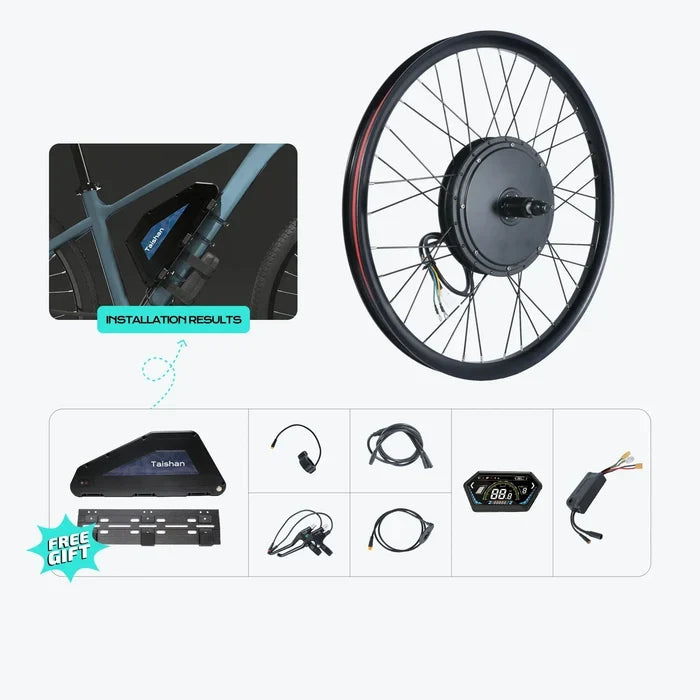
The restrictions are honest ones: less acceleration reserve, more effort on sustained gradients and slower climbing with a heavy rider or load. Motor design and gearing also matter enormously — a poorly designed 250W system can feel weak or jerky. Two routes cover this tier: the EZ Rider kit bundles a 250W front motor, dual battery and colour display, while the 250W front-wheel kit is a 36V geared front motor for 100mm open dropouts with 27.5, 29 and 700C wheel options. Confirm fork material, brake interface, tyre width and throttle configuration before ordering — a completed bike must meet all EAPC conditions, not just the motor rating.
500W vs 750W vs 1000W: What Each Step Actually Buys
All three sit outside standard UK EAPC limits. 500W suits rolling or moderately hilly private-land routes and heavier riders who do not need 1000W: it accelerates noticeably better than a typical 250W system and holds speed on moderate gradients while drawing less current than the tiers above — though it can still struggle on long steep climbs when loaded.
750W adds real reserve for regular hills, heavier riders and work bags, often as a geared hub that stays lighter than many 1000W direct-drive kits. The 500W/750W MTX kit covers both in 27.5, 28, 29 and 700C wheels with cassette or freewheel options. Resist the common claim that 750W is the universal sweet spot: it is unnecessary for flat commuting, lighter riders, public-road-only use, and any bike with marginal brakes or a light fork.
1000W earns its place on steep or repeated hills, with cargo or a trailer, or for a heavier rider who wants acceleration in reserve. The 48V 1000W kit is a direct-drive rear motor with several battery configurations. The costs are real: higher battery current, more weight, more stress at the dropouts, greater braking and tyre demand, harder rear punctures, heat when a direct-drive hub grinds uphill, and a sharper range penalty at full power. A torque arm is not optional at this tier.
| Factor | 500W | 750W | 1000W |
|---|---|---|---|
| Acceleration | Moderate | Stronger | Strongest |
| Hill reserve | Good on moderate terrain | Better under load | Best for steep and loaded |
| Battery current | Lower | Higher | Highest |
| System weight | Lower | Slightly higher | Heaviest |
| Typical motor | Geared rear hub | Geared hub or mid-drive | Often direct-drive rear hub |
| Best rider | Moderate private-land use | Hills, load, mixed terrain | Steep hills, cargo, heavy riders |
How Fast Are 500W, 750W and 1000W Kits?

There is no definite answer. Speed is influenced by rated vs peak power, motor winding, voltage, controller current, wheel circumference, rider and load weight, gradient, headwind, tyre pressure and display settings. More power does raise speed, but drag rises rapidly with it, so the extra watts are increasingly lost to air rather than converted into pace. Any speed claim worth reading states the rider weight, voltage, wheel size, surface, wind and assist mode — and whether the figure is assisted or motor-only. Treat published tier figures as manufacturer claims for specific configurations, not results to expect on your bike. The legal boundary is unaffected either way: EAPC assistance must stop at 15.5 mph and continuous rated power must not exceed 250W (GOV.UK).
Hub or Mid-Drive, Front or Rear?
Layout is a separate decision from power tier.
| Factor | Hub motor | Mid-drive |
|---|---|---|
| Installation | Wheel swap and wiring | Bottom-bracket replacement |
| Hybrid fit | Common on open-dropout bikes | Depends on the BB standard |
| Drivetrain wear | Motor bypasses the chain | Motor drives through the chain |
| Hills | Fixed effective ratio | Uses the bicycle gears |
| Maintenance | Wheel, spokes and axle | Chain, cassette and chainring |
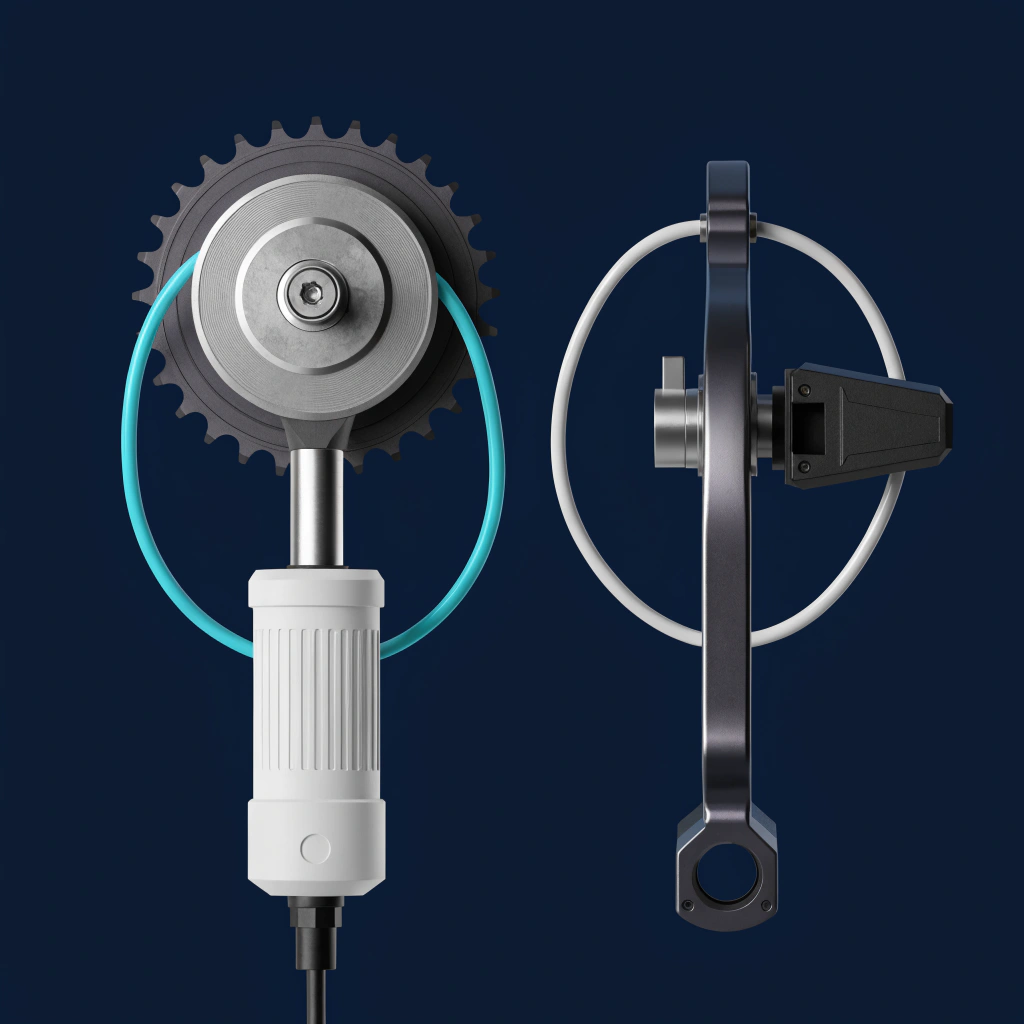
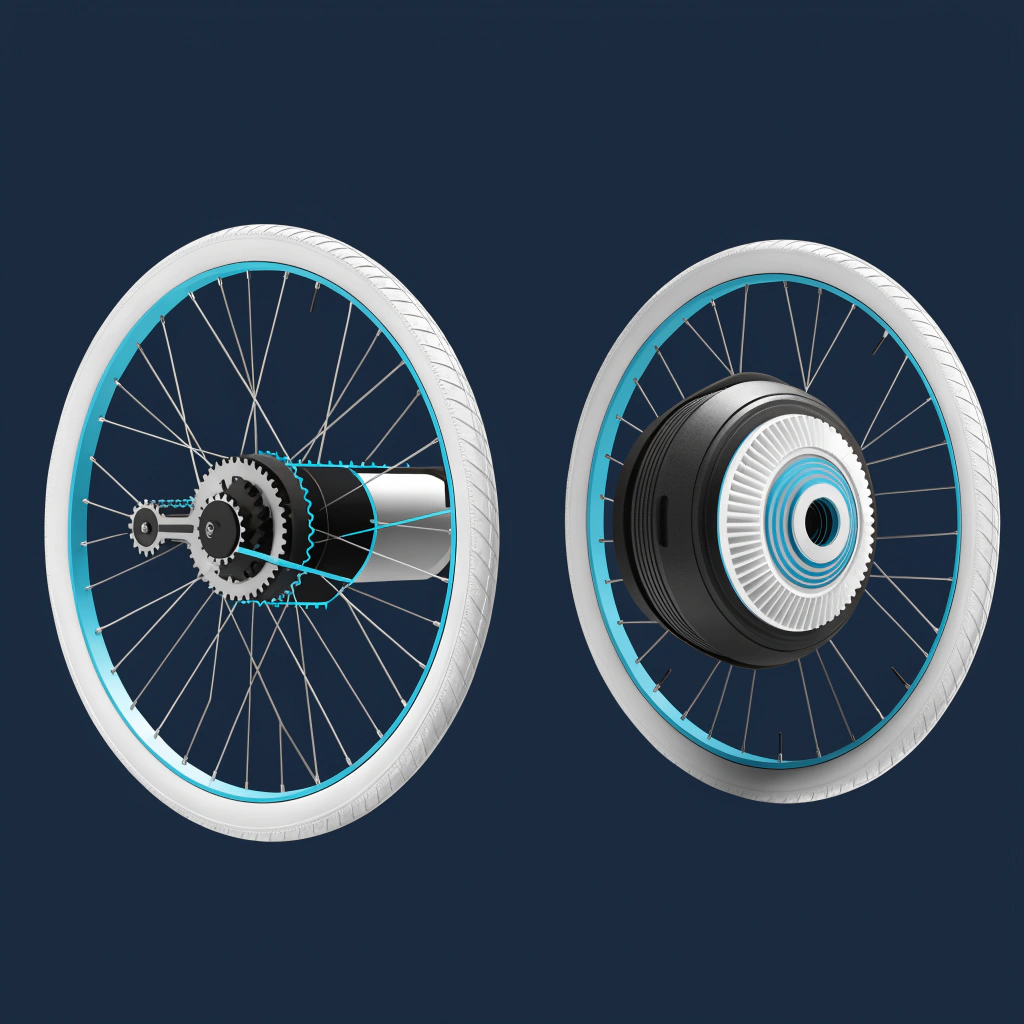
Choose a hub motor when the route is mostly paved, installation simplicity matters and you want less motor-related drivetrain wear. Choose a mid-drive when sustained hills dominate, you carry cargo, or balanced weight matters — provided the bottom bracket suits it, and Park Tool is a useful reference on why press-fit shells complicate that. KirbEbike’s mid motor kit is a torque-sensing Tongsheng unit for threaded shells.
✓ Front hub — suits the 250W tier
- Keeps the rear drivetrain completely untouched
- Needs 100mm open fork spacing and a suitable fork material
- Brake clearance and torque-arm room still required
- The simple end of the installation scale
✕ Rear hub — suits 500W to 1000W
- Better traction under power
- Needs 130/135mm spacing plus cassette or freewheel match
- Derailleur and rotor clearance must be checked
- Do not fit a high-power front hub just because installation looks easier
Battery Options for Each Power Tier

| Tier | Common voltage category | Battery priority |
|---|---|---|
| 250W | 36V | Low weight and commuter range |
| 500W | 36V or 48V | Balanced capacity and current |
| 750W | Usually 48V | Greater current headroom |
| 1000W | Usually 48V | High continuous discharge, secure mounting |
A general framework, not permission to pair any battery with any controller.
Watt-hours beat amp-hours as a capacity measure: watt-hours equal voltage times amp-hours, so 36V×15Ah is 540Wh, 48V×15Ah is 720Wh and 48V×20Ah is 960Wh. For planning: low assist uses roughly 10–15Wh per mile, mixed commuting 15–25Wh, and fast, hilly or loaded riding 25Wh or more — estimates, not guarantees. KirbEbike packs run from the entry lithium range up to the Taishan series with its 60A-continuous BMS.
Hybrid-Bike Compatibility Checklist
- Wheel and tyre: 700C, 26, 27.5 or 29-inch; ETRTO marking; rim width; tyre clearance; rim or disc brake
- Dropouts and axles: open dropout or thru-axle; front and rear spacing; slot shape; cable clearance; full nut engagement — measure against the wheel and dropout reference
- Gears: freewheel or cassette, sprocket count, freehub standard, derailleur clearance. Spin the sprockets backwards and watch the tool fitting to tell which you have
- Brakes: pad condition, rotor or rim wear, lever feel, cables or hoses, caliper alignment, motor cut-off compatibility
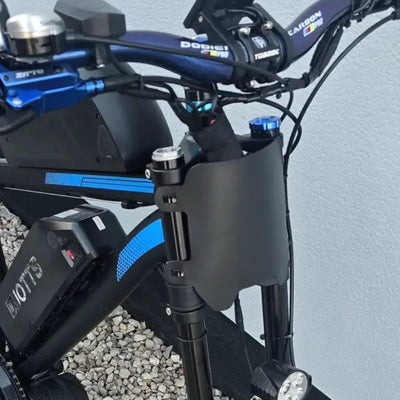
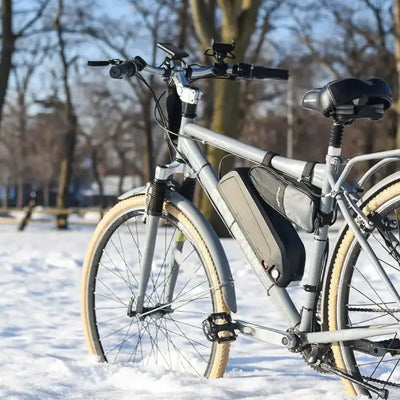
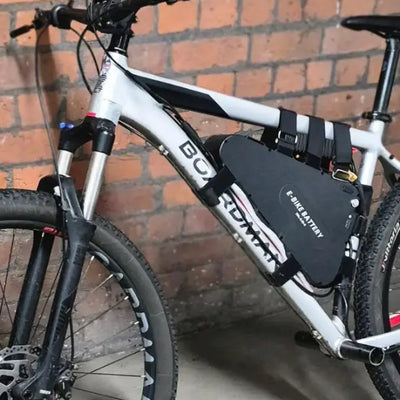
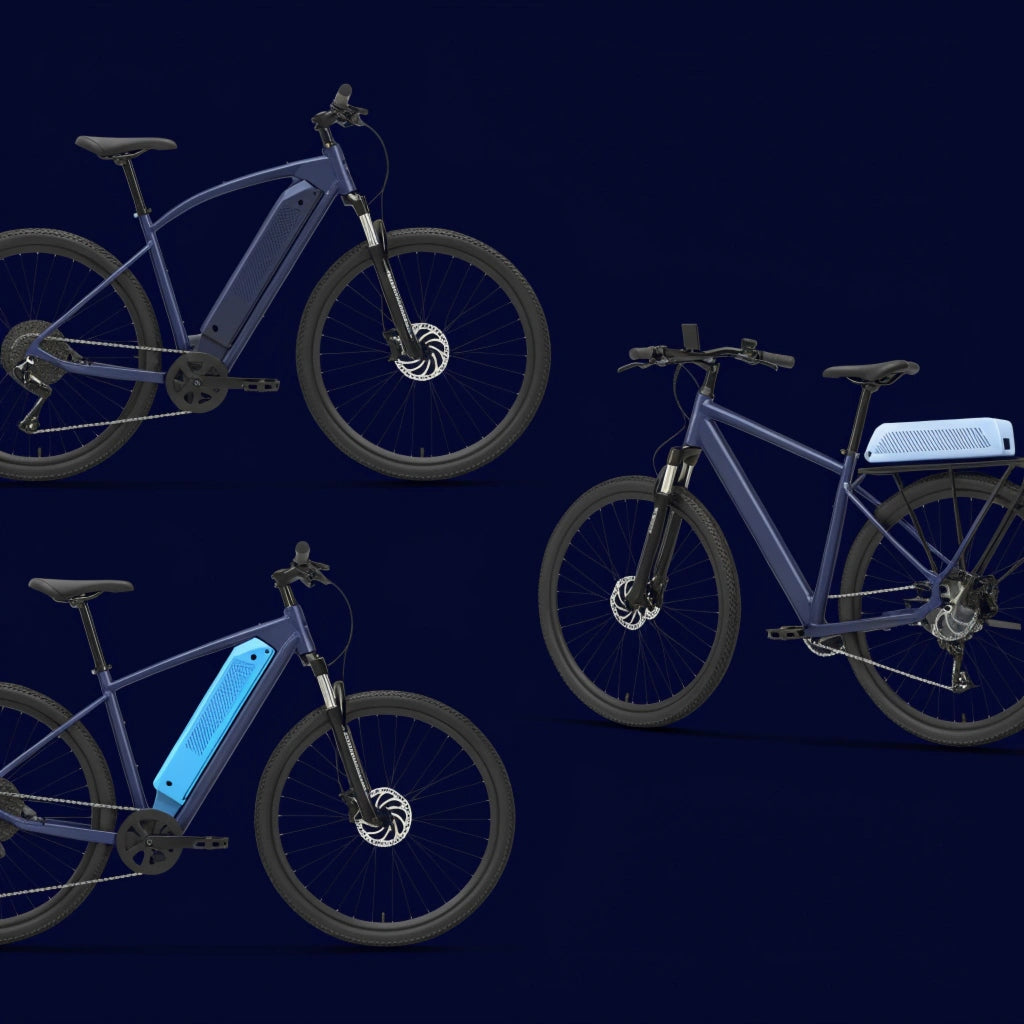
- Battery space: down-tube, crank and front-tyre clearance, cable access, removal direction, rack rating where relevant
Are Hybrid Bike Brakes Strong Enough?
For a 250W commuter carrying moderate weight on moderate terrain, rim or disc brakes in good condition can be fine — provided pads and braking surfaces are healthy and the assist stays within legal limits. At 500–750W, look for reliable disc brakes, serviceable pads, good rotors, good tyres and working brake cut-offs. At 1000W, assess brake heat, rotor size, frame and fork support, tyre grip, total weight, long descents and emergency stopping far more conservatively. Hydraulic brakes alone do not make a high-power build safe, and no rotor upgrade should proceed until the frame, fork and brake makers approve the diameter and adapter.
Kits to Compare for a Hybrid Bike
Judged on the same criteria: motor location, power tier, whether a battery is included, 700C support, axle and brake compatibility, sensing method and intended legal category. Confirm current specifications on each supplier’s page before buying.
KirbEbike across the tiers

Useful for comparing all four tiers with one supplier: the 250W front kits for road-legal commuting, the 500W/750W MTX for mixed private-land terrain and the 48V 1000W for heavier loads and steeper ground, all in 700C and common hybrid sizes. The restrictions matter: the hub kits need open slotted dropouts — a 12×142 thru-axle hybrid is not supported — and only the 250W systems can be configured as EAPC.
Electric Bike Conversions: the Bafang and Tongsheng ladder
The closest UK comparison, with a mid-drive at each level: the range lists the Bafang BBS01B 250W/350W, BBS02B 500W and 750W, the BBSHD 1000W, and Tongsheng TSDZ2B torque-sensing units, plus a CYC Photon Gen 2 marketed as 250W EPAC-compliant. Mid-drives keep your wheels and usually fit a threaded 68–73mm bottom bracket, but the battery is typically separate — compare the ride-ready total, not the motor price. (Named for comparison; not affiliated.)
Swytch front hub

The lightest 250W route and the one that leaves the rear drivetrain untouched, with the battery in a compact pack across a wide span of wheel sizes. Fork spacing, material and axle type limit it, thru-axle forks are generally excluded, and a front hub has less traction on wet or loose climbs.
Boost rear hub
A UK-built 250W rear hub with a 252Wh pack and one cable between battery and motor, which suits a tidy hybrid commuter build. Its configurator asks for axle type first and offers 130/135mm open dropouts plus a 142mm thru-axle option — unusual among conversion kits, and the answer for a thru-axle hybrid. Boost prefers shop fitting at extra cost, and the frame needs bottle-cage bosses. (Named for comparison; not affiliated.)
| Kit | Layout | Tier | Best hybrid use | Main fit check |
|---|---|---|---|---|
| Boost | Rear hub | 250W class | Road commuting | Axle type, bottle bosses |
| Electric Bike Conversions | Mid-drive | 250W–1000W | Hilly routes, keeping wheels | Threaded BB and chainline |
| KirbEbike 250W | Front hub | 250W | Road-focused commuting | Fork and brake compatibility |
| KirbEbike MTX / 48V | Rear hub | 500W–1000W | Private-land mixed terrain | Dropouts, gears, brakes |
| Swytch | Front hub | 250W class | Lightweight assistance | Fork and wheel standard |
Listed alphabetically. Availability is not frame compatibility.
Common Mistakes and a Selection Order
| Mistake | Why it costs you |
|---|---|
| Choosing the highest wattage available | Weight, current and braking demand all rise with it |
| Treating rated and peak power as the same | They are different measurements of different things |
| Assuming watts alone set torque or top speed | Winding, voltage, current and gearing decide both |
| Buying 750W for UK public roads | Only 250W continuous can qualify as an EAPC |
| Believing a display limit re-rates a motor | The documented continuous rating does not change |
| Ordering a rear hub before checking the gears | Freewheel and cassette are not interchangeable |
| Fitting a high-power front hub to a light fork | Fork dropouts carry the reaction torque |
| Ignoring the hybrid’s brakes and tyres | The weakest part sets the safe limit |
A workable order: confirm public-road or private-land use, measure the route and steepest sustained gradient, add rider and cargo weight, inspect frame, fork, wheels, brakes and tyres, confirm wheel size and axle standard, choose the layout, then pick the lowest tier that meets the case. Only then match battery voltage and current to the controller, calculate watt-hours, template the battery, confirm the gear interface, and budget torque-arm and brake hardware into the ride-ready cost.
Conclusion: Choose the Lowest Power That Meets the Job
A 250W kit is the sensible choice for most UK hybrid-bike commuters, because it is the only tier that can meet EAPC rules when the complete system is correctly specified. A 500W or 750W kit adds acceleration and hill support for private-land use, with 750W giving more reserve for heavier riders and mixed terrain. A 1000W system is appropriate only when the route and load justify its extra weight, current demand and braking requirements.
Do not choose by wattage alone. Check motor design, battery voltage, controller current, wheel size, gearing, frame condition and legal use. The best conversion is not the most powerful one; it is the lightest, safest and most serviceable system that completes your journey without asking more of the hybrid than it can give.
Check the Bike, Then Pick the Tier
Wheel size, dropouts and brakes decide what fits. Gradient decides how much power you need — and the lowest tier that does the job is the right one.
Frequently Asked Questions
What is the most reliable e-bike conversion kit?
How fast does a 750W e-bike conversion kit go?
What is the difference between a 750W and 1000W e-bike?
What is the difference between a 500W and 1000W electric bike?
Is a 500W e-bike better than a 750W e-bike?
How fast will a 1000W e-bike conversion kit go?
How do I choose the right e-bike conversion kit?
Is 750W enough for an e-bike?
Are 750W e-bikes legal in the UK?
Is Bafang better than Bosch?
Sources
- GOV.UK — Riding an electric bike: the rules. gov.uk/electric-bike-rules
- GOV.UK — Electrically assisted pedal cycles in Great Britain: information sheet. gov.uk
- GOV.UK — Battery safety for e-cycle users. gov.uk/battery-safety
- GOV.UK / OPSS — Statutory guidelines on lithium-ion battery safety for e-bikes. gov.uk
- London Fire Brigade — Electric bicycle conversion kits. london-fire.gov.uk
- Park Tool — Determining cassette and freewheel type. parktool.com/cassette-freewheel
- Park Tool — Bottom bracket standards and terminology. parktool.com/bottom-bracket
- Park Tool — Wheel removal and installation. parktool.com/wheel-removal
- Electric Bike Conversions, Swytch, Boost — competitor ranges read from live pages, 28 July 2026 (cited unlinked).