App-Programmable E-Bike Conversion Kits: What You Can Tune and Why It Matters
A programmable controller lets you decide how the bike delivers the power it already has. That is a control feature, not a speed feature, and the distinction matters both for how the bike rides and for what is legal on the road.
KE
KirbEbike Editorial
Reviewed by the KirbEbike conversion-support team
Delen
Unlock £10 off today
Op deze pagina
250W: CAN BE EAPC-LEGALSOFTWARE ≠ LEGAL CHANGEUK MARKETCHECKED 14 AUG 2026
The Quick Answer
An app-programmable kit pairs a Bluetooth controller with a phone app so you can adjust PAS levels, acceleration strength, current limits, throttle response and, on supported systems, regenerative braking. Most systems also show live data and let you save or export a configuration. It is genuinely useful: the same hardware can be set up as a gentle commuter or a sharp trail bike.
What it does not do is change the law. A software setting cannot alter a motor’s documented continuous rated power, so a higher-power kit does not become road-legal because a limit is selected. In Great Britain an EAPC needs working pedals, a motor rated no higher than 250W continuous and assistance stopping at 15.5mph (GOV.UK).
Direct Answer: What Can You Actually Change?
Parameter
What it changes
Why you would adjust it
Check first
PAS levels
How much assist each level gives
A gentler level 1, or more usable steps
How many levels the system allows
Acceleration strength
How quickly power arrives
Smoother starts, or sharper response
Higher power needs more restraint
Current limit
Peak current the controller draws
Protect a motor, or manage battery load
Battery continuous and BMS rating
Throttle response
How the throttle feels
Controlled starts on a heavy bike
Throttle legality for road use
Regenerative braking
Motor resistance under braking
Speed control on descents
Whether your motor supports it
Speed and limit settings
The configured assist cut-off
Matching the setting to where you ride
It does not change classification
Read down to the parameter you care about. The last column is what people skip.
Programmability is about control, not speed. The useful question is not how much power a kit has, but whether you can shape how that power arrives.
What Makes a Conversion Kit App-Programmable?
The controller decides how the motor responds, and a programmable one exposes those decisions as settings rather than fixing them at the factory. Pair it over Bluetooth and you can read live data and change supported parameters without tools or a laptop. A conventional controller does the same job with the behaviour locked in — fine if the factory settings suit you, frustrating if they do not. Not every kit supports this: the capability lives in the controller, so downloading an app achieves nothing unless the hardware speaks to it. Our displays and controllers range sets out which systems are Bluetooth-capable.
💡
Before you change anything: six checks
1. Controller compatibility — the exact controller model is supported by the app you intend to use
2. Display and system match — the display or head unit is part of the supported combination
3. Voltage match — battery, controller and motor are all specified for the same voltage
4. Battery headroom — the pack’s continuous discharge and BMS rating cover any current you set
5. Record the original — photograph or export the factory configuration before touching it
6. Legal envelope — the configuration you intend to ride is legal where you intend to ride it
PAS Levels, Acceleration and Throttle Response
An illustration of what configuration achieves, not measured motor output: the same kit set up as a gentle commuter or a sharper trail bike by changing what each PAS level delivers.
PAS levels are worth adjusting first. Factory maps often make level 1 too strong for filtering through traffic and bunch the useful range into the top two levels. Spreading assistance evenly gives steps you will actually use, and a genuinely gentle level 1 eases slow manoeuvring and stretches the battery.
Acceleration strength sets how quickly the motor reaches the level you asked for. A softer ramp feels more natural and helps on loose or wet surfaces; a sharper one gets you off the line faster. On higher-power builds, restraint here does more for control than any other single setting, because the motor has more torque available than the tyres can always use.
Throttle response matters on kits fitted with one. A softer curve gives controlled starts on a heavy bike; a faster one suits riders wanting power immediately. Note the legal position: on a road-going EAPC in Great Britain, a throttle that propels the bike beyond walking pace without pedalling can remove EAPC status, whatever the app is set to.
Current Limits and Regenerative Braking
**Current limiting** is where tuning meets electrical safety. The controller has a hardware capability and an active software limit, and those are not the same thing: raising the software limit toward the hardware ceiling increases heat in the motor and controller and draws harder on the battery. Do not simply set the maximum. The pack’s continuous discharge capability and BMS rating must cover whatever you configure, with headroom — a battery that cuts out on a climb is usually a current mismatch rather than a capacity problem. Our BMS amps guide works through matching, and battery-to-motor matching covers cable gauge and voltage.
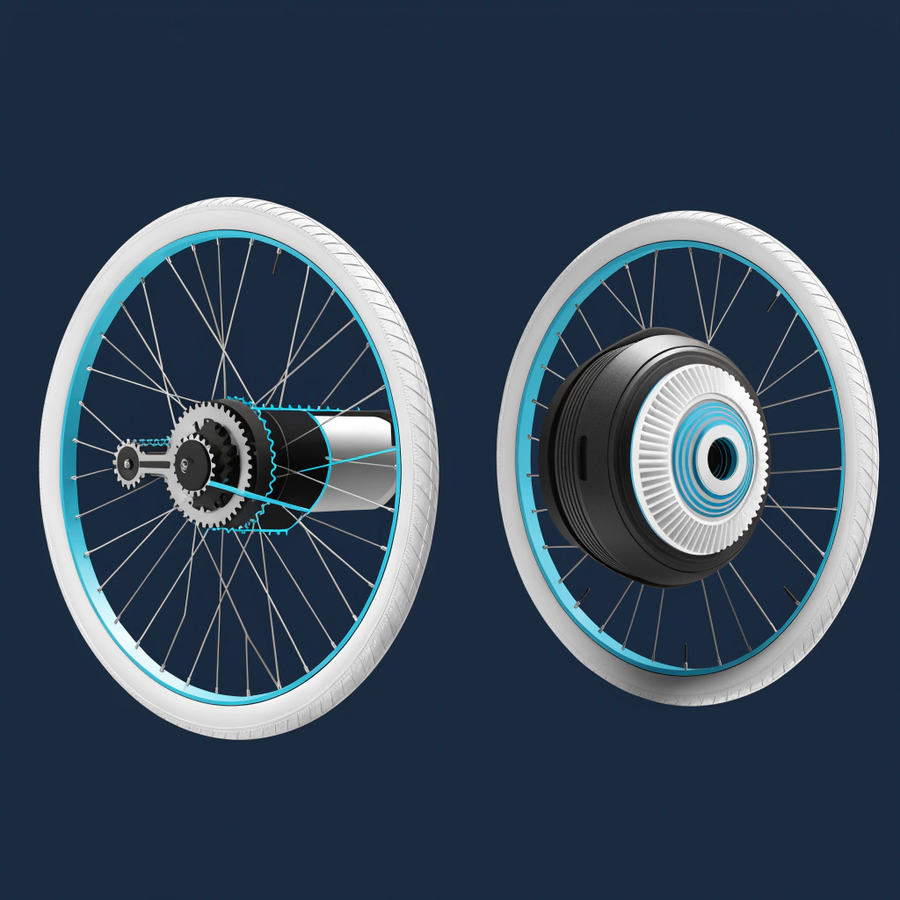
**Regenerative braking** returns a small amount of energy and, more usefully, adds motor resistance that helps control speed on long descents. Two caveats. It is not a substitute for mechanical brakes. And availability depends on motor and controller together: direct-drive hubs can support it because the motor is always connected, whereas a geared hub’s clutch disconnects the motor when you stop driving, so no energy can return. Confirm for your exact combination — our guide to hub motor internals explains why the clutch decides it.
Speed Settings, Software and UK Law
This is the section to read carefully. Software can change what a system does; it cannot change what a system legally is. In Great Britain a converted cycle is an Electrically Assisted Pedal Cycle only when it has working pedals capable of propelling it, a motor whose continuous rated power does not exceed 250W, and assistance that cuts off at 15.5mph, with the rider aged 14 or over (GOV.UK). A cycle that exceeds those requirements is treated as a motor vehicle in law, bringing type approval, registration, insurance, licensing and helmet requirements (GOV.UK EAPC guidance).
Some controllers offer selectable output regimes, often called limit modes, switching between a restricted road setting, pedal-assist only, walk assist and an unrestricted setting for private land. They are genuinely useful for matching a bike to where you ride it, and make a high-power build far more manageable in traffic.
⚖️
A software limit is not a legal reclassification. Selecting a lower output mode does not change a motor’s documented continuous rated power, and it is that rating which determines classification. A kit whose motor is rated at 1000W continuous remains outside EAPC classification whichever mode is selected. For road-legal use in Great Britain you need a kit whose motor is rated at 250W continuous in the first place. Higher-power kits are for private land with the landowner’s permission and subject to site rules, or for properly approved, registered and insured use.
So treat the road-legal build and the private-land build as two different bikes rather than two settings on one. This article does not explain how to remove a speed limiter for public-road riding, and be wary of any guide that does.
Why Programmability Is Worth Having
Control is the headline: different riders want different things from the same hardware, and a fixed factory map is a compromise aimed at nobody. Comfort follows — a softer ramp and better-spread PAS levels make a bike pleasant in traffic. Efficiency matters more than people expect, because aggressive settings draw more current and shorten range.
Adaptability is the practical benefit: one bike configured for a wet winter commute and reconfigured for dry trails. Troubleshooting is the underrated one — live voltage, current and fault codes tell you far more about an intermittent problem than guessing, and a saved configuration gives you a known-good state to return to.
App-Programmable vs Standard Controllers
Capability
Standard controller
App-programmable controller
PAS adjustment
Limited, model dependent
Configurable
Acceleration adjustment
Usually fixed
Configurable
Current limit adjustment
Limited
Configurable within hardware limits
Regen adjustment
Model dependent
Where the motor supports it
Live system data
Limited
Real-time
Save or export settings
Rarely
Usually
Capability depends on the controller, not on Bluetooth being present.
A standard controller is enough for a straightforward commuter build where the factory setup suits you, and it is one less thing to go wrong. Programmability earns its cost for DIY builders, riders moving between environments, anyone running higher power, and people diagnosing a fault. Do not assume "Bluetooth" means fully configurable — some systems only report data, so check which parameters are adjustable before buying.
How to Reprogram a Controller Safely
Keep this methodical rather than experimental. The sequence matters more than the settings:
Confirm compatibility between controller, display and app, including the voltage range
Connect over Bluetooth with the system powered on and app permissions granted
Record the original configuration by photograph or export before changing anything
Change one setting at a time so you can attribute any change in behaviour
**Test somewhere appropriate and safe**, checking motor behaviour, braking, and motor and controller temperature after a few minutes of load
Stop and revert if anything behaves unexpectedly, and restore the saved configuration
Two things to avoid. Do not raise current and acceleration together, because you will not know which caused a problem. And do not tune a bike whose installation is not already sound — loose axle hardware, a missing torque arm or worn brakes are made worse by more aggressive settings, not better. Our installation mistakes guide covers what to check first.
Controller Tuning Systems Compared
Four routes, listed alphabetically and judged on the same criteria: what it connects to, what it lets you change, and the main limitation. Confirm current compatibility on each supplier’s page before buying, because support varies by controller model and protocol.
1. Bafang BESST and Config Tool
The manufacturer-side route for Bafang systems, used by dealers and technicians. The BESST hardware tool plus the Windows Config Tool reads and writes controller parameters in depth, covering current, speed, PAS and wheel settings. It is the most capable option for Bafang hardware and the least convenient: it needs a computer, a programming cable or the BESST unit, and a working knowledge of what each field does. Newer firmware is increasingly locked, so what you can change depends on the specific unit. Not a phone app, and not aimed at casual users.
2. Bafang Go App
The consumer-facing Bluetooth app for compatible Bafang systems, connecting through the display rather than directly to the controller. It shows real-time status including battery level and fault codes, records ride data with navigation and Strava sync, and allows customising the power parameters of assist levels. Two limitations worth knowing: because the Bluetooth link is in the display, the phone cannot replace the display, and compatibility is tied to specific display and controller combinations rather than to Bafang motors generally.
3. EggRider V2
A third-party smart display with a companion iOS and Android app, widely used on Bafang mid-drives. It programs controller parameters over Bluetooth with no cable or PC, replaces the stock display and shows live data and ride profiles. Compatibility is specific: it suits UART display connections rather than CANbus, works between roughly 20V and 60V with a 52V nominal maximum, and the app only functions with the EggRider display fitted. Some retailers market it for derestriction; that use is a legal matter for the rider, not a feature to plan around.
4. KirbEbike Ride Power App
Our Bluetooth app for compatible KirbEbike smart controllers, covering PAS levels, acceleration strength, current and low-voltage limits, throttle response, selectable limit modes, motor self-learning, live data and configuration export and import. It pairs with the controllers in our displays and controllers range. Honest limits: it works with our own compatible controllers rather than as a universal tool, regenerative-braking availability depends on the motor and controller combination so confirm it for your kit, and selecting a lower limit mode does not change a motor’s continuous rated power or its legal classification.
System
Connects to
Type
Depth of control
Main limitation
Bafang BESST / Config Tool
Bafang controllers
PC tool and hardware
Deepest
Needs a computer and cable
Bafang Go
Compatible Bafang displays
Phone app
Moderate
Link is via the display
EggRider V2
Bafang UART systems
Display plus app
High
Not CANbus; 52V nominal max
KirbEbike Ride Power
Compatible KirbEbike controllers
Phone app
High
Own-brand controllers only
Listed alphabetically. Compatibility is per controller, not per brand.
How Fast Can a High-Power Kit Go?
There is no honest single figure, and any article offering one for a wattage alone is guessing. Top speed depends on battery voltage, motor winding, controller current, wheel size, rider and cargo weight, gradient, tyre pressure, aerodynamics and the battery’s ability to sustain current. A 72V system with a high-current controller has more theoretical capability than a 48V one, but theoretical capability and achievable road speed are different things. Our wattage and speed guide sets out why gradient dominates power demand.
More watts also bring more heat, greater battery demand, more stress on axle, wheel and brakes, and a different legal classification. The useful question is whether the power matches your use case, and programmability helps precisely here: it lets a high-power kit be ridden gently when you want, which speed figures never capture.
Choosing an App-Programmable Kit
Start with the riding, not the wattage: commute, hills, trails, cargo or private-land performance
**Match voltage across the system** — battery, controller and motor must be specified for the same voltage, and a controller must be rated for the pack’s full-charge voltage
Check what is actually adjustable, parameter by parameter, and whether settings can be saved
Confirm battery capability: continuous discharge, BMS rating, and what any raised current limit demands
**Confirm installation fit** — wheel size, dropouts, brakes and wiring — using our compatibility checklist
Check the support route, including documentation, firmware updates and who answers questions
Product touchpoint
Matching a programmable system to your build
Programmability is worth most when the rest of the build is right. Confirm your frame against the wheel and dropout sizes, check the battery can supply what you intend to configure with our BMS amps guide, then look at the displays and controllers range and the conversion kits. If you want a road-legal commuter, choose a kit rated at 250W continuous rather than planning to limit a bigger one — that is the part software cannot fix.
More heat in motor and controller, and harder battery load
Raising current beyond the BMS rating
Cut-outs on climbs and shortened pack life
Changing several parameters at once
You cannot tell which change caused the behaviour
Not recording the original configuration
No known-good state to return to
Assuming Bluetooth means configurable
Some systems only report data
Treating regen as a brake
It supplements mechanical braking, never replaces it
Assuming a limit mode makes a kit road-legal
Continuous rated power determines classification
More on fitting errors in our installation-mistakes guide.
Conclusion: Programmability Is About Control, Not Speed
A good programmable conversion kit lets the rider decide how the bike delivers the power it already has. PAS levels can be spread to be genuinely useful, acceleration softened or sharpened, current managed within what the battery can supply, throttle response matched to the bike, regen adjusted where the motor supports it, and a working configuration saved so you can experiment without losing it.
Keep the two categories separate, though. A road-legal build in Great Britain means a motor rated at 250W continuous with assistance stopping at 15.5mph, and no software setting changes that rating (GOV.UK). Higher-power kits belong on private land with permission, where programmability earns its keep by making a powerful bike controllable. Match the battery and charger properly throughout (GOV.UK), and change one thing at a time.
Shape how the power arrives
Configure PAS, acceleration and current to suit your riding, within what the battery and the law allow.
What is the best e-bike conversion kit available in the UK?
It depends on the use case. A lightweight 250W kit suits road-legal commuting, while higher-power kits suit private-land riding. Judge fit, battery matching, documentation and support rather than looking for a single best kit.
How do I reprogram an e-bike controller?
Confirm the controller, display and app are a supported combination, connect over Bluetooth, record the original configuration, then change one parameter at a time and test safely before changing anything else.
What software can I use to program an e-bike controller?
It depends on the hardware. Ride Power works with compatible KirbEbike Bluetooth controllers; Bafang systems use the Bafang Go app, the BESST and Config Tool, or a third-party display such as EggRider. Compatibility is per controller model.
What is the best app for e-bikes?
General companion apps handle navigation and ride tracking; controller-tuning apps change how the motor behaves. They are different categories, so pick the one that matches your controller rather than the most popular name.
How fast is a 72V 5000W e-bike in mph?
There is no fixed figure. Voltage and nominal wattage alone do not set top speed — controller current, motor winding, wheel size, rider weight, gearing and terrain all change it, and such a system is outside EAPC classification.
Can I unlock the full speed of an e-bike?
Changing a controller setting and legally using the resulting performance are different questions. In Great Britain a cycle exceeding 250W continuous or assisting beyond 15.5mph is not an EAPC, so higher-power configurations belong on private land.
What is ghost pedalling on an e-bike?
It is the disconnected feeling when the motor supplies far more than your pedalling warrants, so the pedals seem to spin without contributing. Better-spread PAS levels and a softer acceleration ramp usually reduce it.
Can I put a 36V battery on a 24V e-bike?
Not unless the controller and motor are specified for 36V. Battery voltage must sit inside the controller’s approved range, including full-charge voltage, so check the system specification rather than assuming higher is an upgrade.
What e-bike kits should I stay away from?
Watch for unclear motor and controller specifications, vague battery information, no compatibility documentation, unsupported modifications, weak after-sales support and packs with no named cells or stated BMS rating.
What does an app-programmable controller actually control?
Typically PAS levels, acceleration strength, current limits, throttle response, low-voltage cut-off and, on supported systems, regenerative braking and selectable limit modes, plus live data and saved configurations.
Sources
Claims are cited inline; the authoritative, non-competitor references follow. KirbEbike and third-party app specifications are their published claims and are referenced in the body only.
A note on safety & legality. General information, not a substitute for the manufacturer’s instructions. Never configure a current limit beyond what the battery’s continuous discharge and BMS rating support, never treat regenerative braking as a substitute for mechanical brakes, and record the original configuration before changing anything. Use only a charger authorised for your pack. In Great Britain a converted cycle is an EAPC only when it has working pedals, a motor rated no higher than 250W continuous and assistance that stops at 15.5mph; a software or display setting does not change that rating. Higher-power kits may be used on private land with the landowner’s permission and subject to site rules, or on roads only with the relevant motor-vehicle approval, registration, tax, insurance, licence and equipment (GOV.UK).
About this guide
Author: KirbEbike Editorial. Technical review: KirbEbike conversion-support team. Last reviewed: 14 August 2026. Methodology: legality and battery safety cross-checked against GOV.UK and London Fire Brigade guidance, cited inline. The PAS configuration chart illustrates what tuning achieves and is not measured motor output. App capabilities and compatibility limits were read from each supplier’s published material on 14 August 2026 and are their claims; support varies by controller model, protocol and firmware version. Regenerative-braking availability is not claimed for any specific kit. This guide does not provide any procedure for removing a speed limiter for public-road use. Confirm controller, display, app and battery compatibility in writing before ordering.
Stay in the know
Conversion guides, fitting advice and the deals worth knowing about. No spam.
Door je aan te melden ga je akkoord met ons Privacybeleid.