Will a Mid-Drive Kit Fit a 68mm or 73mm Bottom Bracket? Measure Before Ordering
Width is the first check, not the last. Six measurements tell you whether a mid-drive will fit your frame, shift cleanly and stay put.
AK
Andy Kirby
Reviewed by the KirbEbike conversion-support team
Share
Unlock £10 off today
On this page
PRE-PURCHASE FITMEASURING GUIDE + CHECKLISTUK + US
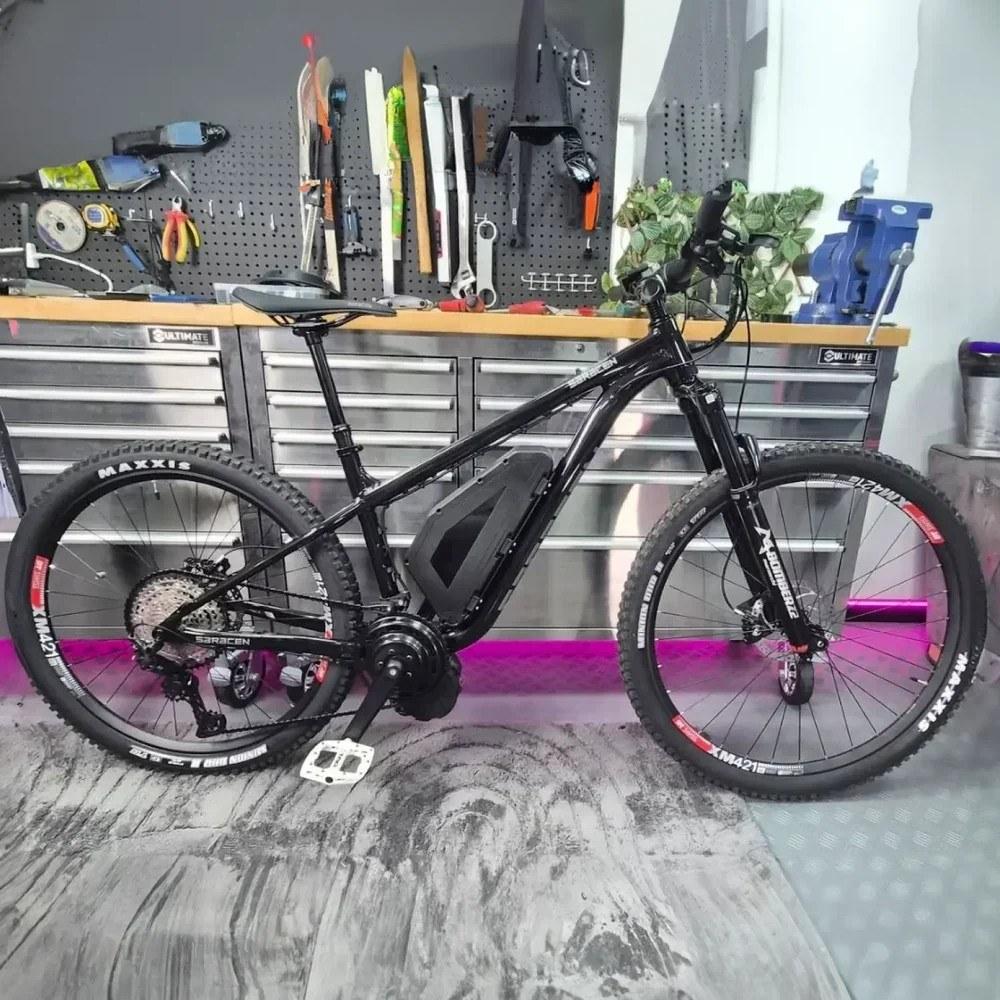
A Saracen hardtail with a Z16 mid-drive. The motor sits in a threaded shell, clear of the down tube and chainstays.
The Quick Answer
A 68 mm or 73 mm bottom bracket can take a mid-drive kit, but width alone does not prove it. Most aftermarket mid-drives, including KirbEbike’s Z16 1000W and TSDZ8 500W/750W, are built for threaded BSA/English shells. Check five more things: that the shell is threaded, that its bore is about 33.7 mm, that nothing blocks the motor, that the motor and chainring clear the frame, and that the chainline lets you use your gears.
Will a 68mm or 73mm Bottom Bracket Fit a Mid-Drive Kit?
Usually, if it is a threaded BSA/English shell with nothing in the motor’s way. The 68–73 mm figure is the shell’s width; a mid-drive also needs the right bore and thread, clear space around the shell, and a chainline your gears can live with.
68mm vs 73mm Bottom Bracket: What Actually Changes?
Shell width is the frame shell itself, measured from outer face to outer face. It is not the crank spindle length and not the distance across installed cups.
68 mm shell
73 mm shell
What it is
Frame shell width, face to face
Frame shell width, face to face
Common use
Road, hybrid and many older mountain bikes
Many mountain bikes
Thread (BSA/English)
1.37 in × 24 TPI
1.37 in × 24 TPI
Shell inside diameter
About 33.7 mm
About 33.7 mm
What changes on a mid-drive
Spacer arrangement and chainline
Spacer arrangement and chainline
Thread and bore per Park Tool; widths per Sheldon Brown. The motor’s own instructions decide the spacer arrangement.
Why “68–73mm Compatible” Does Not Guarantee Fit
Because other shells share those widths. BB30 and PF30 press-fit shells are also made 68 or 73 mm wide, but they have smooth bores of about 42 mm and 46 mm instead of a threaded 33.7 mm one (Sheldon Brown, Park Tool). And even on the right shell, the motor can hit the chainstay or down tube, a cable guide can sit in its path, or the chainring can end up too far out to reach the largest rear cogs cleanly.
How to Measure Your Bottom Bracket Before Ordering
Work top to bottom. A stop means verify, not modify.
Step 1: Measure the Shell Width Face to Face
Remove the cranks and bottom bracket first, so you measure the frame shell rather than cups or spacers. Use a digital caliper across the two outer faces. About 68 mm or about 73 mm: continue. Any other width (83, 100 or 120 mm, for example): stop and check the exact motor version.
68 mm and 73 mm shells look alike; only a caliper tells them apart.
Step 2: Identify Threaded BSA vs Press-Fit
Look inside the empty shell. A BSA/English shell has internal threads; a press-fit shell has a smooth bore (Park Tool). Thread-together cups can make a press-fit frame look threaded from outside, so judge the frame shell, not the installed bearings. On an English shell the drive-side cup uses a left-hand thread, as Park Tool’s English tap and facing set shows (Park Tool). Italian shells use a different 36 mm × 24 TPI thread, a 35 mm bore and are usually 70 mm wide (Sheldon Brown).
Step 3: Measure the Internal Bore
A BSA/English shell has an inside diameter of about 33.7 mm (Park Tool). KirbEbike’s installation drawing for the Z16 shows the part that passes through the shell at Ø33.2 mm, so a standard BSA shell leaves only about 0.5 mm on the diameter. A bore of about 41 mm or more points to a press-fit or T47 shell; an Italian shell is about 35 mm.
Check under and around the shell for cable guides, weld beads, bosses, internal sleeves, suspension pivots, kickstand plates and anything that is out-of-shape in the down tubes or chainstays. The motor housing should be able to lie flat against the frame.
Step 5: Check Motor Housing and Chainstay Clearance
The motor body should swing up into position without being forced against the frame. Then check the chainring against the chainstay on its own: the housing can clear while the ring still rubs. KirbEbike’s side-view drawings measure about 225 × 145 mm for the Z16 and 204 × 126 mm for the TSDZ8, which helps you judge the space under the down tube.
Step 6: Check Chainline Before Calling It Compatible
Chainline is the sideways distance from the frame’s centreline to the middle of the chainring. If the ring sits too far out, the chain runs at a steep angle to the largest rear cogs, which causes noise, poor shifting, dropped chains and faster wear. There is no single perfect number: measure it after fitting and test every gear.
Schematic, not to scale. KirbEbike’s drawings give 47 / 49.5 mm for the Z16 and 49.5 / 55 mm for the TSDZ8; measure your own installation.
68mm vs 73mm Mid-Drive Installation: Spacers and Hardware
What Spacers Actually Do
Spacers take up the difference between the shell width and the motor’s mounting length, or move the motor out to clear the chainstay. Luna Cycle, for example, notes that a BBSHD built for 100 mm fat-bike shells needs extra spacers on a 73 mm shell. Each motor has its own arrangement, so follow its instructions.
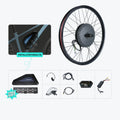
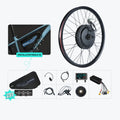
The Z16 kit as supplied: motor and chainring, crank arms, display, brake levers, speed sensor, fixing rings and lockring tool.
Why a 73mm Shell May Need a Different Spacer Stack
On KirbEbike’s Z16 drawing the chainline is 47 mm on a 68 mm shell and 49.5 mm on a 73 mm shell, because the wider shell pushes the drive side out; the TSDZ8 drawing gives 49.5 mm and 55 mm. The fixing plate and lockring position also change with width. Use the kit’s own parts; do not improvise with washers or clamps.
Direct Fit vs Spacer Fit
Direct fit (fewer spacers)
Spacer fit
Setup
Simpler
More parts to align
Chainstay clearance
Fixed by the frame
Can be increased
Chainline
Closest to the motor’s design figure
Moves the ring outward
Pedal width (Q-factor)
Unchanged
May increase
Threaded vs Press-Fit Bottom Brackets for Mid-Drive Conversions
BSA / English Threaded: The Straightforward Case
British and ISO threaded shells use 1.370 in or 1.375 in × 24 TPI threads in 68 mm and 73 mm widths (Sheldon Brown). This is the shell both KirbEbike mid-drives are built for. “Straightforward” still means checking the motor body, chainring, cables and battery space.
Press-Fit: When an Adapter May Work
BB86/BB92 (PF41), BB30 (PF42) and PF30 (PF46) are different standards, and width alone cannot tell them apart (Park Tool). An adapter is only valid when both the frame standard and the chosen motor support that adapter path. KirbEbike lists both of its mid-drives for 68/73 mm threaded shells and does not list a press-fit option, so a press-fit frame needs a specialist assessment before you order.
When a Workshop Assessment Is Sensible
Have a bike shop inspect the frame if the shell standard is not clear, the frame is carbon, an adapter would be required, the frame's threads are damaged or the shell's faces are not even, the internal cables pass over the motor path, or the suspension pivots are in the way of the shell. It is also a good idea if you don't have crank and bottom-bracket tools or if you can't measure chainline after installing.
Chainline vs Chainstay Clearance: The Fit Check Buyers Miss
Physical Fit vs Drivetrain Fit
Physical fit means the motor passes through the shell and tightens against the frame. Drivetrain fit means the finished bike shifts cleanly across the cassette. One KirbEbike Z16 owner fitted kits to two 12-speed trail bikes and could not use the lowest two or three gears: the motor fitted, the drivetrain did not fully.
Smaller vs More Offset Chainrings
A smaller chainring sits further from the chainstay, which can solve rubbing; a different ring offset moves the chain in or out. KirbEbike sells a 38T aluminium chainring for the TSDZ8 (£40; owners describe the stock ring as 44T), and one owner reports it gave a good chainline on a Trek mountain bike.
What to Record on a Test Installation
Frame make, model and year; shell width, type and bore; spacer stack; chainring size; chainring-to-chainstay gap; final chainline; the lowest rear gear that shifts cleanly; and any cable you had to reroute.
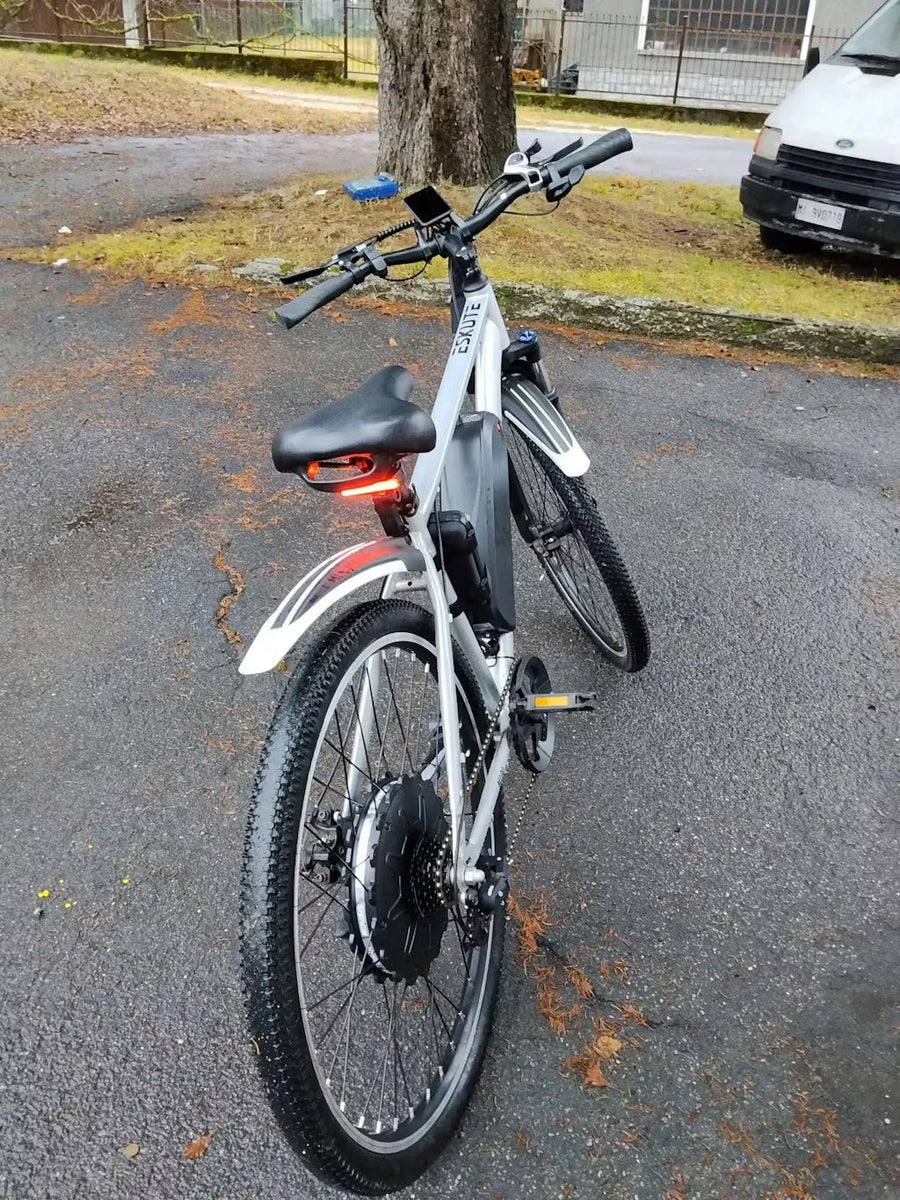
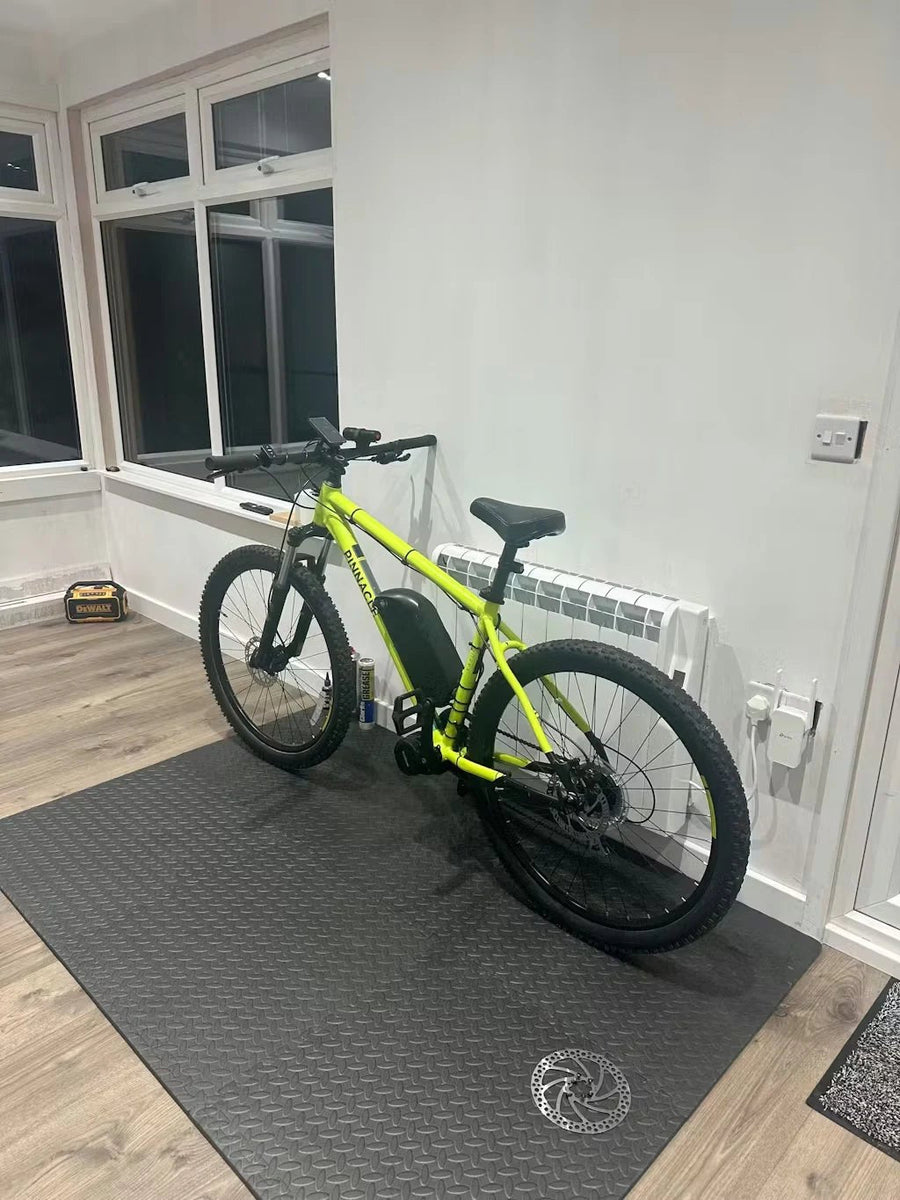
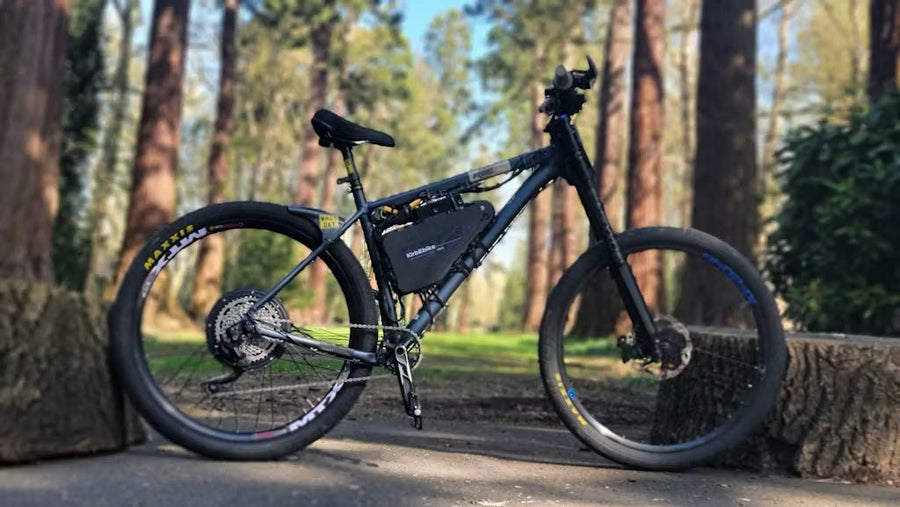
Two hardtails converted with mid-drives. Each frame needs its own clearance and chainline check.
KirbEbike Mid-Drive Fit: TSDZ8 vs Z16
Z16 installation drawing: 176 mm overall, Ø33.2 mm tube through the shell, chainline 47 / 49.5 mm on 68 / 73 mm shells.TSDZ8 installation drawing: 170 mm overall, chainline 49.5 / 55 mm on 68 / 73 mm shells.
Fit item
TSDZ8 500W / 750W
Z16 1000W
Shell
68 or 73 mm threaded
68 or 73 mm threaded
Frame
Steel or aluminium; no carbon
Steel or aluminium; no carbon
Press-fit
Not listed; needs a specialist assessment
Not listed; needs a specialist assessment
Overall width (drawing)
170 mm
176 mm
Chainline, 68 / 73 mm shell (drawing)
49.5 / 55 mm
47 / 49.5 mm
Side-view size (drawing)
204 × 126 mm
225 × 145 mm
Motor weight
Not stated on the current page
6 kg
Chainring
Owners report a 44T stock ring; 38T aluminium ring sold separately (£40)
The TSDZ8 option (500W or 750W) is drawn for 68 or 73 mm threaded shells, with a 49.5 / 55 mm chainline and 170 mm overall width. Owners report fitting it to bikes such as a Giant Talon mountain bike, and one notes that some frames need extra spacers for a perfect fit.
Z16 48V 1000W
The Z16 is listed for 68/73 mm threaded shells on steel or aluminium frames, but do not assume the same hardware or chainline as the TSDZ8: its drawing gives 47 / 49.5 mm. KirbEbike asks buyers to check frame clearance and battery space, and at 6 kg and about 225 × 145 mm in side view it is the larger motor of the two.
Product touchpoint
Two motors, one kit page
The Z16 1000W (from £520 motor only) and the TSDZ8 500W/750W (from £350 motor only) are options of the same KirbEbike mid-motor kit, both drawn for 68/73 mm threaded shells. Not sure about your frame? Send support the photos listed below before you order.
Close photos of both sides and the underside of the bottom bracket
A caliper photo showing the shell width
A photo of the inside of the empty shell, if you can
Frame make, model, year and size
Your current crank and bottom bracket, if known
The motor kit and chainring size you want
A photo of the chainstay area and any cable guides or pivots near the shell
Send these to KirbEbike support. Do not file, grind, clamp or modify the frame to force a motor to fit; if fit is uncertain, verify before ordering or use a workshop.
Conclusion: Width Is the First Pass, Not the Answer
A 68 mm or 73 mm measurement tells you the motor might fit. A safe order needs the rest confirmed: a threaded BSA shell, a bore of about 33.7 mm, nothing in the motor’s path, clearance for the motor and chainring, a chainline your gears accept, and the right hardware for your width.
Measure, compare the figures with the exact motor’s fit data, and send photos if anything is uncertain.
Measured and still unsure?
Send your shell width, bore and photos before you order.
On threaded frames, 68 mm is the standard BSA/English width and 73 mm is common on mountain bikes (Sheldon Brown). Many newer frames use press-fit or T47 shells instead, so measure yours rather than assume.
What is the standard diameter of a bottom bracket?
There is no single one. A BSA/English shell is about 33.7 mm inside with 1.37 in × 24 TPI threads; press-fit shells such as PF41, PF42 and PF46 have larger, smooth bores of roughly 41 to 46 mm.
How do I know which bottom bracket I have?
Take off the cranks and bottom bracket, check for threads or smooth bore, check the width and bore of the shell, record the crank/bottom bracket used and verify with the frame maker.
Will a 68mm mid-drive kit fit a 73mm bottom bracket?
Sometimes, when the motor is designed for both widths and the correct 73 mm hardware is supplied. KirbEbike’s TSDZ8 and Z16 are listed for both; a motor sold only as 68 mm may not suit a 73 mm shell.
Can a mid-drive motor fit a press-fit bottom bracket?
Only with a system that supports it. CYC lists a BB92 option for its Photon 2; KirbEbike lists its mid-drives for threaded shells only. Clearance and chainline still need checking.
Which is better, a hub motor or mid-drive motor?
A mid-drive suits hills, uses your gears and keeps the weight central; a hub motor is simpler and does not depend on the bottom bracket at all. Read our rear hub vs mid-drive guide.
What is the top speed of a BAFANG mid-drive kit?
There is no one number. It is based on the motor, voltage, controller programming, gearing, wheel size, load and legal limits in which you ride.
Which BAFANG mid-drive motor is best?
It depends on the bike and use. Luna lists its 750W BBS02 for 68–73 mm shells only; the 1000W BBSHD comes in 68–73, 100 and 120 mm versions. Fit and local rules come before output.
How long should a bottom bracket last?
There is no fixed mileage; bearing quality, dirt, load and maintenance decide it. A mid-drive replaces the original bottom bracket, so after conversion check the motor’s bearings and the drivetrain instead.
What is the most reliable e-bike conversion kit brand?
Judge by evidence, not brand: published fit standards, spare parts, warranty and support, electrical documentation, real installations, and a system suited to your bike and local rules.
A note on safety & legality. Never modify a frame to fit a motor, and do not fit a mid-drive to a carbon frame. Tighten all fixings to the stated values. Both KirbEbike mid-drives are rated above 250W, so in Great Britain they are for private land, not public roads (GOV.UK). US federal and state rules differ (16 CFR § 1512.2).
About this guide
Author: Andy Kirby. Last reviewed: November 2026. Shell standards and dimensions come from Park Tool and Sheldon Brown. KirbEbike fit data come from the live mid-motor kit page (Z16 and TSDZ8 options), its installation drawings and the mid-motor collection. Owner experiences are from customer reviews. Competitor fit data are each maker’s or retailer’s published figures.
Stay in the know
Conversion guides, fitting advice and the deals worth knowing about. No spam.