29 Inch Ebike Conversion Kit With Battery: Fit Guide
KE
KirbEbike Editorial
Reviewed by the KirbEbike conversion-support team
Share
Unlock £10 off today
On this page
Fitting a 29-inch conversion kit is mostly about one thing: measuring your bike before you buy. The wheel itself is the easy part — a 29er rim is the same 622 mm size as a 700C wheel, so the choice of kits is wide. What actually decides the fit is your rear dropout width, brake rotor, drivetrain and whether the battery clears your frame. This guide walks each check in turn, then compares complete 29″/700C kits, so you buy once and buy right.
Quick answer
Most conversion kits are designed for 29ers, because a 29er rim is the same size as a 700C wheel (622 mm bead-seat diameter). The fit questions that actually decide it are rear dropout width (usually 135 mm quick-release, or 142/148 mm thru-axle), brake rotor type, drivetrain (cassette or freewheel) and whether the battery fits your frame. Measure those first. In the UK, road-legal means 250 W limited to 15.5 mph; anything higher is for private land.
What Is a 29 Inch Ebike Conversion Kit With Battery?
A 29-inch conversion kit is a set of parts that turns your 29er into an electric bike, centred on a motor built into a 29-inch wheel that drops into your existing frame. Instead of buying a new e-MTB, you keep the frame, fork, suspension and riding position you already know, and simply add power. A complete kit — the kind this guide is about — arrives with the battery included, so there is nothing else to source before your first ride.
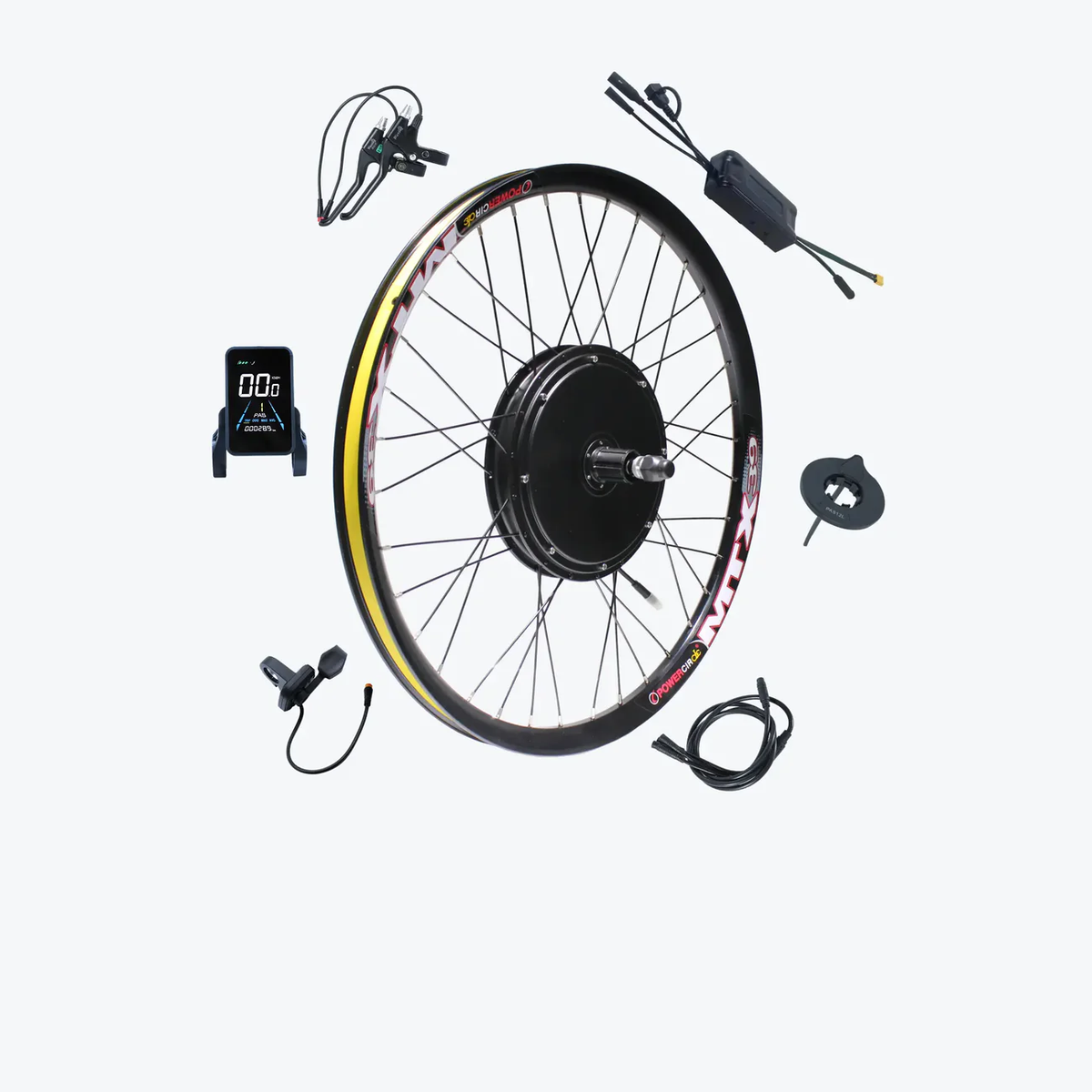
A typical complete 29-inch kit contains a motor wheel sized for 29″/700C, a battery pack with charger, a controller, a display, a pedal-assist (PAS) sensor, brake sensors and — on throttle kits — a throttle, plus the wiring harness. Kit-only listings leave out the battery, which is why comparing on price alone misleads: compare complete kit against complete kit.
29-inch wheels are the default on modern mountain bikes and many hybrids and gravel bikes, which is exactly why 29er riders lean towards conversion. The wheel rolls well over rough ground and holds speed, and keeping your own frame means you don’t pay twice for geometry you already like — usually for far less than a comparable factory e-bike.
🚴
Who converts a 29er — and why.
MTB riders — add climbing power and trail speed while keeping a proven frame and suspension.
Hybrid commuters — flatten hills on the ride to work without buying a second bike.
Gravel & touring riders — extend range on long mixed-surface days.
Not familiar with the terms? KirbEbike’s beginner’s glossary explains watts, volts and amp-hours in plain English. When you’re ready to see complete kits, the electric bike kit + battery collection lists every power level with the battery included.
Will a 29 Inch Ebike Conversion Kit Fit My Bike?
A 29er wheel is only half the story. However well a kit fits 29″ wheels, it won’t work if your dropout spacing, brakes, drivetrain or frame clearance don’t match. Work through the checklist below before ordering — most fit problems trace back to one skipped measurement.
✅
Pre-purchase fit checklist.
Wheel size — confirm a true 29″ (622 mm) rim
Tyre width — the motor wheel’s rim must suit your tyre width
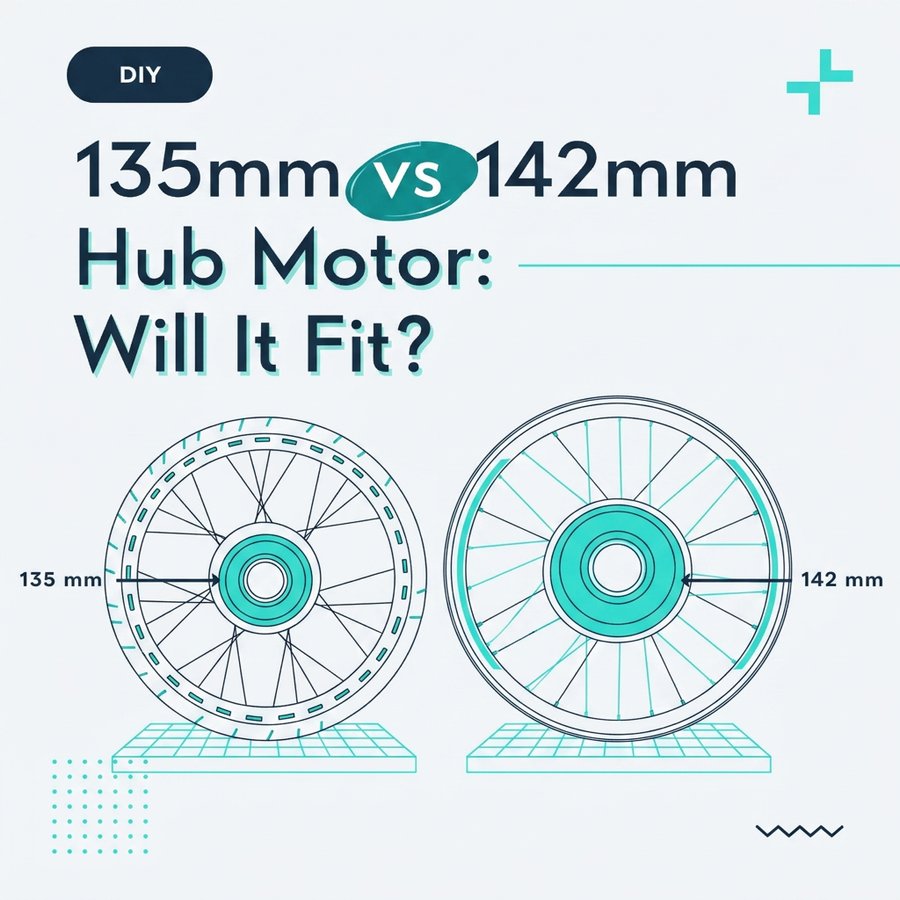
Rear dropout spacing — 135, 142 or 148 mm; quick-release or thru-axle
Brake rotor type — disc or rim; rotor size and mounting (6-bolt vs Center Lock)
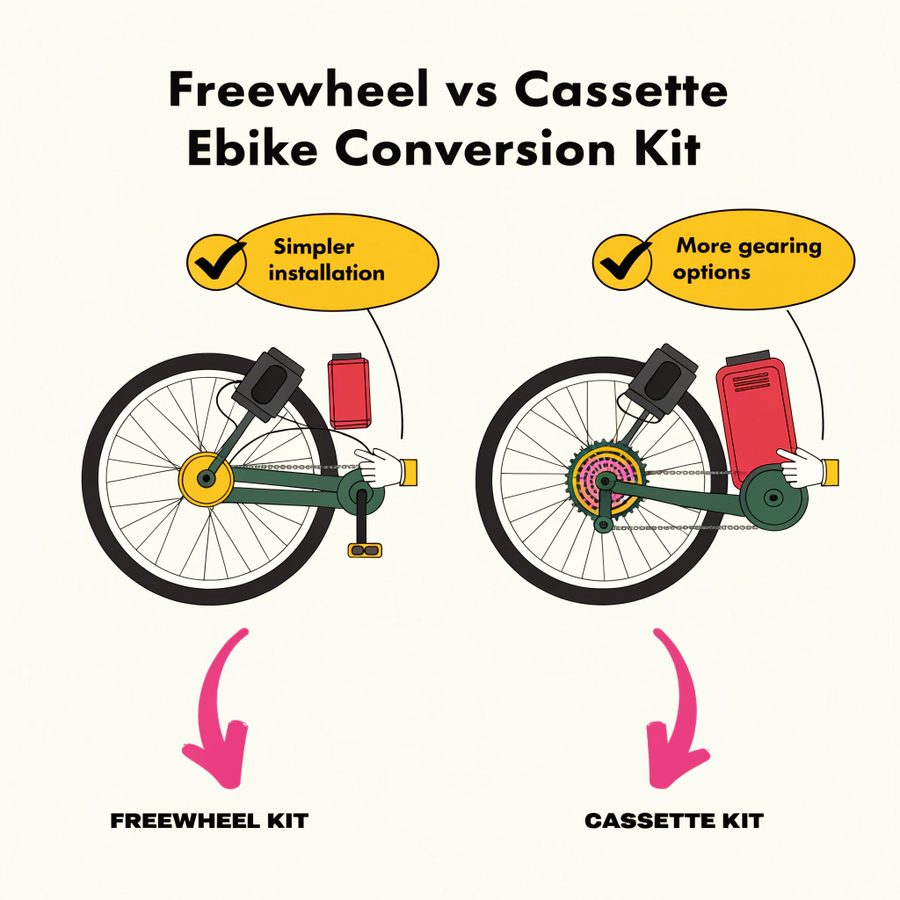
Cassette or freewheel — match your gear count and sprocket mounting
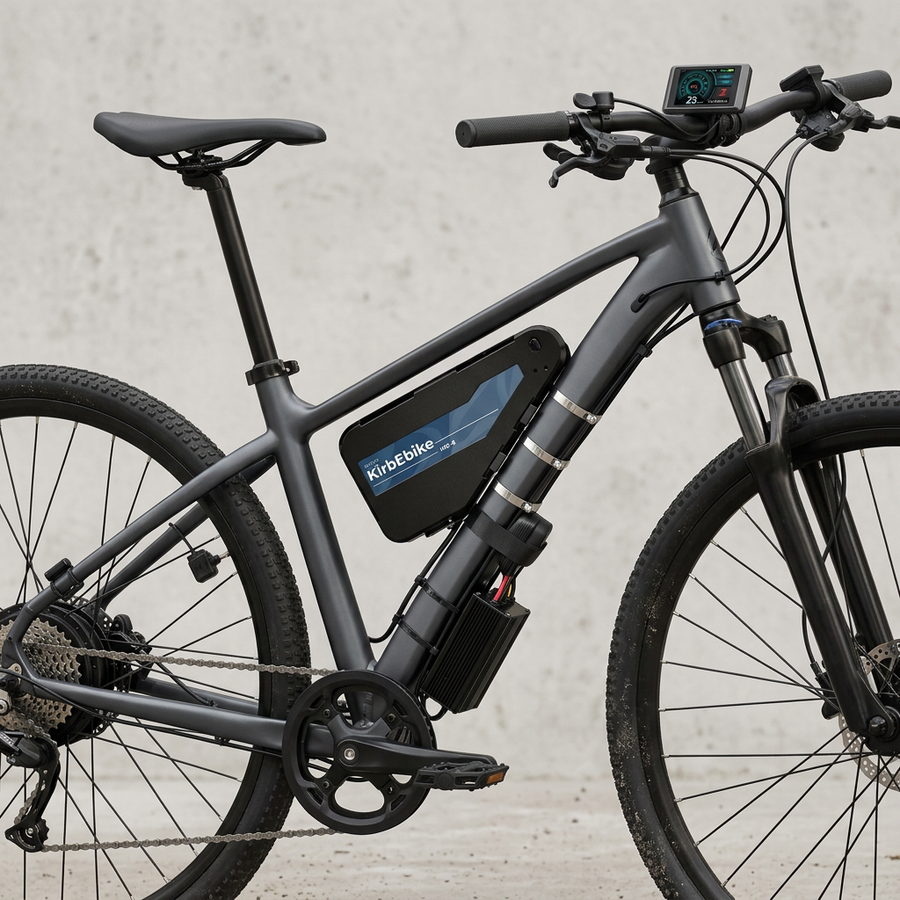
Battery mounting space — bottle bosses, triangle room, cable clearance
Frame clearance — chainstays, caliper and frame for the motor and cables
Check Your 29-Inch Wheel and Tyre Size
Start at the tyre sidewall. A 29er tyre reads like 29 × 2.1 or 622-XX (e.g. 622-54): the first number (622) is the bead-seat diameter in millimetres, the second (54) is the tyre width. That 622 is the key — it is the same rim size as 700C road and gravel wheels, which is why a 29-inch motor wheel is mechanically the same as a 700C one.
What differs between 29″ and 700C is the tyre, not the rim: 29″ tyres are usually wider and knobbier for off-road; 700C tyres are narrower for road and gravel. So the motor wheel must suit your tyre width — a wide MTX-style rim for fat 29er trail tyres, a narrower rim for slick 700C tyres. If your bike is badged 700C, a kit listing 29″/700C compatibility is the right one.
💡
Quick tip: your tyre sidewall should read something like 29 × 2.1 or 622-54. If you see 622, you have a 29″/700C rim and the widest choice of kits.
Measure Rear Dropout Width Before Choosing a Motor Wheel
Dropout spacing — the gap between the inside faces of your rear dropouts, where the axle sits — is the single most important measurement for a rear-wheel kit, and the one most often skipped. Measure it with the wheel out, inside face to inside face, and note whether your bike uses a quick-release skewer or a bolted thru-axle.
Rear spacing
Axle type
Typically found on
Fit note
135 mm
Quick-release
Older/hardtail MTBs, many hybrids
The most common rear-hub target; widest kit choice
142 mm
Thru-axle
Modern trail hardtails & gravel
Needs a kit/adapter built for thru-axle spacing
148 mm (Boost)
Thru-axle
Newer full-suspension & trail 29ers
Confirm the kit explicitly supports 148 mm Boost
Many budget kits fit 135 mm quick-release (some up to 142 mm). Thru-axle bikes (142 and 148 mm Boost) are common on newer 29ers and need a thru-axle-ready motor or an axle adapter — not all kits include one. If your frame is thru-axle, always confirm compatibility in writing before buying: this is by far the most common cause of a 29er conversion failing. For a fuller run-through of MTB gotchas, see KirbEbike’s guide to converting a mountain bike to an e-bike.
Check Disc Brake Rotor Compatibility
Most 29ers run disc brakes, so the motor wheel must accept your rotor and let the caliper line up. The two factors are rotor size (usually 160, 180 or 203 mm) and mounting standard (6-bolt or Center Lock). A new motor wheel usually keeps the standard caliper position; if standards differ, you may need a new rotor or an adapter.
⚠️
Safety — brakes scale with power. A converted 29er is heavier and faster, so it brakes harder. Keep rotors and pads in good order, and step up to larger rotors on higher-power builds. On rim-brake bikes, check the motor wheel offers a braking surface — many disc-only motor rims do not. Underpowered braking is a bigger risk than most first-time converters expect.
Cassette vs Freewheel Compatibility
This catches a lot of buyers. A rear hub motor is set up for either a cassette or a freewheel, and they are not interchangeable without the right part — get it wrong and your existing sprockets won’t fit.
Hub type
Works with
Typical gears
Notes
Cassette hub
Modern MTB/hybrid drivetrains
8–12 speed
Cassette slides onto a splined freehub body; the modern standard
Freewheel hub
Older / budget bikes
5–7 speed
Threaded freewheel screws onto the hub; a 7-speed often needs a spacer
Before ordering, check three things: how many gears your bike has, whether the sprockets are a cassette (splined) or freewheel (threaded), and whether the kit’s hub matches. Kits that accept a wider range — a 6-to-12-speed freewheel, or a cassette body for 8–11 speed — save swapping drivetrain parts. KirbEbike’s mountain-bike conversion guide covers cassette and freewheel choices for 26″, 27.5″ and 29″ wheels.
Made to fit
Complete 29″/700C Kits With Battery
Made-to-order motor wheels in 13 sizes — battery, controller, display and charger included, matched to your dropout and drivetrain.
Once the wheel and dropout questions are settled, the next decision is which end of the bike the motor goes. Rear and front hub motors suit different bikes and riding, each with fit implications worth weighing.
Rear Hub Motor Conversion
A rear hub motor drives the back wheel, putting power where your weight already sits. It’s the usual choice for mountain bikes, hills and higher-power builds — traction and ride feel are better, and it uses your existing rear drivetrain.
Better traction on climbs and loose surfaces
More natural, balanced ride feel under power
Suits MTB, hilly routes and higher-power kits
Uses your existing cassette/freewheel gears
Most of KirbEbike’s higher-power 29-compatible kits are rear-wheel — the 48V 1000W kit, the 52V 2000W MTX and the 60V 2500–3000W MTX among them — all built to order in your wheel size.
Front Hub Motor Conversion
A front hub motor drives the front wheel and is usually the simplest install: your rear drivetrain is untouched, so there’s no cassette or freewheel to match. It suits straightforward commuting, and it’s how many road-legal 250W kits are built.
Easiest installation — rear drivetrain left alone
No cassette/freewheel matching needed
Good for simple, lower-power commuting
The trade-offs: front traction can slip on loose or wet ground, and the fork must suit the motor torque. KirbEbike’s 250W front-wheel kits are road-legal options that fit 29″/700C — and on any front-motor build, especially aluminium or carbon forks, fit a torque arm to stop the axle spinning in the dropout.
Rear Hub vs Front Hub: Quick Comparison
Feature
Rear hub
Front hub
Installation
Moderate
Easier
Traction
Higher
Lower
MTB suitability
Better
Limited
Drivetrain impact
Uses your gears
None
Hill performance
Better
Depends on power
Choosing the Right Battery for a 29 Inch Conversion Kit
The battery is included with a complete kit. Match its capacity to how you actually ride, then confirm the pack clears your frame triangle.
With a complete kit the battery is included, but the capacity you choose should match how you ride, not just the headline number. It’s about matching energy on board to your real rides, then checking the pack physically fits your 29er’s frame.
What matters: voltage (must match the motor/controller — 36–52V for commuting-class kits, 60–72V for high power), amp-hours (Ah) and watt-hours (Wh) (Wh = volts × Ah, the true measure of range), cell quality, and mounting style. Express range as a band, never a single guaranteed figure — it swings with weight, terrain, tyre pressure and how hard you ride.
36–52V
Commuting class
60–72V
High-power builds
Wh = V×Ah
What sets range
If your rides are…
Lean towards
Because
Shorter commutes / mixed
Smaller capacity
Lighter, easier to fit, cheaper — enough range for the day
Long tours / hilly / high-power
Larger capacity
More reserve, fewer charge stops, shallower cycles
KirbEbike’s core kits share one battery ecosystem, so packs cross-fit across the 500W–4000W range and you can add a second pack later. The Taishan and HS-II batteries use named LG 21700 and Samsung 50S cells, an IP65 sealed case and a 5A charger. Whatever brand you buy, judge a pack on cell type, BMS rating, capacity and fit — in that order — and always confirm it clears your frame triangle. Browse the full ebike battery collection to compare.
How to Install a 29 Inch Conversion Kit With Battery
Under an hour on a plug-and-play kit. With a pre-built motor wheel and keyed connectors, the install is approachable for anyone comfortable changing a wheel.
With the fit checks passed, installation is approachable for anyone comfortable changing a wheel — though still a job to do carefully. On a plug-and-play kit with a pre-built motor wheel, most riders finish in well under an hour.
Step 1 — Remove the Existing Wheel
Release the brake if needed, undo the axle (quick-release or thru-axle), and take the wheel out. Move your tyre, tube and — where relevant — your rotor and sprockets onto the motor wheel, or fit the new ones supplied. Seat the motor wheel squarely in the dropouts.
Step 2 — Install the Battery Mount
Mount the battery where it clears the frame and keeps weight low and central — commonly the downtube (on bottle-cage bosses), inside the frame triangle, or on a rear rack. Before committing, check:
Bottle-cage bosses are present and sound (packs shouldn’t hang on zip ties alone)
Frame clearance for the pack and its bracket
Cable routing that won’t snag, stretch or rub
Step 3 — Connect Controller, Display and Sensors
Connect the controller, then plug in the display, PAS sensor, brake sensors and throttle. Quality kits use waterproof, keyed quick-release connectors that only mate one way, which makes mis-wiring hard. Mount the display where a bike computer would sit and tuck the harness tidily along the frame.
Step 4 — Test Before Riding
Don’t skip the checks. Before your first proper ride, confirm each of these:
Brakes engage firmly and cut motor power
Wheel sits true and centred in the dropouts
Motor drives the correct direction
PAS responds smoothly as you pedal
Battery is locked in and connectors seated
Torque arm(s) fitted and axle nuts torqued
Common Mistakes When Buying a 29 Inch Conversion Kit
Most buying regrets come from a few avoidable errors. Run through these before you commit.
Assuming Every 29-Inch Kit Fits Every 29er
Wheel size alone doesn’t confirm compatibility. A kit can be correctly labelled 29″ and still not fit if your dropout width, brake or drivetrain standards differ. Match the whole checklist, not just the wheel.
Ignoring Dropout Measurements
Wrong axle spacing is the classic stopper — a 135 mm quick-release motor won’t drop into a 142 mm thru-axle frame without the right solution. Measure inside-face to inside-face, and confirm quick-release versus thru-axle, before ordering.
Choosing Power Before Checking Bike Condition
More power demands more of the bike. A high-power kit needs a strong frame, brakes in good order and a healthy drivetrain. Fitting big wattage to a tired bike moves the weak point, it doesn’t remove it.
Buying a Battery Without Checking Clearance
A large downtube or triangle pack won’t fit every frame. Measure your triangle and bottle-boss spacing against the pack’s published dimensions — fit anxiety over the battery drives more returns than any other single issue.
Forgetting Local E-Bike Regulations
Keep road-legal and off-road builds separate in your head. In the UK a kit is only a road-legal EAPC if the motor is 250 W continuous, assist cuts at 15.5 mph and the bike needs pedalling. Higher-power kits are for private land. Check the GOV.UK e-bike rules and ride within them.
29 Inch Conversion Kit vs Buying a New Electric Bike
If you already own a decent 29er, conversion is usually the better-value route — but it isn’t right for everyone. Here’s the honest split.
Conversion Kit Advantages
Keep the frame, fork and geometry you already like
Lower cost than a comparable factory e-MTB
Choose your own power level and battery capacity
Familiar riding position — nothing new to adapt to
Less waste — you reuse a bike you own
When Buying a Complete E-bike Makes More Sense
You want a fully integrated, factory-tested design
You’d rather have a manufacturer-built frame and a warranty on the whole bike
You’d prefer to do no DIY work at all
Recommended 29 Inch Conversion Kit Options
Below are UK-facing complete kits (motor wheel plus battery) that fit 29″/700C, given the same scrutiny. Check dropout and drivetrain fit on each seller’s page — most are 135 mm quick-release freewheel builds, and most high-power kits are off-road only. KirbEbike sits mid-pack on price, earning its place on made-to-order wheel sizing, the widest freewheel range, a bundled 5A charger and multi-country service.
Seller (domain)
Example 29″ kit
Battery incl.
Dropout / drive
Price (from)
kirbebike.com
48V 1000W MTX rear
LG/Samsung, charger
135–142 mm · 6–12-spd
£365.25
theebikeshop.co.uk
48V/52V 1500W MTX39 rear
48V 20Ah LG
135 mm · 7-spd freewheel
£300
ebikepoweruk.com
48V 1000W MTX rear
48V 19.2Ah LG
135–148 mm · 7–11 cassette
£249
ebikemasters.co.uk
1000W MTX rear
48V 13Ah downtube
135 mm · 7-spd freewheel
£500
yosepower.co.uk
36V 250W/350W hub
36V 13–15.6Ah
Road-legal focus, QR
£270
All figures verified on each seller’s live page, July 2026, and subject to change — confirm before ordering. Links open in a new tab.
The Ebike Shop is the keenest complete-kit price here (a 1500W MTX39 with a 20Ah LG battery from £300, 2-year warranty), but is 135 mm freewheel only.
The Ebike Shop — 48V/52V 1500W MTX39 rear kit with a 20Ah LG battery.
E-Bike Power UK is the most drivetrain-flexible — 135–148 mm dropouts and a 7–11-speed cassette body, with a display limiter for UK compliance.
E-Bike Power UK — 48V 1000W MTX rear kit, 135–148 mm with a 7–11-speed cassette body.
E-Bike Masters runs a Manchester shop for hands-on fitting and support, but ships a smaller 13Ah pack at a higher price.
E-Bike Masters — 1000W MTX rear kit with a 48V 13Ah downtube pack.
Yose Power leans road-legal (36V 250–350W) with strong reviews — better suited to commuters than high-power 29er builds.
Yose Power — 36V 250–350W hub kit, a road-legal-focused option for commuters.
This is a representative sample, not the whole market — builders such as Woosh, Swytch (road-legal 250W) and specialist wheel-builders also serve 29ers. Whoever you buy from, judge each kit on the same checklist: 29″/700C fit, dropout spacing, brake and drivetrain match, battery cells and BMS, and after-sales support.
KirbEbike 29-Inch Options
Built to your wheel size. KirbEbike makes the motor wheel to order in all 13 sizes (20″–29″ and 700C), complete with controller, display, sensors, harness and an LG/Samsung-cell battery.
KirbEbike builds the motor wheel to order in your exact size, so the 29″/700C fit is made rather than assumed. Kits arrive complete — potted controller, colour display, sensors, waterproof quick-release harness and a battery on LG or Samsung cells with charger — under a 1-year warranty from UK stock. Rear-hub kits take 6-to-12-speed freewheels (most rivals stop at 7), and higher-power kits include a one-button Limit Mode that caps the bike to a road-legal 250 W / 15.5 mph.
*Off-road / private land at full power; every smart kit includes a road-legal 250 W Limit Mode.
Conclusion: Finding the Right 29 Inch Kit
A 29er conversion is about far more than wheel size. The 622 mm rim gets you into the running — but the fit is decided by your rear dropout width and axle type, your brake rotor, whether you run a cassette or a freewheel, and whether the battery clears your frame. Measure those before you buy and the install is quick; skip one and you’re repackaging a return.
Match the kit to your bike and riding: a front-hub 250 W kit for simple, road-legal commuting, or a rear-hub higher-power kit for hills, trails and speed on private land. Confirm the fit, ride within the law, and enjoy the bike you already own — now electrified.
💡
The best 29-inch kit is not the most powerful one — it’s the one that matches your dropout spacing, brake and drivetrain standards, frame clearance and riding goals, with a battery whose cells you can name and a BMS rated for your controller.
Ready to electrify your 29er?
Match a complete 29″/700C kit to your dropout, drivetrain and riding — battery, charger and full toolset included.
There’s no single figure — speed depends on voltage, controller current, battery, wheel size, rider weight and terrain. A 60–72V 3000W build commonly reaches around 45 mph or more, but that’s a system outcome, not a wattage guarantee. Kits at this power are for private land or closed tracks, not UK public roads.
What is the fastest electric bike conversion kit with battery?
Broadly, the highest-voltage kits are quickest — 52V to 72V systems deliver far more than a 36V or 48V setup. But top speed comes from the whole system (voltage, controller, motor winding, wheel size), not wattage alone, and the fastest kits are strictly off-road. Compare complete kits on full spec, not a single headline number.
What is the cheapest electric bike conversion kit?
Entry-level kits are cheapest, but low cost usually means less battery capacity, a lower-rated controller or fewer parts. A cheap kit-only listing can also look cheaper than it is once you add a battery. Weigh upfront price against cell quality, warranty and what’s in the box — and compare complete kit to complete kit.
What are the disadvantages of ebike conversion?
The main trade-offs are added weight, the install effort, ongoing battery care and the compatibility checks this guide covers. A conversion can also void your original bike warranty. For most riders who already own a suitable 29er, the cost saving and keeping a familiar bike outweigh these — but they’re worth knowing first.
Is an ebike conversion kit illegal?
No — conversion kits are legal, but how you can ride the result depends on the rules. In the UK a converted bike is a road-legal EAPC only if the motor is 250 W continuous, assist cuts at 15.5 mph and it needs pedalling. Higher-power or throttle-only builds are for private land unless registered and insured. Always check local law.
What is the lifespan of an ebike battery?
Quality lithium packs are typically rated for several hundred charge cycles — commonly around 800 to 1,000 — which for regular use often works out to roughly three to five years before you notice reduced capacity. Lifespan depends on cell quality, depth of discharge, storage temperature and charging habits.
What are the risks of conversion kits?
The real risks come from getting the build wrong: incorrect installation (loose axles, no torque arm), poor-quality cells, brakes that can’t handle the extra speed and weight, or mismatched components. Choose named cells and a BMS rated for your controller, fit torque arms, keep brakes in good order, and confirm every fit check before riding.
Is it better to buy an ebike or a conversion kit?
It depends on what you own. If you already have a good 29er and want lower cost, customisation and a familiar ride, conversion usually wins. If you want a fully integrated, factory-built and warrantied bike with no DIY, a complete e-bike makes more sense.
What ebike has 100Nm torque?
Torque figures matter most for climbing and loaded riding rather than top speed. Around 100 Nm is territory you’ll see from strong mid-drive systems and high-power hub setups. For a 29er conversion, focus on matching torque to your terrain rather than chasing a headline number.
What is the best conversion kit brand?
There’s no single best — the right choice depends on your bike and riding. Judge candidates on the same criteria: compatibility with your 29er (dropout, brake, drivetrain), battery cell quality and BMS rating, warranty, support and spares. Reputable UK-facing options include KirbEbike, The Ebike Shop, E-Bike Power UK and E-Bike Masters.
⚠️
A note on safety & legality. High-power kits are off-road/private-land only in the UK — a road-legal EAPC is 250 W and 15.5 mph. Fit torque arms, use correctly rated connectors, keep brakes in good order, and charge lithium packs on a non-flammable surface, never unattended. See the sources below for official guidance.