Torque Sensor vs Cadence Sensor: Which Conversion Kit Feels Natural?
AK
Andy Kirby
Reviewed by the KirbEbike conversion-support team
Share
Unlock £10 off today
On this page
A cadence sensor asks whether you are pedalling. A torque sensor asks how hard. That single difference decides how the bike feels at every start, on every hill, and how much battery you use getting there.
The Quick Answer
Torque if you want the bike to feel like a bicycle — assistance scales with your effort, so starts are smooth and hills respond to how hard you push. Cadence if you want strong help for little effort, prefer fixed assist levels you set yourself, or want the simpler retrofit. Worth knowing before you shop: every KirbEbike hub kit checked on 7 August 2026 uses the V12 cadence PAS, and torque sensing sits on the mid-drive line. Tuning matters too — a well-set-up cadence system can feel better than a badly tuned torque one.
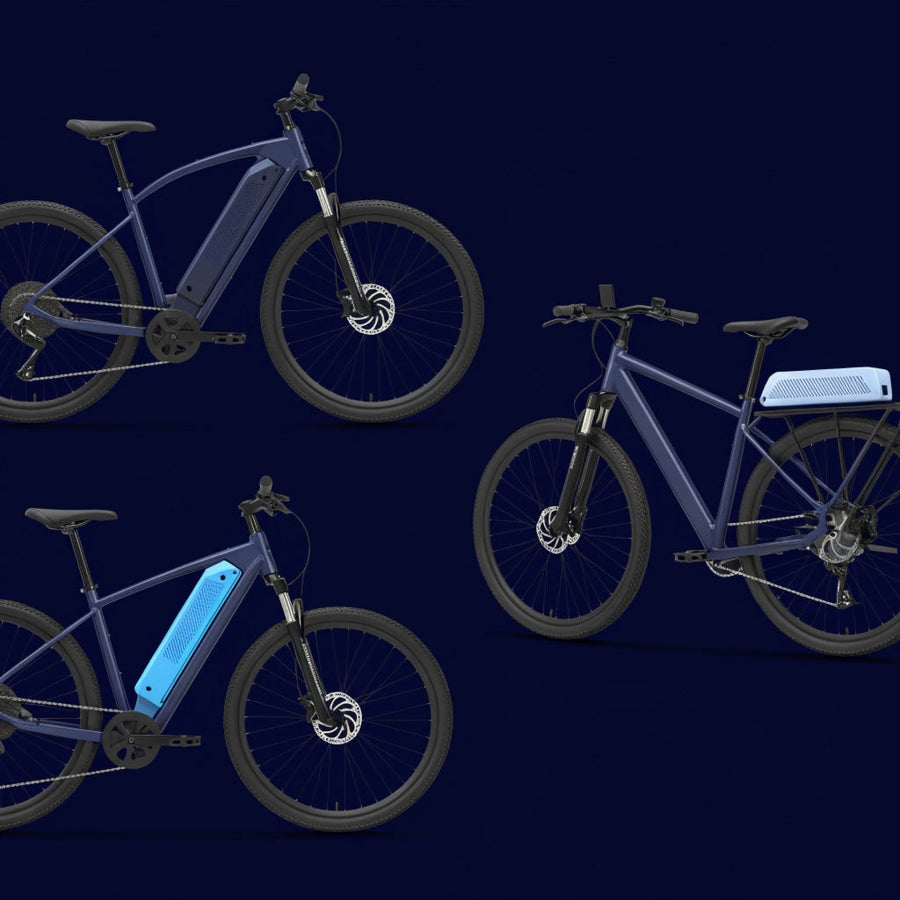
Where the motor sits usually decides which sensor you get. Torque sensing lives almost entirely on the mid-drive line, so choosing the feel often means choosing the layout with it.
Direct Answer: Which Sensor Suits You?
What matters to you
Choose
Why
Verify before ordering
Natural bicycle feel
Torque
Assistance tracks your pedal force
Bottom-bracket compatibility
Smooth starts in traffic
Torque
No fixed surge as the pedals turn
Sensor and controller pairing
Strong help for little effort
Cadence
Fixed level once pedalling begins
Assist levels and ramp settings
Lower battery use, conditions permitting
Torque
You supply more of the power — see the range section
Watt-hours, not headline range
Simpler sensor retrofit
Cadence
An external magnet-disc PAS is simpler to fit than a bottom-bracket torque sensor
Install time still depends on front hub, rear hub or mid-drive — a layout question, not a sensor one
Hills at low speed
Either, tuned well
Gearing and power matter more
Continuous rating and heat
Existing hub kit, wanting torque
Usually a new system
Signals are not interchangeable
Controller support in writing
Read down to your priority. Sensor type and motor layout are separate decisions — do not read cost or install time off the sensor column alone.
Neither sensor is better in the abstract. Torque suits riders who want to feel the bike respond to their effort; cadence suits riders who want consistent help at a level they choose.
How Each Sensor Works
Cadence — asks “are you pedalling?”
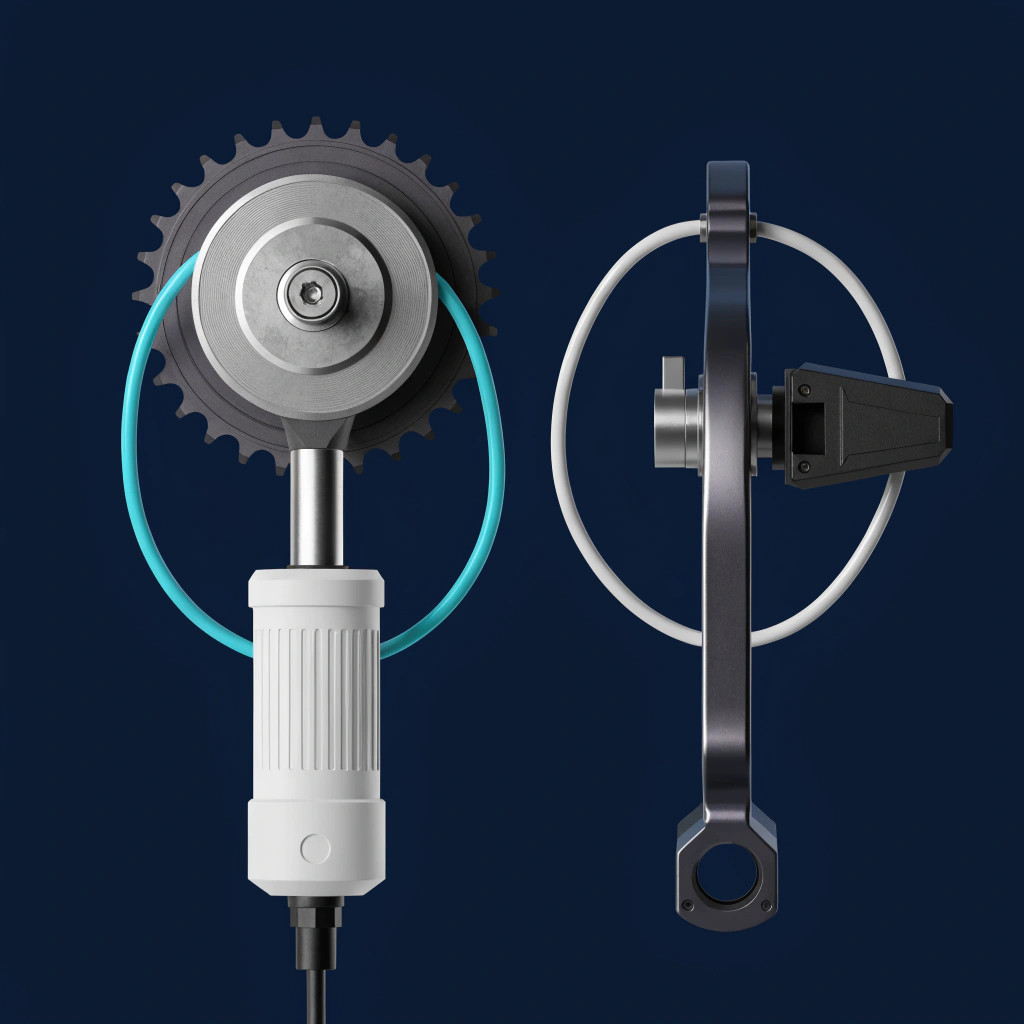
A ring of magnets on the crank, fixed pickup on the frame
Detects rotation and, on most systems, pedal speed
Cannot tell straining uphill from spinning freely
Applies whatever level you selected — feels like a switch
Simple, external, cheap to replace
Torque — asks “how hard?”
Strain gauge or magnetic element measuring deflection under load
Measures the force you actually apply
Controller scales motor output to match
Amplifies what you do rather than replacing it
Precision part; service means pulling the cranks
Bosch describes torque as the force with which you pedal, measured in newton metres, and makes the consequence explicit: to call up the motor’s maximum torque, a corresponding pedal force is required from the rider, depending on the riding mode and its support factor. That is the principle in one sentence.
Magnet Count Sets How Fast a Cadence System Reacts
The “delay” riders complain about on cadence kits is not vague. It is geometry. A ring with N magnets gives the pickup one pulse every 360÷N degrees of crank rotation, so at a cadence of C revolutions per minute the gap between pulses is:
Time between cadence pulses
t = 60 ÷ (C × N) seconds
C = cadence in rpm, N = number of magnets on the ring. A 12-magnet ring resolves the pedal stroke into 30° steps; a 5-magnet ring into 72° steps.
Pulling away is the worst case, because cadence is lowest exactly when you most want help. At around 40rpm — a realistic figure for the first half-turn from a standstill — the arithmetic looks like this.
Gap between pulses at 40rpm, by magnet count
Time the controller waits for its next confirmation that the cranks are still turning. Teal = the 12-magnet standard used across the KirbEbike hub range; blue = coarser rings still common on budget kits. Geometry only — see the caveat below.
12 magnets V12 PAS
125 ms
8 magnets
188 ms
5 magnets
300 ms
⚠️
Read that as a floor, not a measured lag. It is the shortest interval the sensor can possibly report at that cadence. Real engagement is longer, because most controllers wait for more than one pulse before deciding the cranks are genuinely turning, and then apply their own power ramp on top. What the arithmetic does show reliably is the ratio: a 5-magnet ring cannot react faster than a 12-magnet one, whatever the controller does afterwards.
Two practical consequences follow. First, magnet count is worth checking on any cadence kit, because it sets a hard limit the firmware cannot undo — this is the concrete reason a V12 ring is a meaningful specification rather than marketing. Second, the same geometry explains why cadence assist feels worst on a hill start and best once you are spinning: at 90rpm a 12-magnet ring reports every 56ms, which is quick enough that most riders stop noticing it.
Where a Torque Sensor Sits, and What Each Position Misses
“Torque sensing” is a category, not a specification. Where the sensing element sits changes what it can measure, how hard it is to fit, and what it fails to see.
Position
What it measures
Fitting burden
What it misses
Bottom bracket spindle The usual mid-drive route
Torsion in the spindle — rider input from both legs
High: cranks off, BB out, shell type and thread must match
Little, on the input side
Crank spider
Drive-side torque at the chainring
Moderate: crankset-specific
Non-drive-side input, unless it doubles the reading
Rear dropout / axle
Chain tension reacted at the axle
Moderate: dropout-specific
Reads chain pull, so gearing and drivetrain losses colour the signal
Pedal or pedal spindle
Force at the pedal itself
Low to fit, high to source
Rare on conversion kits; usually a power-meter product
A sensor that reads only one side and doubles it assumes your legs are symmetrical. Most riders are close enough for the assist to feel right; it is a reason to judge a system by how it rides, not by the word “torque” on the box.
Core Differences Side by Side
Factor
Cadence sensor
Torque sensor
What it measures
Whether and how fast pedals turn
How hard you push
Signal it sends
A pulse train — frequency rises with cadence
A varying voltage or digital value proportional to force
Assist behaviour
Fixed level per assist setting
Proportional to your effort
Feel from a standstill
A surge once the pedals move
Builds as you press
Engagement delay
Set by magnet count and controller confirmation
Usually shorter — force appears before rotation does
Run-on when you stop
Possible if poorly tuned
Minimal
Battery use
Higher for the same route
Lower, you contribute more
Needs a power-up reference
No
Yes — a zero reading with no load on the pedals
Installation
Simple, external
More involved, BB-dependent
Cost
Lower
Higher
All of it follows from what each sensor can detect.
Ride Feel, Starts and Low-Speed Control
The control principle, not measured output
How motor assistance responds as rider pedal force increases. Blue = cadence: once the pedals turn, the selected level arrives and stays flat however hard you push. Navy = torque: assistance rises with the force you apply.
Cadence — once the pedals turn, the level you selected arrives and stays flat, however hard you push.
Torque — assistance rises with the force you apply: more effort in, more assist out.
The difference is clearest at low speed, where most commuting happens. Pulling away on a cadence system means a short pause while the magnets register movement, then a set amount of power arrives whether you wanted it or not — effective, and abrupt on a loaded bike or a tight turn. A torque system starts helping as you press and stops when you stop, so slow manoeuvring feels more controllable.
💡
Two caveats worth stating. A cadence system with a gentle power ramp and sensible assist levels can feel perfectly civilised, and many riders genuinely prefer being carried. And a torque system demands real effort by design — if you wanted the motor to do the work, it will disappoint you.
What the Support Factor Actually Does
On a proportional system the assist level is not a power setting. It is a multiplier applied to what you are already producing, which is why the same setting feels different depending on how hard you ride.
Proportional assistance
Motor output = your input × support factor
Capped by the motor’s continuous rating and, on a road-legal build, cut off entirely at 15.5mph however hard you are pushing.
Soft pedalling
50W → 100W
At a 200% support factor, gentle input brings gentle help. The bike stays calm in traffic.
Working
125W → 250W
The same setting now returns the full 250W, because you asked for it with your legs.
Sprinting
300W → 250W
The multiplier would ask for more, but the continuous rating caps it. Extra effort is now all yours.
Two things follow that catch people out. A torque system on a low support factor can feel weaker than a cadence system on level one, even though it is the more sophisticated design — you are simply not feeding it enough. And the legal ceiling bites hardest on strong riders: once your own input alone would call for more than the motor may continuously deliver, the assist stops scaling and you are riding an ordinary bicycle with company.
Which Sensor Is Better on Hills?
On a climb a torque sensor responds to exactly what you do: push harder and more assistance arrives, ease off and it recedes, so gradient changes feel continuous and holding a comfortable cadence is easy. A cadence system gives the level you selected however steep it gets, so you manage hills by changing assist level rather than effort.
The thing people miss
Climbing ability = motor torque + gearing + controller current − weight
The sensing method is not in that equation. A torque-sensing mid-drive climbs well largely because it drives through your gears; a cadence hub at the same power climbs fine if gearing and controller suit it.
There is one hill case where the sensor genuinely does decide the outcome, and it is worth knowing because it is the one riders describe as “the bike gave up”. On a steep pitch a cadence system rewards spinning, not pushing: drop into a low gear and keep the cranks turning and you get full assist, whereas grinding a high gear at 30rpm starves the sensor of pulses and the help fades exactly when the gradient bites. A torque system inverts that — grinding produces high force, so it delivers more. Neither behaviour is a fault; they simply reward opposite techniques, and knowing which one you have changes how you ride a climb.
Battery Use and Range
A torque system can use less battery over the same route, because it supplies power in proportion to your effort rather than at a level you select — so a rider who pedals harder draws less average current. That is a mechanism, not a guarantee, and sensor type alone does not set watt-hours per mile.
Motor efficiency, controller mapping, assist level, gearing, speed, terrain, rider input and total weight can all outweigh the sensor effect. A torque system on maximum assist can easily consume more than a cadence system on level one. We have not run a same-bike, same-route comparison with a published method, so this guide quotes no percentage. Size the battery on watt-hours and your own measured consumption, not on the sensor fitted.
Low assist, flat
10–15 Wh/mile
Gentle assist on level ground in still air
Mixed riding
15–25 Wh/mile
Everyday commuting, moderate assist and loads
Fast, hilly or loaded
25+ Wh/mile
Sustained speed, climbing or heavy cargo
Planning bands, not test results. Divide your pack’s watt-hours by your own measured consumption over a few typical rides, and keep a reserve before low-voltage cut-off.
One behavioural point matters more than the electronics. A cadence system invites you to sit on a high assist level and stop contributing, because nothing about the ride punishes it; a torque system makes coasting through the assist impossible by design. Where riders report large real-world differences between the two, that habit is usually doing more of the work than the sensor is.
Reliability and Common Sensor Problems
A cadence sensor is mechanically trivial — magnets and a pickup — and its failures are cheap and obvious. A torque sensor is a precision component in the bottom-bracket area, so its failures are costlier and less obvious: drift, calibration loss, inconsistent output, water ingress. Servicing one means removing cranks and disturbing the bottom bracket, which is not a roadside job. Across both types, most problems reported to us are installation problems rather than component failures.
The Zero Reading a Torque System Takes at Switch-On
A strain-based sensor measures deflection against a reference, and it establishes that reference when the system powers up. If there is load on the pedals at that moment — a foot resting on one, or the bike leaning with a crank against a kerb — the system takes a loaded state as its zero.
The symptoms are distinctive. Either the bike creeps or delivers assist you did not ask for, because your true zero now reads as positive force; or there is a dead band where early pressure produces nothing, because your true zero reads as negative. Both usually clear on a power cycle with the bike upright and nothing touching the pedals, which is worth trying before anyone books a service.
Diagnosing an Intermittent or Dead Assist
Symptom
Most likely on
Cause to check first
What to do
Assist cuts in and out while pedalling steadily
Cadence
Magnet-to-pickup gap too large, or the disc has shifted on the crank
Reset the gap to the manufacturer’s figure and check the disc is concentric and secure
Assist works one direction of lean, not the other
Cadence
Pickup arm flexing, so the gap changes under load
Support the pickup properly rather than relying on a single zip tie
Bike creeps, or assists before you push
Torque
Zero taken with load on the pedals
Power cycle with nothing touching the cranks
Dead band before assist arrives
Torque
Same zero-offset problem, opposite sign
As above; if it persists, the sensor needs checking
Assist fades on a steep climb
Cadence
Cadence dropped too low to keep the pulses coming
Change down and spin rather than grind
Assist continues briefly after you stop
Cadence
Controller ramp-down, or a brake cut-off not fitted or not triggering
Fit and test the cut-off; soften the ramp if adjustable
Everything erratic after wet riding
Either
Water in a connector, or ingress at the bottom bracket
Dry and inspect connectors before assuming the sensor failed
Work down the “cause” column before replacing anything. On both sensor types the connector and the mounting are more common culprits than the sensing element.
⚠️
On braking controls, follow the instructions for your exact system. Install and test any supplied or required brake cut-offs, and verify on the built bike that motor assistance stops promptly both when you stop pedalling and when you apply the brakes. Test each lever with the driven wheel safely raised before the first ride. We fit and recommend cut-offs on the systems that supply them; designs differ, so the manufacturer’s documentation is the authority on what your system needs.
Can You Upgrade a Cadence Kit to a Torque Sensor?
Usually not by swapping the sensor. A cadence pickup sends a rotation signal and a torque sensor sends a force signal; a controller is built to read one or the other, so a torque upgrade normally means a new controller and often a new kit.
Why the Two Signals Are Not Interchangeable
This is worth understanding, because it is the reason a cheap-sounding upgrade is not available at any price. The two sensors do not merely report different quantities — they speak in different physical formats.
What a cadence sensor sends
A stream of on/off pulses as magnets pass the pickup
Information is carried in the frequency — faster pedalling, more pulses
Amplitude means nothing; the controller counts edges and times the gaps
No pulses is a valid, meaningful state: “not pedalling”
What a torque sensor sends
A continuously varying level proportional to force, or a digital equivalent
Information is carried in the value, not in how often it changes
It needs a zero reference to mean anything at all
A steady value is normal — it means steady pressure, not a fault
Feed a torque signal into a firmware expecting pulses and it reads as a constant with no edges to count: to the controller, that is a rider who has stopped. The mismatch is in the firmware, not in the wiring, which is why an adapter cable is not the answer and why the controller is the real cost of any upgrade. Work through the checks below before buying anything.
Controller support — confirm in writing that the controller reads a torque signal, not just cadence
Sensor and controller pairing — the specific sensor must be validated with that specific controller
Physical clearance — obstructions, cable guides, motor body and chainstay clearance
Chainline and lockring — chainline maintained and lockring engagement correct
Total cost against a new kit — parts plus labour often approaches a complete torque-sensing system
The third and fourth points matter most. Bottom-bracket width alone does not decide fit, and budget for the controller as well as the sensor, because that is usually the real cost.
Sensor Kits to Compare
A hub kit as supplied. The pedal-assist sensor is one of the smallest parts in the box and the one that decides how the finished bike feels — worth confirming before you order, not after.
Five routes on the same criteria. Sensing method is a product specification, not a category rule — confirm it on the seller’s page for the exact variant. The one that catches people out is Bafang BBS: the most widely stocked mid-drive family in the UK, and cadence-based despite being a mid-drive.
Option
Sensing
Layout
Power tier
Main caution
Bafang BBS mid-drive
Cadence
Mid-drive
250W upward
Mid-drive does not imply torque sensing
CYC mid-drive
Torque
Mid-drive
Higher power
Cost; outside EAPC above 250W
KirbEbike hub kits
Cadence (V12 PAS)
Front or rear hub
250W–1000W
No proportional assist; tune the ramp
KirbEbike TSDZ8 / Z16
Torque
Mid-drive
500W–1000W
Drivetrain wear; BB compatibility
Swytch universal
Cadence
Front hub
250W class
Magnet disc will not fit every crankset
Tongsheng TSDZ
Torque
Mid-drive
250W upward
Battery and support sourced separately
Listed alphabetically. Sensing method is a product specification, not a category rule. Checked 7 August 2026.
🔍
Which KirbEbike kits use which sensor. Every hub kit checked on 7 August 2026 — the EZ Rider, 250W front, 36V/48V 250W, 500W/750W MTX and 48V 1000W — uses the V12 cadence PAS. Torque sensing appears only on the Tongsheng mid-drive line. Ranges change, so confirm the sensor on the product page for the variant you select before ordering.
What a Torque-Sensing Mid-Drive Asks of Your Drivetrain
Everything downstream of the chainring now carries motor power. On a mid-drive the cassette, chain and derailleur do work they were never sized for on an unassisted bike — which is why they become consumables.
Choosing torque sensing usually means choosing a mid-drive, and that brings a consequence the sensor discussion tends to bury: the motor’s output goes through your chain, cassette and derailleur rather than straight to a wheel. Everything downstream of the chainring now carries motor power as well as leg power.
In practice that means chains and sprockets wear faster than they did unassisted, shifting under power is harder on the drivetrain than it was, and a worn chain that you might have tolerated on an unpowered bike becomes a component that skips under load. None of it is a reason to avoid a mid-drive — it is a reason to budget for consumables and to ease off the pedals when you change gear, the same discipline that keeps any drivetrain alive, applied more strictly.
Controller Tuning Can Matter as Much as Sensor Type
A cadence system with a gentle power ramp and low assist levels can feel smoother than an aggressively tuned torque system, so the fitted sensor is only half the answer.
When comparing kits, ask what is adjustable rather than only what is fitted. A programmable controller can rescue a cadence build; a locked one leaves you with whatever the factory chose.
Setting
What it changes
Worth asking about because
Number of assist levels
How finely you can pick help
Three levels on a cadence kit is a coarse instrument; five or nine is usable
Power ramp / start-up softness
How quickly the motor reaches the selected level
This is the single setting that makes a cadence kit civilised at low speed
Current limit
Peak draw, and so the shove available
Also protects the battery BMS and the motor from heat
Speed limit
Where assistance cuts off
The setting that keeps a road build legal — confirm it is set, not just settable
Whether a dealer tool is needed
Whether you can change any of it
A locked controller means living with the factory choice for the life of the kit
Test-Ride Checklist
If you can try before buying, or after fitting, judge these rather than the spec sheet.
What to try
What you are looking for
Pull away on a slight incline
Does assistance build, or arrive in a step?
Slow manoeuvring at walking pace
Can you place the bike precisely, or does it push on?
Stop pedalling, then brake
How quickly does power cut in each case?
A gradient change mid-climb
Does response follow your effort, or stay flat?
Back-pedal half a turn
Does assist stay off? Some cadence rings read reverse rotation as pedalling
Ride with assistance off
How does it pedal unpowered — drag, or close to normal?
What to Avoid When Choosing a PAS System
Mistake
Why it costs you
Assuming torque sensing means more power
It changes control, not motor output
Assuming a mid-drive is torque-sensing
Several popular mid-drives are cadence-based
Judging bottom-bracket fit by width alone
Shell type, diameter and clearance all matter
Ignoring what is adjustable
Tuning can outweigh sensor type
Ignoring magnet count on a cadence kit
It sets a reaction floor the firmware cannot undo
Skipping the supplied brake cut-off
Fit and test whatever your kit supplies or requires
Mounting the magnet disc with too large a gap
The most common cause of intermittent assist
UK Legality and Sensor Choice
Sensor type does not change the law. A converted cycle is an EAPC in Great Britain when it has working pedals, a motor rated no higher than 250W continuous and assistance cutting off at 15.5mph (GOV.UK electric bike rules) — neither sensor is inherently more or less compliant. A throttle that propels the bike beyond walking pace without pedalling is treated separately and can take the vehicle outside EAPC classification, so confirm how any throttle on your kit operates. The EAPC information sheet sets out the conditions in full.
One nuance is worth stating plainly, because it is where the two sensors differ in law rather than in feel. Both are pedal-assist systems, so both satisfy the requirement that the bike must be pedalled — but a cadence system satisfies it more loosely, since turning the cranks without meaningful effort is enough to call up full assist. That is not a legal defect and no rule distinguishes the two. It does mean a cadence build is the one where an added throttle blurs the line fastest, because the machine is already capable of carrying you on token pedalling.
⚖️
Power above 250W. A 500W, 750W or 1000W kit means the completed cycle is outside GB EAPC classification, whether it uses torque or cadence sensing. It may be used on private land only with the landowner’s permission and subject to site rules, or on public roads only if the relevant motor-vehicle approval, registration, tax, insurance, licence and equipment requirements are met.
Product touchpoint
Choosing between our cadence and torque kits
If you want the natural, effort-proportional feel, the torque-sensing route is the Tongsheng mid-drive, and it needs a compatible threaded bottom bracket — check that first. If you want strong assistance for less effort with the simplest install, the EZ Rider or 250W front kit are the road-legal cadence options. Either way, ask us what is adjustable on the controller before ordering, because that is what you will actually live with day to day.
Conclusion: Match the Sensor to How You Want to Ride
A cadence sensor knows whether you are pedalling; a torque sensor knows how hard. That single difference explains the ride feel, the starts, the low-speed control and much of the battery behaviour — and it explains the failure modes too, since one is undone by a magnet gap and the other by a bad zero reading.
Then judge the specific product rather than the category: which sensor is actually fitted, how many magnets a cadence ring carries, where a torque element sits, what the controller lets you adjust, whether the bottom bracket suits a mid-drive, and whether the power level is legal where you ride. Sensing method is a specification to verify per variant, not something to infer from motor position or price. Use only a charger authorised for your pack, whichever system you choose.
Torque for feel, cadence for effortless help
Then check what the controller lets you tune, because that is what you live with.
What is the difference between a torque and a cadence sensor?
A cadence sensor detects whether the pedals are turning and applies the assist level you selected. A torque sensor measures how hard you push and scales assistance in proportion, so it amplifies your effort rather than replacing it. The practical result is that cadence assist feels like a switch — nothing, then a set amount of help — while torque assist feels like a stronger pair of legs.
Can I upgrade a cadence kit to torque sensing?
Rarely by swapping the sensor alone. Controllers read either a rotation signal or a force signal and the two are not interchangeable, so it usually means a new controller and often a new kit. Get controller support confirmed in writing first, and budget for the controller rather than the sensor, because that is where the cost sits.
Why does my cadence assist take a moment to kick in?
Because the sensor only knows the cranks are turning when a magnet passes the pickup. With a 12-magnet ring at 40rpm that is one confirmation every 125 milliseconds, and most controllers wait for more than one before committing, then apply a power ramp on top. Fewer magnets means longer gaps, which is why magnet count is worth checking. The effect shrinks as you spin faster, which is why the delay is most obvious pulling away.
What is a V12 PAS sensor?
A pedal-assist sensor with a twelve-magnet ring, which resolves the pedal stroke into 30-degree steps. More magnets mean shorter gaps between confirmations that you are still pedalling, so the system reacts sooner at low cadence. It is still a cadence sensor — it detects rotation, not effort — so it gives you the assist level you selected rather than assistance proportional to how hard you push.
Does a torque sensor need calibrating?
Most take a zero reading automatically when the system powers up, which is why you should switch on with the bike upright and nothing resting on the pedals. If it takes its zero under load, you get either a creep — assist you did not ask for — or a dead band where early pressure does nothing. A power cycle with the cranks free usually clears both. If it does not, the sensor itself needs checking.
Which sensor works better on changing gradients?
Torque, because it tracks a gradient that changes mid-climb without you reaching for a button. There is a related trap on cadence systems: grinding a high gear at very low cadence starves the sensor of pulses, so assist fades exactly when the hill steepens. Changing down and spinning restores it. But neither sensor creates torque — the motor's continuous rating, gearing and heat management decide whether the bike climbs.
Do all mid-drive kits use torque sensing?
No, and it is the most common misconception here. Several popular mid-drives are cadence-based, including the widely sold Bafang BBS line. Check the specific product specification rather than inferring it from motor position, and remember that "torque sensing" is a category — where the element sits, and whether it reads both legs or one, varies between products.
Which KirbEbike kits use each sensor?
Among the hub kits checked on 7 August 2026 — EZ Rider, 250W front, 36V/48V 250W, 500W/750W MTX and 48V 1000W — all use the V12 cadence PAS. Torque sensing is on the mid-drive line. Confirm the variant on its product page, as ranges change.
Does a torque-sensing mid-drive wear the drivetrain faster?
Yes, because motor power goes through your chain, cassette and derailleur rather than straight to a wheel. Expect chains and sprockets to wear faster than they did unassisted, and treat shifting under power as harder on the drivetrain than before. Budget for consumables and ease off the pedals when you change gear — the same discipline that keeps any drivetrain alive, applied more strictly.
Does sensor type affect UK EAPC status?
No. An EAPC needs working pedals, a motor rated no higher than 250W continuous and assistance cutting off at 15.5mph; the sensor is not one of the criteria. Above 250W the classification changes whichever sensor is fitted. A throttle is assessed separately from the pedal-assist sensor, so confirm how any throttle on your kit behaves before riding on public roads.
Sources
Bosch eBike Systems — Torque in the context of the drive unit: pedal force, support factor and cadence.
A note on safety & legality. General information, not a substitute for the manufacturer’s instructions. Fit and test the brake cut-off on either sensor type, do not modify a bottom bracket or frame to accept a mid-drive, and use only a charger authorised for your pack. In Great Britain a converted cycle is an EAPC only when it has working pedals, a motor rated no higher than 250W continuous and assistance that stops at 15.5mph; above that it is outside EAPC classification and may be used on private land with the landowner’s permission and subject to site rules, or on roads only with the relevant motor-vehicle approval, registration, tax, insurance, licence and equipment.
About this guide. Author: KirbEbike Editorial. Technical review: KirbEbike conversion-support team. Last reviewed: 7 August 2026. Methodology: the proportional-assistance principle is cited to Bosch eBike’s own definition of torque and support factor; bottom-bracket and crank procedures to Park Tool; legality and battery safety to GOV.UK and London Fire Brigade guidance, all cited inline. The sensor-response chart illustrates the control principle and is not measured motor output. The pulse-interval figures are geometric arithmetic from magnet count and cadence — they describe the shortest interval a sensor can report, not a measured engagement lag, which is longer and controller-dependent. The support-factor examples are illustrative arithmetic, not a specification of any product. Sensor types, powers and battery configurations were read from each supplier’s live product page on 7 August 2026 and are published claims; where our own listings do not specify a sensor arrangement in detail, the article states only what is published. Confirm the exact sensor, controller and bottom-bracket compatibility in writing before ordering.
Stay in the know
Conversion guides, fitting advice and the deals worth knowing about. No spam.