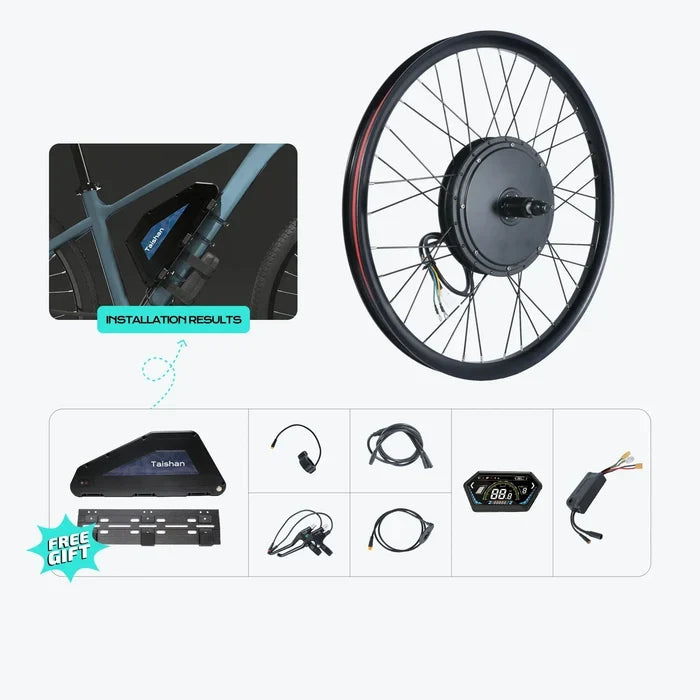
The controller is the brain of your e-bike conversion kit—silently managing every interaction between battery, motor, display, throttle, and sensors. When it fails or simply underperforms, the entire riding experience suffers.
Unlike batteries or tyres, most riders never think about their controller until something goes wrong. This guide changes that, covering how to diagnose controller problems, select the right replacement, and install it confidently—whether you're fixing a fault or upgrading for better performance.
What Does an E-Bike Controller Actually Do?
![]()

Before replacing one, it helps to understand what you're working with. The controller performs several critical functions simultaneously:
-
Power management — Regulates current flow from battery to motor based on rider input
-
Motor commutation — Fires the motor's phase windings in the correct sequence using hall sensor data
-
PAS processing — Interprets cadence or torque sensor signals and applies appropriate assistance levels
-
Brake cutoff — Instantly cuts motor power when brake sensors are activated
-
Protection functions — Monitors for overvoltage, overcurrent, overtemperature, and low-voltage conditions
-
Display communication — Sends speed, battery, and assist data to the handlebar display
Modern FOC (Field Oriented Control) controllers—like the 50A FOC controller available from Kirbebike—go further, delivering smoother power curves, quieter motor operation, and better efficiency compared to older square-wave controllers.
Signs Your Controller Needs Replacing
![]()

Not every electrical fault points to the controller, but certain symptom patterns are strongly indicative. Work through this checklist before ordering a replacement.
Strong Controller Fault Indicators
-
Display powers on but motor never engages — Battery and display connections are fine, but no motor response to throttle or PAS
-
Motor cuts out intermittently then recovers — Controller thermal protection triggering from a failing component
-
Specific error codes — Most displays show numbered faults; codes 03, 06, and 25 on common display protocols relate to controller communication failures
-
Motor runs in one direction only — Phase sequencing fault in controller circuitry
-
Motor stutters at startup then stalls — Hall sensor processing failure within controller
-
Burning smell or visible damage — Burnt components, blown capacitors, or heat-damaged PCB visible if you open the housing
-
Bike works fine in cold weather but fails when warm — Thermal failure of a controller component
Ruling Out Other Causes First
Before replacing the controller, verify these aren't the actual problem:
|
Symptom
|
Check First
|
Controller Likely?
|
|
No motor response
|
Battery voltage, main connector, power switch
|
Only if above pass
|
|
Intermittent cutout
|
Phase wire connections, battery sag under load
|
If connections clean
|
|
Error codes on display
|
Display cable, communication wire
|
If display cable intact
|
|
Reduced power
|
Battery capacity, phase wire corrosion
|
If battery healthy
|
|
No PAS response
|
PAS sensor gap and wiring
|
If sensor checks out
|
Understanding Controller Specifications
![]()

Matching specifications correctly is the single most important step in controller replacement. An incorrect controller damages other components.
The Three Non-Negotiable Specs
Voltage compatibility — Must exactly match your battery voltage. A 36V controller cannot operate with a 48V battery; the voltage mismatch causes immediate failure.
|
System Voltage
|
Controller Rated Voltage
|
Compatible?
|
|
36V battery
|
36V controller
|
Yes
|
|
48V battery
|
48V controller
|
Yes
|
|
48V battery
|
48V-52V controller
|
Yes
|
|
52V battery
|
48V controller
|
No
|
|
72V battery
|
48V controller
|
No
|
Current rating (Amperes) — Determines maximum power output. Calculate minimum required current: Motor wattage ÷ System voltage = Minimum amps. Always add 20-30% safety margin.
For example: 1000W motor on 48V system = 1000 ÷ 48 = 20.8A minimum. A 25A or 30A controller provides appropriate headroom.
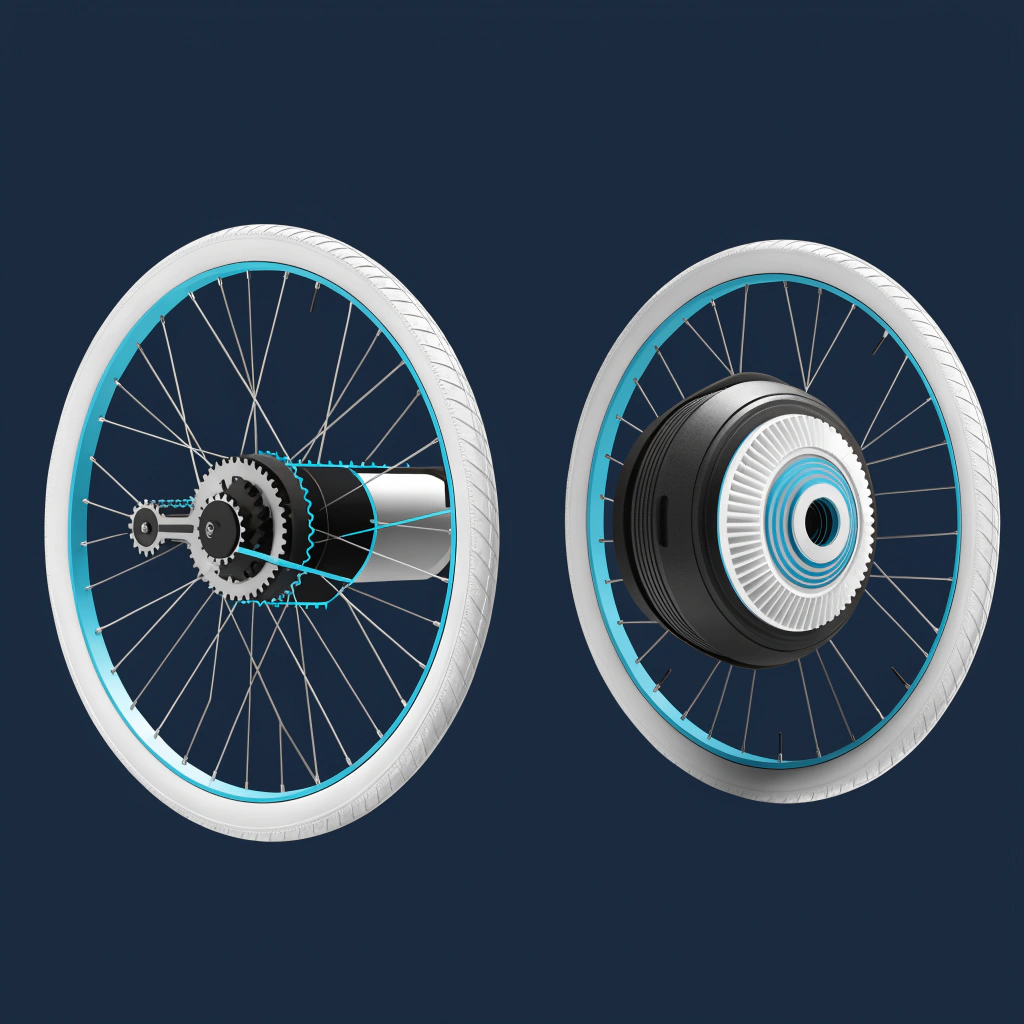
Motor type compatibility — Must match whether your motor is a geared hub motor (uses hall sensors differently) or direct-drive hub motor. Also must support the correct number of hall sensor poles, which varies between motor models.
Secondary Specifications to Match
-
Communication protocol — UART or CANbus; must match your display unit
-
Connector types — XT60, Anderson, or proprietary; adapters available but direct match preferred
-
Phase wire gauge — Higher-current controllers use thicker phase wires; ensure motor cable gauge is compatible
-
PAS compatibility — Cadence sensor (standard) vs. torque sensor (mid-drive systems)
-
Brake sensor support — Hydraulic brake sensors vs. mechanical cable sensors use different signal types
Controller Upgrade Options: Like-for-Like vs. Performance Upgrade
Replacement falls into two clear categories with different goals.
Direct Replacement (Same Specifications)
Best choice when: controller has failed and the existing system performed well; you simply want it working again.
Advantages:
- All existing connectors and settings transfer directly
- No recalibration needed for wheel size, voltage limits, or PAS response
- Lowest risk of compatibility issues
- Fastest route back to riding
What to check: Confirm the replacement uses identical connector types and communication protocol. Many controllers of the same voltage and amperage use different connector standards between manufacturers.
Performance Upgrade Controller
Best choice when: existing system underperforms, motor runs rough, acceleration feels sluggish, or you want smoother power delivery.
FOC vs. Square Wave controllers:
The most impactful upgrade available to hub motor conversion kit users is switching from a square-wave controller to an FOC (Field Oriented Control) controller. Kirbebike's 50A FOC controller and Smart eBike Controller & Display combination represents exactly this upgrade pathway.
|
Feature
|
Square Wave
|
FOC Controller
|
|
Motor noise
|
Noticeably audible
|
Near-silent operation
|
|
Low-speed smoothness
|
Jerky, stepped
|
Fluid and progressive
|
|
Efficiency
|
Moderate
|
Higher (less heat)
|
|
Torque delivery
|
Adequate
|
Optimised and precise
|
|
Programmability
|
Limited
|
Extensive via display
|
|
Heat generation
|
Higher
|
Lower
|
Real-world impact: riders upgrading from square-wave to FOC controllers consistently report noticeably quieter motor operation, smoother power delivery at all assist levels, and reduced motor heat on longer rides.
Higher current rating upgrade:
Upgrading from a 20A to a 30A or 35A controller on an existing motor and battery combination provides:
- Improved acceleration (more current available during initial demand)
- Better hill-climbing ability (sustained higher current under load)
- Reduced thermal stress (controller runs cooler as it's no longer at its limits)
Important: Higher current capability doesn't mean the system always draws more current—it means more is available when needed, reducing the strain on the controller during demanding sections.
Controller Replacement on Mid-Drive vs. Hub Motor Systems
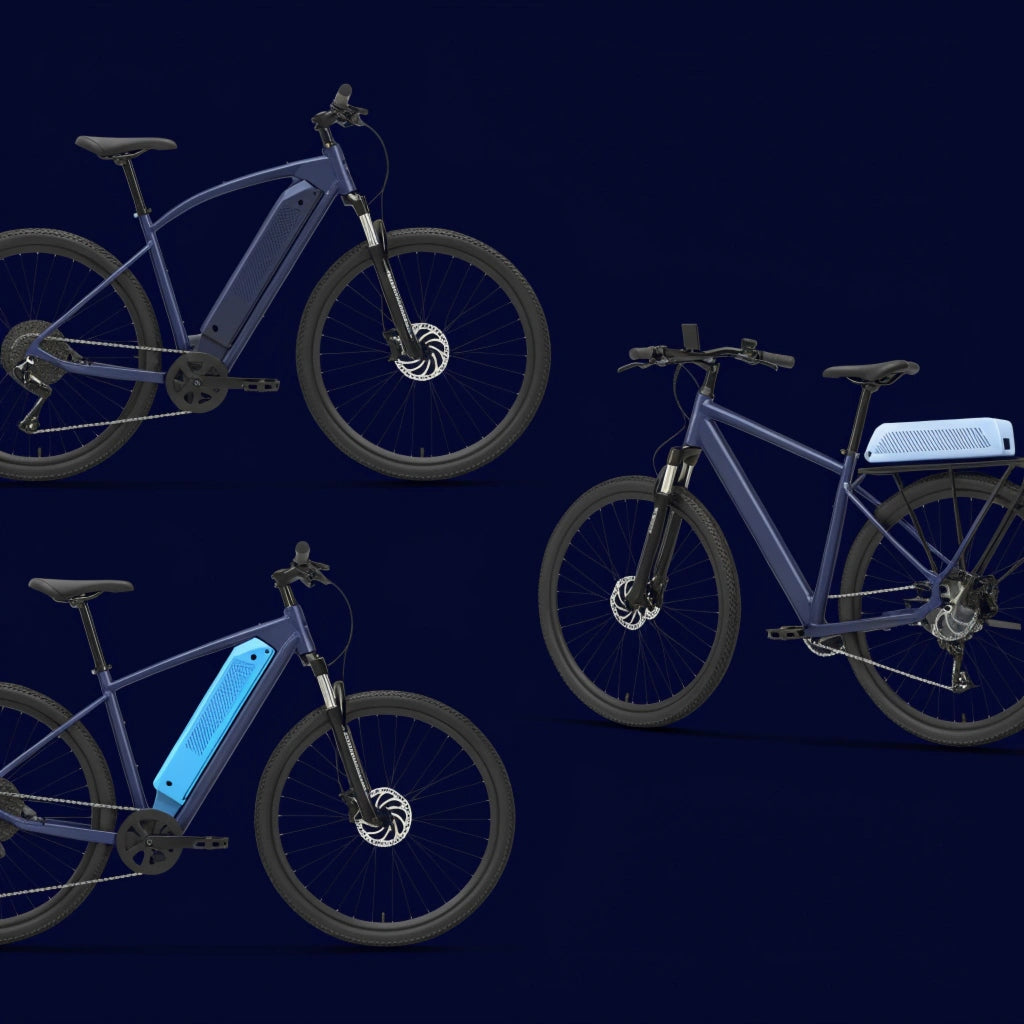
The replacement process differs significantly between motor types. Hub motor conversions (Kirbebike 250W through 4000W hub kits): External controller replacement as described above. Controller is separate from motor, accessible without motor removal. Straightforward DIY process.
Mid-drive conversions (Tongsheng TSDZ8 kits): The controller is integrated within the motor housing. Replacement requires purchasing the correct TSDZ8-specific controller unit and partial motor disassembly.
This is a more involved process but well-documented within the Tongsheng service community. The integrated design means fewer external connectors and a cleaner overall installation—one reason many riders prefer mid-drive systems for long-term reliability.
UK Legal Considerations When Upgrading
Replacing or upgrading a controller can affect your e-bike's legal status on UK roads. For EAPC (Electrically Assisted Pedal Cycle) compliance on public roads, the controller must be programmed to limit motor power to 250W continuous output and cut motor assistance above 25km/h (15.5mph).
Controllers with higher current ratings are entirely compatible with road-legal operation—they simply need correct programming. A 35A controller programmed to 250W limit is legally identical to the original factory controller in terms of road compliance, while providing better performance within those limits and more headroom for off-road or private land use.
Higher-voltage, higher-power systems in the Kirbebike range (52V, 60V, 72V) are not road-legal in the UK for public road use—these require private land or off-road use only.
Troubleshooting After Controller Replacement
If the system doesn't work correctly after installation, work through this sequence:
Motor doesn't run at all:
- Verify battery is fully inserted and engaged
- Check main power connector polarity is correct
- Confirm phase wires are connected (not loose)
- Verify display shows no error codes
Motor runs backwards:
- Swap any two of the three phase wire connections
- No other change needed—this corrects direction without affecting other functions
Motor stutters or runs rough:
- Check hall sensor connector is fully seated
- Verify hall sensor wires haven't been crossed
- Test with known-good hall sensor harness if available
PAS doesn't respond:
- Verify PAS connector fully seated
- Check sensor gap (magnet disc should be 2-5mm from sensor)
- Confirm controller PAS settings in display menu
Conclusion
Replacing or upgrading an e-bike controller is one of the most effective maintenance and performance improvements available to conversion kit owners. Whether you're restoring a failed system or upgrading to a smoother FOC controller for better performance, the process follows a logical sequence of documentation, verification, installation, and configuration.
The controller is among the most frequently replaced components on high-mileage kits—verified by Kirbebike customers who have logged tens of thousands of kilometres on their systems, often going through one or two controllers across those miles while keeping original motors and batteries running.
For riders whose controller upgrade points toward a more comprehensive system refresh, explore the full selection of e-bike conversion kits and batteries at Kirbebike to find the right combination for your performance goals.
Frequently Asked Questions
Can I replace my e-bike controller with a higher amperage one for more power?
Yes, provided voltage matches your battery exactly and the motor can handle increased current. Upgrading from a 20A to a 30A controller improves acceleration and hill-climbing while reducing thermal stress on the controller..
How do I know which controller is compatible with my Kirbebike kit?
The key specifications are voltage (must match exactly), motor type (direct-drive or geared hub), and communication protocol matching your display. Contact Kirbebike support at support@kirbebike.com with your specific kit details for definitive compatibility confirmation, especially for FOC controller upgrades.
What is an FOC controller and is it worth upgrading to?
FOC (Field Oriented Control) controllers calculate the optimal current vector for motor efficiency in real time, rather than applying fixed switching patterns. The practical benefits are quieter motor operation, smoother power delivery at all speeds, improved efficiency, and less motor heat.
My new controller is installed but the motor runs backwards. What's wrong?
This is a normal occurrence when phase wire colour coding differs between old and new controllers. Simply swap any two of the three large phase wire connections (yellow, green, blue). The motor will then run in the correct direction.
Can I replace just the controller without changing the display?
Usually yes, provided the communication protocol matches. Most standard LCD and TFT displays used in conversion kits communicate via UART protocol, which is widely compatible across controller brands. rs.
Does replacing the controller affect road legality in the UK?
The controller itself doesn't determine road legality—how it's programmed does. Any replacement controller must be configured to limit motor assistance to 250W continuous and cut off above 25km/h for legal UK road use. Higher-capacity controllers programmed within these limits are compliant.
: invalid url input)
usmile
Liquid error (snippets/blog-best-product line 36): product form must be given a product
Liquid error (snippets/blog-best-product line 59): product form must be given a product