Folding bikes represent urban cycling perfection—collapsing small enough for train compartments, apartment closets, and car trunks while unfolding into functional transportation. Their singular limitation? The physical effort required for hilly commutes or longer distances that would otherwise make these portable machines ideal car replacements.
Electric conversion eliminates this constraint, transforming folding bikes from short-distance solutions into genuinely versatile urban transport. However, converting folding bikes—particularly iconic models like Bromptons—demands specialized knowledge that respects their unique engineering while adding meaningful electric assistance.
Unlike standard bicycle conversions where space and weight prove less critical, folding bike electrification requires obsessive attention to compactness, portability, and maintaining the fold mechanism. A poorly executed conversion that prevents proper folding or adds excessive weight destroys the very characteristics that make folding bikes valuable.
KirbEbike's compact conversion systems offer folding bike-appropriate solutions, but success depends on understanding the unique constraints, opportunities, and creative approaches these specialized bikes demand.
Understanding Folding Bike Conversion Challenges
![]()

The Portability Paradox
Folding bikes optimize for convenient transport, but e-bike conversions inherently add weight and bulk—seemingly contradictory goals.
Weight considerations:
- Base folding bike weight: 9-14kg (Brompton ~11kg, Dahon ~12kg, Tern ~13kg)
- Motor addition: 2-4kg depending on power
- Battery addition: 1.5-3kg depending on capacity
- Total converted weight: 12.5-21kg
Practical portability thresholds:
|
Weight Range
|
Carrying Feasibility
|
Use Case Suitability
|
|
Under 15kg
|
Easy one-hand carry
|
Train commute, office storage, stairs
|
|
15-18kg
|
Manageable two-hand carry
|
Occasional stairs, longer walks
|
|
18-21kg
|
Difficult extended carry
|
Minimal carrying, mostly riding
|
|
Over 21kg
|
Too heavy for regular carrying
|
Defeats folding bike purpose
|
Success requires ruthlessly prioritizing lightweight components while accepting reduced power compared to standard bike conversions.
Fold Mechanism Preservation
Electric components cannot interfere with folding operation—non-negotiable for folding bike conversions.
Critical clearance zones:
Brompton-specific considerations:
- Front wheel folds under main frame (motor must clear frame when folded)
- Rear triangle folds to side (battery cannot block swing)
- Handlebar folds down (display and controls must not interfere)
- Pedals fold (nothing can obstruct this movement)
Universal folding bike concerns:
- Hinge points require cable clearance
- Folded bike profile cannot increase dramatically
- Locking mechanisms must remain accessible
- Carrying position must remain balanced
Testing protocol: Every conversion requires fold testing at multiple installation stages before finalizing component positions.
Small Wheel Motor Limitations
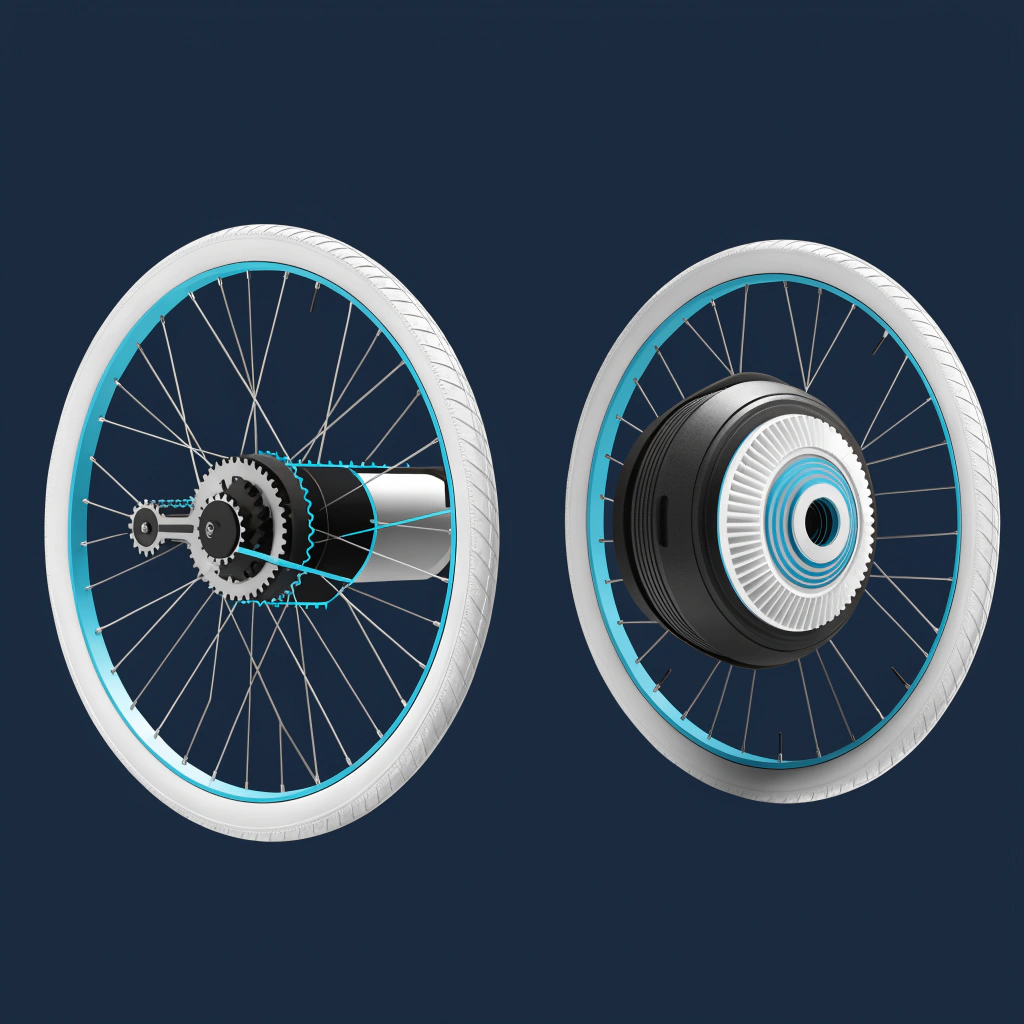
Folding bikes predominantly use 16" or 20" wheels, creating motor selection constraints.
Small wheel challenges:
16" wheels (Brompton standard):
- Limited motor options in this uncommon size
- Higher torque multiplication (benefit for hills)
- Reduced top speed from smaller diameter
- Motor clearance tight within compact frame
20" wheels (Dahon, Tern, many folders):
- More motor availability than 16"
- Better speed/torque balance than 16"
- Still more limited than standard 26"/700c options
- Adequate for most urban conversion needs
Brompton Conversion: The Ultimate Challenge
![]()

Bromptons represent folding bike engineering apex—and conversion complexity apex. Their brilliant fold mechanism and compact package create unique opportunities and constraints.
Why Convert a Brompton?
Compelling use cases:
Multi-modal commuting perfection:
- Bike to station, fold for train, ride at destination
- Electric assistance makes longer segments practical
- Compact fold still fits under train seat or office desk
- Hills no longer dictate route selection
Urban car replacement:
- Range extension for grocery runs
- Fitness-level independence (ride regardless of energy)
- Store anywhere (apartment, office, trunk)
- Weather adaptability (arrive less sweaty in heat)
Brompton-Specific Conversion Options
Front Hub Motor Systems (Most Common)
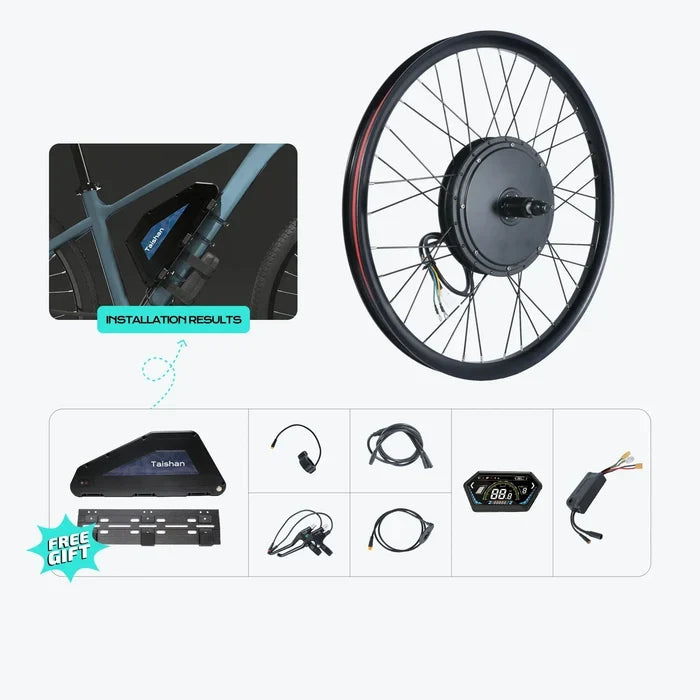
Front wheel conversion offers Brompton-compatible solutions with minimal fold interference.
Advantages for Brompton:
- Simple installation replacing front wheel
- Maintains rear triangle fold mechanism completely
- Battery mounts outside main frame structure
- Preserves iconic Brompton appearance partially
Limitations:
- Front hub motor visible (aesthetic compromise)
- Weight on front wheel affects handling slightly
- Traction concerns on steep climbs in wet conditions
- Motor must clear frame in folded position
Recommended Brompton front hub specifications:
|
Component
|
Specification
|
Rationale
|
|
Motor
|
36V 250W
|
Legal compliance, adequate power, manageable weight
|
|
Wheel size
|
16" x 1⅜"
|
Brompton standard (varies by model)
|
|
Battery
|
36V 7-10Ah
|
Balances range (25-40km) with portability
|
|
Motor weight
|
2.5-3.5kg
|
Minimizes handling impact
|
|
Total added weight
|
4-6kg
|
Keeps total bike weight under 17kg
|
Friction Drive Systems (Lightweight Alternative)
Specialized Brompton conversions use friction drives that add minimal weight and maintain fold perfectly.
Friction drive benefits:
- Lightest possible conversion (2-3kg total)
- Zero interference with fold mechanism
- Maintains standard wheels (quick-release convenience)
- Easy removal when not needed
Friction drive limitations:
- Reduced power compared to hub motors (200-350W typical)
- Tire wear from friction contact
- Weather sensitivity (rain reduces effectiveness)
- Noise from roller contact
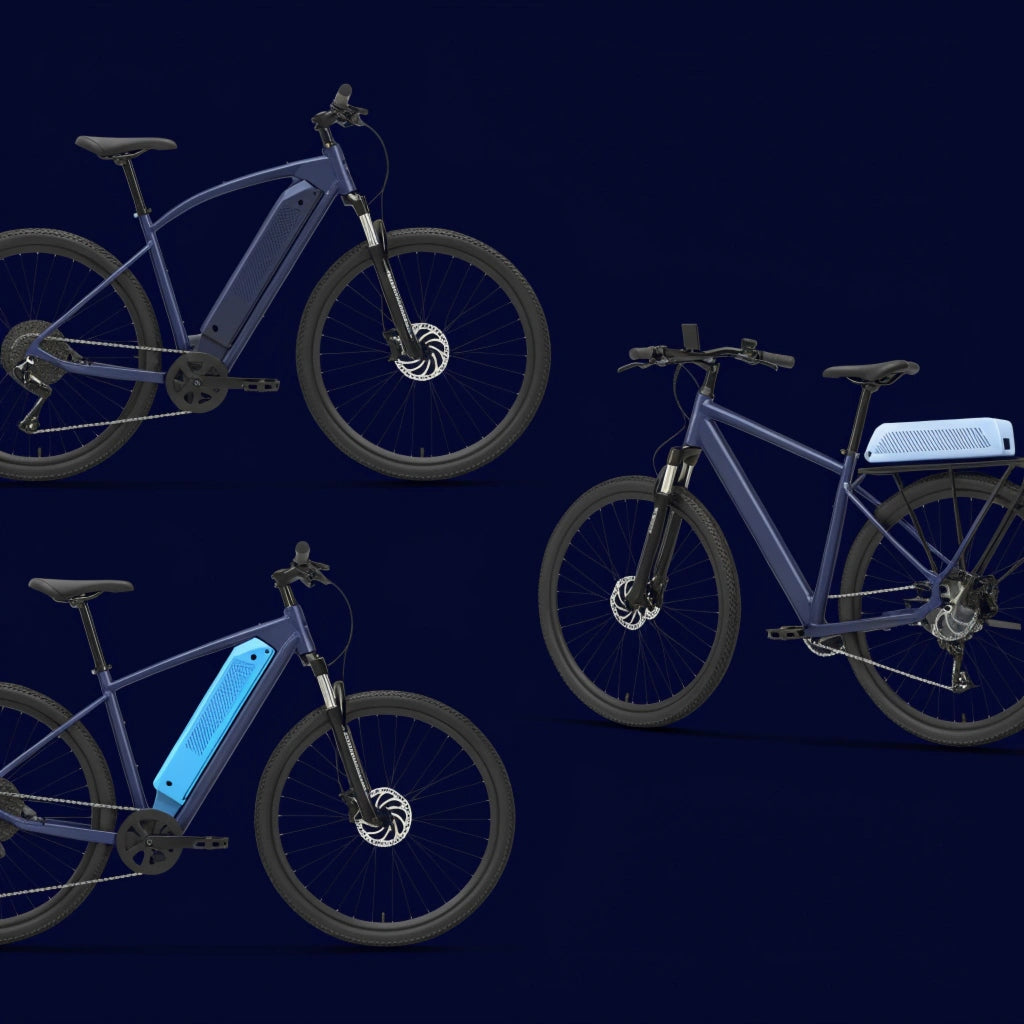
Brompton Battery Mounting Solutions
Battery placement determines conversion success or failure on Bromptons.
Front Carrier Bag Battery
Purpose-built bags containing battery and controller mount to Brompton's front carrier block.
Advantages:
- Removable for charging without tools
- Matches Brompton bag aesthetic perfectly
- Easy security (remove battery when parked)
- Doesn't interfere with fold mechanism
- Can still attach standard Brompton bag above
Specifications:
- Capacity: 36V 5-10Ah (175-360Wh)
- Weight: 1.5-2.5kg
- Form factor: Fits Brompton carrier block dimensions
- Weatherproofing: Essential for daily use
Frame-Mounted Compact Battery
Small batteries mount to frame areas that maintain fold clearance.
Mounting locations:
- Behind seat post (requires low-profile design)
- Main frame triangle (limited space, careful sizing)
- Under saddle (minimalist approach, small capacity)
Considerations:
- Must not block fold mechanism at any point
- Weatherproofing critical (exposed mounting)
- Capacity limited by available space
- May require frame modifications (permanent change)
Universal Folding Bike Conversion Approaches
![]()

Beyond Bromptons, numerous folding bikes suit conversion with varying complexity.
20" Wheel Folder Conversions
Standard 20" folding bikes (Dahon, Tern, B'Twin, generic models) offer more straightforward conversion than Bromptons.
Rear Hub Motor: The Standard Approach
Rear wheel hub motors provide powerful, reliable conversion for 20" folders.
Why rear motors suit 20" folders:
- More 20" motor availability than 16"
- Power to rear wheel (better traction than front)
- Front remains standard for easy fold/unfold
- Typically simpler frame geometry than Brompton
Recommended specifications:
-
Motor: 36V 250-500W (balance power and weight)
-
Battery: 36V 10-15Ah (350-540Wh for 40-70km range)
-
Total added weight: 5-8kg (manageable for periodic carrying)
Installation considerations:
Fold mechanism verification:
- Test fold completely before finalizing installation
- Verify cables don't bind when folding
- Ensure battery doesn't block fold points
- Confirm latches remain accessible
Frame suitability:
- Aluminum frames handle conversion better than steel (weight)
- Check dropout thickness (3mm minimum for hub motor)
- Verify frame doesn't have cracks or damage
- Consider torque arm for frames with thin dropouts
Front Hub Motor for Universal Folders
Front hub systems work well on many 20" folders, particularly those with front fork dropouts designed for quick-release wheels.
When front motors make sense:
- Rear dropouts incompatible with hub motors
- Desire to maintain rear quick-release convenience
- Frame geometry creates battery mounting issues at rear
- Simpler installation preferred over optimal performance
Front motor limitations:
- Weight distribution affects handling (especially noticeable on small wheels)
- Climbing traction concerns on steep/wet surfaces
- Fork stress on lower-quality folding bikes
- Must verify motor clears frame when folded
Maintaining Folding Bike Character After Conversion
Handling Characteristics Preservation
Small wheel bikes handle distinctively—conversion shouldn't destroy this.
Weight distribution principles:
- Keep added weight as low as possible (bottom of frame ideal)
- Front/rear balance matters more on small wheels
- Avoid high-mounted batteries (affects stability)
- Test handling thoroughly before committing to mounting
Steering response maintenance:
- Front hub motors add weight to steering axis
- Choose lightest front motors available (under 3kg)
- Geared motors lighter than direct-drive for front applications
- Consider rear hub if steering feel critically important
Folded Size Management
Every centimeter added to folded dimensions reduces practicality.
Acceptable fold size increases:
- Width: +0-3cm (minimal impact on storage)
- Length: +0-5cm (still fits most spaces)
- Height: +3-8cm (most common dimension increase)
Problem indicators:
- No longer fits under train seat
- Won't fit in car trunk with fold
- Office storage now difficult
- Carrying handle positioned awkwardly
Making Your Folding Bike Conversion Decision
Converting folding bikes successfully requires accepting compromises between power, weight, and portability. The most successful conversions ruthlessly prioritize maintaining the folding bike's core value proposition—convenient transport—while adding meaningful electric assistance for the riding portions.
Explore KirbEbike's complete conversion range for components suited to folding bike constraints, from ultra-compact 250W systems to more powerful options for folders that prioritize capability over ultimate portability.
Keys to folding bike conversion success:
- Accept lower power than standard bike conversions (250-500W maximum)
- Prioritize weight reduction ruthlessly
- Test fold mechanism thoroughly before finalizing installation
- Choose battery capacity for actual usage (don't over-build)
- Verify local regulations (especially public transport rules)
- Maintain folded size as close to original as possible
Folding bikes represent urban cycling's most practical format—combining full bicycle capability with apartment-friendly storage and public transport compatibility. Electric conversion extends this practicality dramatically, enabling longer distances, hillier routes, and fitness-independent usage while preserving the fundamental advantages that make folding bikes special.
Frequently Asked Questions
Can I convert my Brompton without affecting its iconic fold?
Yes, with careful component selection. Front hub motors (36V 250W) and compact carrier-mounted batteries preserve the fold mechanism completely. Total weight increases to 15-17kg but the folded dimensions and operation remain nearly unchanged. Avoid oversized batteries and test clearances thoroughly.
What's the ideal power level for folding bike conversion?
For 16" wheels (Brompton), 250W provides adequate assistance without excessive weight. For 20" folders, 250-500W depending on terrain and portability priorities. Higher power adds weight that compromises folding bike benefits—most users find 250-350W the sweet spot.
How much does folding bike conversion add to carrying weight?
Expect 4-8kg addition depending on components. Lightweight conversions (250W motor, small battery) add 4-6kg, keeping total weight manageable (under 18kg). Heavy conversions (500W, large battery) add 6-8kg+, making regular carrying difficult. Prioritize minimal weight for multi-modal commuting.
Will converted folding bikes still fit under train seats?
Most conversions maintain adequate folded size for under-seat storage, though height typically increases 3-8cm. Front hub motors and compact batteries preserve dimensions best. Test your specific train's under-seat clearance before committing to large components. Some conversions require alternative storage locations.
Should I choose front or rear hub motor for 20" folding bikes?
Rear hub motors generally perform better (traction, power, handling) and work well on most 20" folders. Choose front hub if rear dropouts incompatible or if maintaining rear quick-release critical. For Bromptons, front hub only practical option given fold mechanism.
What battery range do I actually need for folding bike commuting?
Calculate your round-trip distance and add 30% margin. Typical urban commutes (10-20km round-trip) need 350-500Wh (36V 10-13Ah). Multi-modal commuters with short riding segments can use smaller 180-300Wh batteries. Larger batteries add weight that compromises portability benefits.
Can I remove the conversion components to restore my folding bike?
Yes, hub motor conversions are reversible—simply reinstall original wheel. Battery mounts typically leave minimal marks. This reversibility allows trying conversion without permanent bike modification, important for expensive bikes like Bromptons or when maintaining resale value matters.
: invalid url input)
usmile
Liquid error (snippets/blog-best-product line 36): product form must be given a product
Liquid error (snippets/blog-best-product line 59): product form must be given a product