One of the most consequential decisions when selecting an e-bike conversion kit involves choosing between throttle control and pedal-assist operation—or both. This choice extends far beyond personal preference, fundamentally determining your bike's legal classification, where you can ride, and what regulations apply.
Understanding the legal landscape surrounding these two control methods helps you make informed decisions that align with both your riding style and jurisdictional requirements.
Understanding the Two Control Systems
![]()

What Is Pedal Assist?
Pedal-assist systems (PAS) provide motor power only when you're actively pedaling. The motor amplifies your pedaling effort, creating the sensation of riding with a powerful tailwind.
How Pedal Assist Works:
-
Cadence Sensors: Detect when pedals are rotating and activate the motor accordingly
-
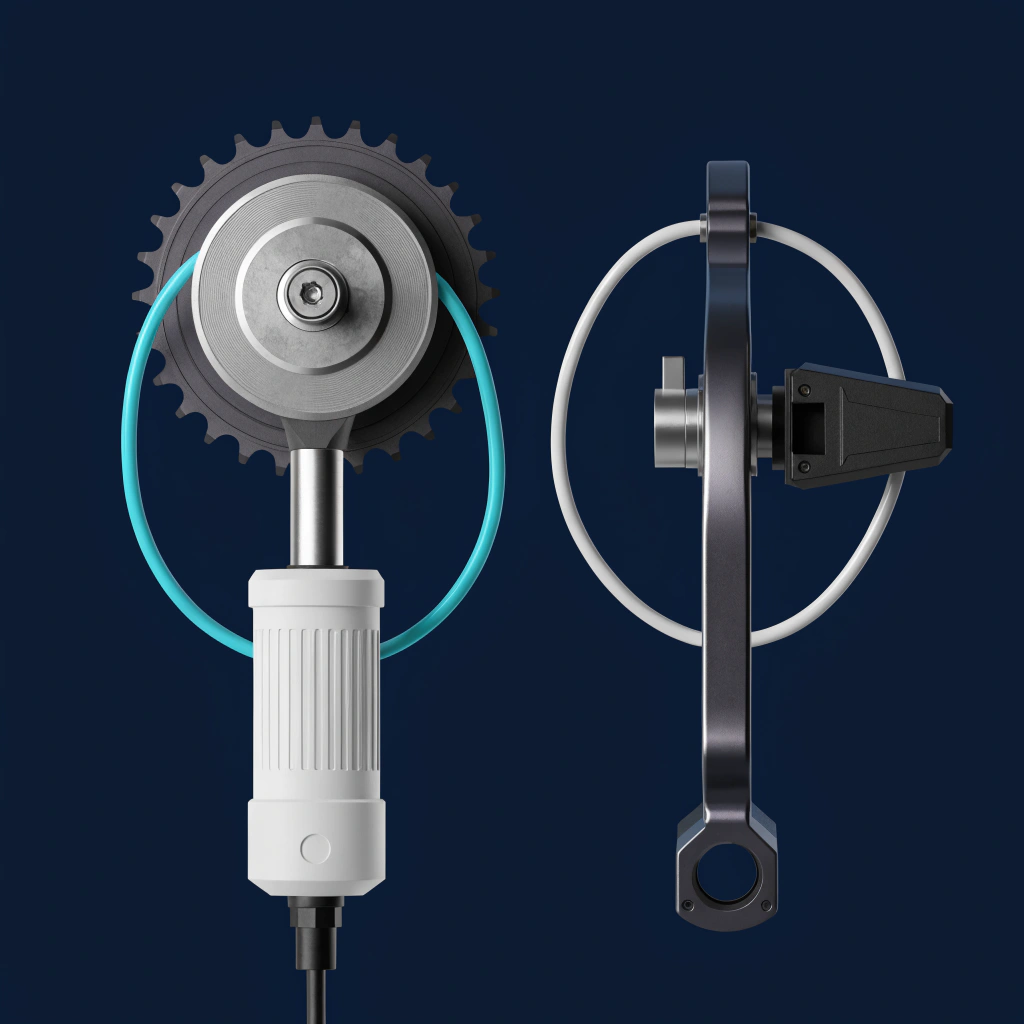
Torque Sensors: Measure how hard you're pedaling and provide proportional assistance
-
Assist Levels: Multiple power settings (typically 1-5 or 1-9) adjust assistance intensity
-
Speed Cutoff: Motor assistance stops at legal speed limits regardless of pedaling
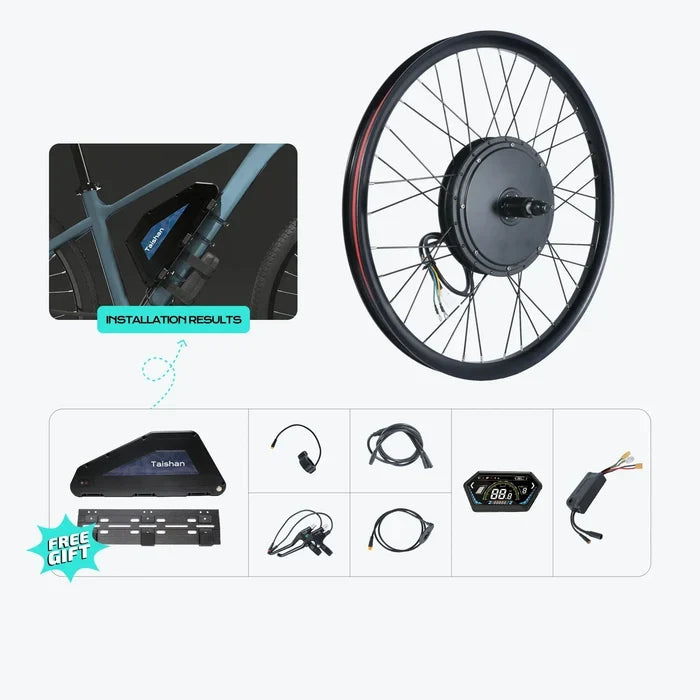
The 48V 750W mid-motor conversion kit exemplifies advanced pedal-assist technology with its torque sensor delivering 140Nm of responsive power that adapts to your pedaling input.
Pedal Assist Characteristics:
- Provides natural cycling feel
- Requires continuous pedaling for motor engagement
- Battery-efficient through rider contribution
- Creates intuitive riding experience
- Legally favored in most jurisdictions
What Is Throttle Control?
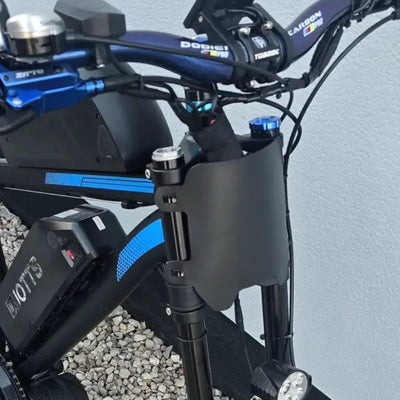
Throttle-controlled systems allow motor operation without pedaling, similar to a motorcycle or scooter. Twist the grip or press the thumb lever, and the motor propels the bicycle independently of pedal input.
Throttle Types:
Thumb Throttle: Push-button or lever mounted near the handlebar grip, operated by thumb pressure.
Twist Throttle: Motorcycle-style grip that rotates to control motor power, typically replacing the right handlebar grip.
Half-Twist Throttle: Compromise design offering throttle control without full grip replacement.
Throttle Control Characteristics:
- Operates without pedaling requirement
- Instant power delivery on demand
- Useful for hill starts and traffic situations
- Assists riders with mobility limitations
- Faces legal restrictions in many areas
Legal Status: United Kingdom
![]()

UK Throttle Regulations
The United Kingdom maintains strict limitations on throttle operation for electrically assisted pedal cycles (EAPCs):
UK Throttle Requirements:
-
Walk-Assist Only: Throttles limited to 3.7 mph (6 km/h) maximum
-
Purpose: Intended for walking alongside the bike, not riding
-
Beyond 6 km/h: Pedaling required for any motor assistance
-
Pedal-Assist Mandatory: Main riding mode must be pedal-assist only
Legal Implications:
Any e-bike with a throttle capable of propelling the bike above 6 km/h without pedaling becomes classified as a motor vehicle, requiring:
✗ Registration and number plates
✗ Motor insurance
✗ Valid driving license
✗ MOT certification
✗ Road tax
UK Pedal-Assist Status
Pedal-assist systems face no such restrictions in the UK, provided they meet standard requirements:
✓ 250W maximum rated motor power
✓ 15.5 mph (25 km/h) assistance cutoff
✓ Motor only assists when pedaling
✓ No registration or licensing required
The EZ Rider Kit demonstrates UK compliance with its pedal-assist-only operation and optional throttle that adheres strictly to walk-assist limitations.
Legal Status: European Union
EU Throttle Restrictions
The European Union follows regulations closely aligned with UK requirements through EN 15194 standards:
EU Throttle Rules:
- Throttle operation prohibited above 6 km/h without pedaling
- Walk-assist function permitted up to 6 km/h
- Pedaling required for motor assistance during riding
- Throttle-only operation reclassifies vehicle as moped
|
Country
|
Throttle Status
|
Enforcement Level
|
|
Germany
|
Prohibited above 6 km/h
|
Very Strict
|
|
France
|
Walk-assist only
|
Strict
|
|
Netherlands
|
Limited to 6 km/h
|
Moderate
|
|
Spain
|
Varies by region
|
Moderate
|
|
Italy
|
Walk-assist permitted
|
Moderate
|
EU Pedal-Assist Requirements
Pedal-assist systems enjoy unrestricted status across the EU with standard compliance:
- 250W continuous rated power maximum
- 25 km/h assistance cutoff
- Progressive power reduction approaching speed limit
- Motor engages only with pedaling input
Speed Pedelec Exception:
The EU recognizes "speed pedelecs" capable of 45 km/h, but these:
- Require moped registration and insurance
- Mandate helmet use
- Restrict throttle operation (pedal-assist only)
- Limit infrastructure access
Legal Status: United States
The Three-Class Framework and Throttles
The United States presents a more nuanced approach through its three-class system, with throttle legality varying by classification:
Class 1 E-Bikes:
-
Throttle Status: Prohibited
-
Operation: Pedal-assist only
-
Speed Limit: 20 mph assistance cutoff
-
Access: Broadest infrastructure access
Class 2 E-Bikes:
-
Throttle Status: Permitted up to 20 mph
-
Operation: Throttle and/or pedal-assist
-
Speed Limit: 20 mph for all motor assistance
-
Access: Some path restrictions
Class 3 E-Bikes:
-
Throttle Status: Varies by state
-
Operation: Primarily pedal-assist to 28 mph
-
Throttle Limitation: If permitted, limited to 20 mph
-
Access: Significant path restrictions
State-by-State Throttle Variations
California:
- Class 2 throttles legal to 20 mph
- Class 3 allows throttle to 20 mph (then pedal-assist to 28 mph)
- Clear regulations with good infrastructure
New York:
- Class 2 throttles permitted to 20 mph
- Recent legalization after years of prohibition
- Increasing acceptance across the state
Colorado:
- Class 2 throttles legal
- Some local trail systems prohibit throttle-equipped bikes
- Mixed enforcement priorities
Texas:
- Generally permissive throttle regulations
- Federal 20 mph/750W guidelines followed
- Minimal state-level restrictions
Washington:
- Three-class system with Class 2 throttles permitted
- Some trails prohibit Class 2 bikes
- Urban areas more restrictive
Federal Perspective
At the federal level, the Consumer Product Safety Commission defines low-speed electric bicycles as capable of 20 mph "on motor power alone"—implicitly accepting throttle operation within this framework.
Making Your Decision
Choosing Based on Legal Priorities
UK/EU Riders:
The decision is straightforward—pedal-assist only for unrestricted legal operation. Installing throttle capability creates immediate legal complications regardless of how infrequently you use it.
Appropriate Systems:
- 36V 250W pedal-assist kits
- Systems with torque sensors for responsive feel
- Walk-assist throttles (6 km/h maximum)
US Riders:
Greater flexibility allows personal preference to guide decisions:
Choose Pedal-Assist Only (Class 1) If You:
- Prioritize trail and path access
- Prefer natural cycling feel
- Want maximum legal simplicity
- Ride primarily on shared infrastructure
Choose Throttle-Equipped (Class 2) If You:
- Ride mainly on roads
- Value flexibility in motor engagement
- Have mobility considerations
- Frequently navigate stop-and-go traffic
Choose Class 3 (Pedal-Assist Priority) If You:
- Need higher speeds for longer commutes
- Ride on roads comfortable with traffic
- Accept infrastructure access limitations
- Understand additional requirements
Choosing Based on Riding Style
Fitness-Focused Riders: Pedal-assist systems maintain workout benefits while providing assistance when needed. Torque-sensor systems reward harder pedaling with proportional power.
Commuters: Throttle capability shines in urban environments with frequent stops, though infrastructure access may be limited. Class 2 offers good compromise.
Recreational Trail Riders: Pedal-assist ensures access to trail systems and maintains traditional cycling experience with enhanced capabilities.
Utility Cyclists: Throttle assists with heavy loads and cargo, making starts easier and reducing physical strain during practical cycling.
Installation Considerations
Throttle Installation Requirements
Adding throttle capability to a conversion kit involves:
Hardware Installation:
- Throttle unit mounted to handlebar
- Wiring connection to controller
- Proper cable routing and securing
- Testing and calibration
Controller Configuration:
- Enable throttle functionality in settings
- Set maximum throttle speed
- Configure throttle response curve
- Test safety cutoff features
Pedal-Assist Sensor Installation
Pedal-assist systems require sensor installation:
Cadence Sensor Setup:
- Magnet disc mounted to crank
- Sensor positioned at bottom bracket
- Proper spacing for reliable detection
- Weatherproof installation
Torque Sensor Integration:
- Mid-drive motors typically include integrated sensors
- Hub motor kits may require bottom bracket replacement
- Calibration for accurate power measurement
- Professional installation often recommended
Conclusion
The United States offers greater flexibility through its class system, with Class 2 throttles legal to 20 mph in most states, though infrastructure access becomes more restricted than pedal-assist-only Class 1 bikes.When selecting your e-bike conversion kit, consider not just which control method appeals to you, but where you'll ride and what regulations apply in your area.
Pedal-assist systems provide the broadest access and clearest legal status worldwide, while throttles offer practical advantages in specific situations at the cost of regulatory complexity. Understanding these differences ensures your converted e-bike delivers both the performance you want and the legal compliance you need for confident riding wherever your journey takes you.
Frequently Asked Questions
Can I install a throttle on my e-bike but just not use it in areas where throttles are prohibited?
Legally, this creates complications. In the UK and EU, having a throttle capable of operating above 6 km/h makes the bike non-compliant regardless of whether you actually use it. In the US, the bike's classification depends on its capabilities, not your usage patterns.
Are throttles really necessary, or is pedal-assist sufficient for most riders?
Most riders find pedal-assist completely adequate for normal cycling needs. Modern systems with torque sensors provide incredibly responsive power that feels natural and intuitive
If my conversion kit has both throttle and pedal-assist, which system gets priority for legal classification?
In the US, the system with higher capability determines classification. A bike with pedal-assist to 28 mph and throttle to 20 mph is Class 3. In the UK and EU, any throttle capability above 6 km/h immediately reclassifies the vehicle as non-compliant regardless of pedal-assist capabilities.
Can I switch between throttle and pedal-assist modes to change my bike's legal classification?
While technically possible through controller programming, this approach creates legal uncertainty. Your bike should be configured for the most restrictive environment you'll ride in. Authorities evaluate the bike's maximum capabilities, not its current configuration.
Do all pedal-assist systems feel the same, or are there differences in responsiveness?
Significant differences exist between cadence-sensor and torque-sensor systems. Cadence sensors simply detect pedaling and apply preset assistance levels, creating somewhat abrupt engagement. Torque sensors measure how hard you're pedaling and provide proportional assistance, creating an incredibly natural feel.
Are throttle restrictions likely to change in the UK or EU in the near future?
Current trends suggest regulations will remain stable in the near term. The UK and EU have established clear policy positions prioritizing pedal-assist operation to maintain e-bikes' classification as bicycles rather than motor vehicles.
What happens if I'm caught using a throttle on a trail that prohibits them?
Consequences vary by location and enforcement authority. You might receive a warning for a first offense, or face citations ranging from modest fines to trail access bans. Park rangers and trail monitors in popular areas increasingly check for throttle capability, especially where conflicts between user groups exist.
: invalid url input)
usmile
Liquid error (snippets/blog-best-product line 36): product form must be given a product
Liquid error (snippets/blog-best-product line 59): product form must be given a product