The ebike conversion kit industry stands at a technological inflection point—battery safety concerns are driving regulatory tightening, torque-sensing systems are replacing primitive cadence sensors, and the DIY ethos that built the market is colliding with demands for professional-grade reliability.
Understanding where conversion technology is heading matters because purchasing decisions made today determine whether your kit remains legally compliant, technologically relevant, and practically safe over its multi-year lifespan.
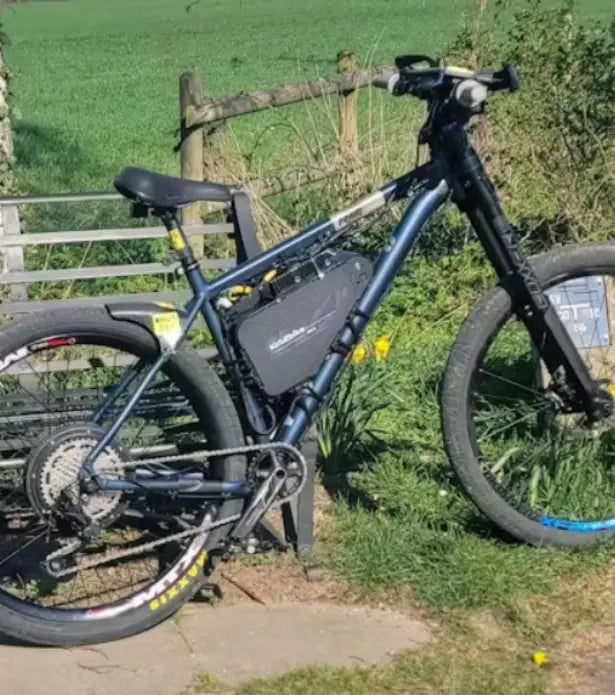
One verified Kirbebike customer completing nearly 14,000 miles over multiple years on a 1500W system demonstrates how longevity and adaptability determine real-world value—but the regulatory and technological landscape that enabled that purchase is actively shifting beneath riders' feet.
This isn't speculation about distant futures. These changes are happening now, reshaping what's available, what's legal, and what's safe.
Battery Safety: The Catalyst Driving Regulatory Change

The UK Fire Safety Crisis
London Fire Brigade reports document that approximately 40% of e-bike fires stem from conversion kit batteries—not purpose-built e-bikes. The problem isn't lithium technology itself; it's unregulated batteries lacking proper Battery Management Systems (BMS), thermal protection, and cell quality standards.
Why conversion kits present higher risk:
- No mandatory certification requirements (currently)
- Online marketplace batteries often lack UK safety compliance
- Second-hand batteries with unknown charge cycle history
- DIY installation sometimes bypasses safety features
- Price competition incentivizing corner-cutting on battery quality
Regulatory response trajectory:
UK authorities are moving toward mandatory battery certification similar to existing CE/ROHS requirements for other electrical components. Kirbebike's LG cell batteries with intelligent BMS systems already meet these anticipated standards—3-year lifespan, 1,000+ cycle ratings, military-grade construction with advanced thermal management.
What This Means for Future Purchases
Immediate implications:
- Budget batteries from uncertified sources face probable market exclusion
- Established suppliers with documented safety standards gain regulatory advantage
- Retrofit certifications may become mandatory for existing installations
- Insurance implications as insurers scrutinize battery provenance
Kirbebike positioning:
All battery systems across the 36V-72V range use LG cells with intelligent BMS protection—future-proofing against probable certification requirements. The 1-year warranty backed by component-level replaceability (one customer replaced controller and display over 14,000 miles while keeping original motor/battery) demonstrates commitment to long-term support rather than disposable products.

Why Cadence Sensors Are Becoming Obsolete
Traditional cadence-based PAS (Pedal Assist Systems) detect pedal rotation and deliver binary on/off motor engagement. This creates unnatural power delivery—one customer describes "a little delay before the assistance kicks in"—a characteristic cadence limitation.
Torque sensor advantages:
The Tongsheng TSDZ8 mid-drive with dual torque sensors measures actual pedalling force 1,000 times per second, modulating motor output proportionally. One verified customer notes the TSDZ8 provides "a more natural feel"—exactly what torque sensing delivers.
|
Sensor Type
|
Power Delivery
|
Efficiency
|
User Experience
|
Future Viability
|
|
Cadence (traditional)
|
On/off binary
|
Lower (constant output)
|
Delayed engagement
|
Declining market share
|
|
Torque (modern)
|
Proportional to effort
|
Higher (adaptive output)
|
Seamless natural feel
|
Industry standard direction
|
Market trajectory:
Premium purpose-built e-bikes universally adopt torque sensing. Conversion kits following this trend—like the TSDZ8 achieving 23km hilly rides with 80% battery remaining through torque-sensing efficiency—represent where the market is heading rather than where it's been.
Motor Technology: Smaller, Lighter, More Powerful

Power Density Improvements
Modern brushless motor design achieves higher torque from smaller, lighter packages. The TSDZ8's 140Nm torque from 4.8kg motor weight exemplifies this trend—outperforming older, heavier systems through design efficiency rather than brute mass.
Comparative power density:
- Older generation hub motors: 8-10Nm per kg
- Current generation (Kirbebike 48V 1000W): 12-15Nm per kg
- Advanced mid-drives (TSDZ8): 29Nm per kg
- Future projection: 35-40Nm per kg achievable with next-generation motor design
What this enables:
Lighter overall bike weight without sacrificing performance. The EZ Rider's 2.7-3.8kg motor weight demonstrates road-legal 250W systems can be lightweight enough for daily urban handling while delivering 50Nm torque—adequate for typical UK gradients.
Heat Management Innovation
CNC-machined motor housings with improved heat dissipation extend motor lifespan and maintain performance under sustained load. The EZ Rider's "newly upgraded high temperature resistant inner ring" reflects industry-wide focus on thermal management—critical for UK riders facing extended climbs where heat buildup historically degraded magnet strength.
UK Legal Framework: EAPC Regulations Under Pressure
Current UK Road-Legal Requirements
To ride on public roads without registration, insurance, or license, conversion kits must comply with EAPC (Electrically Assisted Pedal Cycle) regulations:
Three mandatory requirements:
- Maximum 250W nominal motor power
- Assistance cuts at 15.5mph (25km/h)
- Motor only assists while pedalling (pedal-assist only)
Probable Regulatory Evolution
Enforcement tightening:
- Increased roadside checks for non-compliant systems
- Insurance company scrutiny of conversion kit specifications
- Potential requirement for professional installation certification
- Mandatory battery safety certification (discussed above)
- Possible throttle restrictions (currently allowed to 6km/h without pedalling; may be eliminated entirely)
Why this matters:
Systems purchased today that comply with current regulations will likely remain legal through grandfather provisions. Systems operating in grey areas (250W+ on public roads) face increasing enforcement risk as authorities respond to safety concerns and lobbying from various stakeholders.
Installation and Support: The Professional Service Shift
DIY Versus Professional Installation
The conversion kit market built on DIY accessibility—Kirbebike's "20 minutes to install" positioning exemplifies this. Multiple verified customers confirm ease of installation: "easy to follow instructions," "very easy to fit."
Emerging tension:
Safety concerns and regulatory pressures are driving preference toward professional installation with certification. This doesn't eliminate DIY but creates tiered market:
-
Budget DIY tier: Self-installation, limited support, price-sensitive
-
Supported DIY tier: Manufacturer support, video guides, quality components (Kirbebike's current positioning)
-
Professional installation tier: Certified installers, comprehensive warranty, insurance recognition
Long-term market prediction:
DIY remains viable for mechanically confident riders, but majority market gravitates toward professional installation with certification as insurance and regulatory requirements increase.
Warranty and Support Evolution
Kirbebike's 1-year warranty with component-level replaceability (demonstrated by customer replacing controller and display over 14,000 miles while keeping motor/battery) represents sustainable support model versus disposable product approach.
Future support expectations:
- Extended warranties (3-5 years) becoming competitive standard
- Modular component replacement rather than complete system disposal
- Regional service networks for complex repairs
- Software update infrastructure for smart-integrated systems
Environmental Sustainability: The Circular Economy Advantage
Conversion Versus New Purchase Environmental Math
Converting existing bicycles avoids 200-400kg CO₂e manufacturing emissions of new e-bike production. This environmental advantage—reinforced by one verified customer noting conversion saved "100kg of CO₂"—becomes increasingly relevant as climate policy shapes consumer decisions and potential regulatory incentives.
Circular economy positioning:
Conversion kits inherently support circular economy principles: extending product life, enabling component-level repair, maintaining frame/wheel/component value. Future policy may incentivize conversion through subsidies or tax advantages versus new e-bike purchase.
Battery Recycling Infrastructure
The verified customer with nearly 20,000km needing only bearing replacement (original battery and motor still functional) demonstrates battery longevity potential—but end-of-life battery recycling remains infrastructure challenge.
Emerging solutions:
- Manufacturer take-back programs
- Regional battery recycling networks
- Second-life applications (e-bike batteries to home storage)
- Improved recycling technology recovering >95% lithium content
Market Positioning: Direct-to-Consumer Dominance
Why Kirbebike's Model Represents Future Direction
"The reason why KirbEbike kits are cheaper on the market is that we sell them directly to you"—this direct-to-consumer positioning eliminates retail markup, enables rapid iteration, and maintains customer relationships for long-term support.
Competitive advantages of DTC model:
- Lower cost enabling quality component selection (LG batteries, SHENGYI brand motors, Tongsheng TSDZ8)
- Direct customer feedback driving product improvement
- Component-level warranty support without retail intermediary friction
- UK & US warehouse distribution enabling rapid delivery
- Free shipping eliminating purchase barriers
UK Road-Legal Ceiling Creates Off-Road Opportunity
The 250W UK road-legal ceiling frustrates riders seeking higher performance—one customer noting they "expect it'll be long before I swap out for a higher wattage kit either 1000w rear wheel or mid drive" demonstrates this market segment.
Performance tier stratification:
|
Power Level
|
UK Road Legal
|
Primary Use Case
|
Market Growth Trajectory
|
|
250W
|
Yes
|
Urban commuting, road cycling
|
Stable mature market
|
|
500-750W
|
No (private land only)
|
Moderate off-road, rural trails
|
Growing market
|
|
1000-2000W
|
No (private land only)
|
Serious off-road, performance riding
|
Rapid growth segment
|
|
2500-4000W
|
No (private land only)
|
Extreme performance, specialized use
|
Niche but expanding
|
Conclusion
The future of ebike conversion kits divides along clear fault lines: battery safety regulations will mandate certified systems with documented thermal protection and intelligent BMS, effectively eliminating budget uncertified batteries; torque-sensing systems will become standard expectations as cadence-based PAS becomes associated with outdated technology; smart integration with GPS tracking, app connectivity.
Explore Kirbebike's complete range to understand how systems designed with safety certification, smart controllers, torque-sensing capability, and modular component architecture position for technological and regulatory futures rather than chasing temporary market trends that won't survive the coming decade of industry maturation.
Frequently Asked Questions
Are ebike conversion kits legal in the UK for road use?
Yes, if they comply with UK EAPC regulations: 250W maximum nominal power, 15.5mph assistance cut-off, and pedal-assist only operation. Kirbebike's 36V 250W and 48V 250W systems with CE/ROHS certification are fully road-legal. e.
Will battery safety regulations affect existing conversion kits?
Probable battery safety certification requirements will primarily affect new purchases rather than retrospectively banning existing systems. However, insurance implications and potential professional installation requirements may create practical compliance pressure.
What's the difference between cadence and torque sensors for future performance?
Torque sensors measure actual pedalling force and deliver proportional motor assistance, creating natural riding feel and superior efficiency—the TSDZ8 mid-drive customer achieving 23km hilly rides with 80% battery demonstrates this advantage.
How long will current ebike conversion technology remain relevant?
Component-level modularity determines relevance longevity more than headline specifications. One verified customer replaced controller and display over 14,000 miles while keeping original motor/battery—demonstrating systems designed for component-level evolution remain relevant indefinitely.
Will UK regulations get stricter for conversion kits?
Yes, almost certainly. Battery safety certification, potential professional installation requirements, increased enforcement of 250W road-legal limits, and possible elimination of throttle allowance (currently permitted to 6km/h) are all probable developments.