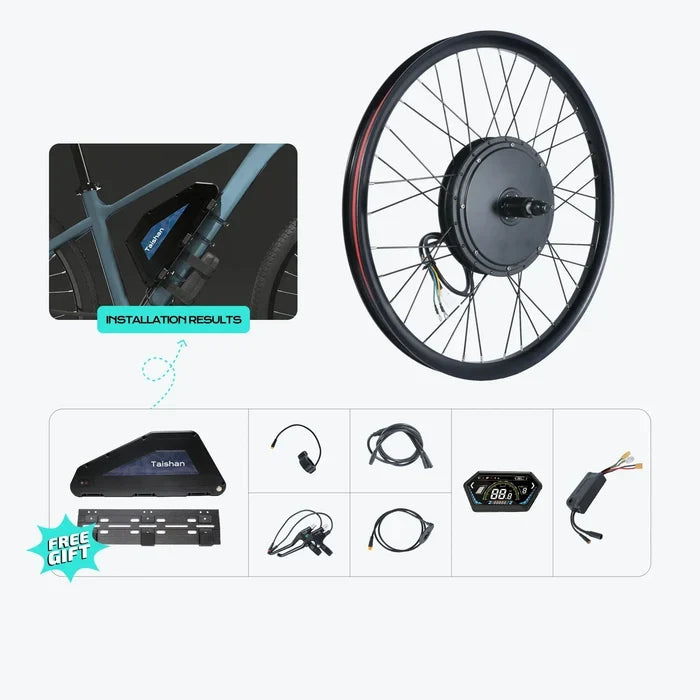
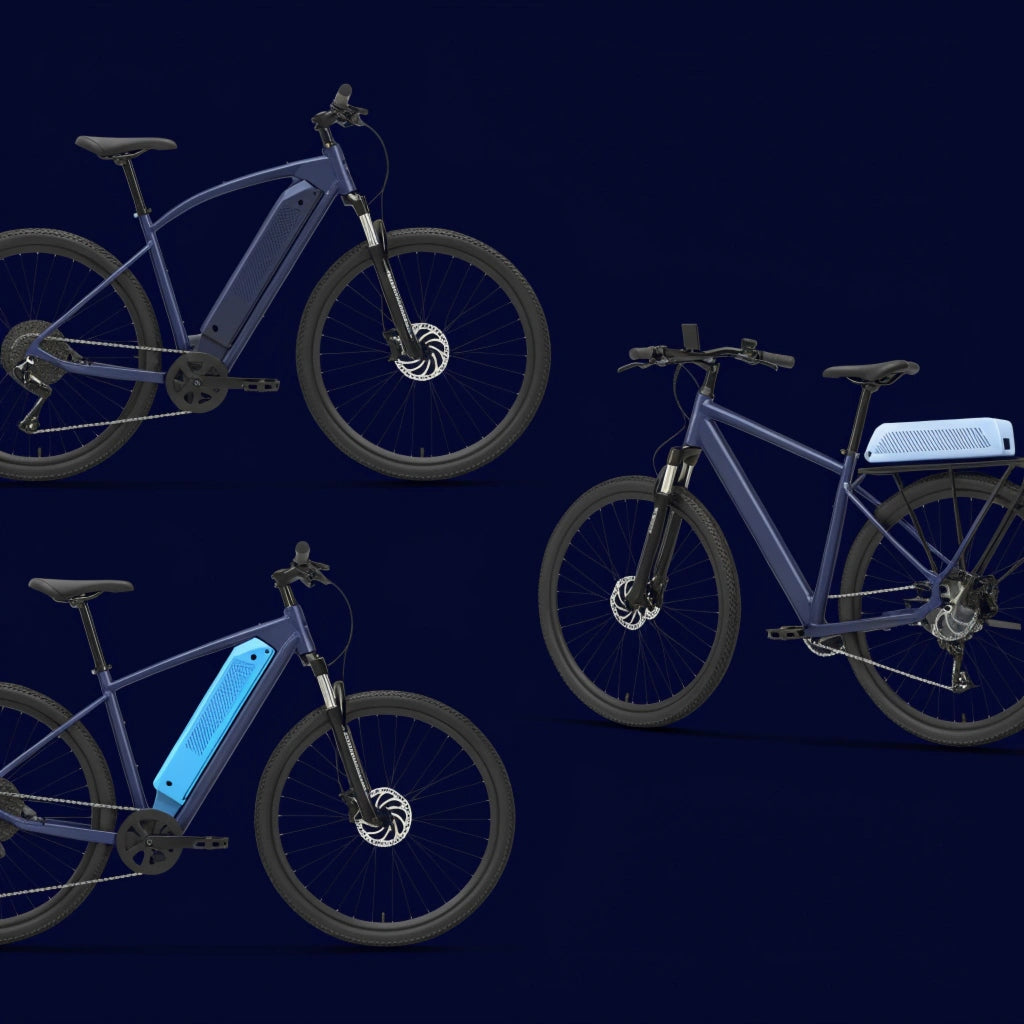
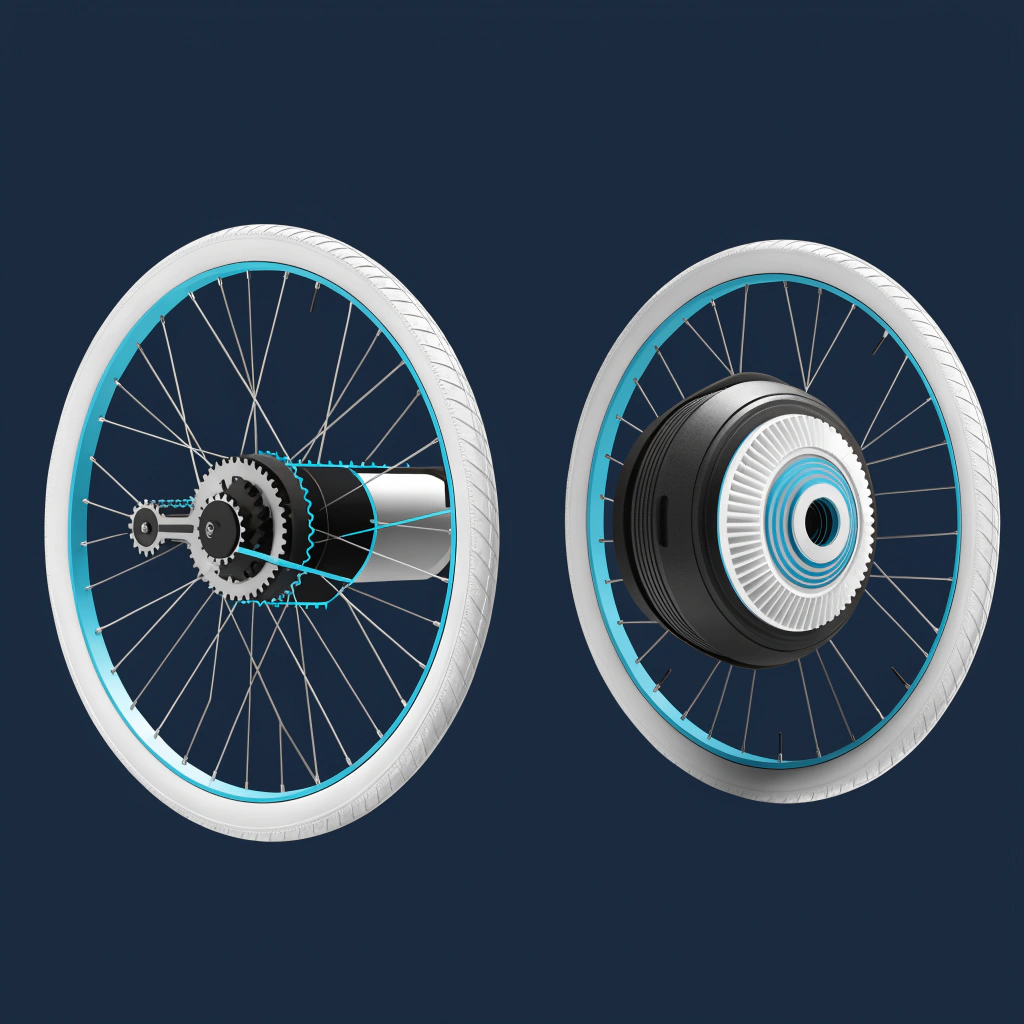
An electric bike conversion kit with battery turns a bike you already own into an e-bike. In the UK, choose by six things: wheel size, dropout width, brake type, motor power, voltage and battery capacity — then match that to how you'll ride. For public roads, stay with a 250W pedal-assist kit that cuts off at 15.5mph, like the EZ Rider 250W kit. For hills, cargo or private-land performance, higher-voltage 48V–72V kits give more power but are for off-road use only.
If you already own a bike you like, a conversion kit is the cheapest honest route to electric riding. You keep the frame you're used to, add a motor and battery, and skip the price of a whole new machine. The catch is that "which kit?" isn't one question — it's six smaller ones about how your bike is built and where you plan to ride. Get those right and fitting is straightforward; get them wrong and you've bought a wheel that won't go in your forks.
This guide walks through each decision in plain terms, compares the main UK conversion brands fairly, and keeps the legal picture clear throughout. Where a bundled kit-and-battery package is the right fit, we'll point to the KirbEbike range as one option — but we'll name the lighter and mid-drive alternatives too, so you can judge for yourself.

How to Choose an Electric Bike Conversion Kit with Battery UK
Before the detail, here's the shape of the decision. Two riders, two very different right answers.
Best choice for UK road use
If you're commuting on public roads and cycle lanes, you want a road-legal build: a 250W motor, pedal assist, and assistance that cuts off at 15.5mph. Several kits fit the bill well. If you want the lightest possible setup and a sub-30-minute install, Swytch and Cytronex are the premium benchmarks. If you'd rather have the battery, controller and sensors bundled in one package at lower cost, the EZ Rider 36V 250W kit fits in about 20 minutes, comes with the battery included, and stays compliant from day one. Any of these is a sensible, low-stress starting point for commuters.
Best choice for hills, cargo, and private land
If you're climbing steep gradients, hauling loads, or riding trails and private land, you'll want more power than a legal road kit provides. KirbEbike's 48V, 52V, 60V and 72V kits deliver that — but they exceed the 250W road limit, so they're for off-road and private-land use only. More on that below.
The 5 checks before buying
Whichever direction you lean, run these five checks first. They take five minutes and save expensive mistakes.
- Wheel size. Read the number printed on your tyre sidewall (e.g. 700×38C, 26×1.95). Your motor wheel must match.
- Dropout width. The gap in your frame or fork where the wheel sits — commonly 100mm front, 135–142mm rear. A hub motor has to fit that gap.
- Brake type. Rim brake or disc brake changes which wheel and rotor mount you need.
- Motor power. 250W for legal road use; higher only for off-road or private land.
- Battery voltage and capacity. Voltage must match the motor system; capacity (Ah/Wh) sets your range.
Electric Bike Conversion Kit with Battery UK: Product Comparison Matrix
Here's the current KirbEbike line-up with live prices, motor type, speed and range. Speeds above 15.5mph apply to off-road/private-land use only — see the legal section. Prices and specs are taken from the live product pages and can change, so always confirm on the page before ordering.
| Kit | Motor | Battery | Speed* | Range | From | Road use |
|---|---|---|---|---|---|---|
| EZ Rider 250W | 250W front hub | 36V 7Ah + 15Ah dual | 15mph | up to 60 mi | £390.00 | Legal |
| 500W / 750W MTX | 500–750W geared | 36V15–48V20Ah | 35–40 km/h | 35–70 km | £261.65 | Off-road |
| 48V 1000W | 1000W direct drive | 48V20–52V25Ah | 45–50 km/h | 35–70 km | £365.25 | Off-road |
| 52V 2000W MTX | 2000W direct drive | 52V 25/30Ah | 50–60 km/h | 40–60 km | £357.85 | Off-road |
| 60V 2500–3000W | 2500–3000W DD | 60V 20Ah | 45+ km/h | 40–55 km | £489.00 | Off-road |
| 72V 4000W | 4000W flagship | 72V 20Ah | 75–85 km/h | 40–80 km | £670.00 | Off-road |
*Top speeds above the UK 15.5mph assist limit are for off-road or private land only.
KirbEbike kits share a common baseline: battery, controller, wiring and sensor bundled in one purchase, free shipping from UK and US warehouses, and a one-year warranty. That bundling is the main practical difference from loose marketplace kits, where the battery is usually a separate buy. It's not the only good approach, though — so it's worth seeing how the wider market lines up before you decide.
How the main UK 250W kits compare
For road-legal commuting, the honest shortlist is a handful of 250W kits — and the fairest comparison is like-for-like against them, not against every kit on the market. Here's how the EZ Rider Kit lines up next to the premium UK benchmarks (Swytch, Cytronex) and the popular torque-sensor mid-drive (Tongsheng). All four are road-legal; the biggest practical difference is range.
| Kit | Type | Battery | Range | Weight | From | Legal |
|---|---|---|---|---|---|---|
| KirbEbike EZ Rider | 250W front hub | Included — 36V 7Ah + 15Ah dual pack | Up to 60 mi | 3.8 kg + battery | £390 | Legal |
| Swytch Air / Go | 250W front hub | Included, small | Air ~15 mi / Go ~30 mi | ~3 kg class | £499–£599 | Legal |
| Cytronex C1 | 250W front hub | Included, small bottle | ~25–30 mi | ~3.6 kg | £982.99 | Legal |
| Tongsheng TSDZ2B | 250W mid-drive | Sold separately | Depends on pack | Light | £279.99 | Legal |
UK prices, indicative and subject to change — check each brand's site before buying. All four are road-legal 250W pedal-assist kits. Ranges are typical bands and vary with rider weight, terrain and assist level.


A few honest takeaways from that table. If light weight and a 30-minute install matter most and you're riding legal roads, the EZ Rider Kit is hard to beat — though you'll pay a premium over the cheapest loose kits, and in return you get the part that actually matters on a commute: range. Its 36V 7Ah + 36V 15Ah dual battery takes you up to 60 miles on a charge, well beyond the small single packs on Swytch and Cytronex, and it still keeps the whole system to just 3.8 kg plus battery with 50Nm of torque. Charging is flexible too: a standard 2A charge takes roughly 7–10 hours, or an optional fast charger tops the pack up in about 5 hours. Swytch and Cytronex remain the choice if you want the very lightest possible build and don't mind a shorter range; Tongsheng suits riders who specifically want a torque-sensor mid-drive and are happy to source and match their own battery. But if your priority is a road-legal kit that genuinely goes the distance without range anxiety — and fits neatly, including a dedicated Brompton version for folding-bike commuters — the EZ Rider's dual-battery range is the standout. Pick the priority that fits your riding, not the loudest marketing.
UK Road-Legal Commuter Kit vs High-Power Off-Road Kit
The clearest way to think about the range is as two families with a gap between them:
250W front hub kit — commuting and legal public-road use
Light, simple, road-legal. The EZ Rider and 250W front kits fit the front wheel, leave your gears untouched, and are the easiest installs. Ideal for flatter commutes and riders who want zero legal worry.
48V 1000W kit — stronger hill support, private land
A noticeable step up in climbing power for loaded or hilly riding, but above the road limit, so off-road/private-land only.
52V 2000W kit — the performance sweet spot
A popular balance of speed and range for off-road performance builds.
60V kit — cargo, heavy riders, long range
Direct-drive torque and a bigger pack for high daily mileage and workhorse use. Real fleet reviews report 60–70 miles a day in delivery use.
72V kit — extreme off-road performance
The flagship, for trail and private-land riders who want maximum power and top speed. Strictly off-road.
EZ Rider 250W Kit
The range answer for legal commuting: a 36V 7Ah + 36V 15Ah dual battery takes you up to 60 miles on a charge, far beyond most single-pack 250W kits. Add a ~20-minute reversible install, a 3.8kg system with 50Nm of torque, and optional ~5-hour fast charging — all road-legal at the 15.5mph cut-off from day one.
UK E-Bike Law in 2026: What Buyers Need to Know
The legal picture is simpler than the online noise suggests, and it hasn't changed for 2026. Get the finished build right and your converted bike is treated exactly like a pedal bicycle.
What counts as an EAPC in Great Britain
Your converted bike is an Electrically Assisted Pedal Cycle (EAPC) — and road-legal without licence, tax or insurance — when it has pedals that propel it, a motor with a continuous rated power output of no more than 250W, assistance that cuts off at 15.5mph, and a rider aged 14 or over. The bike should also be marked with the manufacturer, the continuous rated power, and either the battery voltage or the maximum assisted speed. If it meets all that, you can ride it anywhere a normal bike is allowed, including cycle lanes — but not pavements.
250W Road-Legal Kit vs 1000W+ Off-Road Kit
Use 250W for public roads and cycle lanes
A 250W pedal-assist kit with the 15.5mph cut-off is the only category that's road-legal as an EAPC. That's the EZ Rider and 250W front kits.
Use high-power kits only where local rules and private-land permissions allow
1000W, 2000W, 3000W and 4000W kits belong on private land or off-road, with the landowner's permission. They're excellent tools in the right place — just not on the public road.
Don't assume high power is road-legal
A kit above 250W or capable of assisting past 15.5mph is, in law, a motor vehicle. Riding it on the road without registration, insurance, tax and a motorcycle helmet can mean fines or having the bike seized. For the full plain-English breakdown, see KirbEbike's UK legal e-bike conversion kit guide.
Is 48V 1000W legal in the UK?
Not as a standard EAPC for public roads. A 1000W motor exceeds the 250W continuous rated limit, so even if you cap the speed, it doesn't qualify as an EAPC. Treat 48V 1000W as a private-land/off-road kit unless the bike is registered and type-approved as a motor vehicle.
Wheel Size First: Why Fit Matters More Than Power
The single most common conversion mistake is buying on wattage before checking whether the wheel fits. A hub-motor kit replaces one of your wheels, so the new wheel has to match your existing size, dropout and brake type. Power is a later decision.
How to check your wheel size
Look at the sidewall of your current tyre. You'll find a marking like 700×38C or 26×1.95 — that's your size. KirbEbike builds motor wheels in all the common sizes: 20", 24", 26", 27.5", 28" and 700C (plus 16" for Bromptons on the EZ Rider). You tell them your size at checkout and the wheel is built to match.
700c vs 29 Inch: what UK hybrid riders often get wrong
These two labels describe the same rim diameter (ISO 622) but get used in different contexts: 700c on narrower road and hybrid tyres, 29" on wider mountain-bike tyres. So a 700c and a 29" wheel will physically fit the same frame, but you should match the motor wheel's rim width to your riding — a narrow road rim for a hybrid, a wider rim for an MTB. If your bike says 700c, ordering the 700C option is correct.
Front wheel vs rear wheel kit
Front wheel: simpler install, good commuter option
Swapping the front wheel leaves your gears and chain untouched, which makes it the easiest fit — the approach the EZ Rider uses.
Rear wheel: more natural drive feel, more checks
Rear-hub drive feels more like a normal bike because power comes from where you already pedal, but you'll need to check freewheel/cassette fit and rear dropout width.
Mid-drive: better climbing feel, harder install
A mid-drive motor drives through your bike's gears for a natural, torque-sensed feel on climbs, at the cost of a more involved installation and more drivetrain wear.
Dropout, Axle and Brake Compatibility Checklist
Once the wheel size is right, these are the fit details that decide whether the motor actually goes on your bike.
Front dropout width and fork type
Most front-hub kits, including the EZ Rider's universal wheel, are built for 100mm front dropouts (the Brompton version is 74mm). Confirm your axle standard — quick-release, nutted or thru-axle — before ordering, as it changes what will fit.
Rear dropout width, gears and freewheel/cassette fit
Rear-hub kits need more checks than front kits: rear dropout width is commonly 135mm or 142mm, and you'll need to know whether your bike uses a screw-on freewheel or a cassette on a freehub, because the motor's rear must accept your gears. This is why rear conversions suit slightly more confident builders.
Rim brake vs disc brake compatibility
Match wheel and brake type before buying
A rim-brake bike needs a rim-brake motor wheel; a disc bike needs the disc version with the right rotor mount.
Check rotor mount type for disc setups
Confirm whether your rotors are 6-bolt or centre-lock so the new wheel matches.
Check brake strength after adding weight
A motor and battery add weight and speed, so make sure your brakes and pads are in good condition — upgrading them is cheap insurance.
Motor Power Comparison: 250W vs 1000W vs 2000W vs 3000W vs 4000W+
More watts means more speed and torque — and, past 250W, off-road-only status. Here's how the tiers actually differ in use.
| Power | Best for | Typical top speed* | Legal on UK roads? |
|---|---|---|---|
| 250W | Commuting, flat-to-mild hills | 15.5mph | Yes — EAPC |
| 1000W | Steeper hills, heavier riders | 45–50 km/h | No |
| 2000W | Performance, fat-tyre builds | 50–60 km/h | No |
| 3000W | Cargo, heavy loads, steep terrain | 45+ km/h | No |
| 4000W+ | Extreme trail / private land | 75–85 km/h | No |
250W: road-legal commuter power
Plenty for a sweat-free commute and moderate hills. One EZ Rider reviewer described climbing a Devon hill at 15mph "without breaking a sweat," turning a 25-minute slog into an 11-minute ride. This is the tier for legal, everyday use.
1000W: stronger hill support for non-road use
A clear jump in climbing muscle for loaded or hilly off-road riding — capable and affordable, but not road-legal.
2000W and 3000W: performance and cargo builds
For private land, heavy loads and fat-tyre bikes where you want speed and grunt. Direct-drive motors here are quiet and durable.
4000W+ and 12000W: extreme builds
People ask "how fast will a 12000W e-bike go?" — and there's no single honest number. Speed depends on voltage, controller amps, rider weight, gearing, tyres and terrain, so a headline figure is meaningless as a buying promise. What is certain: anything at this power is far outside UK EAPC limits and belongs strictly on private land. For context, flagship 72V 4000W hub kits from brands like KirbEbike top out around 75–85 km/h off-road — already extreme, and well beyond anything road-legal.
Voltage and Battery Choice: 36V vs 48V vs 52V vs 60V vs 72V
Voltage sets the system's power ceiling; capacity sets its range. The golden rule: battery voltage must match the motor and controller. 36–52V is the commuting band; 60–72V is high-power territory.
36V battery: light commuter setup
Compact and light, ideal for legal commuting. The EZ Rider's 36V 7Ah LG pack is small enough to drop in a backpack — one rider does a 6km commute with a big climb and carries a second battery for 50–60km weekend range.
48V and 52V batteries: stronger everyday power
More push for hills, heavier riders and longer rides. KirbEbike's Taishan packs come in 48V, 52V, 60V and 72V with a 52V 25Ah flagship, premium cells and stable voltage under load.
60V and 72V batteries: high-output private-land builds
The most power and the most heat, so a matched controller and charger and secure mounting matter. The HS-II packs add a bracket mount with anti-theft lock and a 60A BMS for 500–4000W systems.
Battery capacity: Ah vs Wh explained
This is the number that decides range, and it's worth understanding the two ways it's expressed:
Ah shows capacity at a given voltage
Amp-hours tell you capacity, but only meaningfully when you also know the voltage.
Wh gives a clearer energy comparison
Watt-hours (volts × amp-hours) let you compare packs of different voltages fairly. The chart below shows why.
Range depends on far more than the battery
Rider weight, hills, assist level, tyre pressure, wind and temperature all move real range more than small spec differences do.
Taishan & HS-II Batteries
Premium cells, stable voltage under load, and a matching 5A charger included — in 48V, 52V, 60V and 72V to pair cleanly with your kit.
Battery Safety: What Makes a Kit Safer to Buy
Battery fires make headlines, and almost always trace back to cheap, mismatched or unbranded packs and chargers. The safe path is straightforward.
Buy kit and battery as a matched system
A pack, controller and charger designed to work together removes the biggest risk factor. Buying them as one bundled system — as KirbEbike and several other reputable brands do — is safer than pairing an unbranded battery from an unknown seller with a mismatched charger.
Charger compatibility matters
Never mix a random charger with a battery. Use the charger built for your pack; every KirbEbike battery ships with a matching one.
Mounting, cable routing and waterproofing
- Keep cables away from spokes, cranks and tyres, and tidy them with cable ties.
- Mount the battery securely and low where possible for balanced handling.
- Check connectors after wet rides — KirbEbike kits use a waterproof design, but connections still deserve a look.
- Recheck axle nuts and torque arms after your first 50–100km.
Electric Bike Conversion Kit with Battery vs Buying a New E-Bike
Both are valid. Which wins depends on the bike you already have and how hands-on you want to be.
| Conversion kit + battery | New e-bike | |
|---|---|---|
| Cost | Lower — you keep the frame | Higher |
| Look | Cables visible, bolt-on | Fully integrated |
| Warranty | On the kit | Whole-bike |
| Effort | Some DIY (or shop fit) | Ride out of the box |
| Familiarity | Your own bike | New geometry to learn |
Conversion kit with battery: best when you already like your bike
Lower cost, less waste, custom power level, and you keep the frame you're used to. For most people with a sound bike, this is the value play.
New e-bike: best when you want factory integration
A cleaner look, hidden wiring, and a single whole-bike warranty — worth paying for if you don't want any DIY.
Is converting cheaper than buying an e-bike?
Usually yes, when your donor bike is in good condition. Just budget honestly for the extras: tools, possible brake or tyre upgrades, fitting if you're not doing it yourself, and ongoing maintenance. For a fuller comparison, see KirbEbike's guide on choosing between an electric bike and a conversion kit.
Hub Motor vs Mid-Drive: Which Kit Type Should You Choose?
Three quick comparisons to place yourself.
Front hub vs rear hub
Front hub is simpler — untouched drivetrain, easiest fit. Rear hub feels more natural because power comes from where you pedal, but needs freewheel/cassette and dropout checks.
Rear hub vs mid-drive
Rear hub is easier for many DIY builds and drives independently of your gears. Mid-drive gives a stronger, more natural hill feel and better weight placement, at the cost of a harder install.
Mid-drive vs high-power hub motor
Mid-drive wins on torque and gearing efficiency for steep, technical climbs — KirbEbike's torque-sensored Z16 48V 1000W mid motor is built for exactly this. A high-power hub motor gives simpler power delivery and fewer drivetrain changes. For understanding any of these terms, the e-bike conversion glossary is a handy reference.


Installation Route: DIY vs Professional Fitting
When DIY installation makes sense
If you're a confident home mechanic with the right tools and clear instructions, a front-hub kit like the EZ Rider is very doable — most reviewers fit it in 20–30 minutes. KirbEbike kits include the basic tools and there are step-by-step fitting videos from Andy Kirbe.
When to ask a bike shop or mechanic
Get a professional involved for hydraulic brakes, rear hub gears, an unclear dropout size, weak brakes, a damaged frame, or any high-power kit. There's no shame in it — it's comparable to fitting a new derailleur.
Post-install safety checklist
- Brake test before your first ride.
- Wheel alignment and true.
- Spoke tension check.
- Axle nut torque to spec.
- Battery lock engaged.
- PAS sensor functioning.
- Assist cut-off set to 15.5mph for road use.
- Cable-tie cleanup, clear of moving parts.
Where to Buy: Comparing Your Options
Once you know your fit and power needs, it comes down to which brand's package suits you. Below is how to shortlist, using KirbEbike as one worked example alongside the alternatives covered earlier.
For a simple road-legal commuter build
For compliant everyday riding, the shortlist is a handful of 250W kits. If range matters — the usual worry on a commute — the bundled EZ Rider 250W kit is the standout: its 36V 7Ah + 36V 15Ah dual battery goes up to 60 miles, it fits in about 20 minutes, and it's road-legal at the 15.5mph cut-off from day one. If instead you want the very lightest possible build and are happy with a shorter single-pack range, Swytch and Cytronex are the premium picks.
If you also want to weigh higher power levels
Planning to compare a legal commuter kit against off-road power in one place? The KirbEbike kit-and-battery collection lets you see 250W through to 4000W side by side — just remember everything above 250W is private-land and off-road only.
For hills, cargo or private-land performance
For off-road power, higher-voltage 48V–72V hub kits (matched with a Taishan or HS-II pack) or a Bafang/Tongsheng mid-drive are the routes to compare, depending on whether you value raw power or a natural torque-sensed climbing feel.
What to check with any brand before you buy
Whichever way you lean, run the same checklist across every option you're considering — it's the fair way to compare like with like:
- Is the battery included, or sold separately? (KirbEbike bundles it; Bafang and Tongsheng don't.)
- What shipping, warranty and returns cover is offered, and from where?
- Is there real human support if the install goes wrong?
- Can you tune it — PAS, speed, limits — or is it a sealed system? (KirbEbike's Smart Controller and Ride Power App and Cytronex's app both allow this.)
- Does the kit come in your exact wheel size, dropout and brake type?
Common Mistakes When Buying an E-Bike Conversion Kit with Battery
| Mistake | Why it bites | Fix |
|---|---|---|
| Buying by wattage before fit | Wheel won't fit | Check size, dropout, brake first |
| Ordering the wrong wheel size | Unusable kit | Read the tyre sidewall |
| Ignoring UK road-use law | Fines / seizure | 250W for public roads |
| Mixing unmatched battery/charger | Fire risk | Buy a matched system |
| Forgetting brake/tyre upgrades | Poor stopping | Service brakes before riding |
| Expecting full e-bike polish | Visible cables | Set expectations upfront |
Who Should Buy Which Kit?
Best for commuters
A road-legal 250W kit with a 15–25 mile range covers most commutes. Prioritise low weight (Swytch, Cytronex) or bundled value with the battery included (KirbEbike EZ Rider) depending on your budget.
Best for DIY builders
Look for an app-tunable, programmable controller and modular parts so you can adjust PAS, speed and limits yourself. Systems like KirbEbike's Smart Controller or a Bafang mid-drive with aftermarket support suit hands-on builders.
Best for off-road riders
Higher-voltage 52V–72V hub kits give torque, cooling headroom and top speed on private land; a Bafang mid-drive is the alternative if you want gear-driven climbing feel. Pair either with a larger battery.
Best for cargo and delivery-style use
A high-power kit (e.g. a 60V hub) with a high-Ah pack, durable mounting and strong brakes handles high daily mileage — some delivery riders report 60–70 miles a day on this kind of setup.
Conclusion: Choose the Kit That Fits Your Bike, Your Ride and Your Legal Use
The buying framework holds whichever brand you choose: start with wheel size, dropout and brake type; then choose motor power, voltage and battery; and always match that to your legal-use context. For a road-legal commuter kit where range matters, the EZ Rider 250W kit stands out — a dual battery that goes up to 60 miles, bundled and legal from day one; for the lightest possible build, Swytch and Cytronex are strong picks; for mid-drive climbing, Bafang and Tongsheng lead. Just remember that any kit above 250W is for private-land and off-road use, not standard UK road riding. Buy for fit and legality first, and the power will look after itself.
Still weighing up your options?
Whichever brand you lean toward, match the kit to your wheel size, dropout and how you ride. If a bundled kit-and-battery package fits the bill, the KirbEbike team can help you spec the right one — road-legal or off-road.
FAQs
Are e-bike conversion kits worth it?
How much does an electric bike conversion cost?
What's the best e-bike conversion kit?
Is converting cheaper than buying an e-bike?
What are the disadvantages of e-bike conversion?
What is the lifespan of an e-bike battery?
How fast can a 3000W e-bike conversion kit go?
How fast will a 12000W e-bike go?
What's the fastest an e-bike can go legally in the UK?
Is 48V 1000W legal in the UK?
Sources
- GOV.UK — Riding an electric bike: the rules. gov.uk/electric-bike-rules
- GOV.UK — Electrically assisted pedal cycles (EAPCs) in Great Britain: information sheet. gov.uk EAPC information sheet
- GOV.UK / DfT — Proposed changes to EAPC legislation: outcome. gov.uk consultation outcome
- Electrical Safety First — E-bikes safety guidance. electricalsafetyfirst.org.uk
- Electrical Safety First — Lithium-ion battery safety. electricalsafetyfirst.org.uk lithium-ion
- London Fire Brigade — E-bikes and e-scooters fire safety. london-fire.gov.uk
- Transport for London — E-bike safety. tfl.gov.uk e-bike safety