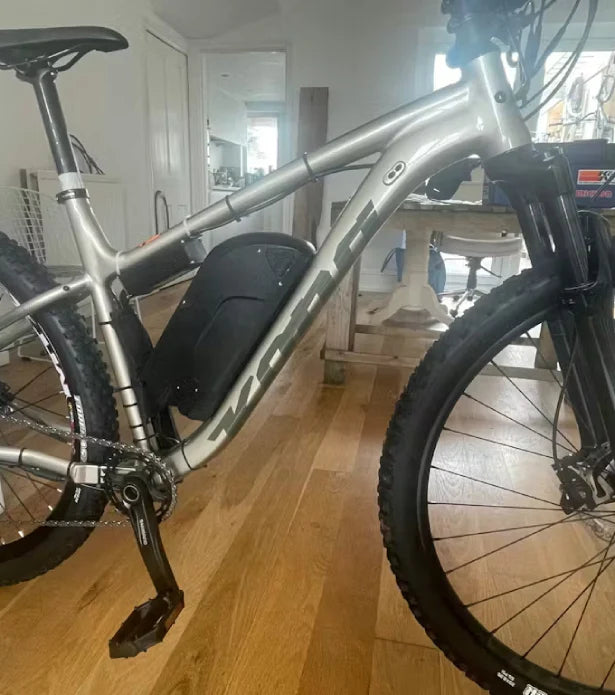
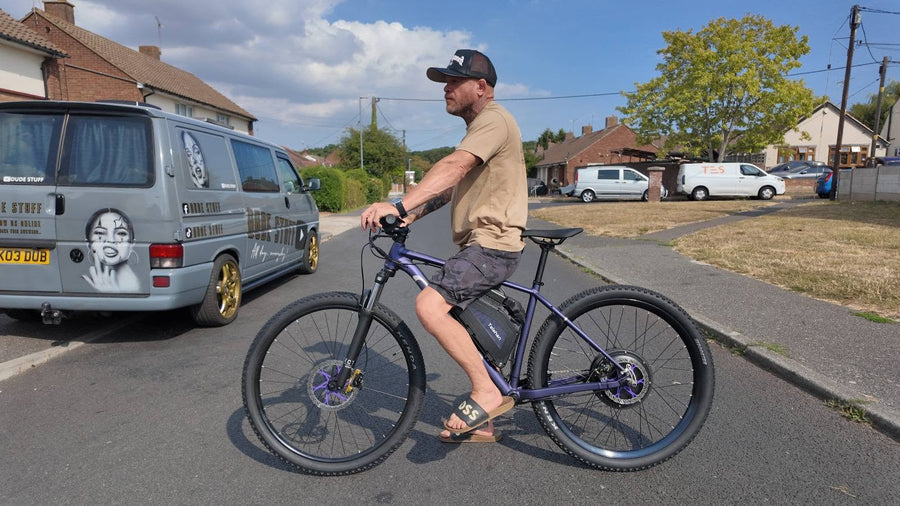
Your e-bike battery represents one of the most significant investments in your conversion kit, and understanding its lifespan directly impacts your long-term ownership costs. Most riders wonder how long their battery will actually last—not in marketing terms, but in real-world use.
The answer depends on chemistry, charging habits, storage conditions, and how aggressively you ride.Quality lithium-ion batteries in KirbEbike conversion kits typically deliver 800-1000+ charge cycles before capacity drops to 80% of original performance.
With proper care, this translates to 3-5 years of reliable service for most riders. However, poor maintenance can halve this lifespan, while excellent practices can extend it significantly. Let's explore what actually determines battery longevity and how to maximize your investment.
What Is a Battery Cycle? Understanding the Basics

Defining a Complete Cycle
A charging cycle occurs when you use 100% of battery capacity—but not necessarily all at once. Using 50% capacity, recharging, then using another 50% counts as one complete cycle. This means partial charging doesn't damage modern lithium batteries; in fact, it often helps preserve lifespan.
Cycle counting examples:
- Discharge from 100% to 20%, recharge to 100% = 0.8 cycles
- Discharge from 100% to 50%, recharge to 100% twice = 1.0 cycle
- Discharge from 80% to 40%, recharge to 80% five times = 1.0 cycle
Modern battery management systems (BMS) track cycles automatically, though most users simply monitor performance degradation rather than precise cycle counts.
Why Batteries Degrade Over Time
Lithium-ion batteries degrade through two primary mechanisms:
Chemical degradation: Internal resistance increases as the electrolyte breaks down and solid electrolyte interface (SEI) layers form on electrodes. This process occurs regardless of use—batteries age even sitting on shelves.
Mechanical stress: Repeated charging and discharging causes physical expansion and contraction of electrode materials. Over hundreds of cycles, this gradually reduces capacity as active material becomes isolated from electrical connections.
Both processes accelerate under certain conditions: high temperatures, deep discharges, prolonged storage at full charge, and high current draws during use.
Expected Lifespan: What Numbers Actually Mean
Industry Standard Cycle Ratings
Most e-bike batteries specify cycle life at 80% capacity retention—the point where the battery holds only 80% of its original charge.
|
Battery Type
|
Rated Cycles (to 80%)
|
Typical Lifespan
|
Real-World Performance
|
|
Standard Li-ion (LG/Samsung cells)
|
800-1000 cycles
|
3-4 years
|
KirbEbike standard
|
|
Premium Li-ion (high-grade cells)
|
1000-1200 cycles
|
4-5 years
|
Available in select models
|
|
Economy cells
|
500-700 cycles
|
2-3 years
|
Avoid these
|
|
LiFePO4 (if available)
|
2000+ cycles
|
6-8 years
|
Heavier, lower voltage
|
KirbEbike uses quality LG cells in configurations like the 48V 16Ah mid-motor kit battery, providing reliable 1000+ cycle performance with proper care.
Translating Cycles to Years
Your actual lifespan in years depends on riding frequency:
Daily commuter (5 days/week):
- 250 rides per year
- 1000 cycles = 4 years of service
- Assumes one full discharge per ride
Weekend rider (2 days/week):
- 100 rides per year
- 1000 cycles = 10 years theoretical
- Practical limit: 5-6 years due to calendar aging
Occasional use (1-2 times/month):
- 20 rides per year
- Limited by calendar aging, not cycles
- Expect 4-5 years maximum
One customer reports nearly 14,000 miles over four years on their KirbEbike 1500W system with the original battery still performing—demonstrating that real-world lifespan can meet or exceed specifications with proper care.
Critical Factors That Affect Battery Longevity

Depth of Discharge Impact
How deeply you discharge batteries significantly impacts lifespan. Shallow discharges preserve capacity far better than deep drains.
Discharge depth vs. cycle life:
- 100% depth (full discharge): ~500 cycles
- 80% depth (discharge to 20%): ~1000 cycles
- 50% depth (discharge to 50%): ~2000 cycles
- 25% depth (discharge to 75%): ~4000+ cycles
Keeping batteries between 20-80% charge dramatically extends lifespan. While you sacrifice some usable capacity per ride, the extended total lifespan often provides more cumulative range.
Temperature Effects on Degradation
Temperature exerts enormous influence on battery chemistry. Heat accelerates degradation exponentially.
Storage/operating temperature impact:
- -10°C to 0°C: Reduced performance, minimal permanent damage if brief
- 0°C to 10°C: Slightly slower degradation than room temperature
- 10°C to 25°C: Optimal range for minimal degradation
- 25°C to 35°C: Moderate acceleration of aging
- 35°C to 45°C: Significant degradation acceleration (2-3x normal rate)
- 45°C+: Severe damage, potential safety concerns
A battery stored at 40°C ages roughly twice as fast as one stored at 25°C. This explains why batteries in hot climates or left in direct sunlight deteriorate faster than those kept cool.
Charge Level During Storage
Long-term storage at high or low charge states damages batteries differently than mid-range storage.
Storage charge recommendations:
- Optimal storage: 40-60% charge
- Acceptable: 30-70% charge
- Harmful (long-term): 0-20% or 90-100% charge
Storing batteries fully charged keeps the electrodes under maximum stress, accelerating degradation. Storing them completely discharged can cause irreversible damage as cells self-discharge below safe minimums and trigger protective circuits.
For seasonal storage exceeding one month, charge to 50-60% and check monthly, recharging if voltage drops significantly.
Charging Current and Speed
Fast charging convenience comes with tradeoffs. High-current charging generates heat and stresses cell chemistry.
Charger current impact:
- 2A standard charger: Minimal stress, maximum lifespan (8-10 hour charge)
- 3-4A fast charger: Moderate stress, good balance (4-6 hour charge)
- 5A+ rapid charger: Increased stress, reduced lifespan (2-3 hour charge)
KirbEbike battery collections typically include 2A chargers optimized for longevity. Fast chargers work well for occasional use but shouldn't be your daily default.
Discharge Current and Power Demand
How hard you work your battery affects lifespan. High-power systems drawing maximum current generate more heat and stress cells more than conservative use.
Power demand considerations:
- Low power (250-500W): Minimal cell stress, optimal lifespan
- Moderate power (1000-1500W): Acceptable stress with quality cells
- High power (2000-3000W): Significant stress, requires premium cells
- Extreme power (3000W+): Maximum stress, reduced cycle life
A 52V 20Ah battery powering a 2000W motor works harder than the same battery on a 1000W system. If longevity matters more than peak performance, consider moderate power levels.
Proven Strategies to Extend Battery Life

Optimize Your Charging Routine
Best practices for daily riders:
- Charge after every ride rather than waiting for complete depletion
- Unplug once charging completes; avoid leaving batteries on chargers for days
- If possible, stop charging at 80-90% rather than 100% for daily use
- Charge in moderate temperatures (15-25°C) when possible
Best practices for occasional riders:
- Charge to 50-60% if the bike will sit unused for weeks
- Recharge monthly during storage periods
- Bring battery to room temperature before charging if stored cold
- Don't leave on chargers indefinitely between rides
Long-term storage (1+ months):
- Charge to 50-60% before storage
- Remove from bike and store indoors
- Check voltage monthly, recharge if dropped significantly
- Ideal storage temperature: 10-15°C
- Avoid basements/garages with temperature extremes
One KirbEbike customer stores their battery indoors during winter months at partial charge, maintaining capacity across multiple seasons without notable degradation.
Smart Riding Habits for Longevity
Your riding style directly impacts battery stress and lifespan.
Battery-friendly riding techniques:
- Use lower assist levels on flat terrain, saving higher power for hills
- Accelerate smoothly rather than maximum-throttle launches
- Contribute pedal power consistently rather than relying entirely on motor
- Plan routes to avoid excessive climbing when possible
- Allow batteries to cool after hard rides before charging
Riding practices to avoid:
- Constant full-throttle operation
- Depleting battery to shutoff regularly
- Riding in extreme heat without allowing cooling periods
- Ignoring low battery warnings and forcing complete discharge
The True Cost of Battery Replacement
Calculating Cost Per Mile
Understanding total cost of ownership helps put battery lifespan in perspective.
Example calculation (48V 16Ah battery):
- Rated cycles: 1000 to 80% capacity
- Average range per charge: 50 km
- Total distance potential: 50,000 km (31,000 miles)
- Extended use to 70% capacity: Additional 15,000 km possible
- Total usable distance: ~65,000 km (40,000 miles)
This demonstrates why battery cost matters less than cycle life—a quality battery delivering 40,000 miles provides exceptional value.
When Replacement Makes Sense
Replace battery when:
- Remaining capacity no longer meets your minimum ride requirements
- Cost of replacement battery is less than 30% of new e-bike cost
- Battery shows physical damage or safety concerns
- You're upgrading to higher capacity for extended range
Don't replace when:
- Capacity reduced but still adequate for your typical rides
- Battery age under 3 years with minimal degradation
- Financial considerations make continued use with reduced range acceptable
Some riders continue using batteries at 70% capacity indefinitely, simply adjusting ride planning to match reduced range.
Frequently Asked Questions
How many charge cycles can I expect from a KirbEbike battery?
KirbEbike batteries using quality LG cells typically deliver 1000+ cycles to 80% capacity retention. With proper care—avoiding deep discharges, storing at moderate charge levels, and maintaining appropriate temperatures—many batteries exceed rated cycle life, providing 3-5 years of reliable service for daily riders.
Does leaving my battery on the charger damage it?
Modern chargers with automatic shutoff minimize damage, but prolonged storage on chargers isn't ideal. Once charging completes, the battery sits at 100% charge, which accelerates degradation. For best results, unplug within a few hours of charge completion, especially if the bike will sit unused for days.
Can I revive a battery that won't charge?
Sometimes. If the battery discharged completely and triggered BMS protection, connecting a compatible charger may reset protection circuits. However, batteries stored at zero charge for extended periods often suffer irreversible damage. If standard charging fails, professional battery rebuilding services can sometimes replace damaged cells, though this often costs nearly as much as replacement.
Should I store my battery fully charged or empty during winter?
Neither. Store at 50-60% charge in a cool, dry location. Check monthly and recharge if voltage drops significantly. Storing fully charged accelerates degradation, while storing empty risks deep discharge damage. Mid-range storage minimizes stress on cell chemistry and preserves capacity.
How much capacity loss is normal after one year?
Quality batteries typically lose 5-10% capacity in the first year with regular use. Loss accelerates slightly in subsequent years. If you notice more than 15% capacity reduction in year one, evaluate charging practices, storage conditions, and usage patterns—something likely accelerated degradation beyond normal rates.
Can I replace my battery with higher capacity?
Usually yes, provided voltage matches your system. A 48V 20Ah battery can replace a 48V 16Ah battery, providing extended range while maintaining compatibility. Verify the physical size fits your mounting location and that connector types match. Never use different voltages—a 52V battery cannot replace a 48V battery.
Does cold weather permanently damage batteries?
Brief cold exposure doesn't cause permanent damage, though it temporarily reduces capacity. Prolonged storage in freezing conditions can damage cells. Before riding in cold weather, bring the battery to room temperature when possible. The bigger risk is charging cold batteries—always warm them to at least 10°C before charging to avoid internal damage.
Maximizing Your Investment
Understanding the lifespan of an ebike battery transforms it from a consumable expense into a manageable asset. With proper care, quality batteries deliver thousands of miles of reliable service, making the initial investment remarkably cost-effective.
For riders committed to long-term e-bike use, investing in quality battery systems from KirbEbike and following proven maintenance practices delivers exceptional value. The battery powering your conversion today can still perform admirably years from now—if you treat it right.