52V 2000W Ebike Kit with Battery: UK Buyer's Guide
KE
KirbEbike Editorial
Reviewed by the KirbEbike conversion-support team
Share
Unlock £10 off today
On this page
The 52V 2000W kit sits in an interesting spot: powerful enough to feel genuinely fast, but not so extreme that it needs the specialist components a 4000W build demands. For a lot of riders it's the sweet spot between the mild 500–1000W kits and the wild 72V flagships — strong hill torque, real speed on private trails, and a battery that lasts a proper ride. It's also, importantly, not road-legal in the UK, and any honest guide has to lead with that.
This guide walks through what the class delivers, how to choose a battery and check fit, and how the main 2000W kits on the market compare — including honest notes on where rival brands beat the bundled options and where they don't. Where a KirbEbike product fits, we'll say so, but we'll name the alternatives alongside it every time.
What a 52V 2000W Ebike Kit Actually Is
Two numbers define this class. The 52 volts is the battery's nominal voltage — it sets the electrical "pressure" the system runs at, peaking around 58.8V fully charged. The 2000 watts is the motor's power, which drives speed and hill-climbing torque. Together they put this kit firmly in high-power territory: several times the 250W a UK road-legal e-bike is allowed.
Almost all 2000W kits use a brushless direct-drive hub motor built into a rear wheel. Direct drive means no internal gears to wear out, quiet running, and the option of regenerative braking — at the cost of more weight and a slight drag when unpowered. That's the standard trade for this power level, and it's how the KirbEbike kit is built. (The main alternative, a mid-drive like the Bafang BBSHD, drives through your bike's chain and gears instead — a different feel and a different install.)
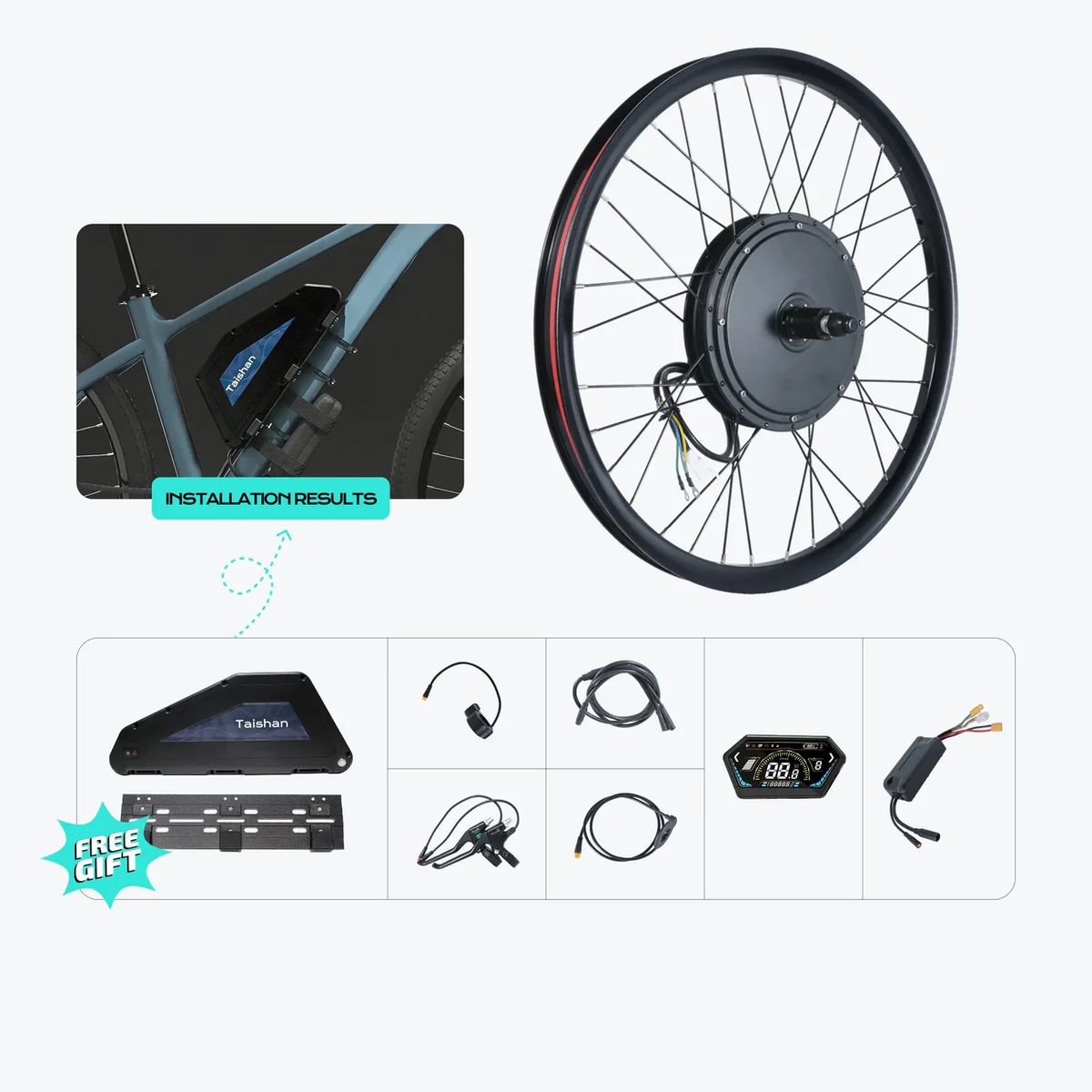
A complete bundled kit: the KirbEbike 52V 2000W package includes the motor wheel, battery, controller, colour display, freewheel and sensors in one box — and ships from UK & US warehouses.
💡
Where it sits in the ladder: a 2000W kit is the practical middle of the high-power range. If you want lighter and legal, look at 250–1000W. If you want extreme trail performance, that's 3000–4000W territory. 2000W balances speed, weight and cost for most off-road riders.
Speed, Torque and Range: What to Expect
Here's what a typical 52V 2000W kit delivers in the real world. Figures vary with rider weight, terrain, tyres and battery size, so treat these as bands rather than promises.
Measure
Typical figure
What affects it
Top speed
50–60 km/h (off-road)
Rider weight, terrain, tyre size
Torque
~60 Nm
Motor design, voltage
Range
40–85 km
Battery Ah, assist level, hills
Motor weight
~5.6–6.8 kg
Motor size and rim
Peak voltage
58.8V
Fully charged 52V pack
Charge time
~5 hours (5A charger)
Charger amperage, pack size
The headline is torque as much as speed. A 2000W direct-drive motor pulls strongly from low speed, which is what makes steep, loose climbs feel manageable where a 250–500W kit would bog down. On the flat, 50 km/h+ arrives quickly. The trade-off is weight: the motor and a big battery add real mass, which you'll feel lifting the bike and, slightly, when pedalling unpowered.
50–60km/h
Typical off-road top speed on a 2000W kit
~60Nm
Torque — strong for loaded and steep climbs
40–85km
Range span from smallest to largest battery
Is a 52V 2000W Kit Legal in the UK?
No — not for public roads, cycle lanes or pavements. This is the single most important thing to understand before buying, so here it is plainly.
Off-road and private land only. A 52V 2000W kit can be ridden legally on private land with the landowner's permission, or on tracks where motor vehicles are permitted. Riding one on a public road without registration, insurance, tax and a motorcycle helmet can mean a fine or having the bike seized. Always check the rules where you ride. KirbEbike's own guide to 1000W and 2000W kit legality covers this in more detail.
One practical note: some kits, including KirbEbike's, let you cap the system to a 250W / 25 km/h mode via the display for legal riding, then unlock full power off-road. That flexibility is useful, but the responsibility for riding legally always sits with you — a speed-limited high-power motor is still, strictly, not an EAPC unless it meets all the criteria. For the full picture, see the legality overview for the UK, EU and US and the e-bike classes explainer.
How the Main 52V 2000W Kits Compare
Here's the honest starting point: in the UK, almost every conversion brand builds to the 250W road-legal limit, so genuine high-power rivals to a 52V 2000W kit are thin on the ground. The one widely sold and supported high-power alternative is Bafang, whose mid-drive kits go well beyond 250W. So the real 2000W-class decision for most UK riders is between a bundled hub kit like KirbEbike's and a Bafang mid-drive — and the things that separate them are how each is built, tuned and supported, not just the sticker price. All figures are UK prices; confirm on each brand's site before buying.
Kit
Type
Controller
Freewheel
App tuning
Battery
From (UK)
KirbEbike 52V 2000W MTX
Direct-drive hub
Fully potted FOC
6–12 speed
Ride Power (+ Limit Mode)
Included or kit-only
£357.85 kit / £872.10 with 25Ah
Bafang BBSHD (1000W)
Mid-drive
Potted
Uses your gears
Via display / USB cable
Sold separately
~£769 (motor kit)
UK prices, incl. VAT where listed; all change often. The Bafang BBSHD is a 1000W motor kit — the price is motor-only, so add a battery and, if it's not bundled, a display. Both are off-road/private-land only in the UK.
The Bafang BBSHD is a 1000W mid-drive: it mounts at the bottom bracket and drives the chain through your bike's gears, rather than powering the wheel directly like a hub kit. Battery is an optional extra.
Where the two approaches differ comes down to a few things you can't see in a photo:
Hub vs mid-drive. KirbEbike's rear-hub motor is a simpler bolt-on and delivers power directly to the wheel; the Bafang mid-drive routes power through your bike's chain and gears, which climbs beautifully but adds drivetrain wear and a fiddlier bottom-bracket install.
Controller potting. KirbEbike's controllers are fully sealed in resin, which sheds the heat a hard-working 2000W kit generates and keeps water and vibration out. Lower-cost kits sometimes run an un-potted board inside a "waterproof" bag — which traps heat instead of releasing it, and is a classic cause of a controller cooking itself on a long climb.
Freewheel range. Most modern bikes run 8–12-speed gears. KirbEbike hub motors take 6–12-speed freewheels, so they bolt straight on without a drivetrain swap.
Tuning and support. The Ride Power app lets you set speed, PAS, acceleration and a road-legal Limit Mode from your phone; Bafang tuning generally means a USB cable and a laptop. KirbEbike also bundles the battery option, UK/US warehouse dispatch, a one-year warranty and human support.
The honest read: if you specifically want a mid-drive's natural, gear-driven climbing feel and don't mind buying a battery separately and tuning over a cable, the Bafang BBSHD is the established high-power benchmark and the obvious cross-shop. KirbEbike's case isn't about being the cheapest line item — it's whole-life cost-effectiveness: a sealed, tunable, well-supported hub kit, with the flexibility to buy it complete with a matched battery or as a kit-only if you already have a pack. You're paying for the parts and backup that decide whether the kit is still running in three years, not just what's in the box on day one.
✅
Want road-legal instead? If you don't actually need 2000W, the honest answer is a 250W kit — the only category that's legal on UK roads, and where most UK brands compete. Well-regarded options include KirbEbike's own EZ Rider kit (road-legal 250W, from £587.99, with a dual 36V 7Ah + 36V 15Ah battery for up to 60 miles of range), Swytch (ultra-light; Go from £499, Air from £599), Boost (UK-built rear-hub, from £522) and Cytronex (premium, from £982.99). They're a different class entirely — legal, light and lower-powered — so they're not a like-for-like rival to a 2000W kit, but they're the right buy if legality matters more than raw power.
Built to last · tunable
KirbEbike 52V 2000W MTX Kit
2000W direct-drive motor with a fully potted FOC controller, sealed quick-release harness, 6–12-speed freewheel and Ride Power app tuning. Buy it complete with a matched battery, or kit-only if you already have a pack.
If you buy the kit complete, the battery is the biggest choice you'll make — it sets your range, weight and price. Capacity is measured in amp-hours (Ah); more Ah means more range and a bit more weight. The three common 52V options genuinely differ in how far they'll take you, so match the pack to your actual rides rather than defaulting to the biggest.
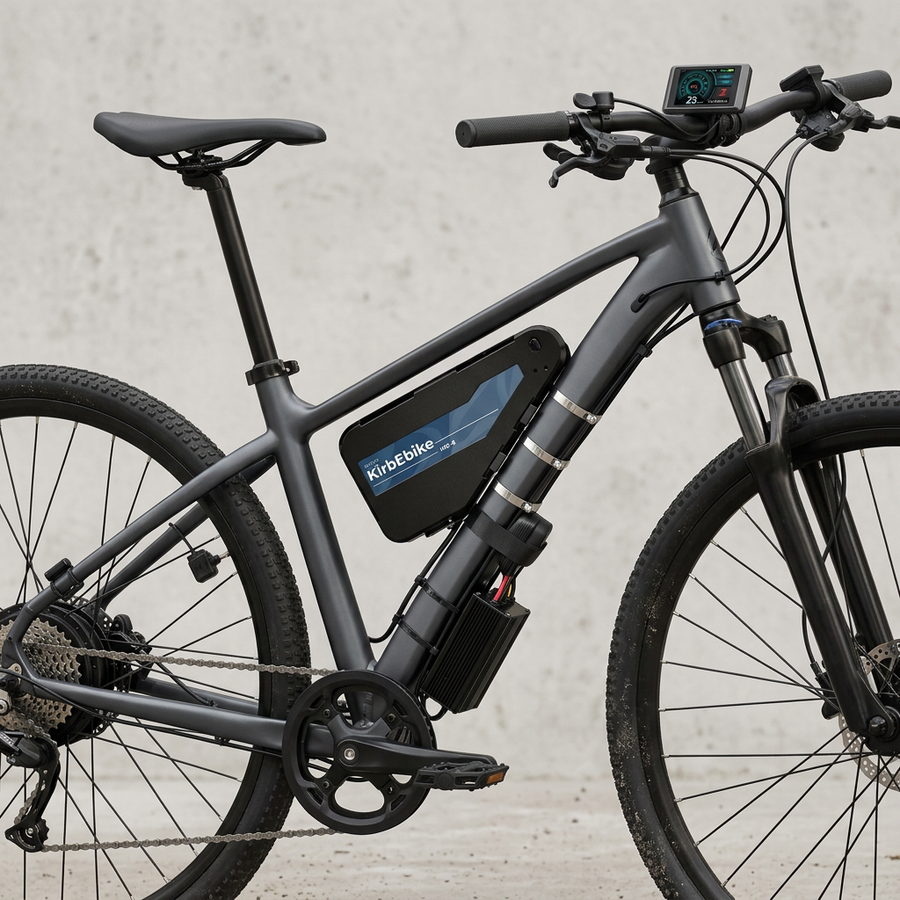
A downtube pack like the KirbEbike Taishan bolts to the frame's bottle-cage mounts. Match the battery's voltage to your motor and controller, and pick the capacity (Ah) to suit your typical ride distance.
Battery
Range
Weight
Charge time
Best for
52V 20Ah
30–50 km
~5.1 kg
~10 hrs (2A)
Lighter builds, shorter rides
52V 25Ah
40–70 km
~6.2 kg
~5 hrs (5A)
The balanced all-rounder
52V 30Ah
55–85 km
~7.55 kg
~5 hrs (5A)
Long rides, heavier riders
Range by battery capacity — 52V packs
Upper end of the typical range band. Each 5Ah step up adds meaningful distance, at a little more weight.
52V 20Ah
up to 50 km
52V 25Ah
up to 70 km
52V 30Ah
up to 85 km
Standard capacityLong-range
For most riders the 25Ah is the sensible default — a genuine day's range without much weight penalty. Step up to 30Ah for long trail days or if you're a heavier rider pushing the motor hard; the 20Ah only makes sense if your rides are short and you want to keep weight down, since its 30–50 km range is a real step below the 25Ah. Note the weight gap between them is modest — roughly a kilo between each step — so range, not weight, is the thing to decide on. Whichever you pick, the rule is the same: the battery voltage must match the motor and controller. If you buy a motor-only kit (a Bafang mid-drive, say) and need a pack separately, a matched battery such as the KirbEbike Taishan or HS-II series is one option — buy on cell quality (look for named LG or Samsung cells) and BMS rating, not just price.
Will a 52V 2000W Kit Fit Your Bike?
Most 2000W rear-hub kits are built for standard mountain-bike and hybrid frames, but there are three fit checks worth doing before you buy anything.
Rear dropout width
2000W hub motors typically need a 135–142mm rear dropout — the gap between your frame's rear forks. That covers most modern MTBs and hybrids. Measure yours before ordering; if it's narrower or a non-standard thru-axle, check with the seller.
Wheel size and gears
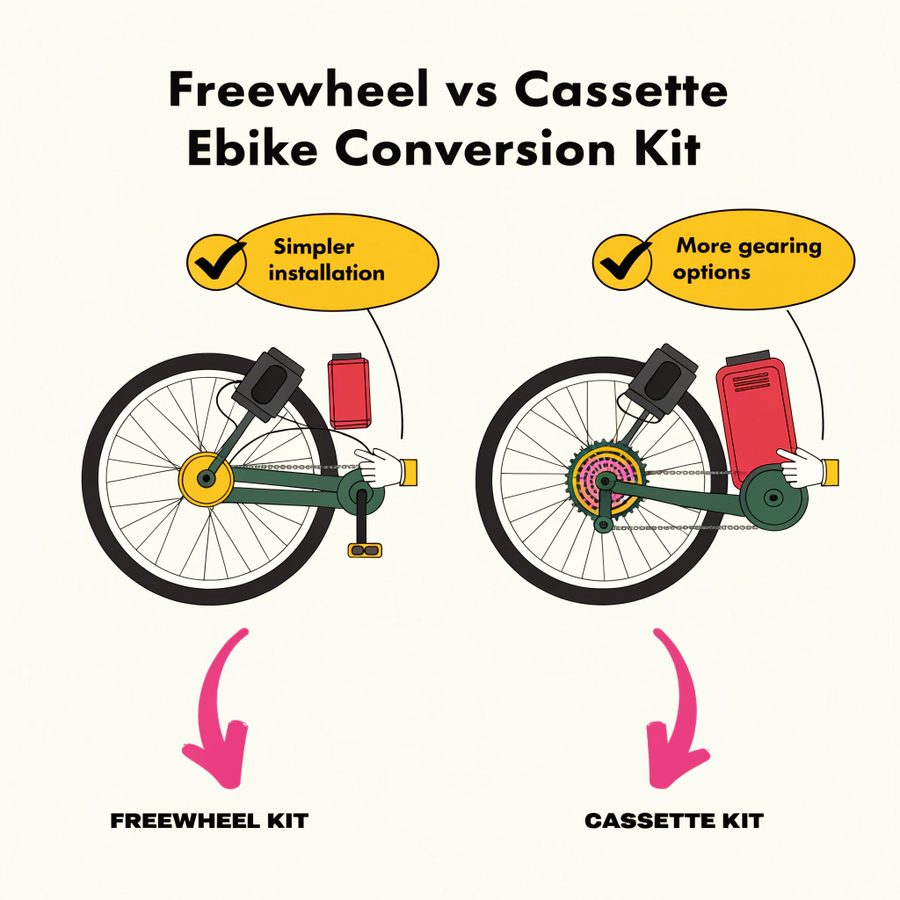
Kits are built to a specific wheel size — commonly 26", 27.5", 28", 29" and 700C — so match the number on your tyre sidewall. You'll also choose between a freewheel (usually 7-speed) and a cassette (8–11 speed) motor to suit your existing gears; getting this wrong is a common ordering mistake, so check which your bike uses.
Brakes and frame strength
A 2000W kit assumes disc brakes and a sound frame. At these speeds and weights, rim brakes aren't enough, and a tired or lightweight frame isn't a good candidate. Make sure your brakes are in good order before adding this much power.
Installation and What's Included
A complete 2000W kit is a bolt-on job most confident home mechanics can do in around 30–40 minutes, though rear-hub installs are a step up from front-wheel kits because you're dealing with the drivetrain. A well-specified kit should include the motor wheel, controller, display, throttle, brake levers (or sensors), a wiring harness and the tools you need.
As an example of what "complete" looks like, the KirbEbike 2000W kit ships with a 2000W motor wheel, a 48V 35A FOC sinewave controller, an LCD colour display, V12 PAS, thumb throttle, e-brake levers, a waterproof 1T4 quick-release harness and installation tools — plus a torque arm, which matters (more below). A mid-drive Bafang BBSHD is a different proposition: it includes the motor and controller but expects you to add a battery and display, and it mounts at the bottom bracket rather than the wheel. Neither is wrong; just know what's in the box before you buy so you're not caught short.
✅
Plan for two parcels: on many bundled kits the battery ships separately from the motor for safe transit — so expect the pack to arrive on its own timeline, whichever brand you order from.
Controller and App Tuning
The controller is the brain of the kit, and it's where 2000W builds differ more than the raw motor spec suggests. A good FOC (field-oriented control) sinewave controller gives smoother, quieter power delivery than a basic square-wave unit. Some kits go further and add app-based tuning over Bluetooth, letting you adjust speed and current limits, PAS levels, acceleration, throttle response and regen from your phone.
This is genuinely useful on a high-power kit: it lets you dial in a gentler, controllable setup for tight trails and a stronger one for open ground, and set that 250W/25 km/h legal-style cap when you need it. KirbEbike's Smart Controller and Ride Power App is one of the more developed examples, and it's a real differentiator versus the sealed controllers on many cheaper motor-only kits — though if you never plan to tune settings, a simpler controller is perfectly fine and cheaper. Buy the level of control you'll actually use.
Safety and Torque Arms
One component matters more than any other on a powerful hub-motor build: the torque arm. A 2000W motor generates enough rotational force to spin loose in a standard dropout, especially aluminium — which can damage the frame or cause a dangerous failure. A torque arm braces the axle against that force. On a kit this powerful it isn't optional; fit it.
Always fit the torque arm (ideally one on each side for higher-power builds), and re-check axle nut torque after your first 50–100 km.
Use disc brakes in good condition and check pad wear before riding hard.
Keep cables clear of spokes and moving parts; a waterproof harness helps in wet conditions but connections still deserve a look after wet rides.
Mount the battery securely with a proper bracket lock, and use a charger matched to the pack — never a random substitute.
If you're running a separate-battery motor kit, these 52V (and 48–72V) packs with matching chargers are one option — compare on cell quality and BMS rating against other suppliers.
You ride off-road, on private land, or where motor vehicles are allowed, and want real speed and hill torque.
You have a sound MTB or hybrid with disc brakes and a 135–142mm rear dropout.
You want strong performance without the weight, cost and specialist parts of a 3000–4000W build.
Look elsewhere if…
You need a road-legal bike — choose a 250W kit instead, from KirbEbike, Swytch, Cytronex or similar.
You want the lightest possible commuter setup — a 2000W direct-drive motor is heavy by design.
You're chasing maximum trail performance — step up to a 3000W (60V) or 4000W (72V) kit.
Conclusion: Is a 52V 2000W Kit Right for You?
For off-road riders who want serious speed and climbing power without the extremes of a 4000W build, the 52V 2000W class is a well-judged middle ground — quick, torquey and, with the right battery, good for a proper day's range. The decisions that matter are choosing the right battery capacity for your rides, confirming your bike's dropout, wheel and brakes fit, and always fitting a torque arm. On brand, the main high-power cross-shop in the UK is a mid-drive Bafang BBSHD; weigh its gear-driven climbing against a sealed, app-tunable and well-supported hub kit such as the KirbEbike 52V 2000W kit — the right answer depends on whether you want a mid-drive feel or a simpler bolt-on with the battery, tuning and support handled. Above all, remember this is an off-road machine in the UK: buy it for where you're actually allowed to ride it.
Weighing up a 2000W build?
Compare the bundled and battery-separate routes, check your bike's fit, and make sure you're riding somewhere a high-power kit is allowed. If a complete package suits you, the KirbEbike team can help you spec the right wheel, battery and gears.
Typically 50–60 km/h (around 35–40 mph) off-road, depending on rider weight, terrain and tyre size. This is well above the UK's 15.5mph road-legal assist limit, so these speeds are for private land and off-road use only.
Is a 2000W ebike kit legal in the UK?
No. UK road-legal e-bikes are capped at 250W continuous and must cut assistance at 15.5mph. A 2000W kit far exceeds both, so in law it's a motor vehicle and is for off-road or private land only unless registered, taxed, insured and ridden with a motorcycle helmet. See KirbEbike's 1000W/2000W legality guide.
What range does a 52V 2000W kit give?
Around 40–85 km per charge depending on battery capacity, assist level, rider weight and terrain. A 52V 20Ah pack sits at the lower end, a 30Ah pack at the upper end. Riding hard at top speed reduces range significantly.
Which battery should I choose — 20Ah, 25Ah or 30Ah?
25Ah is the balanced default for most riders. Choose 30Ah for long rides or if you're heavier and push the motor hard; choose 20Ah only if you want to save weight and your rides are short. Higher Ah means more range but more weight and cost.
Will a 2000W kit fit my bike?
Usually, if your bike has a 135–142mm rear dropout, disc brakes and a sound frame. Match the kit to your wheel size (26"–700C) and to whether your bike uses a freewheel or cassette. Measure your dropout and check your gears before ordering.
Do I need a torque arm for a 2000W kit?
Yes — it's essential, not optional. A 2000W hub motor can spin loose in a standard dropout (especially aluminium), which can damage the frame or cause a failure. Fit the supplied torque arm, ideally one on each side, and re-check axle torque after your first rides.
Is the battery included with a 2000W kit?
It depends on the brand — and even on the specific product. KirbEbike sells the 52V 2000W kit both ways: kit-only (from £357.85) if you already have a matched pack, or complete with a battery (£872.10 with a 25Ah). Mid-drive kits like the Bafang BBSHD are typically sold as a motor kit with the battery and display separate. Always factor the battery cost in when comparing prices.
52V 2000W vs 60V 3000W — which should I pick?
A 52V 2000W kit is lighter, cheaper and easier to live with, and plenty fast for most off-road riding. A 60V 3000W kit adds more speed and climbing power for demanding trail or cargo use, at more weight and cost. If 50–60 km/h covers your needs, 2000W is the value pick.
How long does a 2000W kit take to install?
About 30–40 minutes for a confident home mechanic with a complete kit. Rear-hub installs are slightly more involved than front-wheel kits because of the drivetrain, but most kits include the necessary tools and instructions. A bike shop can fit one if you'd prefer.
Is a 52V 2000W kit waterproof?
Many are designed for wet-weather riding with IP-rated components and waterproof connectors, but "water-resistant" isn't "submersible." Avoid deep water, check connections after wet rides, and confirm the specific IP ratings on any kit you're considering.