Converting a bicycle with an ebike conversion kit changes more than just whether you have electric assist—it changes how the bike feels beneath you, what you hear, and how your body experiences the ride. Some changes are immediately obvious (motor sound, added weight in one wheel), others emerge over miles (different handling on corners, altered feedback through the handlebars).
Understanding what actually changes—and what surprisingly doesn't—helps set realistic expectations before installation and prepares riders for the sensory adjustment period after conversion. This isn't about whether conversion kits are good or bad. It's about what they physically change in your riding experience so you can anticipate the differences rather than being surprised by them.
Motor Noise: What You Actually Hear

Electric motor noise varies dramatically across motor types and quality levels. The sound isn't just about volume—it's about character, frequency, and when it occurs.
Brushless Geared Hub Motors: The Characteristic Whir
Kirbebike's 250W-750W geared hub motors (SHENGYI brand) produce what riders describe as a slight gear noise—a high-pitched whirring that increases with motor load and speed. This is the sound of internal planetary gears meshing as they step down the motor's high RPM to wheel-appropriate rotation.
What it sounds like: Similar to a well-maintained bicycle drivetrain but slightly higher-pitched and continuous while the motor runs. One verified customer describes the EZ Rider kit as producing "slight gear noise"—audible to the rider but not loud enough to dominate the riding experience or be intrusive to pedestrians.
When you notice it: Most apparent during acceleration from stops and climbing hills when the motor is under heavy load. Less noticeable at steady cruising speeds on flat terrain where motor load is lighter.
Volume context: Quieter than car engines, motorbikes, or even some poorly maintained bicycle chains. Comparable to a well-oiled bicycle drivetrain with the addition of a faint electrical hum.
Brushless Direct-Drive Hub Motors: Near-Silent Operation
Kirbebike's higher-power range—48V 1000W through 72V 4000W—uses direct-drive motors where the rotor is the wheel hub itself. No internal gears means no gear meshing noise.
What it sounds like: Predominantly a low electrical hum, barely audible above wind noise at speed. Some riders report these motors are "near silent" compared to geared alternatives.
The physics: Without mechanical gearing, the only sound comes from the controller's electrical switching frequency and bearing rotation. Modern brushless motors with quality bearings operate remarkably quietly—often quieter than the bicycle's chain and drivetrain.
Mid-Drive Motors: Mechanical and Electrical Combined
The Tongsheng TSDZ8 mid-drive operates at the crank, driving the chain directly. This changes the acoustic profile.
What it sounds like: Combination of electrical motor sound plus the mechanical noise of the chain, cassette, and derailleur under power. Verified customers describe the TSDZ8 as "quiet"—one notes the pedal assist "gives the ride a more natural feel" without mentioning noise as an issue.
Why it's different: Because the motor drives through the bicycle's existing drivetrain, you hear both the motor and the amplified sound of the chain and gears working harder than they would on unpowered riding. Not louder necessarily, just a different acoustic signature.
|
Motor Type
|
Primary Sound
|
Volume Level
|
Kirbebike Example
|
|
Brushless geared hub
|
High-pitched whir, gear meshing
|
Moderate—noticeable to rider
|
250W-750W range
|
|
Brushless direct-drive hub
|
Low electrical hum
|
Very quiet—often imperceptible
|
1000W-4000W range
|
|
Mid-drive
|
Motor hum + drivetrain mechanical
|
Moderate—natural cycling amplified
|
TSDZ8 500W/750W
|
Weight Distribution: How the Bike Balances Differently

Adding a motor wheel and battery fundamentally changes how weight is distributed across the bicycle—and riders feel this immediately.
Front Hub Motors: Altered Steering Feel
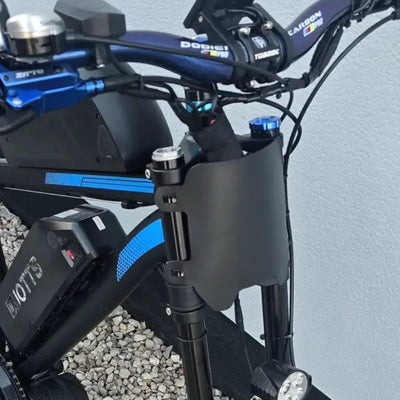
Kirbebike's front wheel systems (EZ Rider, 250W-750W front kits) place the motor in the front hub, replacing the existing front wheel with a heavier motorised equivalent.
What changes:
-
Steering weight: The front end feels heavier, particularly noticeable when lifting the front wheel or maneuvering at walking pace
-
Cornering: More weight pushing forward into turns, requiring slight adjustment to lean angle and speed
-
Low-speed handling: Heavier front wheel has more rotational inertia—takes fractionally more effort to initiate steering changes
Rear Hub Motors: Familiar Weight Distribution
Rear wheel motors (48V 1000W through all high-power systems) place weight where bicycles already carry weight—behind the rider, in the traditional rear triangle.
What changes:
-
Less steering impact: Front steering feels closer to a standard bicycle than front motor systems
-
Weight bias: More weight on the rear wheel affects traction positively on climbs but can make the rear feel slightly planted in corners
-
Lifting difficulty: Heavier rear wheel makes carrying the bike or lifting it over obstacles more challenging
Weight comparison: 48V 1000W motor wheel weighs 4kg (standard) or 6.2kg (all-black version). The heavier all-black version places substantial weight at the rear, noticeably changing how the bike lifts and carries.
What changes:
-
Balanced feel: Weight at the center doesn't bias steering or rear handling—maintains closest feel to original bike balance
-
Lower center of gravity: Additional mass positioned low improves stability
-
Frame stress: More weight directly on frame rather than distributed through wheel bearings
Ride Feel: Handling, Feedback, and Control

Beyond weight and noise, conversion changes tactile feedback through the bike.
Power Delivery Character
Hub motors (front and rear): Power feels like an external push—the wheel pulls or pushes you forward independently of your pedalling cadence. This creates a sensation of being propelled rather than amplified.
Mid-drive motors: Power feels like your legs got stronger—the motor amplifies your pedalling effort through the drivetrain. One TSDZ8 customer describes it as "very natural," specifically noting they didn't install the throttle because "pedal assist gives the ride a more natural feel."
This distinction affects how connected riders feel to the bike. Hub motors feel more like riding a vehicle; mid-drives feel more like enhanced cycling.
Vibration and Road Feel
Front hub motors: Some vibration transmitted through handlebars, particularly on rough surfaces where the heavier motorised wheel encounters bumps and irregularities. More noticeable on lightweight road bike frames with stiff forks than on mountain bike frames with suspension.
Rear hub motors: Vibration absorbed primarily through the saddle and frame rather than handlebars—often less noticeable to rider than front motors.
Mid-drive motors: No additional wheel vibration since wheels remain standard, but drivetrain vibration increases slightly—more chain noise and feedback through pedals under motor load.
Acceleration and Deceleration
Heavier motorised wheels have greater rotational inertia—they resist changes in speed more than lightweight bicycle wheels.
What this means practically:
-
Acceleration: Motor compensates for added wheel weight during powered acceleration, but unpowered acceleration from rest feels slightly sluggish
-
Deceleration: Heavier wheels take fractionally longer to stop—not a safety concern with proper brakes, but requires adjustment in emergency braking instinct
-
Coasting: More momentum while coasting—heavier wheels maintain speed better once moving
Assist Engagement: When and How Power Arrives
The sensory experience of when motor assistance engages affects ride feel significantly.
Cadence Sensor Systems (Standard PAS)
Most Kirbebike kits use D12L cadence sensors detecting when pedals are rotating. Motor assist begins shortly after pedalling starts.
What riders experience: A brief delay (typically 1-2 pedal rotations) between starting to pedal and motor engagement. One customer describes "a little delay before the assistance kicks in"—noticeable but acceptable.
Why it matters: On stop-start urban riding with frequent traffic lights, this delay means initial pedal strokes feel unpowered—requiring slight adjustment to anticipation timing.
Torque Sensor Systems (TSDZ8 Mid-Drive)
The TSDZ8's dual torque sensors measure actual pedalling force 1,000 times per second, modulating motor output proportionally.
What riders experience: Assistance feels immediate and proportional—harder pedalling delivers more assist, lighter pedalling delivers less. Multiple customers describe this as "more natural feel" compared to on/off cadence systems.
What Surprisingly Doesn't Change
Some expected differences don't materialize:
Pedaling resistance when motor is off: Quality hub motors freewheel—when the motor isn't engaged, there's negligible resistance from the motor. Direct-drive motors can produce slight resistance but it's minor. Riders can pedal normally without assist.
Braking effectiveness: Properly installed conversion kits don't compromise braking. The added weight requires attention to brake pad condition, but fundamental braking function remains unchanged. Kirbebike includes brake sensors free with all kits to cut motor power when braking.
Frame rigidity: Concerns about frame flex from motor torque rarely materialize with properly torqued installations. One customer completing 14,000 miles on a 1500W system reports no frame issues across multiple years.
Conclusion
E-bike conversion kits change ride feel in measurable, predictable ways: motor noise introduces a continuous electrical or mechanical hum absent on unpowered bikes; added weight (3-7kg depending on motor type) alters handling, steering response, and how the bike lifts; power delivery creates a propelled sensation from hub motors or an amplified sensation from mid-drives; and battery placement shifts center of gravity differently depending on mounting location.
The sensory experience becomes normal, not noteworthy—the motor becomes part of the bike rather than something added to it. Browse Kirbebike's conversion kit range to find systems engineered for quiet operation, balanced weight distribution, and ride characteristics that enhance rather than compromise the cycling experience.
Frequently Asked Questions
How loud are ebike conversion kits compared to regular bicycles?
Kirbebike's brushless geared motors (250W-750W) produce a slight gear whir—noticeable to the rider but quieter than car traffic or poorly maintained bicycle chains. Direct-drive motors (1000W-4000W) are near-silent with only a low electrical hum.
Does the added motor weight make the bike hard to handle?
Front hub motors (2.7-3.8kg) make steering feel heavier, particularly at walking pace, but riders adapt within weeks. Rear hub motors (4-6.2kg) feel closer to standard bicycle balance since weight is positioned where bicycles traditionally carry loads.
Do conversion kits change how the bike feels through corners?
Yes—heavier motorized wheels have more rotational inertia, requiring slight adjustment to lean angle and speed entry in corners. Front motors make the front end push slightly in turns; rear motors make the rear feel more planted. s.
Is there vibration from the motor that gets uncomfortable on long rides?
Front hub motors transmit some vibration through handlebars on rough surfaces—more noticeable on rigid road bikes than suspension mountain bikes. Rear hub motors transmit vibration through the saddle—typically less intrusive.
How natural does the motor assist feel when riding?
Hub motors feel like external propulsion—the wheel pushes or pulls you forward. Mid-drive motors feel like amplified pedaling—the motor enhances your effort through the drivetrain.
Who Should Plan BDSM Scenes?
BDSM scene planning benefits everyone involved in power exchange dynamics. Here's who should invest time in proper planning:
- New BDSM practitioners - Beginners ne
- Established D/s partnerships. Regular
- People exploring new kinks - Testin
- Planned scenes work well for scheduled video sessions orwhen reuniting.
1T4 Main Cable, MT60, XT90
Priority
Access
Screen
Feature
Weight
Storage
Weight
Feature
Intel Core Ultra 5 226V
14-inch 1920x1200 0LEDtouch
16 GB
3.04 pounds
512 GB SSD
16 hours

usmile
1T4 Main Cable, MT60, XT90

BUY NOW 1

BUY NOW 2
DIAMETER 4.1cm
INSERTABLE LENGTH 9.5cm
BASE WIDTH 6.8cm
MATERIAL Silicone + ABS
PROS
- Smooth graduated taper makes thesize increaseieel natural
- Neck contour provides secure "sit'withoutdiscomfort during wear
- Available in S colonvays includingpremium roseand midnight black
CONS
Definitely not a beginner product -requirespriorexperience with S size
ABS hahdle feels slightly lesspremiuhm than theall-silicone Starer $

A Water Flosser as Part of a Realistic Routine

A Water Flosser as Part of a Realistic Routine

A Water Flosser as Part of a Realistic Routine