Het monteren van een 29-inch conversiekit draait voornamelijk om één ding: het opmeten van je fiets voordat je koopt. Het wiel zelf is het makkelijke deel — een 29er velg is dezelfde 622 mm maat als een 700C wiel, dus de keuze aan kits is breed. Wat de pasvorm uiteindelijk bepaalt, zijn de breedte van je achterpadden, de remschijf, de aandrijving en of de batterij vrij van je frame blijft. Deze gids doorloopt elke controle op zijn beurt, en vergelijkt vervolgens complete 29″/700C kits, zodat je één keer koopt en het meteen goed doet.
De meeste conversiekits zijn ontworpen voor 29ers, omdat een 29er velg dezelfde maat heeft als een 700C wiel (622 mm hielzittingsdiameter). De pasvragen die de doorslag geven zijn breedte van de achterpadden (meestal 135 mm snelspanner, of 142/148 mm steekas), type remschijf, aandrijving (cassette of freewheel) en of de batterij op je frame past. Meet die eerst op. In het VK betekent straatlegaal 250 W beperkt tot 25 km/u; alles daarboven is voor privéland.
Wat is een 29 Inch Ebike Conversiekit Met Batterij?
Een 29-inch conversiekit is een set onderdelen die van je 29er een elektrische fiets maakt, gecentreerd rond een motor die is ingebouwd in een 29-inch wiel dat in je bestaande frame past. In plaats van een nieuwe e-MTB te kopen, behoud je het frame, de voorvork, de vering en de rijpositie die je al kent, en voeg je simpelweg kracht toe. Een complete kit – het type waar deze gids over gaat – wordt geleverd inclusief de batterij, zodat er niets anders hoeft te worden aangeschaft voor je eerste rit.
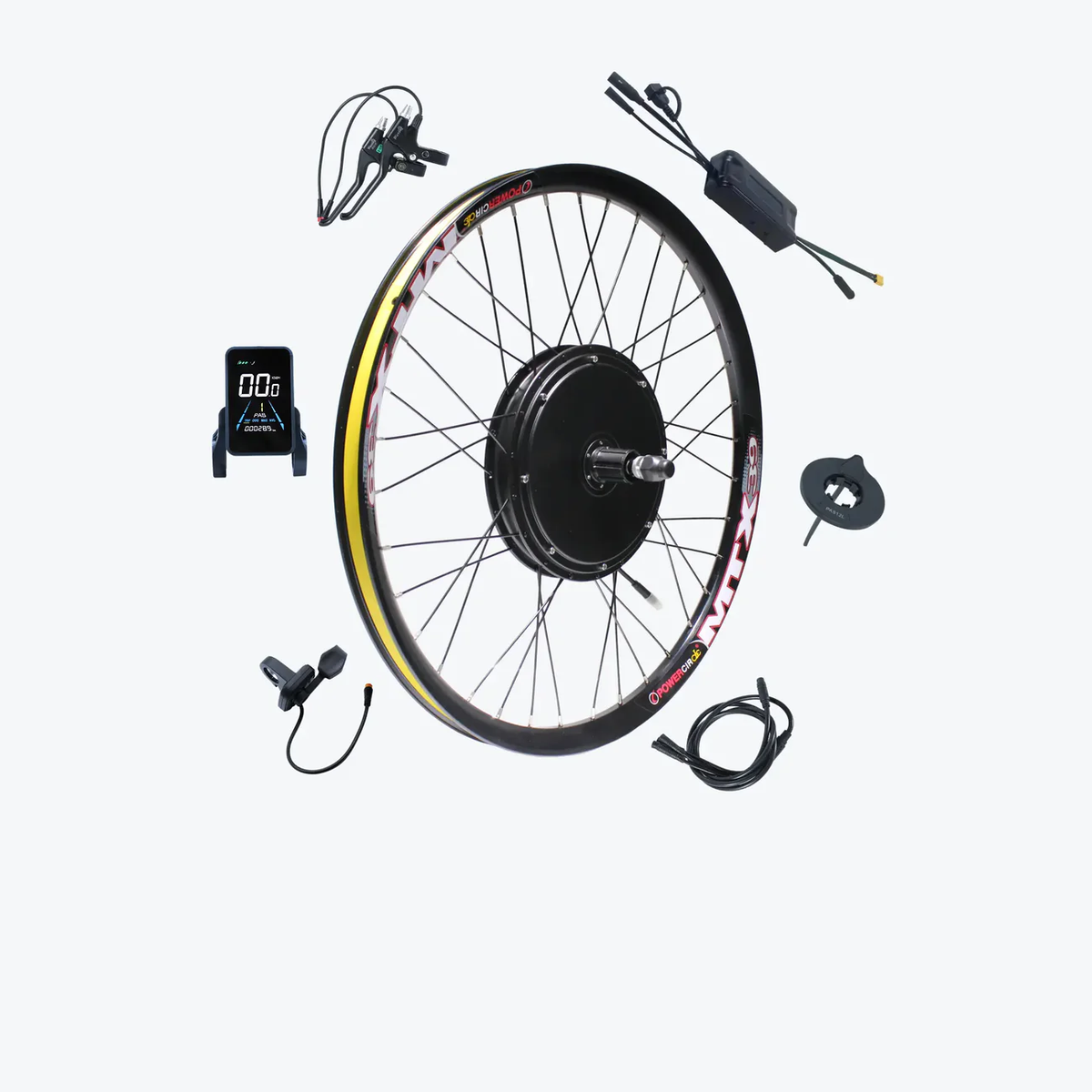
Een typische complete 29-inch kit bevat een motorwiel op maat voor 29″/700C, een accupakket met lader, een controller, een display, een pedaalondersteuningssensor (PAS), remsensoren en – bij gashendelkits – een gashendel, plus de bedrading. Lijsten met alleen kits laten de batterij buiten beschouwing, daarom misleidt vergelijken op prijs alleen: vergelijk complete kits met complete kits.
29-inch wielen zijn de standaard op moderne mountainbikes en veel hybride en gravelbikes, en dat is precies waarom 29er-rijders neigen naar conversie. Het wiel rolt goed over ruw terrein en houdt snelheid vast, en door je eigen frame te behouden, betaal je niet dubbel voor geometrie die je al bevalt — meestal voor veel minder dan een vergelijkbare fabrieks-e-bike.
- MTB-rijders — voeg klimvermogen en trailsnelheid toe met behoud van een bewezen frame en vering.
- Hybride forensen — vlak heuvels af op weg naar het werk zonder een tweede fiets te kopen.
- Gravel & toerrijders — vergroot het bereik op lange dagen met gemengd oppervlak.
Niet bekend met de termen? KirbEbike's begrippenlijst voor beginners legt watts, volts en ampère-uur in begrijpelijke taal uit. Wanneer je klaar bent om complete kits te bekijken, vermeldt de collectie elektrische fietskits + batterij elk vermogensniveau inclusief de batterij.
Past een 29 Inch Ebike Conversiekit op Mijn Fiets?
Een 29er-wiel is slechts het halve verhaal. Hoe goed een kit ook past op 29″ wielen, het werkt niet als je dropout-afstand, remmen, aandrijving of frame-speling niet overeenkomen. Loop de onderstaande checklist door voordat je bestelt — de meeste pasproblemen zijn terug te voeren op één overgeslagen meting.
- Wielmaat — bevestig een echte 29″ (622 mm) velg
- Bandbreedte — de velg van het motorwiel moet passen bij je bandbreedte
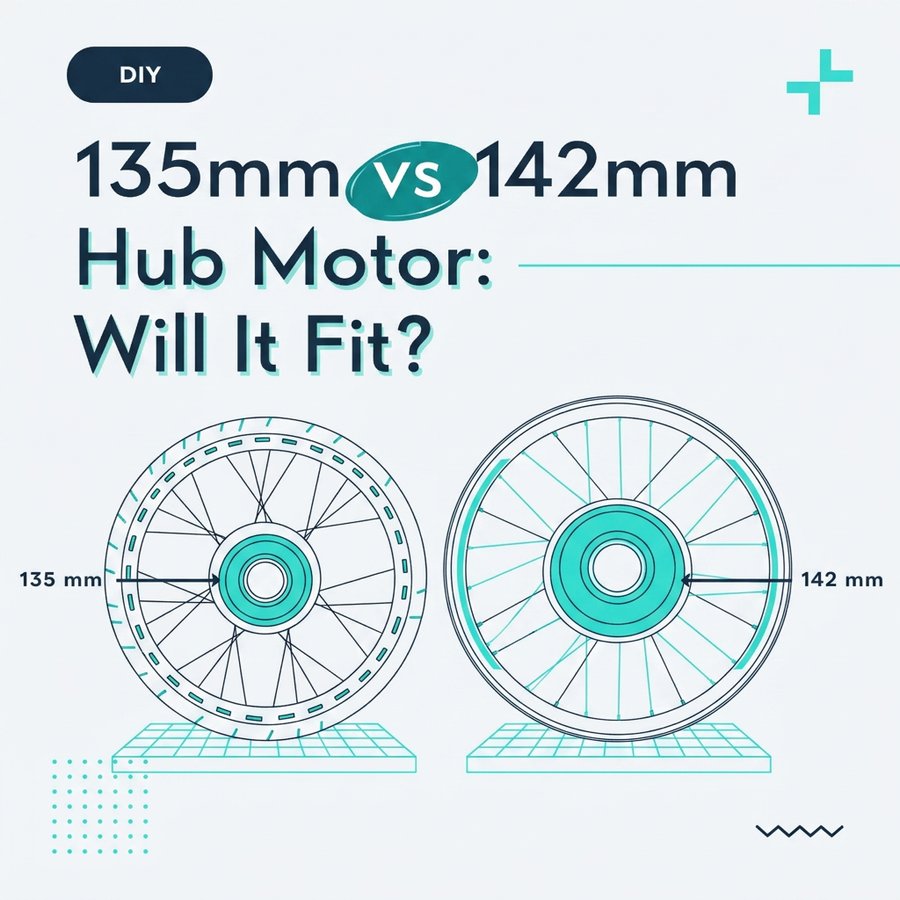
- Afstand tussen achterpadden — 135, 142 of 148 mm; snelspanner of steekas
- Type remschijf — schijf of velg; rotorformaat en montage (6-bouts vs Center Lock)
- Cassette of freewheel — match je aantal versnellingen en tandwielmontage
- Batterij montageruimte — bidonhouders, driehoekruimte, kabelspeling
- Frame speling — liggende achtervorken, remklauw en frame voor de motor en kabels
Controleer de Maat van je 29-Inch Wiel en Band
Begin bij de zijwand van de band. Een 29er band leest als 29 × 2.1 of 622-XX (bijv. 622-54): het eerste nummer (622) is de hieldiameter in millimeters, het tweede (54) is de bandbreedte. Die 622 is de sleutel — het is dezelfde velgmaat als 700C race- en gravelfietswielen, vandaar dat een 29-inch motorwiel mechanisch hetzelfde is als een 700C wiel.
Wat verschilt tussen 29″ en 700C is de band, niet de velg: 29″ banden zijn meestal breder en nobbyer voor off-road; 700C banden zijn smaller voor weg en gravel. Dus het motorwiel moet passen bij je bandbreedte — een brede MTX-stijl velg voor dikke 29er trailbanden, een smallere velg voor gladde 700C banden. Als je fiets is gelabeld als 700C, is een kit die 29″/700C compatibiliteit vermeldt de juiste.
Meet de Breedte van de Achterpatten Voordat Je een Motorwiel Kiest
De dropout-afstand — de ruimte tussen de binnenzijden van je achterpadden, waar de as zit — is de meest cruciale meting voor een achterwielkit, en degene die het vaakst wordt overgeslagen. Meet het op met het wiel eruit, van binnenkant naar binnenkant, en noteer of je fiets een snelspanner of een steekas met bouten gebruikt.
| Achterafstand | Astype | Meestal te vinden op | Pasvorm opmerking |
|---|---|---|---|
| 135 mm | Snelspanner | Oudere/hardtail MTB's, veel hybrides | De meest voorkomende doelgroep voor achternaaf; ruimste kitkeuze |
| 142 mm | Steekas | Moderne trail hardtails & gravel | Heeft een kit/adapter nodig die gebouwd is voor steekasafstanden |
| 148 mm (Boost) | Steekas | Nieuwere full-suspension & trail 29ers | Bevestig dat de kit expliciet 148 mm Boost ondersteunt |
Veel budgetkits passen op 135 mm snelspanners (sommige tot 142 mm). Thru-axle fietsen (142 en 148 mm Boost) zijn gebruikelijk op nieuwere 29ers en hebben een thru-axle-ready motor of een asadapter nodig — niet alle kits bevatten er een. Als je frame een thru-axle heeft, bevestig dan altijd schriftelijk de compatibiliteit voordat je koopt: dit is verreweg de meest voorkomende oorzaak van het mislukken van een 29er conversie. Voor een uitgebreidere bespreking van MTB valkuilen, zie KirbEbike's gids voor het converteren van een mountainbike naar een e-bike.
Controleer de Compatibiliteit van de Remschijf
De meeste 29ers gebruiken schijfremmen, dus het motorwiel moet je rotor kunnen accepteren en de remklauw moet kunnen uitlijnen. De twee factoren zijn rotorformaat (meestal 160, 180 of 203 mm) en montagestandaard (6-bouts of Center Lock). Een nieuw motorwiel behoudt meestal de standaard remklauwpositie; als de standaarden verschillen, heb je mogelijk een nieuwe rotor of een adapter nodig.
Cassette vs Freewheel Compatibiliteit
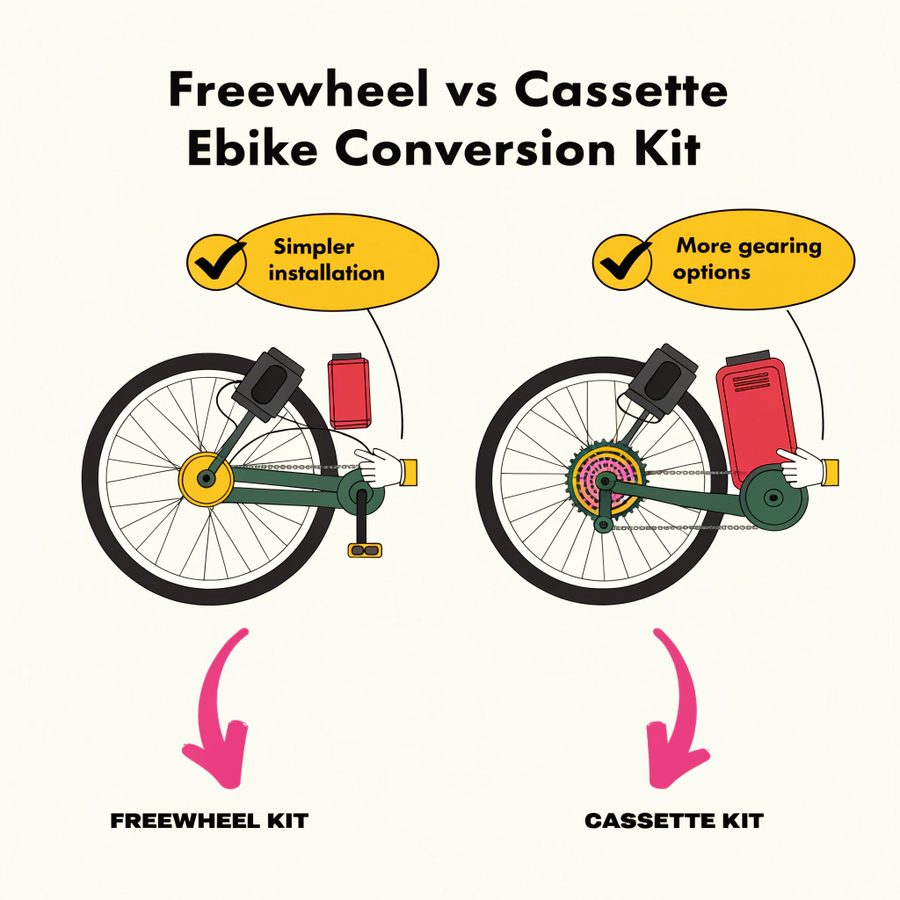
Dit vangt veel kopers. Een achternaafmotor is ingesteld voor een cassette of een freewheel, en deze zijn niet uitwisselbaar zonder het juiste onderdeel – als je het verkeerd doet, passen je bestaande tandwielen niet.
| Naaf type | Werkt met | Typische versnellingen | Opmerkingen |
|---|---|---|---|
| Cassette naaf | Moderne MTB/hybride aandrijflijnen | 8–12 versnellingen | Cassette schuift op een spline-vrije body; de moderne standaard |
| Freewheel naaf | Oudere / budget fietsen | 5–7 versnellingen | Schroefdraad freewheel schroeft op de naaf; een 7-speed heeft vaak een spacer nodig |
Controleer voor het bestellen drie dingen: hoeveel versnellingen je fiets heeft, of de tandwielen een cassette (gesplineerd) of freewheel (schroefdraad) zijn, en of de naaf van de kit overeenkomt. Kits die een breder bereik accepteren — een 6- tot 12-speed freewheel, of een cassettebody voor 8-11 speed — besparen het verwisselen van aandrijflijnonderdelen. KirbEbike's mountainbike-conversiegids behandelt cassette- en freewheelkeuzes voor 26″, 27.5″ en 29″ wielen.
Complete 29″/700C Kits met Batterij
Op maat gemaakte motorwielen in 13 maten — inclusief batterij, controller, display en lader, afgestemd op jouw drop-out en aandrijflijn.
Achterwiel versus Voorwiel: Welke Past Beter?
Zodra de wiel- en dropout-vragen zijn beantwoord, is de volgende beslissing aan welk uiteinde van de fiets de motor komt. Achter- en voornaafmotoren zijn geschikt voor verschillende fietsen en rijstijlen, elk met pasvormimplicaties die de moeite waard zijn om af te wegen.
Conversie naar Achternaafmotor
Een achternaafmotor drijft het achterwiel aan, waardoor de kracht wordt overgebracht waar je gewicht al zit. Het is de gebruikelijke keuze voor mountainbikes, heuvels en krachtigere opstellingen — de tractie en het rijgevoel zijn beter, en het maakt gebruik van je bestaande achterste aandrijving.
- Betere tractie op klimmen en losse ondergronden
- Natuurlijker, gebalanceerder rijgevoel onder stroom
- Geschikt voor MTB, heuvelachtige routes en krachtigere kits
- Gebruikt je bestaande cassette/freewheel versnellingen
De meeste van KirbEbike's krachtigere 29-compatibele kits zijn achterwielkits — de 48V 1000W kit, de 52V 2000W MTX en de 60V 2500–3000W MTX behoren daartoe — allemaal op bestelling gemaakt in jouw wielmaat.
Conversie Voornaafmotor
Een voornaafmotor drijft het voorwiel aan en is meestal de eenvoudigste installatie: je achterste aandrijving blijft onaangetast, dus er is geen cassette of vrijloop om te matchen. Het is geschikt voor eenvoudig woon-werkverkeer, en het is hoe veel straatlegale 250W kits zijn gebouwd.
- Eenvoudigste installatie — achterste aandrijving onaangetast
- Geen cassette/vrijloop matching nodig
- Goed voor eenvoudig, lager vermogen woon-werkverkeer
De nadelen: de voorste tractie kan wegglijden op losse of natte ondergrond, en de vork moet geschikt zijn voor het motorkoppel. KirbEbike's 250W voorwielkits zijn straatlegale opties die passen op 29″/700C — en op elke voorwielmotorfiets, vooral aluminium of carbon vorken, monteer een koppelarm om te voorkomen dat de as in de dropout draait.
Achternaaf versus Voornaaf: Snelle Vergelijking
| Functie | Achternaaf | Voornaaf |
|---|---|---|
| Installatie | Matig | Gemakkelijker |
| Tractie | Hoger | Lager |
| Geschiktheid MTB | Beter | Beperkt |
| Invloed aandrijving | Gebruikt uw versnellingen | Geen |
| Prestaties heuvels | Beter | Afhankelijk van vermogen |
De Juiste Batterij Kiezen voor een 29 Inch Conversiekit

Bij een complete kit is de batterij inbegrepen, maar de capaciteit die je kiest moet passen bij je rijstijl, niet alleen bij het nominale getal. Het gaat erom de energie aan boord af te stemmen op je echte ritten, en vervolgens te controleren of het pakket fysiek past in het frame van je 29er.
Waar het om gaat: spanning (moet overeenkomen met de motor/controller — 36-52V voor kits in de pendelklasse, 60-72V voor hoog vermogen), ampère-uur (Ah) en wattuur (Wh) (Wh = volt × Ah, de ware maat voor bereik), celkwaliteit, en montagestijl. Druk het bereik uit als een band, nooit als een enkel gegarandeerd cijfer — het schommelt met gewicht, terrein, bandenspanning en hoe hard je rijdt.
| Als uw ritten… | Neig naar | Omdat |
|---|---|---|
| Korter woon-werkverkeer / gemengd | Kleinere capaciteit | Lichter, makkelijker te plaatsen, goedkoper — genoeg bereik voor de dag |
| Lange tochten / heuvelachtig / hoge-vermogen | Grotere capaciteit | Meer reserve, minder laadstops, minder diepe cycli |
De kernkits van KirbEbike delen één batterijsysteem, zodat pakketten uitwisselbaar zijn tussen het 500W–4000W-bereik en je later een tweede pakket kunt toevoegen. De Taishan en HS-II batterijen gebruiken genaamde LG 21700 en Samsung 50S cellen, een IP65 afgesloten behuizing en een 5A lader. Welk merk je ook koopt, beoordeel een pakket op celtype, BMS-rating, capaciteit en pasvorm — in die volgorde — en controleer altijd of het vrij van je framedriehoek blijft. Blader door de volledige ebike batterijcollectie om te vergelijken.
Hoe installeer je een 29 Inch Conversiekit met Batterij?

Als de pasvormcontroles zijn doorstaan, is de installatie uitvoerbaar voor iedereen die comfortabel is met het wisselen van een wiel — hoewel het nog steeds een klus is die zorgvuldig moet worden uitgevoerd. Met een plug-and-play kit met een voorgemonteerd motorwiel zijn de meeste rijders in ruim minder dan een uur klaar.
Stap 1 — Verwijder het Bestaande Wiel
Ontgrendel de rem indien nodig, maak de as los (snelspanner of steekas) en verwijder het wiel. Plaats je band, binnenband en — indien van toepassing — je rotor en tandwielen op het motorwiel, of monteer de nieuwe meegeleverde onderdelen. Plaats het motorwiel recht in de dropouts.
Stap 2 — Installeer de Batterijhouder
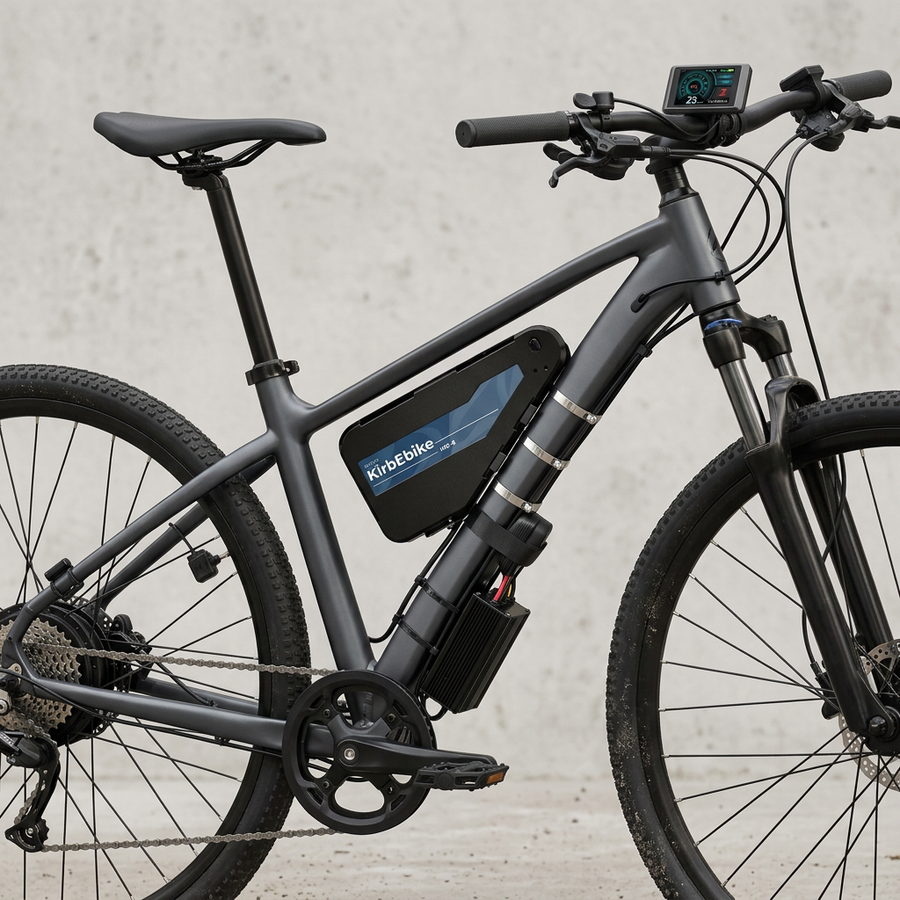
Monteer de batterij zodanig dat deze vrij blijft van het frame en het gewicht laag en centraal houdt — vaak op de onderbuis (op bidonhouderbevestigingen), binnenin de framedriehoek, of op een bagagedrager. Controleer voordat u zich vastlegt:
- Bidonhouders zijn aanwezig en in goede staat (pakketten mogen niet alleen aan tie-wraps hangen)
- Framevrijheid voor het pakket en de beugel
- Kabelgeleiding die niet blijft haken, uitrekt of schuurt
Stap 3 — Sluit Controller, Display en Sensoren aan
Sluit de controller aan en vervolgens de display, PAS-sensor, remsensoren en gashendel. Kwaliteitskits gebruiken waterdichte, gecodeerde snelkoppelingsconnectoren die maar op één manier passen, wat verkeerde bedrading moeilijk maakt. Monteer de display op de plek waar normaal een fietscomputer zou zitten en werk de bedrading netjes langs het frame weg.
Stap 4 — Test voor het rijden
Sla de controles niet over. Controleer elk van deze punten vóór uw eerste echte rit:
- Remmen grijpen stevig aan en schakelen de motor uit
- Wiel zit recht en gecentreerd in de uitvaleinden
- Motor drijft de juiste richting aan
- PAS reageert soepel wanneer u trapt
- Batterij is vergrendeld en connectoren zijn goed aangesloten
- Draaiarm(en) gemonteerd en asmoeren zijn vastgedraaid
Veelvoorkomende fouten bij het kopen van een 29 inch ombouwkit
De meeste spijt achteraf komt voort uit een paar vermijdbare fouten. Neem deze door voordat u een aankoop doet.
Ervan uitgaande dat elke 29 inch kit op elke 29er past
Wielmaat alleen bevestigt de compatibiliteit niet. Een kit kan correct 29″ zijn gelabeld en toch niet passen als de breedte van uw uitvaleinden, rem- of aandrijfstandaarden verschillen. Controleer de hele checklist, niet alleen het wiel.
Metingen van uitvaleinden negeren
Verkeerde asafstand is de klassieke stopper — een 135 mm snelkoppelingsmotor past niet in een 142 mm steekasframe zonder de juiste oplossing. Meet van binnenvlak tot binnenvlak, en bevestig snelkoppeling versus steekas, voordat u bestelt.
Vermogen kiezen zonder de fietsconditie te controleren
Meer vermogen vraagt meer van de fiets. Een krachtige kit vereist een sterk frame, remmen in goede staat en een gezonde aandrijflijn. Het monteren van veel wattage op een vermoeide fiets verplaatst het zwakke punt, het verwijdert het niet.
Een accu kopen zonder de ruimte te controleren
Een grote onderbuis of driehoekige accu past niet op elk frame. Meet uw driehoek- en bidonhouderafstand aan de hand van de gepubliceerde afmetingen van de accu – de angst voor de pasvorm van de accu leidt tot meer retouren dan enig ander probleem.
Lokale e-bike regelgeving vergeten
Houd weg-legale en off-road constructies mentaal gescheiden. In het VK is een kit alleen een weg-legale EAPC als de motor een continu vermogen heeft van 250 W, de ondersteuning stopt bij 25 km/u en de fiets moet worden getrapt. Kits met een hoger vermogen zijn voor privéland. Controleer de GOV.UK e-bike regels en rijd binnen deze regels.
29 inch ombouwkit versus het kopen van een nieuwe elektrische fiets
Als u al een degelijke 29er bezit, is ombouw meestal de voordeligere optie – maar het is niet voor iedereen weggelegd. Hier is de eerlijke afweging.
Voordelen van een ombouwkit
- Behoud het frame, de vork en de geometrie die u al prettig vindt
- Lagere kosten dan een vergelijkbare fabriekse-MTB
- Kies uw eigen vermogensniveau en accucapaciteit
- Vertrouwde rijhouding – niets nieuws om aan te wennen
- Minder afval – u hergebruikt een fiets die u al bezit
Wanneer het kopen van een complete e-bike meer zin heeft
- U wilt een volledig geïntegreerd, in de fabriek getest ontwerp
- U heeft liever een door de fabrikant gebouwd frame en garantie op de hele fiets
- U wilt helemaal geen doe-het-zelf-werk doen
Aanbevolen 29 inch ombouwkit opties
Hieronder staan complete kits (motorwiel plus accu) die geschikt zijn voor 29″/700C, en die in het VK verkrijgbaar zijn, met dezelfde nauwkeurigheid beoordeeld. Controleer de pasvorm van de uitvaleinden en de aandrijflijn op de pagina van elke verkoper – de meeste zijn 135 mm snelspan-freewheel-constructies, en de meeste krachtige kits zijn alleen voor off-road gebruik. KirbEbike zit qua prijs in het middensegment en verdient zijn plaats door op bestelling gemaakte wielmaten, het breedste freewheel-bereik, een meegeleverde 5A lader en service in meerdere landen.
| Verkoper (domein) | Voorbeeld 29″ kit | Accu incl. | Dropout / aandrijving | Prijs (vanaf) |
|---|---|---|---|---|
| kirbebike.com | 48V 1000W MTX achter | LG/Samsung, lader | 135–142 mm · 6–12-spd | £365.25 |
| theebikeshop.co.uk | 48V/52V 1500W MTX39 achter | 48V 20Ah LG | 135 mm · 7-spd freewheel | £300 |
| ebikepoweruk.com | 48V 1000W MTX achter | 48V 19.2Ah LG | 135–148 mm · 7–11 cassette | £249 |
| ebikemasters.co.uk | 1000W MTX achter | 48V 13Ah downtube | 135 mm · 7-spd freewheel | £500 |
| yosepower.co.uk | 36V 250W/350W naaf | 36V 13–15.6Ah | Wettelijk focus, QR | £270 |
Alle cijfers zijn geverifieerd op de live pagina van elke verkoper, juli 2026, en kunnen aan verandering onderhevig zijn — bevestig dit voor het bestellen. Links openen in een nieuw tabblad.
The Ebike Shop heeft hier de scherpste prijs voor een complete kit (een 1500W MTX39 met een 20Ah LG accu vanaf £300, 2 jaar garantie), maar is alleen 135 mm freewheel.

E-Bike Power UK is het meest flexibel qua aandrijving — 135–148 mm dropouts en een 7–11-speed cassette body, met een displaybegrenzer voor Britse conformiteit.

E-Bike Masters heeft een winkel in Manchester voor hands-on montage en ondersteuning, maar verzendt een kleinere 13Ah accu tegen een hogere prijs.

Yose Power richt zich op weg-legaal (36V 250–350W) met goede recensies — beter geschikt voor pendelaars dan voor krachtige 29er-constructies.

Dit is een representatieve steekproef, niet de hele markt — bouwers zoals Woosh, Swytch (weg-legaal 250W) en gespecialiseerde wielenbouwers bedienen ook 29ers. Bij wie u ook koopt, beoordeel elke kit aan de hand van dezelfde checklist: 29″/700C pasvorm, uitvalbreedte, rem- en aandrijflijnmatch, accucellen en BMS, en after-sales support.
KirbEbike 29-inch opties

KirbEbike bouwt het motorwiel op bestelling in uw exacte maat, dus de 29″/700C pasvorm wordt gemaakt in plaats van aangenomen. Kits worden compleet geleverd — ingegoten controller, kleurendisplay, sensoren, waterdichte snelkoppelingskabelboom en een accu met LG- of Samsung-cellen met lader — onder een garantie van 1 jaar vanuit Britse voorraad. Achternaaftkits zijn geschikt voor 6- tot 12-speed freewheels (de meeste concurrenten stoppen bij 7), en krachtigere kits bevatten een één-knops begrenzingsmodus die de fiets beperkt tot een weg-legale 250 W / 25 km/u.
| KirbEbike kit | Vanaf | Meest geschikt voor | Legaliteit |
|---|---|---|---|
| 250W Voorwiel | £237.70 | Vlakke woon-werkverkeer, eenvoudigste installatie | Wettelijk toegestaan op de weg |
| 500W / 750W MTX | £261.65 | Lichte heuvels, gemengd terrein | Off-road* |
| 48V 1000W MTX | £365.25 | Heuvelachtig woon-werkverkeer, allround vermogen | Off-road* |
| 52V 2000W MTX | £357.85 | Snel gemengd rijden (★4.8) | Off-road* |
| 60V 2500–3000W MTX | £489.00 | Trail snelheid, vracht, 72 km/u+ | Off-road* |
| 72V 4000W Extreme | £670.00 | Max MTB/fat-tire prestaties | Off-road* |
*Off-road / privéland met vol vermogen; elke slimme kit bevat een weg-legale 250 W Begrenzingsmodus.
Conclusie: De juiste 29 inch kit vinden
Een 29er ombouw is veel meer dan alleen wielmaat. De 622 mm velg brengt u in de race – maar de pasvorm wordt bepaald door de breedte van uw achteruitval en type as, uw remschijf, of u een cassette of een freewheel gebruikt, en of de accu vrij blijft van uw frame. Meet deze voordat u koopt en de installatie is snel; sla er één over en u pakt een retourzending in.
Stem de kit af op uw fiets en rijgedrag: een 250 W kit met voornaaf voor eenvoudig, legaal woon-werkverkeer, of een krachtigere kit met achternaaf voor heuvels, paden en snelheid op privéterrein. Controleer de pasvorm, rijd volgens de wet en geniet van de fiets die u al bezit – nu geëlektrificeerd.
Klaar om uw 29er te elektrificeren?
Combineer een complete 29″/700C kit met uw uitval, aandrijflijn en rijgedrag — inclusief accu, lader en complete gereedschapset.
Veelgestelde vragen
Hoe snel kan een 3000W ebike ombouwkit gaan?
Wat is de snelste elektrische fiets ombouwkit met accu?
Wat is de goedkoopste elektrische fiets ombouwkit?
Wat zijn de nadelen van e-bike ombouw?
Is een e-bike ombouwkit illegaal?
Wat is de levensduur van een e-bike accu?
Wat zijn de risico's van ombouwsets?
Is het beter om een e-bike of een ombouwkit te kopen?
Welke e-bike heeft 100Nm koppel?
Wat is het beste merk ombouwkit?
Bronnen
- GOV.UK — Rijden op een elektrische fiets: de regels. gov.uk/electric-bike-rules
- GOV.UK — Elektrisch ondersteunde fietsen (EAPC's): informatieblad. gov.uk
- Cycling UK — Gids voor e-bike accu's. cyclinguk.org
- Battery University — Grondbeginselen van accucapaciteit en opladen. batteryuniversity.com
- Park Tool — Servicehandleidingen voor fietswielen, naven en rotoren. parktool.com
- Sheldon Brown — Referentie voor fietsframe- en wielafmetingen. sheldonbrown.com