The decision between converting your existing bicycle to electric or purchasing a complete e-bike is one of the most common dilemmas facing cyclists considering electric assistance. Both ptions offer unique advantages and potential drawbacks, and the right choice depends on your specific circumstances, budget, riding goals, and mechanical aptitude.
This comprehensive analysis examines both pathways to help you make an informed decision that aligns with your needs and delivers the best value for your investment.
Understanding the Two Pathways

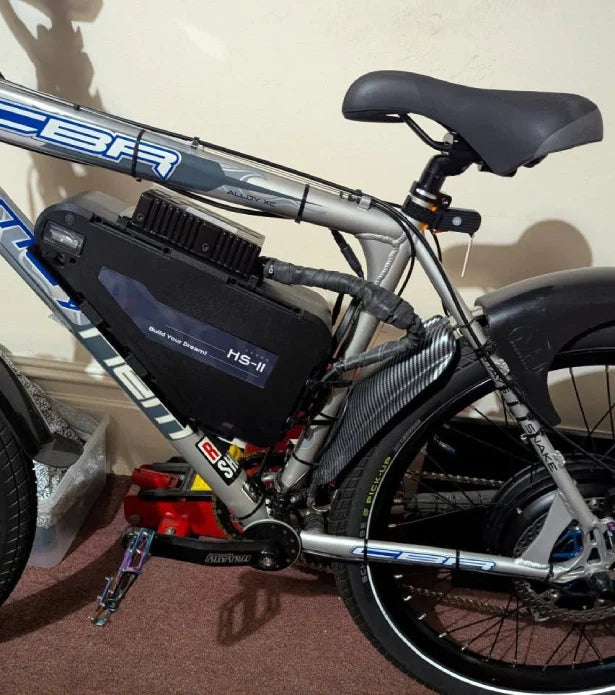
When considering electric cycling, you essentially have two routes: transform your current bike with a conversion kit or invest in a factory-built e-bike. The best ebike kit solutions have made conversion increasingly accessible and cost-effective, while pre-built e-bikes offer plug-and-play convenience with integrated designs.
Conversion Kit Approach
- Add electric components to your existing bicycle
- Choose power level, battery capacity, and motor type
- Install yourself (20-40 minutes) or professionally
- Keep familiar bike geometry and components
Complete E-Bike Purchase
- Factory-integrated electric system
- Pre-configured components and settings
- Warranty coverage for entire bike
- Ready to ride immediately
Cost Analysis: Conversion vs Purchase
Financial Investment Comparison
One of the most compelling reasons people choose conversion kits is the significant cost advantage:
|
Aspect
|
Conversion Kit
|
Complete E-Bike
|
|
Initial Investment
|
Budget to premium options available
|
Generally higher upfront cost
|
|
Bike Frame
|
Use existing bike (zero cost)
|
Included in purchase
|
|
Customization
|
Choose exact components needed
|
Limited to available models
|
|
Component Quality
|
Select premium parts within budget
|
Varies by manufacturer
|
|
Long-term Value
|
Upgradeable components
|
Replacement more expensive
|
Hidden Cost Considerations:
Conversion Kit Additional Costs:
- Basic tools if not owned (one-time investment)
- Professional installation if preferred
- Potential frame upgrades (torque arms, reinforcement)
- Learning curve time investment
Complete E-Bike Additional Costs:
- Higher initial depreciation
- Proprietary replacement parts often more expensive
- Limited upgrade options
- Potential for entire bike replacement vs. component upgrade
Value Proposition Over Time
Conversion kits offer superior long-term value because:
- Individual component replacement vs. entire bike
- Upgrade path as technology improves
- Transfer kit to different bikes
- Keep high-quality frame investment
- Battery replacement significantly cheaper than new e-bike

Power and Customization Options
Conversion Kit Advantages:
Modern conversion kits offer exceptional performance customization:
Power Range Flexibility:
- 250W road-legal options
- 500W-1000W commuter systems
- 1500W-2000W performance setups
- 2500W-4000W extreme power options
This flexibility means you can match power precisely to your needssomething impossible with fixed e-bike configurations.
Motor Placement Choices:
- Front hub motors for simplicity
- Rear hub motors for better traction
- Mid-drive motors for optimal weight distribution and hill climbing
- Mix motor types across multiple bikes
Battery Capacity Selection:
The electric bike kit battery options provide extensive range choices:
- 36V 13-16Ah for commuting (30-50km range)
- 48V 16-20Ah for daily use (35-60km range)
- 52V 20-30Ah for extended rides (40-70km range)
- 60V-72V 20Ah for maximum performance (40-80km+ range)
Complete E-Bike Limitations:
- Fixed power output
- Limited battery upgrade options
- Proprietary systems restrict modifications
- Single motor type and placement
Performance Characteristics
|
Performance Aspect
|
Conversion Kit
|
Factory E-Bike
|
|
Top Speed
|
Customizable 25-85+ km/h
|
Usually limited to legal/brand specs
|
|
Range
|
Choose battery size for needs
|
Fixed to included battery
|
|
Hill Climbing
|
Select motor for terrain
|
Based on bike specification
|
|
Weight Distribution
|
Optimize placement
|
Pre-determined design
|
|
Power Delivery
|
Adjustable controller settings
|
Factory tuned (limited adjustment)
|
Installation and Setup

Conversion Kit Installation
Time Investment:
- Hub motor kits: 20 minutes average
- Mid-drive systems: 30-40 minutes
- First-time installation: Allow extra hour for learning
Skill Requirements:
- Basic mechanical aptitude helpful
- Ability to follow instructions
- Comfort with simple tools
- Understanding of bicycle components
Installation Advantages:
- Learn system thoroughly
- Easy to troubleshoot issues
- Understand component relationships
- Confidence in repairs and upgrades
Installation Support:
- Detailed video tutorials available
- Comprehensive written instructions
- Active online communities
- Technical support available
- Professional installation option if preferred
E-Bike Setup
Time Investment:
- Minimal assembly (usually just pedals, handlebars)
- 10-15 minutes to riding
Skill Requirements:
- Basic assembly only
- No electrical knowledge needed
Setup Considerations:
- Less understanding of system
- Dependent on dealer for service
- May lack troubleshooting knowledge
- Limited customization options
Quality and Reliability

Component Quality Control
Conversion Kits:
Quality varies significantly, making brand selection crucial:
Premium Conversion Kits Offer:
- LG or Samsung battery cells
- Brushless direct-drive or geared motors
- IP66 waterproof ratings
- Military-grade battery construction
- Intelligent BMS (Battery Management System)
- 60Amp discharge capability for high power
- 1000+ charge cycle lifespan
- CE/UL safety certifications
Factory E-Bikes:
- Integrated quality control
- Matched component compatibility
- Professional assembly
- Comprehensive testing before delivery
Durability and Longevity
Conversion Kit Advantages:
- High-quality frame preserved (often superior to e-bike frames)
- Individual component replacement
- Upgrade components as they wear
- Motor lifespan often exceeds frame life
- Battery replacement straightforward
E-Bike Considerations:
- Frame designed around electric system
- Warranty coverage (typically 1-2 years)
- Proprietary parts may become discontinued
- Entire bike replacement when obsolete
- Integrated batteries sometimes non-replaceable
Bike Compatibility and Flexibility

Conversion Advantages
Bike Preservation:
- Keep beloved bike you're comfortable riding
- Maintain familiar geometry and handling
- Preserve high-quality frame investment
- Emotional attachment to existing bike honored
Multi-Bike Flexibility:
- Convert different bikes for different purposes
- Transfer kit between bikes
- Seasonal bike conversions
- Keep non-electric option available
Wheel Size Compatibility:
- 16" (Brompton, compact folders)
- 20" (folding bikes, tricycles)
- 26" (mountain bikes, cruisers, fat bikes)
- 27.5" (modern MTBs)
- 28" (hybrid bikes)
- 29" (large MTBs)
- 700C (road bikes)
Bike Type Suitability:
- Mountain bikes
- Road bikes
- Hybrid bikes
- Folding bikes
- Fat tire bikes
- Cargo bikes
- Tricycles
- Ladies' step-through frames
E-Bike Limitations
Fixed Configuration:
- Single bike type and geometry
- Cannot transfer to different frame
- Stuck with original design decisions
- Frame replacement requires new e-bike
Customization and Upgrades
Conversion Kit Flexibility
Current Customization:
- Choose exact power level needed
- Select preferred motor type
- Pick battery capacity for range
- Throttle or pedal-assist preference
- Display and control options
Future Upgrades:
- Increase battery capacity anytime
- Upgrade to more powerful motor
- Add second battery for extended range
- Improve controller for better performance
- Update display technology
- Switch motor types (hub to mid-drive)
The mid motor electric conversion kit exemplifies upgrade flexibilityif you start with a hub motor and later want superior hill-climbing with 140Nm torque, you can upgrade to mid-drive without replacing your entire bike.
E-Bike Upgrade Limitations
Restricted Options:
- Battery upgrades limited to compatible models
- Motor replacement often impossible
- Proprietary systems lock you in
- Frame geometry unchangeable
- Display and controller usually fixed
When Buying E-Bike Makes Sense
Ideal E-Bike Purchase Scenarios:
- Convenience Priority
- Want immediate ready-to-ride solution
- Don't own suitable bike
- Prefer professional assembly
- No Existing Bike
- Starting from scratch
- No attachment to particular frame
- Need complete package
- Warranty Security
- Want comprehensive coverage
- Prefer dealer support network
- Value professional service access
- Integration Preference
- Appreciate integrated design aesthetic
- Want hidden battery/motor
- Prefer seamless appearance
- Limited Technical Confidence
- Uncomfortable with installation
- Prefer professional setup
- Want plug-and-play simplicity
Legal and Compliance Issues
Conversion Kit Compliance
Road Legal Options:
- 250W systems available for UK/EU compliance
- Speed limiting configurable
- Walk-assist functionality
- Pedal-assist only modes
Higher Power Systems:
- Legal for private land use
- May require registration for road use
- Check local regulations
- Insurance considerations
E-Bike Compliance
Factory Compliance:
- Pre-configured for market regulations
- Certified for road use
- Clear legal status
- Insurance-friendly
The Verdict: Making Your Decision
Conversion Kits Are Worth It When:
You own a quality bike worth preserving ✓ Budget is significant consideration ✓ You want customization flexibility ✓ Long-term upgradeability matters ✓ You desire power options beyond factory limits ✓ Understanding and maintaining systems appeals ✓ Environmental impact concerns you ✓ You want to convert multiple bikes ✓ Self-sufficiency is important
E-Bikes Make More Sense When:
✓ Convenience outweighs cost savings ✓ You don't own suitable bicycle ✓ Technical installation seems daunting ✓ Integrated aesthetics important ✓ Professional support network preferred ✓ Immediate riding without setup desired ✓ Warranty coverage priority
Cost-Benefit Analysis Summary
|
Factor
|
Conversion Kit
|
Complete E-Bike
|
|
Initial Cost
|
★★★★★ (Excellent)
|
★★☆☆☆ (Higher)
|
|
Long-term Value
|
★★★★★ (Best)
|
★★★☆☆ (Limited)
|
|
Customization
|
★★★★★ (Unlimited)
|
★★☆☆☆ (Restricted)
|
|
Installation Ease
|
★★★★☆ (20-40 min)
|
★★★★★ (Immediate)
|
|
Performance Options
|
★★★★★ (250W-4000W)
|
★★★☆☆ (Fixed)
|
|
Upgradeability
|
★★★★★ (Excellent)
|
★★☆☆☆ (Limited)
|
|
Maintenance
|
★★★★☆ (DIY-friendly)
|
★★★☆☆ (Dealer-dependent)
|
|
Parts Availability
|
★★★★★ (Standard)
|
★★★☆☆ (Proprietary)
|
|
Environmental
|
★★★★★ (Reuse frame)
|
★★★☆☆ (New production)
|
Maximizing Conversion Kit Success
Choosing Quality Components
For successful conversion, prioritize quality:
Motor Selection:
- Brushless direct-drive for durability
- Geared motors for hill climbing
- Mid-drive for natural feel and efficiency
- Brand reputation matters significantly
Battery Quality:
- LG or Samsung cells only
- Adequate BMS protection
- Waterproof construction
- Realistic capacity ratings
- Proper certifications
Complete System: The ebike kit battery quality directly impacts reliability, range, and safetynever compromise on battery selection.
Installation Best Practices
Success Factors:
- Watch installation videos thoroughly first
- Organize all components before starting
- Follow torque specifications precisely
- Test thoroughly before first ride
- Secure all cables properly
- Waterproof all connections
- Install safety features correctly
Conclusion
After comprehensive analysis, conversion kits represent exceptional value for most cyclists. The combination of cost savings, customization flexibility, upgrade potential, and environmental benefits makes conversion the logical choice for anyone with a quality bicycle frame. While factory e-bikes offer convenience, they cannot match the versatility and long-term value of quality conversion systems.
The 20-minute installation time for hub motors or 30-40 minutes for mid-drive systems is minimal compared to the substantial financial savings and performance flexibility gained. With modern conversion kits offering everything from road-legal 250W systems to extreme 4000W performance options, you can precisely match your needs without compromise.
Ready to experience the advantages of conversion? Explore the comprehensive electric bike kit battery range and discover how affordable, powerful, and flexible e-bike conversion has become. Transform your existing bike into exactly the electric ride you envisionwithout the premium price of factory e-bikes.
Frequently Asked Questions
Are ebike conversion kits worth the investment compared to buying a new e-bike?
Yes, conversion kits typically offer better value, costing significantly less than complete e-bikes while providing superior customization options. You preserve your quality frame, choose exact power levels (250W-4000W), and maintain upgrade flexibility that factory e-bikes cannot match.
How reliable are conversion kits compared to factory e-bikes?
Quality conversion kits with LG/Samsung cells and brushless motors are highly reliable, often exceeding factory e-bike durability. With 1000+ charge cycles, waterproof construction, and replaceable components, proper conversion kits deliver years of dependable service with easier repairs than integrated systems.
Can conversion kits match the performance of expensive e-bikes?
Conversion kits often exceed factory e-bike performance, offering power ranges from 250W to 4000W versus typical factory limits of 250W-750W. You gain customization for speed (25-85+ km/h), range (30-80+ km), and torque that factory systems rarely provide.
Will converting my bike affect its handling and ride quality?
Converting preserves your familiar bike geometry and handling characteristicsa major advantage over adapting to new e-bike geometry. Proper motor and battery placement (especially mid-drive with 4.8kg motor weight) maintains excellent weight distribution and natural riding feel.
Is it difficult to maintain a converted e-bike?
Converted bikes are often easier to maintain than factory e-bikes because you understand the system from installation and components are non-proprietary. Standard bicycle maintenance applies, while the electric system requires minimal care battery charging, connection inspection, and occasional cleaning.