Speed limits for electric bicycles represent one of the most critical regulatory distinctions separating legal e-bikes from motor vehicles requiring registration and licensing. Whether you're considering an e-bike conversion kit or already riding, understanding the maximum legal speeds in your jurisdiction determines where you can ride, what equipment you need, and whether you're operating within the law.
Let's explore how speed regulations differ across the United States, United Kingdom, and European Union—and what these limits mean for your riding experience.
The Philosophy Behind E-Bike Speed Limits
Why Governments Regulate E-Bike Speed
Speed restrictions on electrically assisted bicycles serve multiple policy objectives:
Safety Considerations: Higher speeds increase stopping distances, collision severity, and risk to vulnerable road users. Legislators aim to keep e-bikes operating within speed ranges comparable to traditional cycling.
Infrastructure Compatibility: Bike lanes and shared paths are designed for bicycle speeds (typically 10-20 mph). Allowing significantly faster vehicles creates safety conflicts with other users.
Vehicle Classification: Speed thresholds help differentiate bicycles from mopeds, scooters, and motorcycles, determining which regulations apply.
Insurance and Licensing: Lower speed limits allow e-bikes to remain license-free and uninsured, reducing barriers to adoption while managing public risk.
United Kingdom: Strict 15.5 MPH Standard
![]()

UK Legal Speed Requirements
The United Kingdom maintains one of the most conservative speed standards for electrically assisted pedal cycles (EAPCs):
UK E-Bike Speed Limit: 15.5 mph (25 km/h)
This represents the maximum speed at which motor assistance may operate. Beyond this threshold, the motor must automatically cut out, leaving the rider to continue through pedal power alone.
|
Requirement
|
Legal Standard
|
|
Maximum Assisted Speed
|
15.5 mph (25 km/h)
|
|
Motor Power Limit
|
250W rated continuous
|
|
Speed Measurement
|
Motor assistance cutoff point
|
|
Throttle Limitation
|
3.7 mph (6 km/h) walk-assist only
|
Understanding the UK Speed Limit
The 15.5 mph limit applies specifically to motor assistance, not overall bicycle speed. Riders can exceed this speed through pedaling alone—descending hills or sprinting—without legal issues. The critical requirement is that motor assistance ceases at the legal threshold.
Practical Implications:
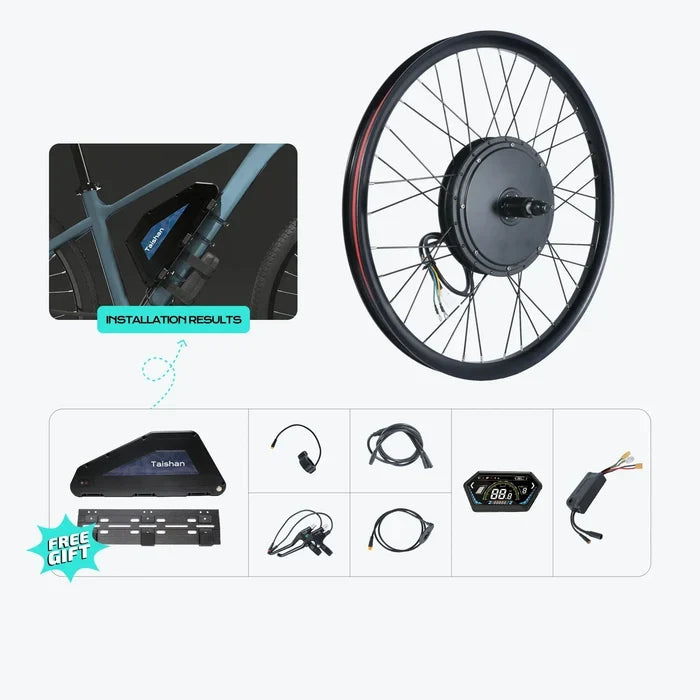
The EZ Rider Kit exemplifies UK-compliant design with its 36V 250W motor programmed to assist up to 15 mph, staying comfortably within legal boundaries while providing substantial assistance for urban commuting and recreational riding.
UK Speed Enforcement
British authorities take speed compliance seriously, particularly following the increase in e-bike adoption:
- Speed limiters must be tamper-resistant
- Removing or defeating speed limiters makes the vehicle non-compliant
- E-bikes capable of exceeding limits (even if not currently operating above them) may be deemed motor vehicles
- Fines and potential vehicle seizure apply to non-compliant systems
European Union: Harmonized 25 km/h Standard
![]()

EU-Wide Speed Regulations
The European Union has standardized e-bike speed limits across member states through the EN 15194 regulation:
EU E-Bike Speed Limit: 25 km/h (15.5 mph)
This harmonization simplifies cross-border travel and creates consistent manufacturing standards across the European market.
Core EU Requirements:
- Motor assistance limited to 25 km/h maximum
- Assistance only when pedaling (pedal-assist systems)
- Gradual power reduction as speed approaches limit
- Complete cutoff at 25 km/h threshold
Country-Specific Variations Within Europe
While the basic 25 km/h limit applies EU-wide, individual nations implement additional requirements:
Germany:
- Strict enforcement with technical inspections
- CE marking mandatory on all components
- Speed limiter tampering carries substantial penalties
- "Pedelec" (pedal electric cycle) classification for compliant bikes
Netherlands:
- Well-developed e-bike infrastructure accommodating 25 km/h speeds
- Separate "speed pedelec" category allowing 45 km/h (requires registration)
- High compliance rates due to excellent cycling infrastructure
France:
- 25 km/h standard for standard e-bikes
- Additional lighting and reflective requirements
- Age restrictions for certain power levels
- Regional variations in local enforcement
Spain:
- 25 km/h national standard
- Some autonomous regions require registration even for compliant e-bikes
- Varies between urban and rural enforcement priorities
Speed Pedelecs: The 45 km/h Category
Europe recognizes a higher-speed "speed pedelec" category:
Speed Pedelec Requirements:
- Maximum assisted speed: 45 km/h (28 mph)
- Classification as moped (L1e-B category)
- Registration, insurance, and license plate required
- Helmet mandatory (often specific moped standards)
- Minimum age restrictions apply
- Prohibited from most bike paths
This category accommodates riders needing higher speeds for longer commutes but imposes motor vehicle-like requirements.
United States: Complex State-by-State Framework
Federal Guidelines and the Three-Class System
Unlike the UK and EU's unified approach, the United States features a more complex regulatory landscape with both federal guidelines and state-specific implementations.
Federal Definition (Consumer Product Safety Commission):
- Maximum speed of 20 mph on motor power alone
- Motor power of 750W or less
- Fully operable pedals required
The Three-Class Speed Framework
Many US states have adopted a three-tiered classification system that defines speed limits differently for each category:
Class 1 E-Bikes:
-
Speed Limit: 20 mph (32 km/h)
-
Operation: Pedal-assist only, no throttle
-
Motor Cutoff: Assistance stops at 20 mph
-
Access: Generally permitted on bike paths and lanes
Systems like the 48V 750W mid-motor conversion kit can be configured for Class 1 operation, offering powerful assistance within legal speed parameters.
Class 2 E-Bikes:
-
Speed Limit: 20 mph (32 km/h)
-
Operation: Throttle-assisted up to 20 mph
-
May Include: Additional pedal-assist functionality
-
Access: Some restrictions on certain paths
Class 3 E-Bikes:
-
Speed Limit: 28 mph (45 km/h)
-
Operation: Pedal-assist only (throttle restrictions vary)
-
Additional Requirements: Speedometer often mandatory
-
Access: Restricted from many bike paths and trails
State-by-State Speed Variations
States Following Three-Class System:
California, Colorado, Washington, New York, and over 30 other states have adopted the three-class framework with its associated speed limits. However, implementation details vary:
California:
- Clear three-class adoption
- Class 3 requires riders 16+ years old
- Helmet mandatory for Class 3
- Local jurisdictions may further restrict access
Colorado:
- Three-class system implemented
- Class 1 and 2 allowed on bike paths unless locally prohibited
- Class 3 restricted from bike paths unless specifically permitted
- 20 mph and 28 mph thresholds strictly defined
Texas:
- Generally follows federal 20 mph standard
- More permissive enforcement in many areas
- Local ordinances create variations
- Focus on motor power (750W) over precise speed enforcement
Florida:
- 20 mph maximum for unrestricted e-bike classification
- 750W motor power limit
- Relatively straightforward single-tier approach
- Minimal special requirements beyond speed and power limits
Real-World US Speed Compliance
Enforcement of e-bike speed limits varies dramatically across the United States:
Urban Areas with Dedicated Infrastructure: Cities like Portland, San Francisco, and Seattle actively enforce speed limits on multi-use paths, particularly Class 3 restrictions.
Suburban and Rural Areas: Many regions focus minimally on e-bike speeds, with enforcement primarily following complaints or accidents.
Trail and Park Systems: Federal, state, and local parks maintain specific speed regulations, often prohibiting Class 2 and 3 e-bikes entirely regardless of actual operating speed.
Conclusion
Legal e-bike speed limits vary significantly across jurisdictions: 15.5 mph in the UK and EU, 20 mph for most US e-bikes (Class 1 and 2), and 28 mph for US Class 3 e-bikes. These limits determine not just how fast your motor will assist, but also where you can ride, what equipment you need, and whether you're operating within the law.
When selecting an e-bike conversion kit, understanding these speed regulations helps you choose a system that matches both your performance needs and legal requirements, ensuring you can enjoy electric cycling with confidence and compliance regardless of where you ride.
Frequently Asked Questions
Can I pedal faster than the legal speed limit without motor assistance?
Absolutely. Speed limits apply only to motor assistance, not your overall cycling speed. You can pedal as fast as you're capable beyond the motor cutoff point—downhill or through hard pedaling—without legal issues. The motor simply won't assist beyond the legal threshold.
Will police use radar to check if my e-bike exceeds speed limits?
Enforcement methods vary by jurisdiction. Some areas use radar or speed cameras on multi-use paths, but most enforcement occurs visually or following complaints. However, if your bike is clearly exceeding speed limits (especially with obvious throttle use), you risk citations regardless of precise measurement methods.
Does the 28 mph Class 3 limit in the US mean I can ride that fast anywhere?
No. Class 3 e-bikes face significant access restrictions. Many bike paths, trails, and protected lanes prohibit Class 3 bikes entirely. You can typically ride 28 mph on standard roads where bicycles are permitted, but not on infrastructure restricted to Class 1 and 2 bikes.
If my conversion kit can go 40 mph but I program it to 15.5 mph, is it legal in the UK?
This creates a legal grey area. UK regulations focus on the motor's maximum rated capability, not just current programming. A motor physically capable of 40 mph may be considered non-compliant regardless of software limitations, though enforcement varies. The safest approach is selecting appropriately powered systems for your jurisdiction.
Why is the UK/EU speed limit so much lower than the US limit?
Different safety philosophies and infrastructure design drive this difference. The UK and EU prioritize consistency with traditional cycling speeds and shared infrastructure capacity. The US federal limit (20 mph) reflects more car-oriented transportation planning and recognition that higher speeds help e-bikes compete with automotive travel for practical commuting.
Can I switch my e-bike between different class configurations for different locations?
Technically yes, if your controller is programmable. However, this approach carries legal risks. Your bike should be configured for the most restrictive environment you'll ride in, or you risk citations when operating in non-compliant configuration. Some riders maintain separate configurations but this doesn't eliminate legal exposure if caught in wrong setting.
Do speed limits apply to e-bikes on private property?
No. Speed regulations apply to public roads, paths, and trails. On private property with owner permission, legal speed limits don't apply, though you should still operate safely and follow landowner rules. This makes private property and dedicated off-road facilities appropriate venues for higher-performance systems.
: invalid url input)
usmile
Liquid error (snippets/blog-best-product line 36): product form must be given a product
Liquid error (snippets/blog-best-product line 59): product form must be given a product