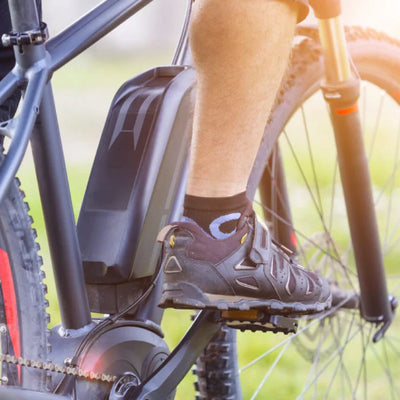
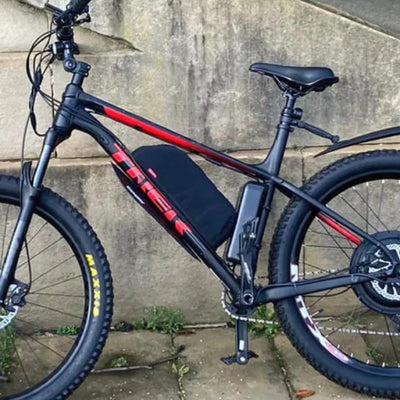
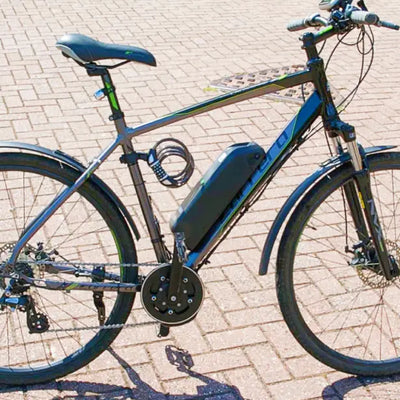
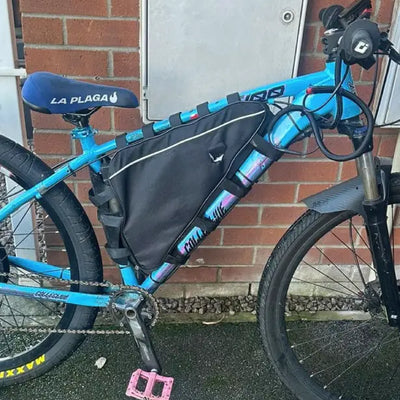
Electric bikes are simpler than most people expect. Strip away the marketing language and every e-bike—whether factory-built or converted with a kit—does the same thing: a battery-powered motor adds force to the wheels when you pedal, making cycling easier, faster, or both.
Understanding the mechanics behind that simple idea helps you choose the right system, use it effectively, and maintain it for years. This guide explains the core components, how they interact, the two main conversion approaches, UK legal requirements, and what real-world riding actually feels like across different power levels.
The Five Core Components Every E‑Bike Needs
![]()

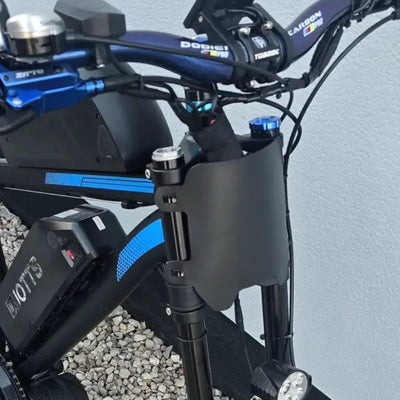
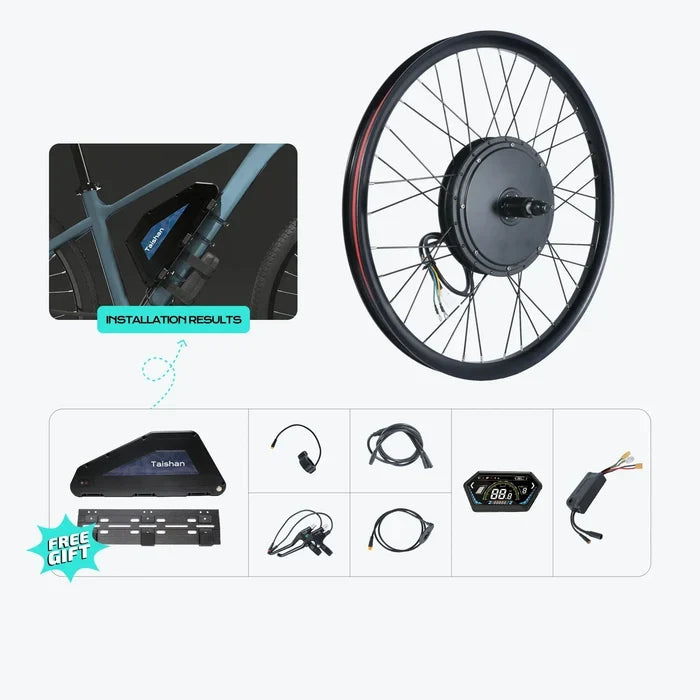
Whether you're looking at a purpose-built e-bike or an ebike conversion kit with battery, the same five components must work together:
1. Motor — Converts electrical energy into rotational force. Mounted either in a wheel hub (hub motor) or at the pedal crank (mid-drive motor).
2. Battery — Stores the electrical energy the motor draws on. Voltage (V) and amp-hours (Ah) determine power delivery and range.
3. Controller — The brain of the system. Regulates how much power flows from the battery to the motor based on inputs from sensors and rider commands.
4. Pedal Assist Sensor (PAS) — Detects that you're pedalling and signals the controller to activate the motor. Either a cadence sensor (detects pedal rotation) or a torque sensor (measures how hard you're pedalling).
5. Display — Mounted on the handlebars, showing speed, battery level, assist mode, range, and trip data. Allows the rider to select assist levels.
These five components connect via a wiring harness. In a factory e-bike they're integrated into the frame. In a conversion kit they're retrofitted to an existing bicycle—functionally identical, physically more visible.
How the Power Flow Actually Works
![]()

Here's the sequence every time you pedal an e-bike:
-
You pedal → the PAS sensor detects rotation or torque
-
Signal sent to controller → controller reads assist level selected on display
-
Controller draws from battery → releases calibrated current to motor
-
Motor adds rotational force → to the wheel (hub) or crank (mid-drive)
-
Brake sensors activate → controller cuts power immediately when brakes applied
-
Process repeats continuously → adjusting to your pedalling input in real time
The result feels like having a stronger set of legs—not a motorbike engine. On a well-tuned system with a torque sensor, the transition between your effort and motor input is almost imperceptible. On a cadence-sensing system, there's a brief moment between pedalling starting and motor engaging.
Hub Motor vs Mid-Drive: The Fundamental Choice
![]()

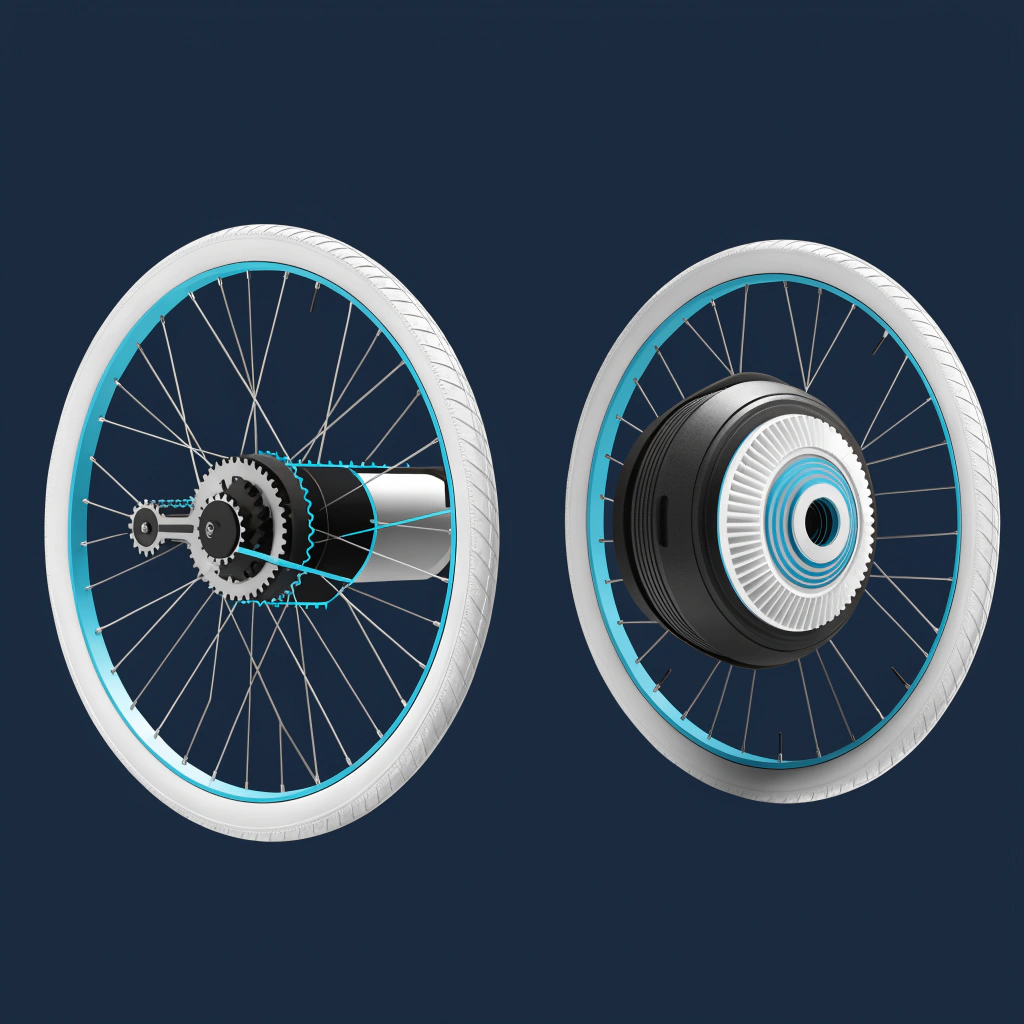
The two architecturally distinct approaches to motor placement produce genuinely different riding experiences.
Hub Motors — How They Work
A hub motor sits inside the wheel hub, directly driving the wheel without involving the bicycle's gears. Kirbebike's hub motor range covers front and rear wheel mounting across all standard wheel sizes from 20" to 700C, with power from 250W to 4000W.
Geared vs direct-drive hub motors:
|
Type
|
How It Works
|
Kirbebike Example
|
Best For
|
|
Brushless geared
|
Motor spins faster than wheel via internal planetary gears
|
36V 250W, 500W-750W range
|
Commuting, lighter weight
|
|
Brushless direct-drive
|
Motor rotor is the wheel hub itself
|
48V 1000W through 72V 4000W
|
Higher speeds, private land
|
The 250W EZ Rider brushless geared motor weighs just 3.8kg total and produces 50Nm of torque—enough to assist meaningfully on hills while remaining lightweight and road-legal. The 48V 1000W direct-drive brushless rear motor weighs 4kg in its standard variant and 6.2kg in the all-black version—heavier, but capable of sustained higher power delivery at 45-50km/h.
Mid-Drive Motors — How They Work
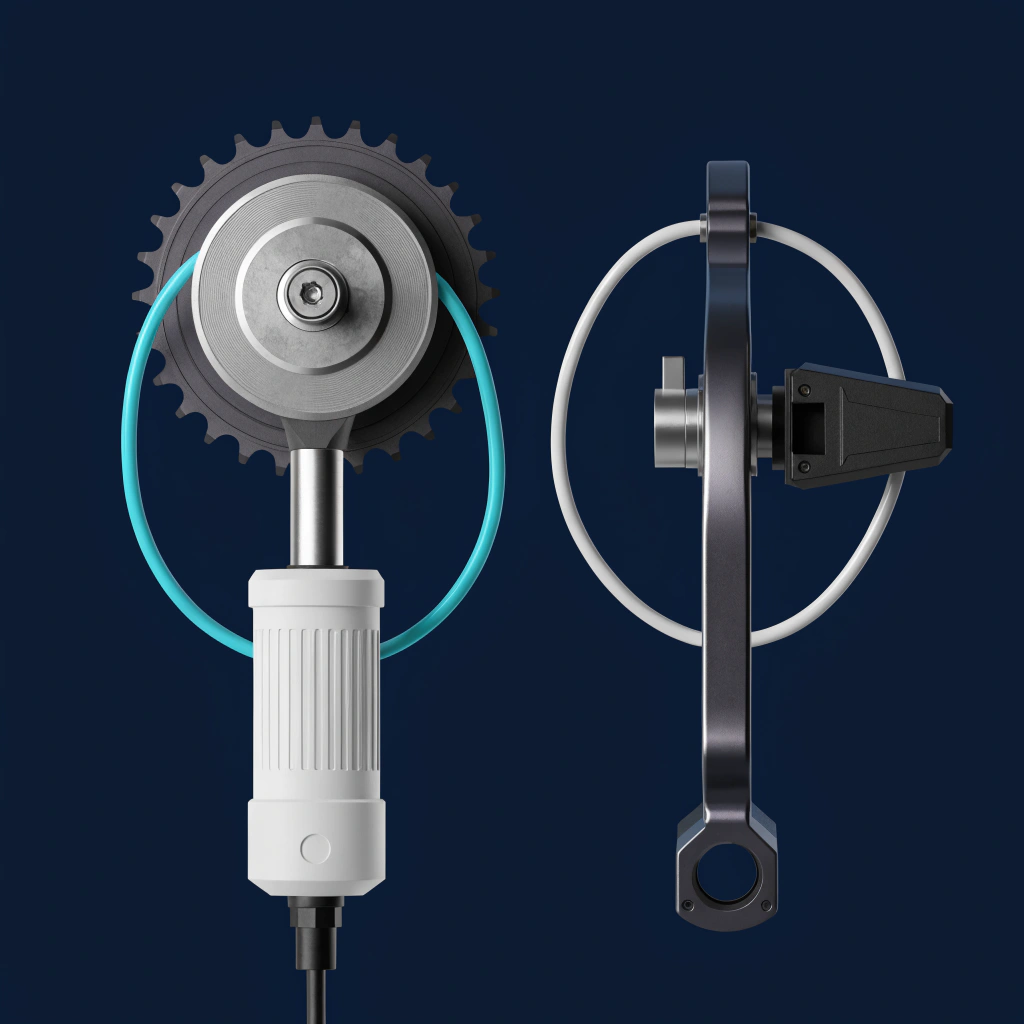
A mid-drive motor mounts at the bicycle's bottom bracket (where the pedal cranks attach), driving the chain rather than the wheel directly. This means the motor's output passes through the bicycle's gearing—giving it a mechanical advantage on hills that hub motors can't replicate.
The Tongsheng TSDZ8 mid-drive operates on this principle with dual torque sensors measuring actual pedalling force 1,000 times per second. When you push harder on the pedals going uphill, the sensors detect the increased torque and the motor responds proportionally—delivering up to 140Nm of assistance through the crank. One verified customer completes a 23km hilly daily ride on assist level one, finishing with 80% battery remaining. That efficiency is the torque-sensing mid-drive at work.
Mid-drive vs hub motor at a glance:
|
Factor
|
Hub Motor
|
Mid-Drive
|
|
Weight position
|
In wheel
|
Central (better balance)
|
|
Hill climbing
|
Adequate
|
Superior (uses gears)
|
|
Natural feel
|
Good
|
Excellent with torque sensor
|
|
Installation
|
Simpler
|
More involved
|
|
Maintenance
|
Wheel removal for service
|
Bottom bracket access
|
|
Kirbebike option
|
250W–4000W range
|
TSDZ8 500W/750W
|
The Battery: Energy Storage Explained
The battery is the component with the most variation between kit quality levels and the greatest impact on real-world experience.
Voltage (V) determines the electrical pressure pushing current through the system. Higher voltage = more potential power at lower current = less heat = better sustained performance. Kirbebike's range spans 36V through 72V, matched to motor specifications.
Amp-hours (Ah) determine how long the battery can deliver current. Multiply voltage by amp-hours to get watt-hours (Wh)—the true measure of energy stored and the honest basis for range comparison.
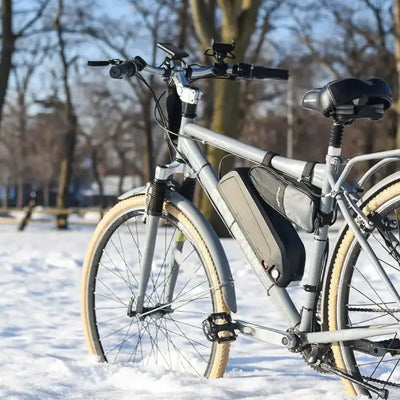
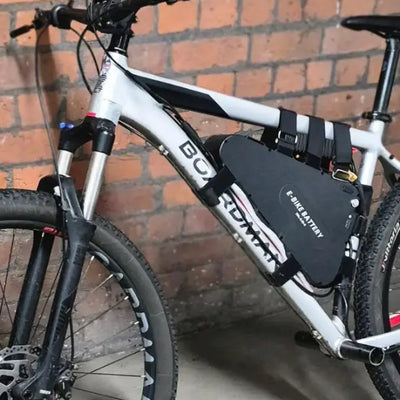
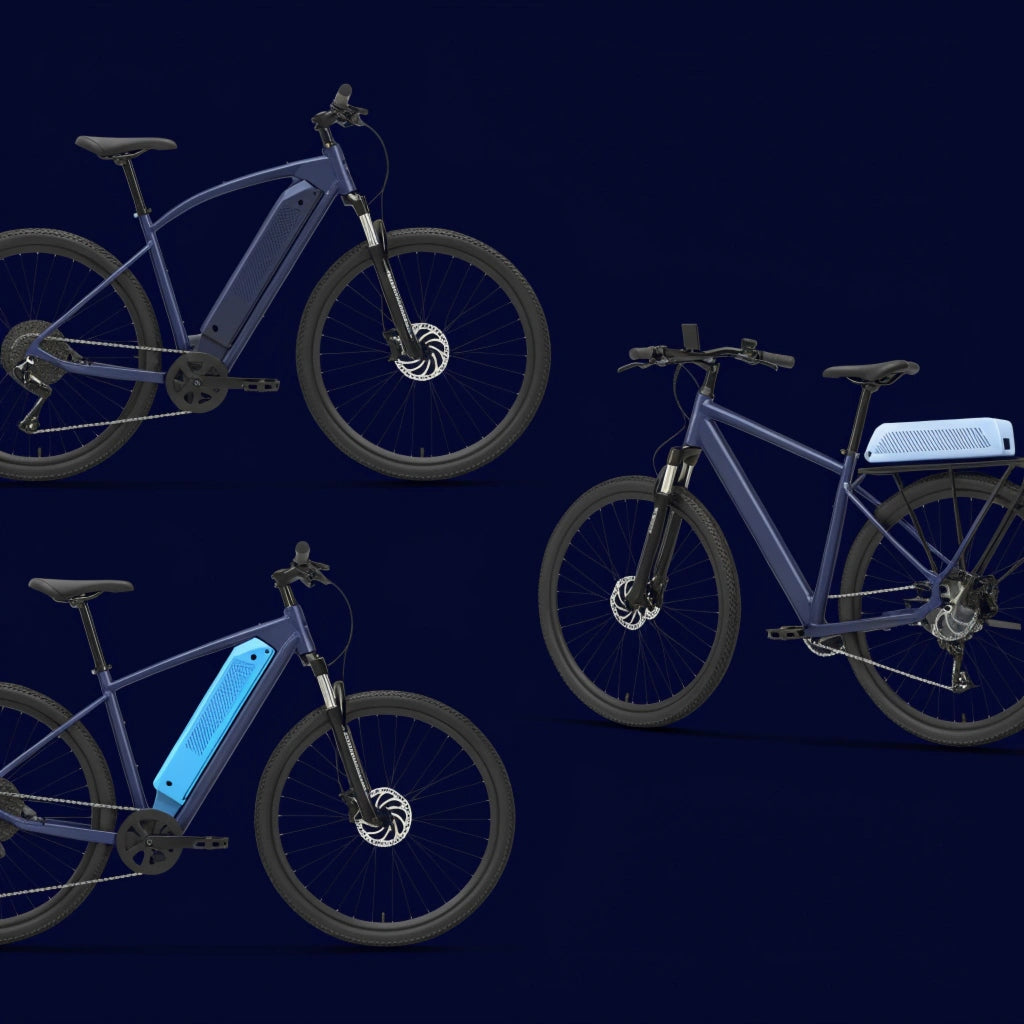
Battery placement options in conversion kits:
-
Downtube (DP battery): Mounts to existing bottle cage bosses on the frame's down tube. Compact, clean aesthetic, removable for charging or security
-
Rear rack: Larger capacity options mountable on standard rack fittings
-
EZ Rider compact battery: Small enough to remove and carry in a backpack—practically useful for commuters who take their bike on trains or into offices
What Conversion Kits Actually Do: The Installation Reality
A conversion kit transforms a standard bicycle by replacing one wheel with a motorised equivalent and adding the electrical system components.
For hub motor kits, the process:
- Remove the existing front or rear wheel
- Fit the motor wheel (built to your specified wheel size)
- Mount the battery to the frame
- Route the wiring harness connecting battery, controller, and motor
- Install the display on the handlebars
- Connect brake sensors to existing brake levers
- Fit the PAS/cadence sensor to the pedal crank area
Kirbebike kits include all necessary installation tools—tyre removal tools, wrenches, hex keys, cable ties—and the process takes approximately 20 minutes for most bikes. The 52V 2000W and 72V 4000W performance kits are slightly more involved at around 30 minutes.
For the TSDZ8 mid-drive, installation replaces the bottom bracket with the motor unit and fits a new chainring, requiring slightly more mechanical engagement but still achievable by a mechanically confident rider in under two hours based on customer reports.
UK Legal Framework: EAPC Rules Explained Clearly
For UK road use, e-bikes must comply with Electrically Assisted Pedal Cycle (EAPC) regulations to be ridden without registration, insurance, or a licence.
The three EAPC requirements:
|
Requirement
|
Specification
|
|
Motor power
|
Maximum 250W continuous rated output
|
|
Speed cut-off
|
Assistance must stop at 15.5mph (25km/h)
|
|
Pedal requirement
|
Motor cannot propel the bike without pedalling
|
Kirbebike's 36V 250W and 48V 250W front wheel kits are EAPC-compliant, CE and ROHS certified, and road-legal for UK public use. The EZ Rider kit is specifically designed for road legality, with a maximum speed of 15mph and pedal-assist only operation (throttle is available as an optional extra but is not road-legal in the UK above walking pace).
Speed and Power: What the Numbers Actually Mean
For UK buyers curious about real-world performance across the range:
|
Kit
|
Speed Range
|
Terrain Suited
|
|
36V 250W (road legal)
|
25-30km/h
|
Commuting, flat-moderate
|
|
48V 250W (road legal)
|
30-35km/h
|
Commuting, extended range
|
|
500W-750W MTX
|
35-40km/h
|
Off-road, hills, private land
|
|
48V 1000W
|
45-50km/h
|
Private land, mixed terrain
|
|
52V 2000W MTX
|
50-60km/h
|
High-performance off-road
|
|
60V 2500W-3000W
|
75-85km/h
|
Serious performance
|
|
72V 4000W
|
75-85km/h (55MPH+)
|
Extreme performance, MTB/fat tire
|
Real-World Riding: What It Feels Like
Understanding the mechanics is one thing; knowing what the experience actually delivers is another.
Road-legal 250W commuter: An arduous hilly 3.5-mile commute in Devon transformed from a 25-minute struggle into an 11-minute leisure ride. A 6km train station commute with a significant climb "not what I want to deal with after a day at work" becomes routine. The motor's engagement feels like an extra push that respects the rider's own effort.
Conclusion
E-bikes and conversion kits work on straightforward engineering principles—battery stores energy, controller manages it, motor converts it to motion, sensors coordinate the interaction. The difference between an adequate system and an excellent one comes down to component quality: LG cell batteries that deliver consistent power over 1,000+ charge cycles.
Explore the full Kirbebike ebike conversion kit range—from UK road-legal 250W commuter systems through to 72V 4000W extreme performance kits—to find the system engineered for how you actually ride.
Frequently Asked Questions
How does an ebike conversion kit work?
A conversion kit adds the five components an e-bike needs—motor wheel, battery, controller, PAS sensor, and display—to a standard bicycle. The motor wheel replaces your existing front or rear wheel; the battery mounts to your frame; the controller and wiring connect the system.
What is the difference between a cadence sensor and a torque sensor?
A cadence sensor detects whether the pedals are turning (binary on/off signal) and activates the motor at a set level when rotation is detected. A torque sensor measures how hard you're actually pushing the pedals and delivers proportional motor assist—harder pedalling triggers more assist, lighter pedalling triggers less.
Are ebike conversion kits legal in the UK?
250W kits with pedal-assist only and speed cut-off at 15.5mph (25km/h) are EAPC-compliant and road-legal on UK public roads without registration, insurance, or a licence. All kits above 250W—including 500W, 750W, 1000W, and high-performance systems—are for private land and off-road use only in the UK.
What does the controller do in an ebike system?
The controller regulates electrical current flowing from the battery to the motor based on sensor inputs and rider-selected assist level. FOC (Field Oriented Control) controllers—used in Kirbebike's EZ Rider and other kits—modulate power delivery smoothly and efficiently.
How do I know what wheel size to order for a conversion kit?
Check the sidewall of one of your bike's existing tyres. The size marking (e.g., 26", 27.5", 29", 700C, 20") is printed on the tyre. Kirbebike covers all 13 industry-standard wheel sizes and builds the motor wheel to your specification.
: invalid url input)
usmile
Liquid error (snippets/blog-best-product line 36): product form must be given a product
Liquid error (snippets/blog-best-product line 59): product form must be given a product