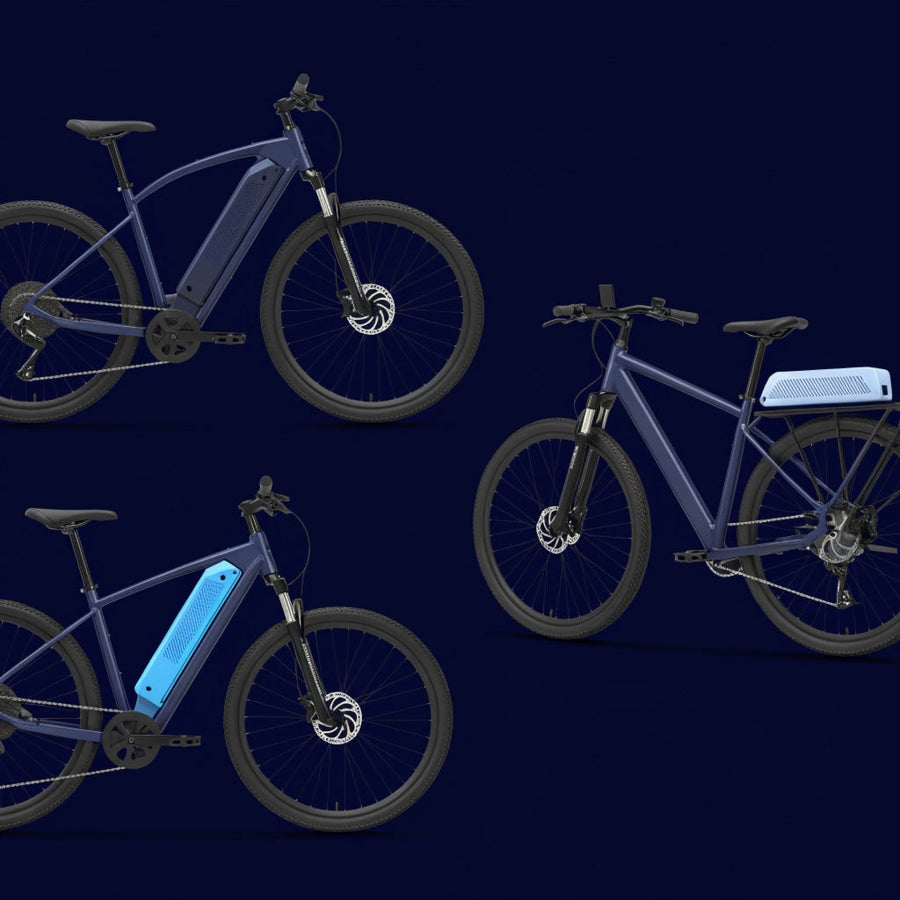
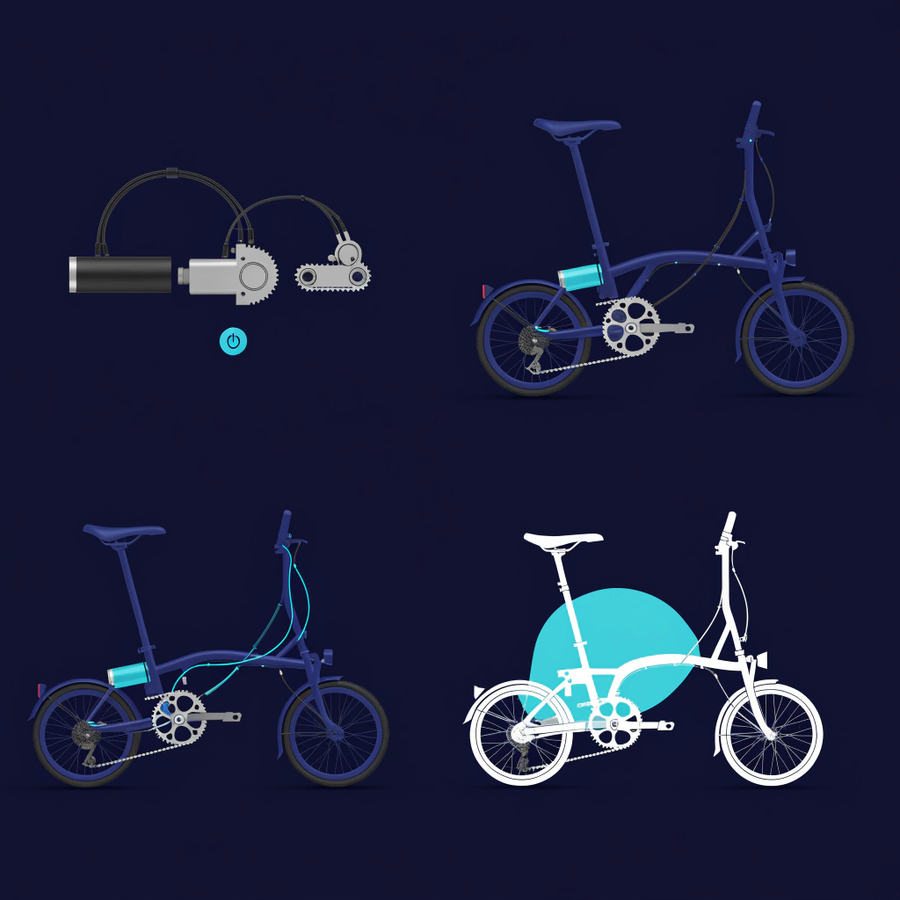
Resale value is one of the most underexplored angles of the e-bike conversion decision. Most buyers focus entirely on the purchase side—kit cost, installation, performance. Far fewer think carefully about what happens when it's time to sell, either the converted bike as a complete system, the kit independently, or the donor bicycle restored to its original state.
Each of these exit routes has a distinct value profile, and understanding them changes how you should think about the conversion decision from the start.
The Three Exit Options: What's Actually Being Sold?

Unlike a purpose-built e-bike—which is a single asset with a single resale route—a converted bike gives you meaningful flexibility in how you exit.
Option A: Sell the complete converted bike Motor, battery, controls, and donor bike all sold together as a working electric bicycle.
Option B: Remove the kit, sell separately Kit sold independently on the used market; original bicycle sold restored to its pre-conversion state.
Resale Reality Check: How the UK Market Actually Works

Before examining each exit route, it's worth setting honest expectations about the UK used electric bike market broadly.
What affects resale value across all electric bikes:
-
Battery health is the single largest variable in used e-bike valuations. Buyers know that battery replacement is the biggest future cost, and they price accordingly. A system with a battery showing good range relative to original specification holds value significantly better than an equivalent system with degraded capacity.
-
Brand recognition matters to some buyers, not to others. The used market contains a meaningful proportion of technically informed buyers—particularly for conversion kits—who evaluate components directly rather than relying on brand heuristics.
-
Documentation of maintenance, mileage, and original purchase adds value by reducing buyer uncertainty.
-
Platform (eBay vs. Gumtree vs. Facebook Marketplace) affects both speed of sale and achievable price, with specialist cycling communities often achieving better prices than general listing sites.
Exit Route A: Selling the Complete Converted Bike

This is the most straightforward route and often delivers the highest absolute return, combining the frame value with the electrical system value in a single transaction.
Factors that support strong resale on a complete converted bike:
The donor bike's quality matters enormously here. A quality conversion kit installed on a well-respected frame—a quality hybrid, a popular MTB geometry, or a Brompton—will consistently attract more interest and hold value better than the same kit on an undistinguished donor.
The Brompton conversion specifically is worth noting. Kirbebike's 36V 250W EZ Rider kit is designed with a Brompton-specific variant (silver 16" 1 3/8 wheel, 74mm dropout). A converted Brompton is genuinely sought-after in the UK used market because Brompton frames hold their value well independently, and the electric assist conversion is a practical enhancement for urban commuters who want a compact, legal, road-usable electric folder.
Presentation elements that maximise complete-bike resale:
- Retain all original documentation (Kirbebike kit instructions, warranty paperwork)
- Photograph installation clearly to demonstrate professional-quality cable routing
- State battery cell brand and remaining health (LG cells with 1,000+ cycle rating are reassuring to buyers)
- Record and present mileage—a system showing a specific, believable mileage is more valuable than an unknown
- Note any components replaced or upgraded (replacement controller, upgraded brake pads)
- Clean the bike and kit thoroughly before photography
Exit Route B: Kit and Bike Sold Separately
This route requires more effort but often delivers better total value, particularly when the donor bike has independent appeal to non-electric cyclists.
The kit's independent resale value:
Quality conversion kits with reputable components sell well on the UK used market. The key variables are battery cell health, mileage, and kit brand recognition. A Kirbebike kit with documented low mileage, LG cell battery showing good capacity, and complete accessories (display, sensors, tools) commands a meaningful proportion of original cost.
|
Kit Component
|
Resale Value Driver
|
|
Battery
|
Single most important — LG cells with good capacity hold value
|
|
Motor
|
Brushless motors with verified mileage sell well
|
|
Display
|
TFT displays in working condition hold better value than basic LCD
|
|
Controller
|
FOC units more sought after than square-wave alternatives
|
|
Accessories
|
Complete accessory set (sensors, tools) adds value versus incomplete
|
The high-power kits—1000W to 4000W—find active buyers in the UK private land and off-road riding community. The 52V 2000W MTX system's 122 verified reviews with sustained positive feedback creates exactly the kind of reputation that supports used market confidence.
Buyers looking at these systems seek documentation of what they're actually getting; a Kirbebike kit's CE/ROHS certification and documented specifications provide that.
Exit Route C: Component Upgrade — The Unique Conversion Advantage
This exit route has no equivalent in the factory e-bike world and deserves specific attention. Because every component in a conversion kit is independently replaceable, riders who want to upgrade power can sell their existing kit while retaining the donor bike—then fit the new system to the same frame.
This is effectively a rolling upgrade path that spreads cost over time while generating resale income from each previous iteration.
A realistic upgrade progression:
A rider who starts with a 36V 250W EZ Rider kit for commuting, then wants more performance as riding evolves, can sell the complete 250W system and put the proceeds toward a 48V 1000W kit for private land use. The frame stays the same; the electrical system upgrades; the old kit generates resale income.
This progression was explicitly referenced by a Kirbebike customer who noted considering upgrading from the EZ Rider to "a 1000W rear wheel or mid drive"—a natural evolution the modular design supports.
The Tongsheng TSDZ8 mid-drive is a popular destination for riders who started with hub motor systems and want superior hill climbing and torque sensing.
Its 140Nm torque and dual sensor response genuinely outperform equivalent-wattage hub systems on hilly terrain—and riders who've outgrown a hub motor find a ready used-market buyer for their previous system among those entering the e-bike conversion world for the first time.
What Maximises Resale Value: The Maintenance Dimension
The single most important determinant of resale value—beyond the quality of components purchased—is how the system has been maintained.
Battery management has the biggest impact:
- Keep battery storage charge between 40-60% when not in use for extended periods
- Avoid regular charging to 100% unless needed for long rides
- Store at room temperature, away from extremes
- Kirbebike's LG cell batteries are rated for 1,000+ cycles; proper management keeps them performing close to original specification throughout
Motor and drivetrain maintenance:
Hub motor bearings can be serviced and in high-mileage systems should be. One Kirbebike customer noted needing hub bearing replacement approaching 20,000km—a reasonable service interval for a component under regular load. A serviced system with documented maintenance is more valuable than a higher-mileage system with unknown service history.
Conversion Kit vs Factory E-Bike: The Resale Comparison
For context, it's worth understanding how conversion kit resale compares to factory e-bikes.
|
Factor
|
Converted Bike
|
Factory E-Bike
|
|
Exit routes
|
3 (complete, kit separate, upgrade)
|
1 (complete only)
|
|
Battery replaceability
|
Easy, standard connectors
|
Often proprietary
|
|
Component independence
|
Full
|
Typically limited
|
|
Frame resale
|
Normal bicycle market if kit removed
|
Tied to e-bike identity
|
|
Brand recognition on resale
|
Kit brand matters
|
E-bike brand matters
|
|
Buyer pool
|
Electric cycling community + cyclists
|
Primarily e-bike market
|
Factory e-bikes depreciate as complete systems where battery health determines a disproportionate share of resale value. When the battery degrades, the entire asset loses value even if the motor, frame, and electronics are in perfect condition.
A conversion kit's individual component replaceability means a degraded battery can be replaced with a fresh unit, effectively resetting that value driver—an option unavailable to factory e-bike owners.
Quick Checklist: Maximising Conversion Kit Resale Value
At purchase:
- Choose a quality donor bike with independent market appeal
- Choose a kit with named cell brand (LG) and documented specifications
- Retain all documentation and packaging where possible
During ownership:
- Follow correct battery storage protocol (40-60% when stored)
- Keep records of mileage and any component replacements
- Service hub bearings at appropriate intervals
- Maintain clean cable routing and dry connector points
Conclusion
The resale story for e-bike conversion kits is more favourable than most buyers realise—and significantly more flexible than the single-exit-route reality of factory e-bikes. The key is starting with quality components that hold their value (LG cell batteries, documented motor specifications, CE/ROHS certified systems), maintaining them correctly throughout ownership, and thinking clearly at resale time about which exit route delivers the best return.
The conversion approach's component independence is not just a maintenance advantage—it's a resale advantage, giving sellers options that integrated systems simply don't provide. Explore the full Kirbebike conversion kit range with batteries to find a system built to retain its value over the long term.
Frequently Asked Questions
Do ebike conversion kits hold their resale value well?
Quality kits with reputable battery cells and documented specifications hold value reasonably well, particularly when sold in specialist cycling communities where buyers can evaluate components directly.
Is it better to sell a converted bike as a complete system or remove the kit?
It depends on the donor bike's independent value and how the kit is performing. A quality donor bike on a desirable frame—Brompton, popular MTB, quality hybrid—may command more sold separately alongside the kit than bundled together.
How does battery condition affect resale of a conversion kit?
Battery condition is the dominant factor. Buyers of used electric systems know that battery replacement is the largest future cost and price accordingly. A system with an LG cell battery showing good capacity relative to original specification—achievable through correct storage and charge management—holds significantly more value than an equivalent system showing 25-30% capacity loss. on.
Can I remove the kit and sell my original bike separately?
Yes, if the conversion was done without permanent frame modification—which Kirbebike kits are designed to be. The motor wheel swaps back to the original wheel; battery mounts on standard bottle cage bosses or rack mounts; the display and wiring detach cleanly..
What is the best platform for selling a used conversion kit in the UK?
Specialist communities—electric bike forums, cycling Facebook groups, Reddit's UK cycling communities—consistently achieve better prices than general platforms like Gumtree because buyers are informed enough to understand and value what they're purchasing.