When converting your traditional bicycle into an electric powerhouse, one of the most critical decisions you'll face is choosing between a 48V and 52V battery system. This choice impacts everything from your top speed and hill-climbing ability to your overall riding experience.
Let's dive deep into the real-world differences between these two popular voltage options and help you determine which system best fits your riding needs.
Understanding Voltage: The Foundation of E-Bike Performance
Voltage is essentially the electrical "pressure" that pushes current through your motor. Think of it like water pressure in a hose—higher pressure means more force. In e-bike terms, higher voltage translates to more power delivery to your motor, which can significantly affect performance characteristics.
The <a href="https://kirbebike.com/collections/electric-bike-kit-battery">difference between 48V and 52V e-bike batteries</a> might seem minimal on paper (just an 8% increase), but this modest voltage bump creates noticeable real-world improvements in several key areas.
Key Performance Differences: 48V vs 52V
![]()

Speed Capabilities
48V Systems:
- Typically reach 45-50 km/h with a 1000W motor
- Provide consistent power delivery within the motor's designed voltage range
- Offer reliable performance for urban commuting and moderate terrain
52V Systems:
- Can achieve 50-60 km/h with the same 2000W motor configuration
- Deliver approximately 8-10% more power to the motor
- Provide noticeable acceleration improvements, especially from a standstill
The speed difference becomes most apparent when you're pushing your system to its limits. While a 48V system works perfectly for daily commuting, riders who crave that extra burst of speed for highway riding or competitive situations will appreciate what 52V brings to the table.
Hill Climbing Performance
This is where the 52V vs 48V e-bike battery comparison becomes particularly interesting. Higher voltage doesn't just mean more speed—it fundamentally changes how your motor handles resistance.
|
Performance Aspect
|
48V Battery
|
52V Battery
|
|
Steep Hill Performance
|
Good, may slow on extreme grades
|
Excellent, maintains speed better
|
|
Torque Delivery
|
Standard motor torque
|
8-10% increased effective torque
|
|
Battery Sag Under Load
|
Moderate voltage drop
|
Less noticeable voltage drop
|
|
Heavy Load Handling
|
Adequate for most riders
|
Superior for cargo or heavier riders
|
When climbing steep inclines, the 52V system maintains its power output more effectively. This is because the higher voltage compensates better for the natural voltage drop that occurs when batteries are under heavy load—a phenomenon known as "voltage sag."
Range Considerations: The Complexity Behind the Numbers
![]()

Many riders assume higher voltage means shorter range, but the reality is more nuanced. Range depends on several interconnected factors:
Factors Affecting Range:
- Battery capacity (measured in amp-hours)
- Riding speed and terrain
- Rider weight and cargo load
- Pedal assist level used
- Weather conditions and headwinds
A 48V 16Ah battery contains 768 watt-hours of energy (48V × 16Ah = 768Wh). Similarly, a 52V 15Ah battery provides 780 watt-hours. When capacity is equivalent, the 52V system doesn't inherently reduce range—it simply delivers power more efficiently.
In practice, because 52V systems can maintain speed with less current draw from the battery, many riders report comparable or even slightly better range compared to 48V systems when riding at the same speeds.
Motor Compatibility: What You Need to Know
Most modern e-bike motors designed for 48V operation can safely handle 52V input. The motor sees this as operating at the higher end of its voltage range, similar to how it would perform when a 48V battery is fully charged (at 54.6V).
Important Compatibility Notes:
- Controllers must support the higher voltage range
- Some older 48V systems may not be 52V compatible
- Check manufacturer specifications before upgrading
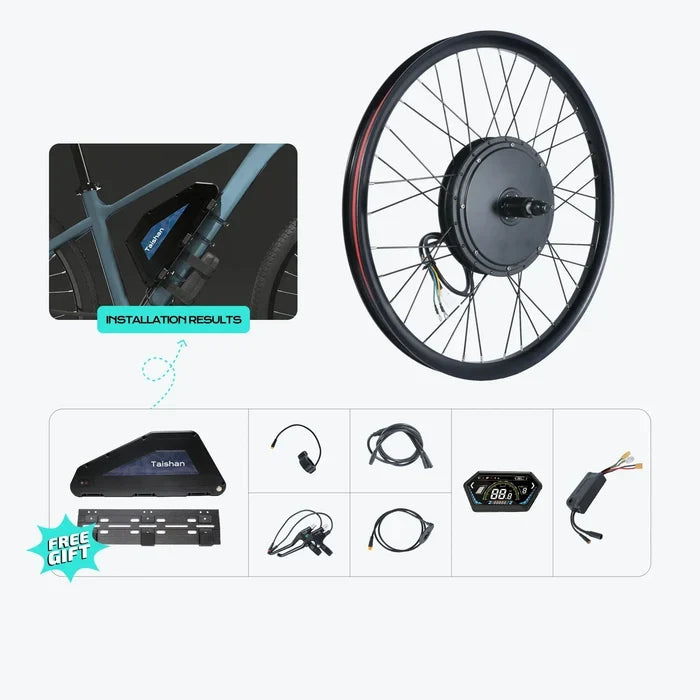
- Most Kirbebike conversion kits support both voltage options
The <a href="https://kirbebike.com/collections/electric-bike-kit-battery">Kirbebike battery collection</a> offers systems specifically designed to work seamlessly with their motor kits, ensuring proper voltage matching and optimal performance.
Battery Longevity and Cycle Life
Both 48V and 52V lithium-ion batteries typically offer 800-1000+ charge cycles when properly maintained. The voltage difference doesn't significantly impact longevity—what matters most is:
- Battery cell quality (LG cells are premium options)
- Charging habits (avoid extreme charge levels)
- Storage conditions (cool, dry environments)
- Discharge depth (partial discharges are gentler than full ones)
Higher voltage systems may experience slightly less stress per cycle because they can deliver the same power with lower current draw, potentially extending cell life marginally.
Cost Analysis: Is the Upgrade Worth It?
![]()

52V batteries generally cost slightly more than their 48V counterparts due to:
- Additional cells required for the higher voltage configuration
- More robust BMS (Battery Management System) requirements
- Higher-rated controller components
However, the price premium is typically modest. When you consider the performance improvements—particularly for riders who regularly tackle challenging terrain or carry heavy loads—the investment often justifies itself through enhanced riding enjoyment and capability.
Real-World Application Scenarios
For flat city riding with moderate speeds, a 48V system provides excellent performance and represents great value. The KirbEbike 48V 1000W conversion kit delivers reliable power for daily commutes without overwhelming your existing bike's components.
Hill Dwellers and Mountain Riders
If you regularly face steep inclines or live in hilly terrain, the 52V system's superior climbing ability becomes invaluable. The extra voltage helps maintain consistent speeds on grades that would slow down 48V systems.
Speed Enthusiasts
Riders seeking maximum performance from their <a href="https://kirbebike.com/products/mid-motor-electric-conversion-kit">mid-motor electric conversion kit</a> will appreciate the 52V system's higher top speeds and stronger acceleration. This is particularly noticeable with 2000W+ motor configurations.
Cargo and Heavy-Duty Applications
When hauling cargo or accommodating heavier riders, the 52V system's ability to maintain power under load makes a significant difference in overall usability and satisfaction.
Charging Infrastructure and Compatibility
Both systems use similar charging technology, with these considerations:
48V Systems:
- Charger outputs approximately 54.6V (fully charged)
- Standard 2-5A charging rates
- Widely available replacement chargers
- 8-10 hour charge times typical with standard chargers
52V Systems:
- Charger outputs approximately 58.8V (fully charged)
- Same 2-5A charging options available
- Growing availability of compatible chargers
- Similar charge time profiles to 48V systems
The Kirbebike battery systems come with appropriate chargers matched to your voltage selection, supporting UK, US, EU, and Australian plug standards.
Making Your Decision: 48V or 52V?
Choose 48V if you:
- Primarily ride on flat or gently rolling terrain
- Want proven, widespread component compatibility
- Prioritize initial cost savings
- Ride moderate distances at legal speed limits
- Value simplicity and standardization
Choose 52V if you:
- Regularly encounter steep hills or challenging terrain
- Want maximum performance from your motor
- Appreciate faster acceleration and higher top speeds
- Carry heavy loads or ride with passengers
- Don't mind a modest price premium for better performance
Installation and Conversion Considerations
Both voltage systems install identically when using quality conversion kits. The Kirbebike systems feature:
- 20-minute installation times for most configurations
- Universal compatibility with 20" through 29" wheels and 700C sizes
- Integrated displays showing voltage, speed, and battery status
- Comprehensive wiring harnesses designed for clean installations
Whether you select 48V or 52V, the physical installation process remains straightforward, making voltage selection purely a performance preference rather than an installation complexity issue.
Frequently Asked Questions
Can I use a 52V battery on a 48V motor?
Most modern 48V motors can safely handle 52V input, as they're designed with voltage tolerance. However, always verify your specific motor's maximum voltage rating before upgrading. Kirbebike conversion kits are engineered to accommodate both voltages.
Will a 52V battery drain faster than a 48V battery?
When comparing batteries with equivalent watt-hour capacity, the 52V system won't inherently drain faster. Range depends more on how you ride (speed, terrain, assist level) than the voltage itself. In some cases, 52V systems may actually be more efficient.
Is the speed increase from 48V to 52V noticeable in everyday riding?
Yes, most riders report a perceptible difference, particularly during acceleration and when climbing hills. The speed increase is approximately 8-10% under similar conditions, which translates to roughly 3-5 km/h higher top speeds.
Do I need special tools to install either battery system?
No specialized tools are required. Basic bicycle tools suffice for most installations. Kirbebike kits include necessary mounting hardware and detailed instructions, making the process accessible to riders with basic mechanical skills.
How long do 48V and 52V batteries typically last?
Both voltage types offer similar lifespans of 800-1000+ charge cycles when using quality cells like LG. Proper charging habits, avoiding extreme temperatures, and not regularly depleting to zero percent will maximize battery longevity regardless of voltage.
Can I upgrade from 48V to 52V later?
Yes, upgrading is straightforward if your motor and controller support 52V operation. Simply replace the battery and ensure your controller can handle the higher voltage. Check compatibility before purchasing to ensure all components work together properly.
Does higher voltage affect warranty coverage?
Using a 52V battery with a motor rated for 48V typically doesn't void warranties if the motor specifications include that voltage range. Kirbebike offers 1-year warranties on their conversion kits when used with recommended battery configurations.
Conclusion
So, does higher voltage really make you faster? The answer is yes—but with important nuances. The 52V vs 48V e-bike battery debate isn't simply about raw speed; it's about overall performance characteristics that extend to acceleration, hill climbing, and power delivery consistency.
For most riders, particularly those tackling varied terrain or seeking maximum performance, the modest upgrade to 52V delivers meaningful benefits that enhance the overall riding experience. The approximately 8-10% performance improvement translates to noticeable real-world differences in situations where power matters most.
However, 48V systems remain excellent choices for urban commuters, budget-conscious buyers, and riders on moderate terrain. They offer proven reliability, widespread compatibility, and more than adequate performance for the majority of riding scenarios.
: invalid url input)
usmile
Liquid error (snippets/blog-best-product line 36): product form must be given a product
Liquid error (snippets/blog-best-product line 59): product form must be given a product