Vouwfietsen vertegenwoordigen de perfectie van het stadsfietsen – klein genoeg om op te vouwen voor treincompartimenten, kledingkasten en kofferbakken, terwijl ze uitgevouwen functioneel transport bieden. Hun enige beperking? De fysieke inspanning die nodig is voor heuvelachtige routes of langere afstanden, wat deze draagbare machines anders tot ideale autovervangers zou maken.
Elektrische conversie elimineert deze beperking en transformeert vouwfietsen van korteafstandsoplossingen tot werkelijk veelzijdig stadstransport. Het ombouwen van vouwfietsen – met name iconische modellen zoals Bromptons – vereist echter gespecialiseerde kennis die hun unieke engineering respecteert en tegelijkertijd zinvolle elektrische ondersteuning toevoegt.
In tegenstelling tot standaard fietsombouwingen waarbij ruimte en gewicht minder kritisch zijn, vereist de elektrificatie van vouwfietsen obsessieve aandacht voor compactheid, draagbaarheid en het behoud van het vouwmechanisme. Een slecht uitgevoerde conversie die het correct vouwen verhindert of overmatig gewicht toevoegt, vernietigt precies de eigenschappen die vouwfietsen waardevol maken.
KirbEbike's compacte conversiesystemen bieden oplossingen die geschikt zijn voor vouwfietsen, maar succes hangt af van het begrijpen van de unieke beperkingen, kansen en creatieve benaderingen die deze gespecialiseerde fietsen vereisen.
Uitdagingen bij de ombouw van vouwfietsen begrijpen
![]()

De draagbaarheidsparadox
Vouwfietsen zijn geoptimaliseerd voor gemakkelijk transport, maar e-bike conversies voegen inherent gewicht en volume toe – schijnbaar tegenstrijdige doelen.
Gewichtsoverwegingen:
- Gewicht basisvouwfiets: 9-14 kg (Brompton ~11 kg, Dahon ~12 kg, Tern ~13 kg)
- Toevoeging motor: 2-4 kg afhankelijk van vermogen
- Toevoeging batterij: 1,5-3 kg afhankelijk van capaciteit
- Totaal omgebouwd gewicht: 12,5-21 kg
Praktische draagbaarheidsdrempels:
|
Gewichtsbereik
|
Draagbaarheid
|
Geschiktheid voor gebruik
|
|
Onder 15 kg
|
Gemakkelijk met één hand te dragen
|
Treinreis, kantooropslag, trappen
|
|
15-18 kg
|
Hanteerbaar met twee handen te dragen
|
Incidenteel trappen, langere wandelingen
|
|
18-21 kg
|
Moeilijk om lang te dragen
|
Minimaal dragen, voornamelijk fietsen
|
|
Boven 21 kg
|
Te zwaar om regelmatig te dragen
|
Doel vouwfiets tenietgedaan
|
Succes vereist een meedogenloze prioritering van lichtgewicht componenten, terwijl een lager vermogen wordt geaccepteerd in vergelijking met standaard fietsconversies.
Behoud vouwmechanisme
Elektrische componenten mogen de vouwfunctie niet belemmeren – dit is een niet-onderhandelbaar punt voor vouwfietsconversies.
Kritische vrije zones:
Brompton-specifieke overwegingen:
- Voorwiel vouwt onder het hoofdframe (motor moet vrij zijn van het frame wanneer gevouwen)
- Achterdriehoek vouwt naar de zijkant (accu mag de beweging niet blokkeren)
- Stuur klapt naar beneden (display en bedieningselementen mogen niet hinderen)
- Pedalen klappen in (niets mag deze beweging belemmeren)
Universele zorgen voor vouwfietsen:
- Scharnierpunten vereisen ruimte voor kabels
- Gevouwen fietsprofiel mag niet dramatisch toenemen
- Vergrendelingsmechanismen moeten toegankelijk blijven
- Draagpositie moet in balans blijven
Testprotocol: Elke conversie vereist vouwtests in meerdere installatiestadia voordat de componentposities definitief worden vastgesteld.
Beperkingen kleine wielmotor
Vouwfietsen gebruiken overwegend 16" of 20" wielen, wat beperkingen oplegt aan de motorkeuze.
Uitdagingen kleine wielen:
16" wielen (Brompton standaard):
- Beperkte motoropties in deze ongebruikelijke maat
- Hogere koppelvermenigvuldiging (voordeel voor heuvels)
- Gereduceerde topsnelheid door kleinere diameter
- Motorruimte krap binnen compact frame
20" wielen (Dahon, Tern, veel vouwfietsen):
- Meer motorbeschikbaarheid dan 16"
- Betere balans tussen snelheid/koppel dan 16"
- Nog steeds beperkter dan standaard 26"/700c opties
- Voldoende voor de meeste stedelijke ombouwbehoeften
Brompton Conversie: De Ultieme Uitdaging
![]()

Bromptons vertegenwoordigen de top van vouwfietsontwerp – en de top van conversiecomplexiteit. Hun briljante vouwmechanisme en compacte pakket creëren unieke kansen en beperkingen.
Waarom een Brompton ombouwen?
Aansprekende toepassingen:
Perfectie voor multimodaal woon-werkverkeer:
- Fiets naar station, vouw voor de trein, rijd op bestemming
- Elektrische ondersteuning maakt langere trajecten praktisch
- Compact opgevouwen past nog steeds onder de treinbank of het bureau
- Heuvels bepalen de routekeuze niet langer
Vervanging stadsauto:
- Bereikvergroting voor boodschappen
- Onafhankelijkheid van fitnessniveau (rijden ongeacht energie)
- Overal op te bergen (appartement, kantoor, kofferbak)
- Weeraanpassingsvermogen (minder bezweet aankomen bij warmte)
Brompton-specifieke ombouwopties
Voornaafmotorsystemen (meest voorkomend)
Conversie van het voorwiel biedt Brompton-compatibele oplossingen met minimale vouwbelemmering.
Voordelen voor Brompton:
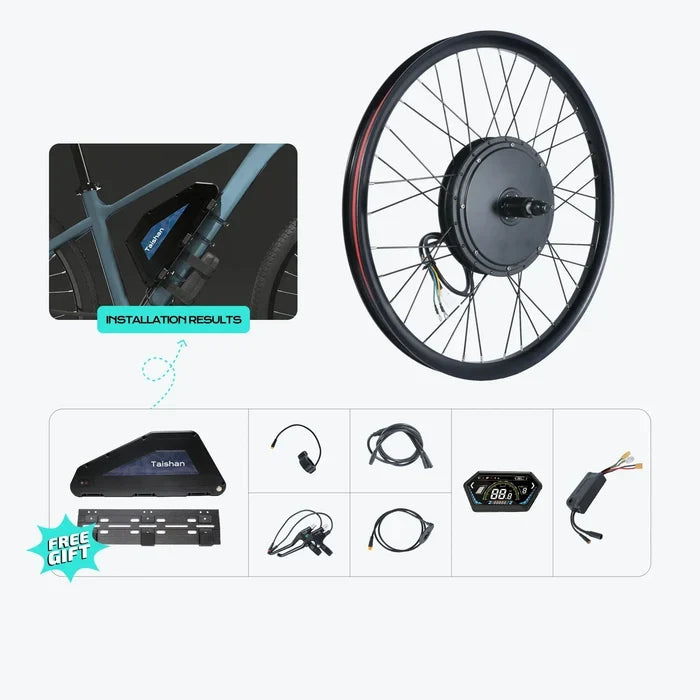
- Eenvoudige installatie ter vervanging van het voorwiel
- Behoudt het vouwmechanisme van de achterdriehoek volledig
- Accu wordt buiten de hoofdframeconstructie gemonteerd
- Behoudt gedeeltelijk het iconische Brompton-uiterlijk
Beperkingen:
- Voornaafmotor zichtbaar (esthetisch compromis)
- Gewicht op voorwiel beïnvloedt de besturing enigszins
- Tractieproblemen op steile beklimmingen bij natte omstandigheden
- Motor moet vrij zijn van het frame in opgevouwen positie
Aanbevolen Brompton voornaaf specificaties:
|
Component
|
Specificatie
|
Motivering
|
|
Motor
|
36V 250W
|
Wettelijke naleving, voldoende vermogen, beheersbaar gewicht
|
|
Wielmaat
|
16" x 1⅜"
|
Brompton standaard (verschilt per model)
|
|
Accu
|
36V 7-10Ah
|
Balanceert bereik (25-40 km) met draagbaarheid
|
|
Gewicht motor
|
2,5-3,5 kg
|
Minimaliseert impact op hantering
|
|
Totaal toegevoegd gewicht
|
4-6 kg
|
Houdt het totale fietsgewicht onder de 17 kg
|
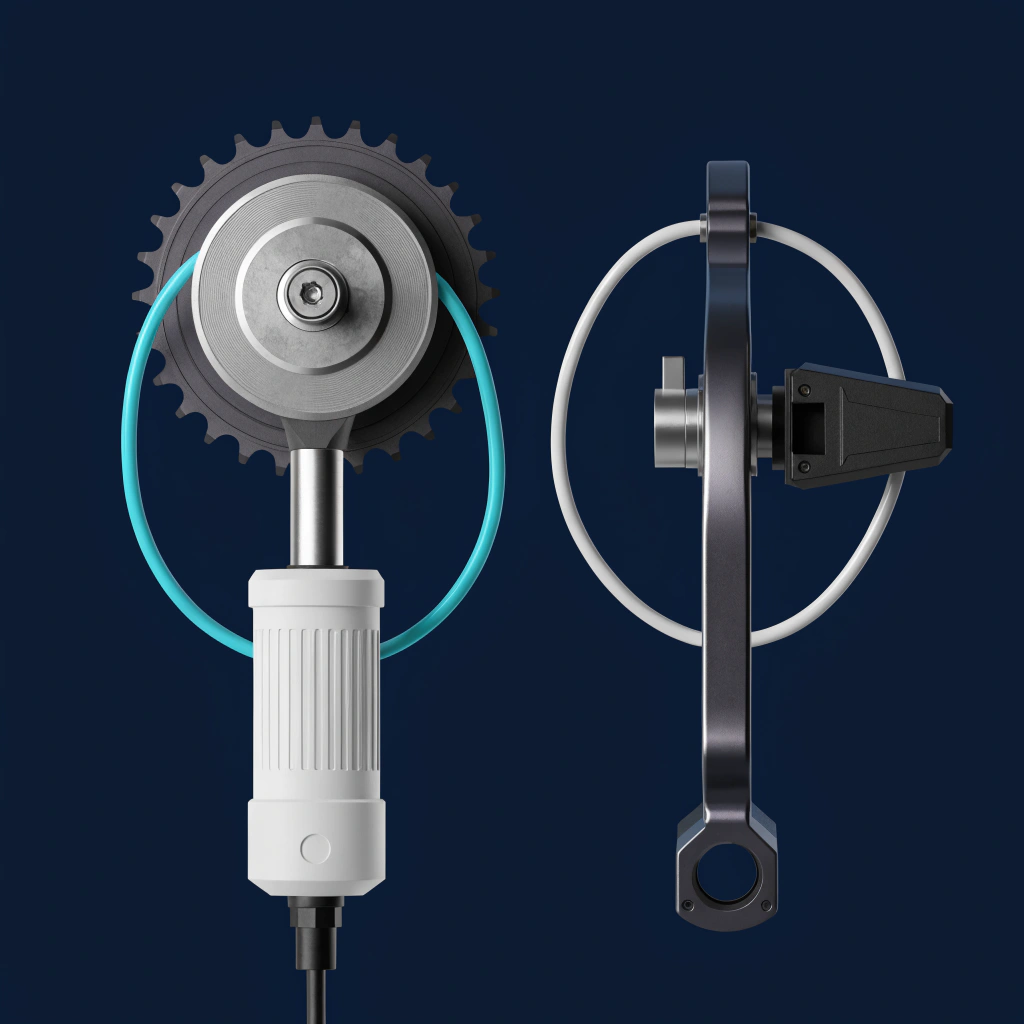
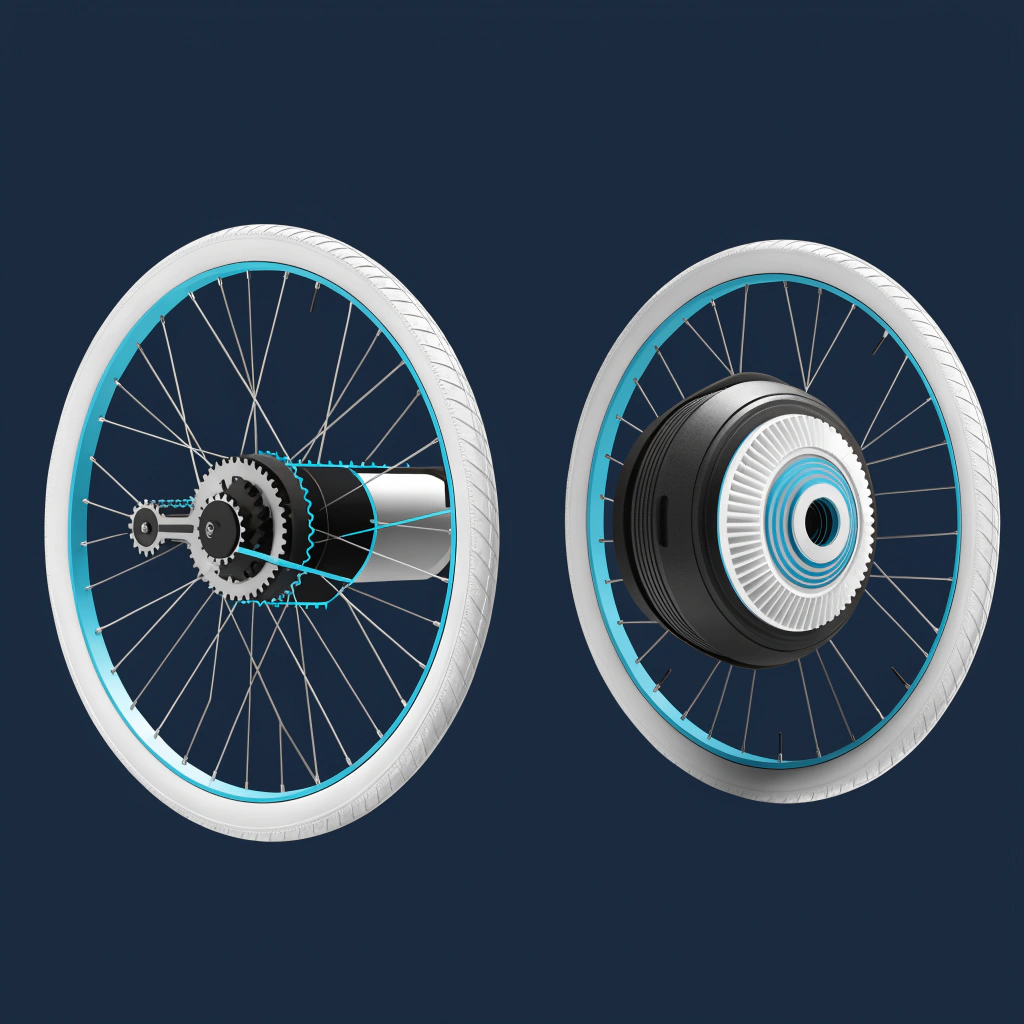
Frictieaandrijfsystemen (lichtgewicht alternatief)
Gespecialiseerde Brompton-conversies maken gebruik van frictieaandrijvingen die minimaal gewicht toevoegen en de vouw perfect behouden.
Voordelen van frictieaandrijving:
- Lichtst mogelijke conversie (2-3 kg totaal)
- Nul interferentie met vouwmechanisme
- Behoudt standaard wielen (gemak met quick-release)
- Eenvoudig te verwijderen wanneer niet nodig
Beperkingen frictieaandrijving:
- Verminderd vermogen vergeleken met naafmotoren (typisch 200-350W)
- Bandslijtage door frictiecontact
- Weergevoeligheid (regen vermindert de effectiviteit)
- Geluid door rolcontact
Brompton Batterijmontageoplossingen
De plaatsing van de batterij bepaalt het succes of falen van de conversie op Bromptons.
Batterij in voortas
Speciaal gebouwde tassen met batterij en controller worden gemonteerd op het Brompton voorbagagedragerblok.
Voordelen:
- Verwijderbaar voor opladen zonder gereedschap
- Past perfect bij de esthetiek van de Brompton-tas
- Gemakkelijke beveiliging (verwijder batterij bij parkeren)
- Interfereert niet met het vouwmechanisme
- Kan nog steeds een standaard Brompton-tas erboven bevestigen
Specificaties:
- Capaciteit: 36V 5-10Ah (175-360Wh)
- Gewicht: 1,5-2,5 kg
- Vormfactor: Past op de afmetingen van het Brompton bagagedragerblok
- Weerbestendigheid: Essentieel voor dagelijks gebruik
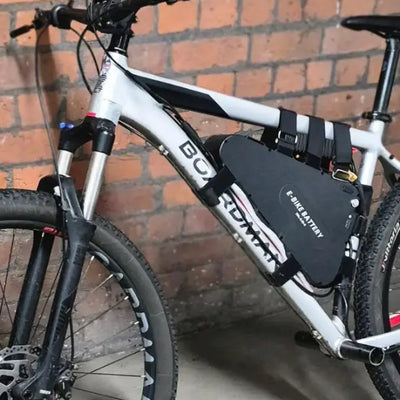
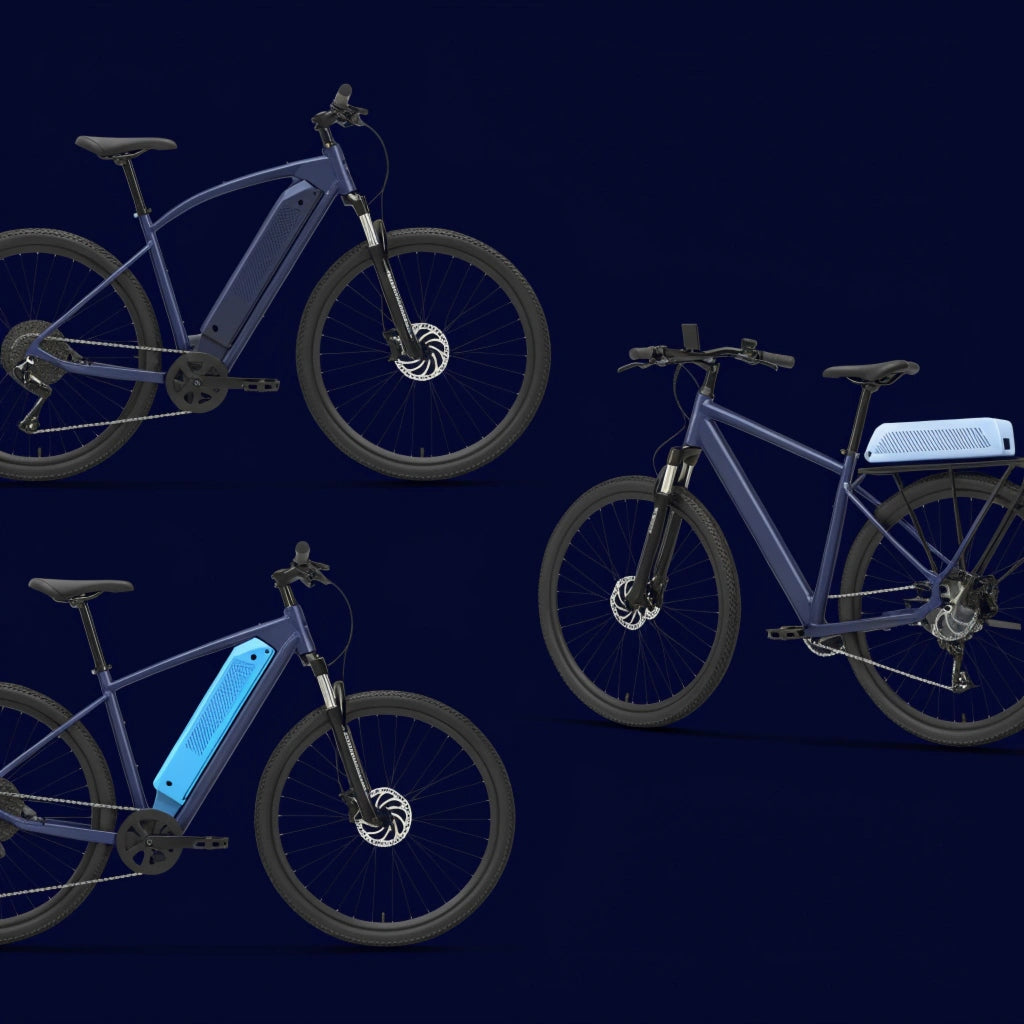
Compacte framegemonteerde batterij
Kleine batterijen worden gemonteerd op framegebieden die de vouwruimte behouden.
Montagelocaties:
- Achter de zadelpen (vereist een onopvallend ontwerp)
- Hoofdramedriehoek (beperkte ruimte, zorgvuldige dimensionering)
- Onder het zadel (minimalistische aanpak, kleine capaciteit)
Overwegingen:
- Mag het vouwmechanisme op geen enkel moment blokkeren
- Weerbestendigheid cruciaal (blootgestelde montage)
- Capaciteit beperkt door beschikbare ruimte
- Kan frameaanpassingen vereisen (permanente wijziging)
Universele benaderingen voor de ombouw van vouwfietsen
![]()

Naast Bromptons zijn talloze vouwfietsen geschikt voor ombouw met variërende complexiteit.
20" wielvouwfiets conversies
Standaard 20" vouwfietsen (Dahon, Tern, B'Twin, generieke modellen) bieden een eenvoudigere conversie dan Bromptons.
Achternaafmotor: De standaardaanpak
Achternaafmotoren zorgen voor een krachtige, betrouwbare ombouw voor 20" vouwfietsen.
Waarom achtermotoren geschikt zijn voor 20" vouwfietsen:
- Meer 20" motoren beschikbaar dan 16"
- Vermogen naar achterwiel (betere tractie dan voor)
- Voorkant blijft standaard voor gemakkelijk vouwen/uitvouwen
- Doorgaans eenvoudigere framegeometrie dan Brompton
Aanbevolen specificaties:
-
Motor: 36V 250-500W (balans tussen vermogen en gewicht)
-
Batterij: 36V 10-15Ah (350-540Wh voor een bereik van 40-70km)
-
Totaal toegevoegd gewicht: 5-8kg (beheersbaar voor periodiek dragen)
Installatie overwegingen:
Controle vouwmechanisme:
- Test het vouwen volledig voordat u de installatie afrondt
- Controleer of kabels niet klem komen te zitten bij het vouwen
- Zorg ervoor dat de batterij de vouwpunten niet blokkeert
- Controleer of de vergrendelingen toegankelijk blijven
Geschiktheid frame:
- Aluminium frames zijn beter bestand tegen ombouw dan staal (gewicht)
- Controleer de dikte van de uitvalnaaf (minimaal 3 mm voor naafmotor)
- Controleer of het frame geen scheuren of beschadigingen heeft
- Overweeg een koppelarm voor frames met dunne uitvalnaven
Voornaafmotor voor universele vouwfietsen
Voornaafsystemen werken goed op veel 20" vouwfietsen, met name die met voorschokbrekeruitvalnaven ontworpen voor snelspanners.
Wanneer voormotoren zinvol zijn:
- Uitvalnaven achter zijn incompatibel met naafmotoren
- Wens om het gemak van de snelspanner achter te behouden
- Framegeometrie veroorzaakt problemen met de batterijmontage aan de achterkant
- Eenvoudigere installatie heeft de voorkeur boven optimale prestaties
Beperkingen van voormotoren:
- Gewichtsverdeling beïnvloedt de handling (vooral merkbaar op kleine wielen)
- Tractieproblemen bij het klimmen op steile/natte oppervlakken
- Belasting van de voorvork bij vouwfietsen van lagere kwaliteit
- Moet controleren of de motor het frame vrijhoudt bij het vouwen
Het behoud van het karakter van een vouwfiets na ombouw
Behoud van rijeigenschappen
Fietsen met kleine wielen hebben onderscheidende rijeigenschappen - ombouw mag dit niet tenietdoen.
Principes van gewichtsverdeling:
- Houd het toegevoegde gewicht zo laag mogelijk (onderkant van het frame is ideaal)
- Balans voor/achter is belangrijker op kleine wielen
- Vermijd hoog gemonteerde batterijen (beïnvloedt de stabiliteit)
- Test de handling grondig voordat u zich vastlegt op de montage
Behoud van stuurrespons:
- Voornaafmotoren voegen gewicht toe aan de stuuras
- Kies de lichtste beschikbare voormotoren (onder 3 kg)
- Versnellingsmotoren zijn lichter dan direct aangedreven motoren voor voorwieltoepassingen
- Overweeg een achternaaf als stuurgevoel van cruciaal belang is
Beheer van opgevouwen formaat
Elke centimeter die aan de opgevouwen afmetingen wordt toegevoegd, vermindert de bruikbaarheid.
Aanvaardbare toename van het opgevouwen formaat:
- Breedte: +0-3cm (minimale invloed op opslag)
- Lengte: +0-5cm (past nog steeds in de meeste ruimtes)
- Hoogte: +3-8cm (meest voorkomende toename van afmeting)
Probleemindicatoren:
- Past niet meer onder de treinbank
- Past niet in de kofferbak van de auto met vouwfiets
- Opslag op kantoor nu moeilijk
- Draaggreep ongemakkelijk gepositioneerd
Uw beslissing over de ombouw van een vouwfiets nemen
Het succesvol ombouwen van vouwfietsen vereist het accepteren van compromissen tussen vermogen, gewicht en draagbaarheid. De meest succesvolle ombouwingen geven meedogenloos prioriteit aan het behoud van de kernwaarde van de vouwfiets - gemakkelijk transport - terwijl ze zinvolle elektrische ondersteuning toevoegen voor de rijgedeelten.
Ontdek KirbEbike's complete ombouwassortiment voor onderdelen die geschikt zijn voor de beperkingen van vouwfietsen, van ultracompacte 250W-systemen tot krachtigere opties voor vouwfietsen die functionaliteit boven ultieme draagbaarheid stellen.
Sleutels tot succesvolle ombouw van een vouwfiets:
- Accepteer minder vermogen dan bij standaard fietsombouwingen (maximaal 250-500W)
- Geef meedogenloos prioriteit aan gewichtsvermindering
- Test het vouwmechanisme grondig voordat u de installatie afrondt
- Kies de accucapaciteit voor daadwerkelijk gebruik (niet overdimensioneren)
- Controleer de lokale regelgeving (vooral regels voor openbaar vervoer)
- Behoud het opgevouwen formaat zo dicht mogelijk bij het origineel
Vouwfietsen vertegenwoordigen het meest praktische formaat van stedelijk fietsen - ze combineren volledige fietsfunctionaliteit met appartementvriendelijke opslag en compatibiliteit met openbaar vervoer. Elektrische ombouw vergroot deze bruikbaarheid dramatisch, waardoor langere afstanden, heuvelachtige routes en onafhankelijk van conditie kunnen worden gebruikt, terwijl de fundamentele voordelen die vouwfietsen speciaal maken, behouden blijven.
Veelgestelde vragen
Kan ik mijn Brompton ombouwen zonder de iconische vouwfunctie te beïnvloeden?
Ja, met zorgvuldige componentselectie. Voornaafmotoren (36V 250W) en compacte, op de bagagedrager gemonteerde accu's behouden het vouwmechanisme volledig. Het totale gewicht neemt toe tot 15-17 kg, maar de opgevouwen afmetingen en bediening blijven vrijwel onveranderd. Vermijd te grote accu's en controleer de speling grondig.
Wat is het ideale vermogen voor de ombouw van een vouwfiets?
Voor 16" wielen (Brompton) levert 250W voldoende ondersteuning zonder overmatig gewicht. Voor 20" vouwfietsen, 250-500W, afhankelijk van terrein en draagbaarheid. Hoger vermogen voegt gewicht toe dat de voordelen van een vouwfiets tenietdoet - de meeste gebruikers vinden 250-350W de sweet spot.
Hoeveel gewicht voegt de ombouw van een vouwfiets toe aan het draaggewicht?
Verwacht een toevoeging van 4-8 kg, afhankelijk van de componenten. Lichtgewicht ombouwen (250W motor, kleine accu) voegen 4-6 kg toe, waardoor het totale gewicht beheersbaar blijft (onder 18 kg). Zware ombouwen (500W, grote accu) voegen 6-8 kg+ toe, waardoor regelmatig dragen moeilijk wordt. Geef prioriteit aan minimaal gewicht voor multimodaal woon-werkverkeer.
Passen omgebouwde vouwfietsen nog steeds onder treinbanken?
De meeste ombouwingen behouden een adequate opgevouwen grootte voor opslag onder de stoel, hoewel de hoogte doorgaans 3-8 cm toeneemt. Voornaafmotoren en compacte accu's behouden de afmetingen het best. Test de vrije ruimte onder de stoel van uw specifieke trein voordat u zich vastlegt op grote componenten. Sommige ombouwingen vereisen alternatieve opberglocaties.
Moet ik kiezen voor een voor- of achternaafmotor voor 20" vouwfietsen?
Achternaafmotoren presteren over het algemeen beter (tractie, vermogen, handling) en werken goed op de meeste 20" vouwfietsen. Kies voor een voornaafmotor als de achternaafassen incompatibel zijn of als het behoud van de snelspanner achter cruciaal is. Voor Bromptons is een voornaafmotor de enige praktische optie, gezien het vouwmechanisme.
Welke accubereik heb ik eigenlijk nodig voor het woon-werkverkeer met een vouwfiets?
Bereken uw retourafstand en voeg 30% marge toe. Typische stedelijke woon-werkverkeer (10-20 km retour) heeft 350-500Wh nodig (36V 10-13Ah). Multimodale forenzen met korte ritsegmenten kunnen kleinere 180-300Wh accu's gebruiken. Grotere accu's voegen gewicht toe dat de draagbaarheidsvoordelen tenietdoet.
Kan ik de ombouwcomponenten verwijderen om mijn vouwfiets te herstellen?
Ja, naafmotorombouwingen zijn omkeerbaar - u hoeft alleen het originele wiel opnieuw te installeren. Accubeugels laten doorgaans minimale sporen achter. Deze omkeerbaarheid maakt het mogelijk om de ombouw uit te proberen zonder permanente fietsaanpassing, belangrijk voor dure fietsen zoals Bromptons of wanneer het behoud van de doorverkoopwaarde belangrijk is.
: invalid url input)
usmile
Liquid error (snippets/blog-best-product line 36): product form must be given a product
Liquid error (snippets/blog-best-product line 59): product form must be given a product