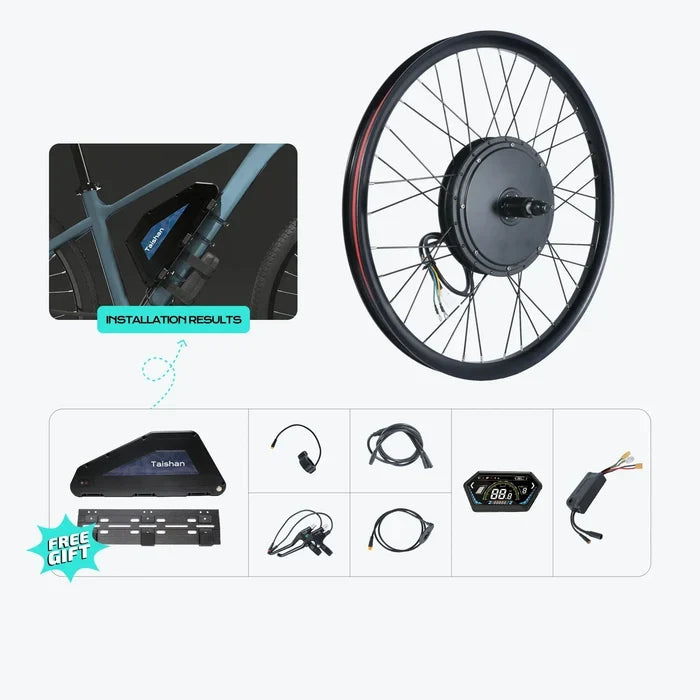
Het kiezen van de juiste batterijcapaciteit is aantoonbaar de meest cruciale beslissing die u zult nemen bij het ombouwen van uw traditionele fiets naar elektrische aandrijving. De batterij bepaalt niet alleen hoe ver u kunt reizen, maar beïnvloedt ook het gewicht, de kosten en de algehele rijervaring.
Door de relatie tussen ampère-uur (Ah) en wattuur (Wh) te begrijpen, kunt u een weloverwogen keuze maken die perfect aansluit bij uw rijbehoeften.
Wanneer u batterijopties voor e-bike ombouwsets onderzoekt, zult u verschillende specificaties tegenkomen die in het begin verwarrend kunnen lijken.
Deze uitgebreide gids zal de metingen van batterijcapaciteit ontrafelen en u helpen precies te berekenen wat u nodig heeft voor uw specifieke rijscenario's.
Batterijcapaciteit begrijpen: Ah vs. Wh uitgelegd
![]()

Voordat we ingaan op de selectiecriteria, laten we eerst verduidelijken wat deze metingen precies betekenen en waarom beide belangrijk zijn.
Ampère-uur (Ah): De grootte van de brandstoftank
Ampère-uur vertegenwoordigt de totale hoeveelheid elektrische stroom die een batterij gedurende een bepaalde tijd kan leveren. Zie het als de grootte van uw brandstoftank – een hogere Ah-waarde betekent meer opgeslagen energie beschikbaar voor uw motor.
Hoe Ah werkt:
- Een 10Ah batterij kan theoretisch 10 ampère leveren gedurende één uur
- Of 5 ampère gedurende twee uur
- Of 2 ampère gedurende vijf uur
De daadwerkelijke looptijd hangt af van hoeveel stroom uw motor trekt, wat varieert op basis van stroomverbruik, terrein en rijstijl.
Wattuur (Wh): De ware energiemaat
Wattuur geeft een completer beeld van de batterijcapaciteit omdat het rekening houdt met zowel spanning als ampère-uur. Dit is de meest nauwkeurige manier om batterijen met verschillende spanningswaarden te vergelijken.
De kritieke formule:
Wattuur (Wh) = Spanning (V) × Ampère-uur (Ah)
Praktijkvoorbeelden van Kirbebike Systemen:
- 36V 7Ah batterij = 252 Wh (EZ Rider Kit)
- 36V 13Ah batterij = 468 Wh (250W ombouwsets)
- 48V 16Ah batterij = 768 Wh (1000W systemen)
- 52V 20Ah batterij = 1.040 Wh (2000W hoogwaardige sets)
- 72V 20Ah batterij = 1.440 Wh (4000W extreem krachtige systemen)
Hoe hoger de wattuurwaarde, hoe verder u kunt reizen op één lading – maar ook hoe zwaarder en duurder de batterij wordt.
Essentiële factoren die de keuze van de batterijcapaciteit beïnvloeden
Uw typische rijafstand
Dit is de belangrijkste overweging bij het kiezen van de e-bike batterijcapaciteit. Bereken uw meest voorkomende reisafstanden en voeg een veiligheidsmarge toe.
Op afstand gebaseerde aanbevelingen:
|
Dagelijkse rijafstand
|
Minimaal aanbevolen Wh
|
Geschikte Kirbebike-systemen
|
|
15-25 mijl (24-40 km)
|
250-300 Wh
|
36V 7Ah EZ Rider
|
|
30-40 km
|
400-500 Wh
|
36V 13Ah of 48V 11.6Ah
|
|
40-60 km
|
650-800 Wh
|
48V 16Ah of 52V 15Ah
|
|
60-80 km
|
900-1.100 Wh
|
52V 20Ah of 60V 20Ah
|
|
80+ km
|
1.200+ Wh
|
72V 20Ah of dubbele batterijopstelling
|
Kies altijd een capaciteit die uw typische behoeften met 20-30% overschrijdt om rekening te houden met batterijdegradatie over tijd en onverwachte omleidingen.
Motorvermogen
![]()

Het wattage van uw motor heeft direct invloed op het energieverbruik. Motoren met een hoger vermogen verbruiken batterijen sneller, waardoor grotere batterijen nodig zijn om een redelijk bereik te behouden.
Afstemming vermogen-capaciteit:
-
250W motoren: 250-500 Wh batterijen bieden een uitstekend bereik voor woon-werkverkeer in de stad
-
500-750W motoren: 500-750 Wh batterijen balanceren prestaties en gewicht
-
1000-1500W motoren: 750-1.000 Wh batterijen nodig voor voldoende bereik
-
2000-3000W motoren: 1.000-1.500 Wh batterijen aanbevolen voor serieus rijden
-
4000W+ motoren: 1.400+ Wh batterijen essentieel voor langdurig gebruik met hoge prestaties
Het Kirbebike 72V 4000W systeem, bijvoorbeeld, combineert met een 72V 20Ah (1.440 Wh) batterij om een bereik van 40-80 km te leveren ondanks de extreme vermogensafgifte.
Terrein en rijomstandigheden
Uw rijomgeving beïnvloedt het energieverbruik dramatisch en moet uw capaciteitskeuze beïnvloeden.
Impact van terrein op batterijvereisten:
-
Vlakke stedelijke routes: Standaard capaciteit voldoende; energieverbruik voorspelbaar
-
Glooiende heuvels: Voeg 25-30% extra capaciteit toe om te compenseren voor het klimmen
-
Bergachtig terrein: Verhoog de capaciteit met 40-50% voor langdurig heuvelklimmen
-
Off-road paden: Houd rekening met 30-40% extra capaciteit voor variabele weerstand
-
Winderige omstandigheden: Tegenwind kan het verbruik met 15-25% verhogen
Als u regelmatig uitdagend terrein tegenkomt, is het kiezen van een e-bike batterij met hoge capaciteit essentieel in plaats van optioneel.
Rijder- en ladinggewicht
Het totale systeemgewicht beïnvloedt het energieverbruik aanzienlijk. Zwaardere ladingen vereisen meer vermogen om te accelereren en snelheid te behouden, vooral op hellingen.
Overwegingen voor gewicht:
-
Solorijder (onder 80kg): Standaard capaciteitsaanbevelingen zijn van toepassing
-
Zwaardere rijders (80-100kg+): Verhoog de capaciteit met 15-20%
-
Regelmatig ladingvervoer: Voeg 20-30% capaciteit toe voor consistente ladingen
-
Kinderpassagiers: Houd rekening met een extra 25-35% capaciteit
Toegang tot laadinfrastructuur
Overweeg hoe vaak u kunt opladen tijdens uw typische rijdagen.
Planning van oplaadscenario's:
-
Enkele dagelijkse rit: Batterijcapaciteit moet de volledige heen- en terugreisafstand dekken
-
Meerdere korte ritten: Een kleinere batterij met oplaadmogelijkheid halverwege de dag werkt goed
-
Meerdaagse tochten: Maximale capaciteit of dubbele batterijsysteem aanbevolen
-
Beperkte toegang tot opladen: Overgedimensioneerde capaciteit geeft gemoedsrust
Hoe de batterijcapaciteitsvereisten van uw e-bike te meten
![]()

Stap 1: Bereken uw basisverbruik
De meeste e-bike systemen verbruiken ongeveer 10-20 Wh per kilometer, afhankelijk van de omstandigheden. Gebruik deze formule:
Vereist Wh = Afstand (km) × Gemiddeld verbruik (Wh/km)
Voorbeeld berekening:
- Dagelijkse woon-werkverkeer: 30 km
- Gemiddeld verbruik: 15 Wh/km (matig terrein, 500W motor)
- Vereiste capaciteit: 30 km × 15 Wh/km = 450 Wh
- Aanbevolen batterij: 500+ Wh (veiligheidsmarge toegevoegd)
Stap 2: Pas realistische vermenigvuldigingsfactoren toe
Pas uw basisberekening aan op basis van uw specifieke omstandigheden:
Verbruiksfactoren:
- Vlak terrein, trapondersteuning niveau 1-2: × 0,8
- Gemengd terrein, matige ondersteuning: × 1,0 (basislijn)
- Heuvelachtig terrein, hogere ondersteuningsniveaus: × 1,3
- Steile heuvels, alleen gas geven: × 1,6
- Zware lading of passagiers: × 1,2
Stap 3: Houd rekening met batterijdegradatie
Lithiumbatterijen verliezen na verloop van tijd capaciteit. Plan voor de toekomst:
-
Nieuwe batterij: 100% capaciteit
-
Na 200 cycli: ~95% capaciteit
-
Na 500 cycli: ~85% capaciteit
-
Na 800 cycli: ~75% capaciteit
Kies een capaciteit die nog steeds aan uw behoeften voldoet bij 80% efficiëntie om de nuttige levensduur van de batterij te maximaliseren.
Batterijcapaciteitsopties in Kirbebike systemen
Kirbebike biedt zorgvuldig afgestemde batterijcapaciteiten voor elke motorconfiguratie, wat optimale prestaties en bereik garandeert.
Compacte capaciteitssystemen
36V 7Ah (252 Wh) - EZ Rider Kit
-
Bereik: 15-25 mijl (24-40 km)
-
Het beste voor: Korte stedelijke ritten, Brompton ombouw
-
Motorcombinatie: 250W voornaafmotoren
-
Gewichtsvoordeel: Lichtgewicht, gemakkelijk te verwijderen en te dragen
36V 13Ah (468 Wh)
-
Bereik: 30-40 km
-
Het beste voor: Dagelijkse forenzen met matige afstanden
-
Motorcombinatie: 250W systemen, sommige 500W toepassingen
-
Kenmerken: Goede balans tussen gewicht en capaciteit
Middelgrote capaciteitssystemen
48V 11.6Ah (556 Wh)
-
Bereik: 35-45 km
-
Het beste voor: Gemengd gebruik, matig terrein
-
Motorcombinatie: 750-1000W motoren
-
Sweet spot: Populaire keuze voor gebalanceerde prestaties
48V 16Ah (768 Wh)
-
Bereik: 40-60 km
-
Het beste voor: Langere woon-werkverkeer, heuvelachtig terrein
-
Motorcombinatie: 1000-1500W systemen
-
Veelzijdigheid: Gaat zelfverzekerd om met gevarieerde rijomstandigheden
Systemen met hoge capaciteit
52V 20Ah (1.040 Wh)
-
Bereik: 40-60 km bij hogere snelheden
-
Meest geschikt voor: Prestatiegerichte rijders, uitdagend terrein
-
Motorcombinatie: 1500-2000W motoren
-
Prestatievoordeel: Behoudt de spanning beter onder belasting
52V 30Ah (1.560 Wh)
-
Bereik: 50-100 km
-
Meest geschikt voor: Langeafstandsritten, uitgebreide offroad-avonturen
-
Motorcombinatie: 2000-2600W systemen
-
Hele dag capaciteit: Maximaal bereik zonder opladen
Extreme prestatiesystemen
60V 20Ah (1.200 Wh)
-
Bereik: 40-80 km
-
Meest geschikt voor: Hoge snelheidstoepassingen, steil terrein
-
Motorcombinatie: 2500-3000W motoren
-
Vermogensafgifte: Uitstekende spanningsstabiliteit
72V 20Ah (1.440 Wh)
-
Bereik: 40-80 km
-
Meest geschikt voor: Extreme prestaties, offroad-dominantie
-
Motorcombinatie: 4000W systemen
-
Maximale capaciteit: Hoogste spanning voor piekprestaties
Fysieke overwegingen: formaat, gewicht en montage
De accucapaciteit beïnvloedt niet alleen het bereik, maar ook de fysieke aspecten van uw conversie.
Gewichtsimpact
Het accugewicht neemt proportioneel toe met de capaciteit:
-
36V 7Ah: Ongeveer 1,5-2 kg
-
36V 13Ah: Ongeveer 2,5-3 kg
-
48V 16Ah: Ongeveer 3,5-4 kg
-
52V 20Ah: Ongeveer 4,5-5 kg
-
72V 20Ah: Ongeveer 6-7 kg
Houd rekening met de framesterkte van uw fiets en uw vermogen om het extra gewicht te hanteren, vooral als u de fiets een trap op moet dragen of op een rek moet tillen.
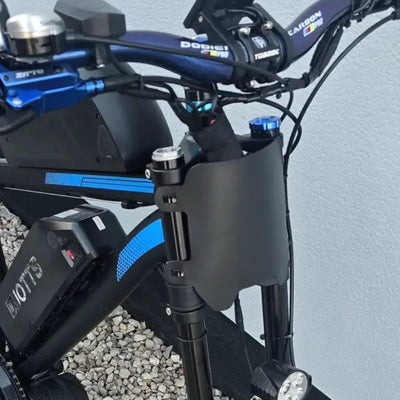
Montageopties
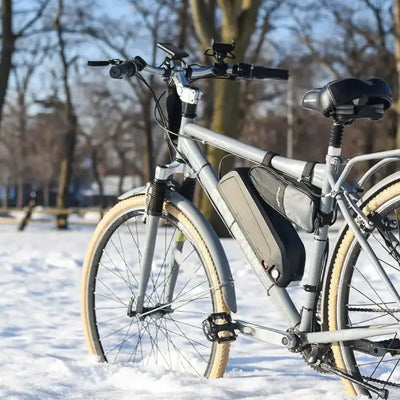
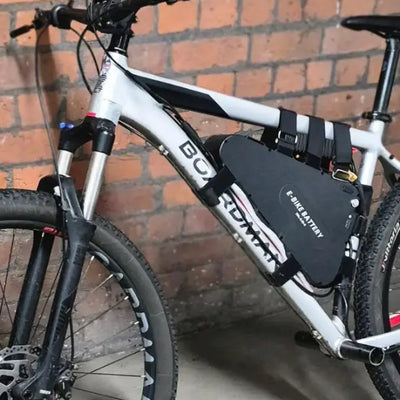
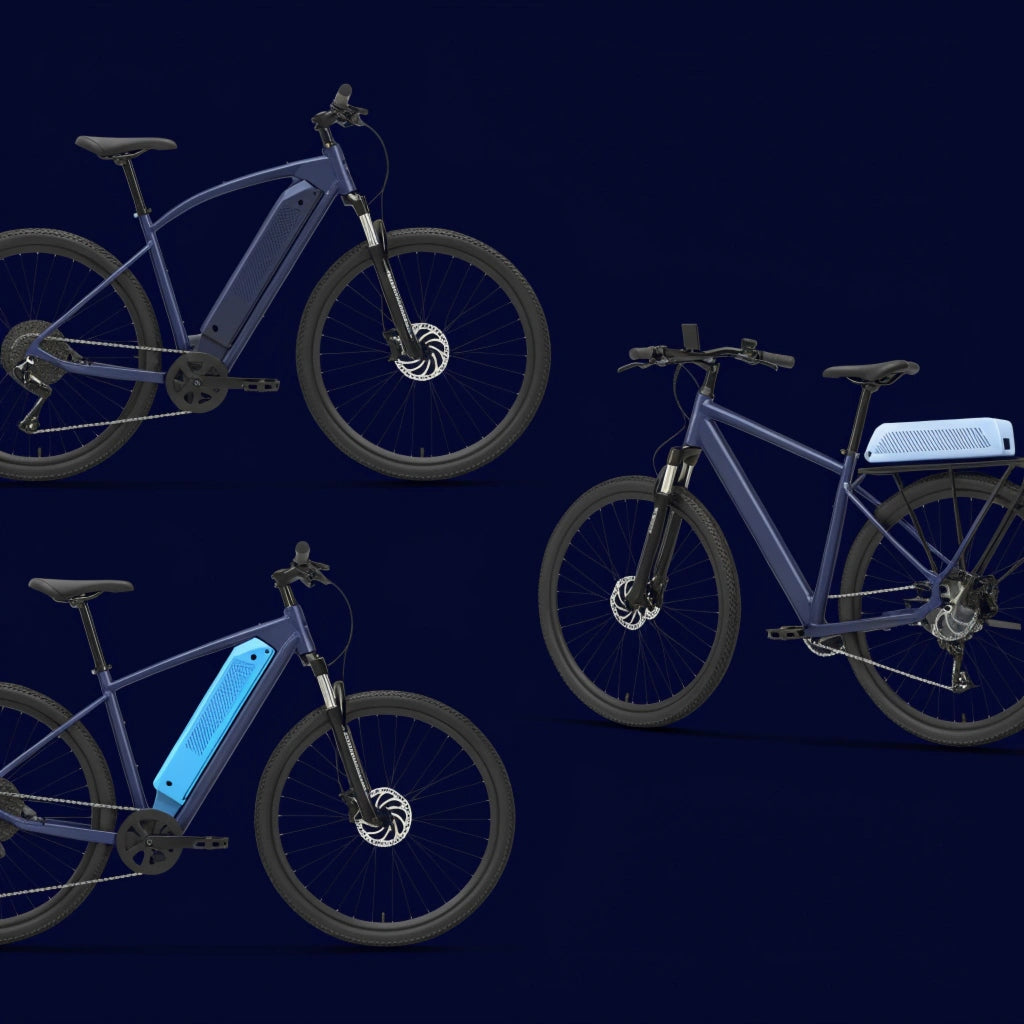
Batterijen met verschillende capaciteiten gebruiken diverse montageconfiguraties:
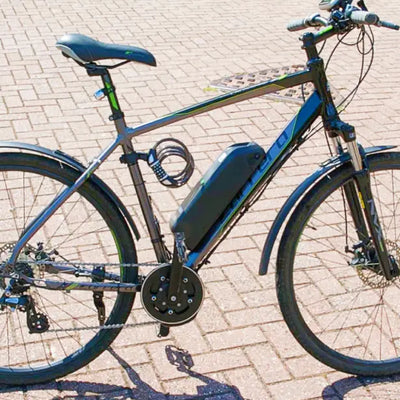
Accu's in de onderbuis:
- Meest voorkomende plaatsing voor 36V-52V systemen
- Goede gewichtsverdeling
- Vereist voldoende ruimte in de framedriehoek
- Verkrijgbaar in meerdere capaciteiten bij Kirbebike
Accu's op de bagagedrager:
- Ideaal wanneer frameruimte beperkt is
- Beïnvloedt de wegligging enigszins (gewicht ligt meer achteraan)
- Uitstekend voor bakfietsen
- Eenvoudig te verwijderen voor opladen
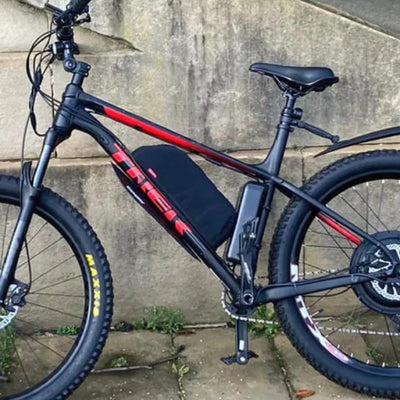
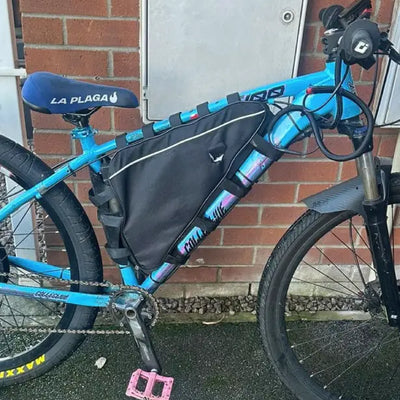
Framedriehoek tassen:
- Alleen compacte batterijen
- Houdt het zwaartepunt laag
- Beperkte capaciteitsopties
- Goed voor minimalistische constructies
Veelgestelde vragen
Hoe meet ik nauwkeurig de capaciteit van mijn huidige e-bike accu?
Controleer de spanning en de ampère-uurwaarde (op de accubehuizing afgedrukt) van uw accu en vermenigvuldig deze met elkaar om wattuur te krijgen. Een 48V 16Ah accu bevat bijvoorbeeld 768 Wh. U kunt ook een wattmeter gebruiken tijdens het opladen om de werkelijke capaciteit te meten, die bij oudere accu's iets lager kan zijn dan de nominale capaciteit.
Kan ik een accu met een hogere capaciteit gebruiken dan oorspronkelijk gespecificeerd voor mijn motor?
Ja, het gebruik van een hogere capaciteit (Ah) bij dezelfde spanning is volkomen veilig en zal uw motor of controller niet beschadigen. Het zorgt eenvoudigweg voor een groter bereik. Zorg er echter voor dat de accuspanning overeenkomt met de vereisten van uw systeem—gebruik geen 52V accu op een systeem dat alleen is beoordeeld voor maximaal 48V, tenzij specifiek compatibel.
Wat is het verschil tussen nominale capaciteit en bruikbare capaciteit?
De nominale capaciteit is de totale energieopslag bij volledige lading, terwijl de bruikbare capaciteit is wat u praktisch kunt gebruiken zonder de accu te beschadigen. De meeste systemen gebruiken 80-90% van de totale capaciteit om de levensduur van de accu te behouden, wat betekent dat een 1.000 Wh accu ongeveer 800-900 Wh aan bruikbare energie levert.
Hoeveel neemt de accucapaciteit af na verloop van tijd?
Kwaliteitslithiumbatterijen van fabrikanten zoals LG behouden doorgaans 85-90% van de capaciteit na 500 laadcycli en 75-80% na 800-1.000 cycli. Dit vertaalt zich ruwweg in 3 jaar levensduur met de juiste zorg. Kirbebike-batterijen met LG-cellen zijn ontworpen voor meer dan 1.000 cycli van betrouwbare prestaties.
Is het beter om één grote accu te nemen of twee kleinere accu's voor dezelfde totale capaciteit?
Dit hangt af van uw prioriteiten. Eén grote accu is eenvoudiger, lichter (minder overtollige behuizing/BMS) en goedkoper. Twee kleinere accu's bieden redundantie, gemakkelijker opladen (kleinere laders), flexibiliteit in gewichtsverdeling en de optie om slechts één mee te nemen voor kortere ritten. Veel rijders geven de voorkeur aan de eenvoud van één accu.
Hoe beïnvloedt koud weer de accucapaciteit?
Lithiumbatterijen verliezen tijdelijk capaciteit bij koude temperaturen—verwacht een vermindering van 15-30% bij vriesweer. De capaciteit keert terug zodra de batterij is opgewarmd. Voor winterritten kiest u een hogere capaciteit ter compensatie, bewaart u de batterij binnenshuis wanneer u niet rijdt, en isoleert u deze indien mogelijk tijdens gebruik.
Wat is de minimale accucapaciteit die ik moet overwegen voor het beklimmen van heuvels?
Voor aanzienlijke heuvelklimmen moet u zich niet alleen richten op capaciteit (Ah/Wh), maar ook zorgen voor voldoende spanning en motorvermogen. Een 48V- of 52V-systeem met ten minste 500-750 Wh werkt goed voor gematigde heuvels, terwijl serieus bergachtig terrein baat heeft bij accu's van 1.000+ Wh in combinatie met motoren van 1500W+ die een hoog vermogen kunnen leveren tijdens beklimmingen.
Conclusie
Het kiezen van de juiste accucapaciteit voor uw e-bike komt uiteindelijk neer op het begrijpen van uw rijgedrag en het eerlijk inschatten van uw behoeften. Hoewel het verleidelijk is om altijd de maximale capaciteit te kiezen, zullen het extra gewicht en de kosten mogelijk niet ten goede komen aan rijders met kortere, voorspelbare routes. Omgekeerd leidt het onderdimensioneren van uw accu tot "range anxiety" en frequente oplaadfrustratie.
De gulden middenweg ligt in het kiezen van een capaciteit die uw typische ritten comfortabel aankan, terwijl er een buffer is voor af en toe langere avonturen of batterijdegradatie na verloop van tijd. De meeste rijders vinden dat accu's van 600-900 Wh een uitstekende veelzijdigheid bieden onder verschillende rijomstandigheden.
: invalid url input)
usmile
Liquid error (snippets/blog-best-product line 36): product form must be given a product
Liquid error (snippets/blog-best-product line 59): product form must be given a product