Het kiezen van een ebike ombouwkit is niet dezelfde beslissing voor een forens in Londen die fietspaden gebruikt en een fietser in de Yorkshire Dales die ruiterpaden trotseert. Stedelijke en landelijke rijomgevingen stellen fundamenteel verschillende eisen – terreinprofielen, reispatronen, infrastructuurtoegang, veiligheidsproblemen en praktische beperkingen variëren allemaal dramatisch.
Inzicht in welke kitspecificaties belangrijk zijn voor jouw specifieke rijcontext, voorkomt de veelvoorkomende fout om systemen te kiezen die geoptimaliseerd zijn voor het gebruik van iemand anders. Een geverifieerde Kirbebike-klant die dagelijks 30 mijl in stedelijke omgevingen aflegt, gebruikt hun systeem heel anders dan de klant die 23 km heuvelachtige routes fietst – beide succesvol, maar met verschillende benaderingen van kitselectie.
Het gaat er hier niet om de ene rijomgeving superieur te verklaren. Het gaat erom de kenmerken van de ombouwkit af te stemmen op de specifieke uitdagingen en kansen die elke omgeving biedt.
Terreinprofiel: De primaire onderscheidende factor
![]()

Kenmerken van stedelijk terrein
Stedelijk fietsen in het VK is overwegend vlak of licht glooiend, afgewisseld met af en toe korte steile beklimmingen (spoorbruggen, toegang tot kanaalpaden, stadheuvels). Gemiddelde hellingen overschrijden zelden 5-8%, hoewel er lokale uitzonderingen zijn.
Wat dit betekent voor kitselectie:
De 36V 250W EZ Rider met 50Nm koppel pakt typische stedelijke hellingen comfortabel aan. Eén forens uit Devon die een "zware autorit van 25 minuten" omzet in een "11 minuten durende vrijetijdsrit" toont voldoende vermogen voor stedelijke heuvelprofielen – de route van 3,5 mijl omvat "heuvels van Devon" en toch biedt het 250W-systeem voldoende ondersteuning.
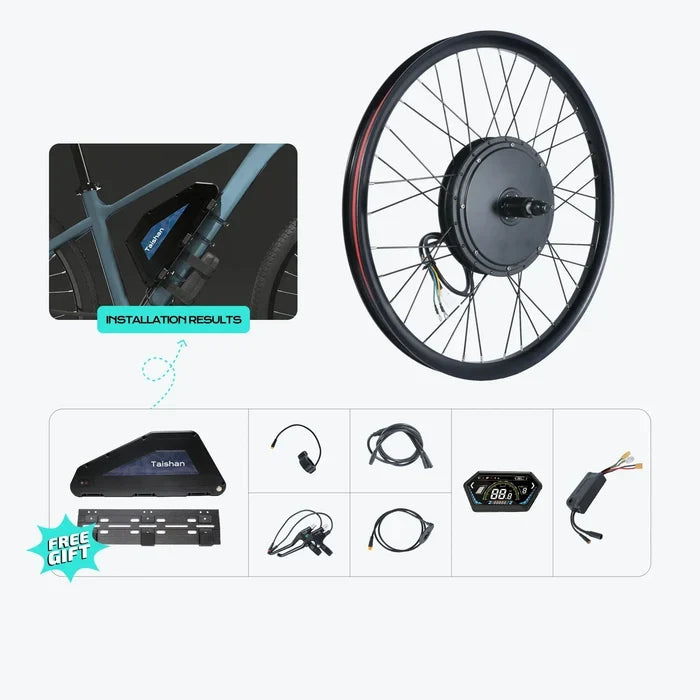
Voorwielnaafmotoren werken goed in stedelijke contexten – lichtgewicht, eenvoudige installatie, voldoende vermogen voor typische hellingen. Het motorgewicht van de EZ Rider van 2,7-3,8 kg compromitteert de stedelijke wegligging niet, waar langdurige steile beklimmingen zeldzaam zijn.
Kenmerken van landelijk terrein
Het Britse platteland presenteert aanhoudende hellingen, beklimmingen van meerdere kilometers, losse ondergronden en een cumulatieve hoogteverschil dat veel groter is dan op stedelijke routes. Hellingen van 10-15% over kilometers lang zijn gebruikelijk op landelijke wegen en ruiterpaden.
Wat dit vereist voor kitselectie:
De Tongsheng TSDZ8 middenmotor met 140Nm koppel presteert dramatisch beter dan naafmotoren op aanhoudende landelijke beklimmingen. Eén geverifieerde klant die 23 km heuvelachtige ritten aflegt, eindigt met 80% batterij over op ondersteuningsniveau één – het versnellingsvoordeel en de koppelgevoelige efficiëntie van middenmotoren worden essentieel op terrein waar naafmotoren batterijen snel leegtrekken.
|
Terreinfactor
|
Stedelijke vereiste
|
Landelijke vereiste
|
|
Gemiddelde helling
|
0-5%
|
5-15% aanhoudend
|
|
Benodigd motorkoppel
|
40-60Nm voldoende
|
100-140Nm aanbevolen
|
|
Motortype
|
Voor-/achternaaf acceptabel
|
Middenmotor of krachtige achternaaf
|
|
Batterijcapaciteit
|
7-13Ah voldoende
|
13-20Ah+ voorkeur
|
|
Belang van versnelling
|
Minder kritisch
|
Essentieel voor efficiëntie
|
Verschillen in reispatroon
![]()

Stedelijke pendelpatronen
Stedelijke ritten volgen voorspelbare routes met frequente stops – verkeerslichten, kruispunten, voetgangersoversteekplaatsen. Acceleratie vanuit stilstand vindt tientallen keren per rit plaats. Gemiddelde afstanden zijn korter (5-15 km is een typische woon-werkafstand).
Kit implicaties:
De EZ Rider-klant die 6 km naar het treinstation pendelt – vijf dagen per week gedurende twee jaar fietst en 3.500 km aflegt – is een voorbeeld van stedelijke reispatronen. De compacte 36V 7Ah batterij biedt meerdere dagen per lading. Frequente stops vereisen een goede handling bij lage snelheden; voorwielnaafmotoren met verwijderbare batterijen voldoen aan de stedelijke veiligheidsbehoeften (batterij eenvoudig los te koppelen en mee te nemen).
Stop-start rijden benadrukt responsieve vermogensafgifte boven duurzaam klimvermogen. Cadence-gebaseerde PAS-systemen werken voldoende – korte vertragingen in de assistentie zijn minder belangrijk wanneer frequente stops de impuls al onderbreken.
Rijpatronen op het platteland
Landelijke ritten omvatten aanhoudend rijden met constante snelheden, minimale stops, langere gemiddelde afstanden (20-50 km), en routes waar infrastructuur (laden, veiligheid) gedurende langere perioden mogelijk niet beschikbaar is.
Kit implicaties:
De klant die in twee jaar bijna 20.000 km aflegt op een 1500W-systeem (voor gebruik op privéterrein) toont landelijke reiskenmerken – lange consistente afstanden die robuuste systemen en aanzienlijke batterijreserves vereisen. Plattelandsfietsers profiteren van grotere batterijcapaciteiten (48V 16-20Ah), uitgebreide garantieondersteuning en systemen die zijn ontworpen voor urenlang continu gebruik in plaats van korte stedelijke sprints.
Koppelgevoelige middenmotoren schitteren in landelijke contexten – de proportionele ondersteuning van de TSDZ8 voelt natuurlijk aan op lange landelijke ritten, waar cadansgebaseerde aan/uit-ondersteuning vermoeiend wordt.
Toegang tot infrastructuur en oplaadmogelijkheden
Voordelen van stedelijk laden
Stedelijke fietsers hebben doorgaans:
- Toegang tot opladen op het werk (kantoren, werkgevers bieden steeds vaker oplaadpunten voor e-bikes)
- Thuis opladen met veilige fietsenstalling
- Kortere afstanden waardoor gedeeltelijk opladen voldoende is
- Meerdere routeopties als de actieradius een probleem wordt
Praktisch gevolg:
Eén EZ Rider-klant merkt op dat de batterij gemakkelijk te verwijderen is en "in een rugzak te gooien" is – de batterij meenemen in treinen, opladen op het werk, diefstalrisico elimineren door waardevolle componenten te verwijderen. Stedelijke infrastructuur ondersteunt frequent opladen tussendoor in plaats van dat er een hele dag batterijautonomie nodig is.
Beperkingen van opladen op het platteland
Landelijke fietsers worden geconfronteerd met:
- Beperkte of geen oplaadmogelijkheden onderweg
- Langere afstanden tussen veilige locaties
- Moet de hele reis afleggen op één enkele lading
- Routes hebben mogelijk geen alternatieven als de batterij leegraakt
Praktisch gevolg:
Landelijke fietsers hebben een overgedimensioneerde batterijcapaciteit nodig ten opzichte van de theoretische actieradius – de veiligheidsmarge moet groter zijn. Een landelijke route van 40 km vereist een 48V 16-20Ah batterijcapaciteit, terwijl een vergelijkbare stedelijke route van 40 km volstaat met 36V 13Ah dankzij toegang tot opladen op het werk en meerdere routeopties.
Geschiktheid van motortype per omgeving
Voorwielnaafmotoren: Stedelijk voordeel
Stedelijke voordelen:
- Lichtgewicht (2,7-3,8 kg) compromitteert de wendbare handling niet
- Eenvoudige installatie geschikt voor doe-het-zelf stedelijke fietsers
- Snelle verwijdering van het voorwiel voor transport/veiligheid
- Lagere instapprijs voor budgetbewuste forenzen
- Voldoende vermogen voor typische stedelijke hellingen
Stedelijk nadeel:
- Zwaarder stuurgevoel (merkbaar maar acceptabel in stadsritten)
- Tractiebeperkingen op natte stedelijke oppervlakken (zeldzaam probleem, beheersbaar)
De EZ Rider-klant die in twee jaar 3.500 km aflegt, toont de levensvatbaarheid van de voorwielnaaf voor dagelijks woon-werkverkeer in de stad – geen catastrofale storingen, consistente prestaties, beheersbare beperkingen.
Achternaafmotoren: Veelzijdig middengebied
Evenwichtige prestaties:
- Betere gewichtsverdeling dan voorwielmotoren
- Meer vermogen beschikbaar (1000W-4000W bereik)
- Geschikt voor zowel stedelijk als gematigd landelijk gebruik
- Tractievoordeel bij beklimmingen en natte oppervlakken
Kirbebike's 48V 1000W tot 72V 4000W achternaafassortiment bedient fietsers die meer vermogen nodig hebben dan 250W, of het nu gaat om stedelijk vrachtvervoer, langere woon-werkafstanden of off-road landelijk gebruik.
Middenmotoren: Landelijke optimalisatie
Landelijke voordelen:
- 140Nm koppel presteert beter dan naafmotoren bij aanhoudende beklimmingen
- Versnellingsefficiëntie verlengt de actieradius op heuvelachtig terrein
- Evenwichtige gewichtsverdeling voor technisch rijden
- Natuurlijke vermogensafgifte voor comfort op lange afstanden
Landelijke afweging:
- Complexere installatie (vervanging van de trapas)
- Verhoogde slijtage van de aandrijving (ketting, cassette ervaren motorkrachten)
- Hogere onderhoudsvereisten
De TSDZ8-klant die 23 km heuvelachtige ritten aflegt met 80% batterij, toont het efficiëntievoordeel van een middenmotor op landelijk terrein – deze actieradiusprestatie zou onbereikbaar zijn met vergelijkbare naafmotorsystemen.
|
Motortype
|
Stedelijke geschiktheid
|
Landelijke geschiktheid
|
Kirbebike voorbeeld
|
|
Voorwielnaaf
|
Uitstekend
|
Voldoende (vlak landelijk)
|
36V 250W EZ Rider, 48V 250W
|
|
Achternaaf
|
Uitstekend
|
Goed (meeste terrein)
|
48V 1000W, 52V 2000W, 72V 4000W
|
|
Middenmotor
|
Goed
|
Uitstekend (heuvelachtig terrein)
|
TSDZ8 500W/750W
|
Batterijcapaciteitsstrategie per omgeving
Stedelijke batterijselectie
Typische stedelijke vereisten:
- Dagelijkse woon-werkverkeer: 10-20 km heen en terug
- Opladen op het werk beschikbaar
- Batterijgewicht is belangrijk (wordt meegenomen in gebouwen)
- Compact formaat heeft de voorkeur voor veiligheid
Optimale stedelijke batterijen:
- 36V 7Ah (252Wh): Korte ritten, dagelijks opladen – EZ Rider specificatie
- 36V 13Ah (468Wh): Standaard woon-werkverkeer, om de dag opladen
- 48V 11.6Ah (557Wh): Uitgebreide stedelijke actieradius, wekelijks opladen
Eén EZ Rider-klant bereikt 20-30 km per lading terwijl hij een kind in een zitje draagt – dit vertegenwoordigt typische stedelijke dagelijkse actieradiusbehoeften die worden voldaan door een compacte batterij.
Landelijke batterijselectie
Typische landelijke vereisten:
- Enkele reis: 30-60 km heen en terug
- Geen oplaadmogelijkheden onderweg
- Gewicht van de batterij minder kritisch (blijft op de fiets)
- Maximale actieradius krijgt voorrang boven formaat
Optimale batterijen voor landelijk gebied:
- 48V 16Ah (768Wh): Minimum voor serieus rijden op het platteland
- 52V 20Ah (1040Wh): Comfortabele actieradiusreserve voor landelijk gebied
- 52V 30Ah (1560Wh): Uitgebreide toertochten op het platteland, capaciteit voor meerdere dagen
- 72V 20Ah (1440Wh): Maximale energiesystemen met aanzienlijke reserve
Snelheidsverwachtingen en gebruikte ondersteuningsniveaus
Snelheidspatronen in de stad
Stadsfietsen overschrijdt zelden 24 km/u aanhoudend – verkeer, voetgangers, kruispunten en wegomstandigheden beperken de gemiddelde snelheden van nature. De assistentieafsnijding van 25 km/u in het VK is minder belangrijk in stedelijke contexten waar de gemiddelde snelheden 16-21 km/u bedragen, inclusief stops.
Gebruik van ondersteuningsniveau in de stad:
Stadsfietsers melden dat ze voor de meeste ritten matige ondersteuning (niveaus 2-3) gebruiken, af en toe terugschakelend naar niveau 1 op vlakke stukken of verhogend naar niveau 4-5 voor specifieke heuvels. De variatie helpt de actieradius te verlengen, terwijl een comfortabel tempo door het verkeer wordt gehandhaafd.
Snelheidspatronen op het platteland
Landelijke wegen laten een aanhoudende snelheid van 24 km/u toe waar de wegomstandigheden dit toelaten. Fietsers opereren vaak op de wettelijke assistentielimiet van het VK, waardoor de afsnijding van 25 km/u echt relevant is – plattelandsfietsers voelen de assistentieafsnijding scherper dan stadsfietsers.
Toegang tot onderhoud en ondersteuning
Voordelen van stedelijk onderhoud
- Lokale fietsenmakers bereikbaar voor reparaties
- Garantieondersteuning gemakkelijker toegankelijk
- Vervanging van onderdelen sneller (volgende dag levering op stedelijke adressen)
- Doe-het-zelf reparatiebronnen direct beschikbaar
Onderhoudsstrategie:
Stadsfietsers kunnen voor complexe reparaties vertrouwen op ondersteuning van derden – professionele fietsenmakers zijn steeds beter bekend met gangbare ombouwsets.
Beperkingen voor onderhoud op het platteland
- Afstand tot gespecialiseerde ondersteuning
- Moet zelfredzamer zijn voor basis onderhoud
- Defecte onderdelen hebben grotere gevolgen (gestrand ver van hulp)
- Langere levertijden naar adressen op het platteland
Onderhoudsstrategie:
Plattelandsfietsers profiteren van robuuste systemen met bewezen duurzaamheid. De klant met bijna 20.000 km op een 1500W-systeem toont het belang aan van duurzame componenten voor landelijke contexten waar frequente winkelbezoeken niet praktisch zijn.
Conclusie
Stedelijke en landelijke fietsers hebben fundamenteel verschillende specificaties voor ombouwsets nodig: stedelijke forenzen profiteren van lichtgewicht voornaafmotoren met verwijderbare accu's, compacte capaciteit en wendbare rijeigenschappen die geoptimaliseerd zijn voor stop-start rijden en veiligheidsproblemen, terwijl landelijke fietsers behoefte hebben aan koppelrijke middenmotoren of krachtige achternaven, aanzienlijke accureserves en robuuste weerbestendige systemen die ontworpen zijn voor langdurig gebruik zonder infrastructuurondersteuning.
Geen van beide benaderingen is universeel beter; beide optimaliseren voor specifieke contexten. Verken het complete assortiment van Kirbebike om te bepalen welke specificaties aansluiten bij de vraag of u op fietssnelwegen navigeert of ruiterpaden bedwingt – de juiste kit hangt volledig af van waar u daadwerkelijk rijdt.
Veelgestelde Vragen
Wat is de beste e-bike ombouwset voor woon-werkverkeer in Britse steden?
Stedelijke forenzen profiteren het meest van voornaafmotoren met verwijderbare accu's. De 36V 250W EZ Rider is geschikt voor korte tot middellange pendelritten (5-15 km), terwijl 48V 250W met 13-16Ah accu de stedelijke afstanden verlengt.
Heb ik een andere ombouwset nodig voor rijden op het platteland dan voor rijden in de stad?
Ja, fundamenteel anders. Rijden op het platteland vereist middenmotoren (TSDZ8 140Nm koppel) of krachtige achternaven (1000W+), grotere accu's (minimaal 48V 16Ah) en systemen die zijn ontworpen voor langdurig gebruik zonder infrastructurele ondersteuning.
Kan een 250W motor de heuvels op het Britse platteland aan?
Voor gematigd plattelandsgebied: ja, met een middenmotorvoordeel. De TSDZ8 36V 500W/48V 750W (voor privéterrein) met 140Nm koppel en efficiënte overbrenging kan de meeste Britse plattelandshellingen effectief aan.
Welke batterijcapaciteit heb ik nodig voor het platteland versus stedelijk rijden?
Stedelijk: 36V 7-13Ah voldoende (oplaadpunt op werkplek beschikbaar, kortere afstanden). Een EZ Rider-klant haalt meerdere dagen per oplaadbeurt met 7Ah voor 6km stedelijk woon-werkverkeer. Platteland: minimaal 48V 16-20Ah (geen oplaadmogelijkheden onderweg, langere afstanden, gehele reis moet worden voltooid).
Zijn ombouwsets met verwijderbare accu's beter voor de stad of het platteland?
Verwijderbare accu's zijn essentieel voor stedelijke contexten (diefstalpreventie, opladen op het werk, woon-werkverkeer met de trein). Eén geverifieerde klant waardeert specifiek de compacte accu die in een rugzak past om op het treinstation te kunnen vastzetten.
: invalid url input)
usmile
Liquid error (snippets/blog-best-product line 36): product form must be given a product
Liquid error (snippets/blog-best-product line 59): product form must be given a product