Achterwiel-conversiekits bieden superieure tractie, natuurlijke fietsprestaties, krachtige prestaties en een optimale gewichtsverdeling – wat ze de voorkeur maakt voor serieuze fietsers, uitdagend terrein, toepassingen met een hoger vermogen, en iedereen die prestaties boven installatiegemak stelt.
Hoewel de beste ebike kit-opties voorwiel-, achterwiel- en middenmotorconfiguraties omvatten, bepaalt het begrijpen wanneer de voordelen van het achterwiel de bescheiden installatiecomplexiteit rechtvaardigen, of deze bewezen aanpak aansluit bij uw specifieke rijbehoeften en prestatieverwachtingen.
Deze uitgebreide gids onderzoekt de beste achterwiel-conversiekits, hun unieke voordelen voor veeleisende toepassingen, installatieoverwegingen en selectiecriteria, en helpt u professionele e-bike prestaties te bereiken door middel van de meest populaire motorplaatsing wereldwijd.
Waarom achterwiel-conversiekits uitblinken in prestaties
![]()

Het begrijpen van de fundamentele voordelen die de plaatsing van de achtermotor biedt, verklaart hun dominantie onder prestatiegerichte rijders en veeleisende toepassingen.
Superieure tractievoordelen
Voordelen van gewichtsverdeling:
Achterwielaandrijving concentreert het vermogen waar de natuurlijke gewichtsverdeling maximale tractie biedt:
Fysica van tractie:
- Gewicht van de rijder voornamelijk over het achterwiel
- Batterijgewicht voegt achterwaartse tractie toe
- Acceleratie verplaatst het gewicht naar achteren
- Klimmen verplaatst het gewicht naar achteren
- Vermogen toegepast waar grip is
Voordelen van tractie in de praktijk:
Droge omstandigheden:
- Uitstekende krachtoverbrenging
- Minimale wielslip
- Zelfverzekerde acceleratie
- Voorspelbaar rijgedrag
- Professioneel gevoel
Natte omstandigheden:
- Voldoende tractie behouden
- Beter dan voorwielaandrijving
- Vlotte kracht essentieel
- Kwaliteitsbanden cruciaal
- Rijderbewustzijn nuttig
Klimmen:
- Gewicht verplaatst naar achteren (voordeel)
- Tractie neemt toe onder belasting
- Krachtige acceleratie mogelijk
- Steile hellingen beheersbaar
- Superieur aan voorwielaandrijving
Losse ondergronden:
- Uitstekende offroad-capaciteit
- Grindwegen goed te berijden
- Trailrijden mogelijk
- Kracht wanneer nodig
- Zelfvertrouwen-inspirend
Natuurlijke rijeigenschappen
Fietsgevoel behouden:
Achterwielmotoren behouden bekende dynamiek van het fietsgedrag:
Stuurprecisie:
- Voorwiel onbelast (responsief)
- Natuurlijk stuurgevoel behouden
- Manoeuvreren op lage snelheid normaal
- Parkeren en opslaan eenvoudig
- Fietsachtig rijgedrag
Gewichtsverdeling:
- Natuurlijker dan voormotoren
- Lager zwaartepunt
- Gebalanceerd fietsgevoel
- Professionele dynamiek
- Hoog rijdersvertrouwen
Kabelbeheer:
- Geen problemen met stuurbeperking
- Eenvoudige kabelgeleiding
- Geen stuurcomplicaties
- Nette voorkant
- Professionele installatie
Top achterwiel conversiekits per toepassing
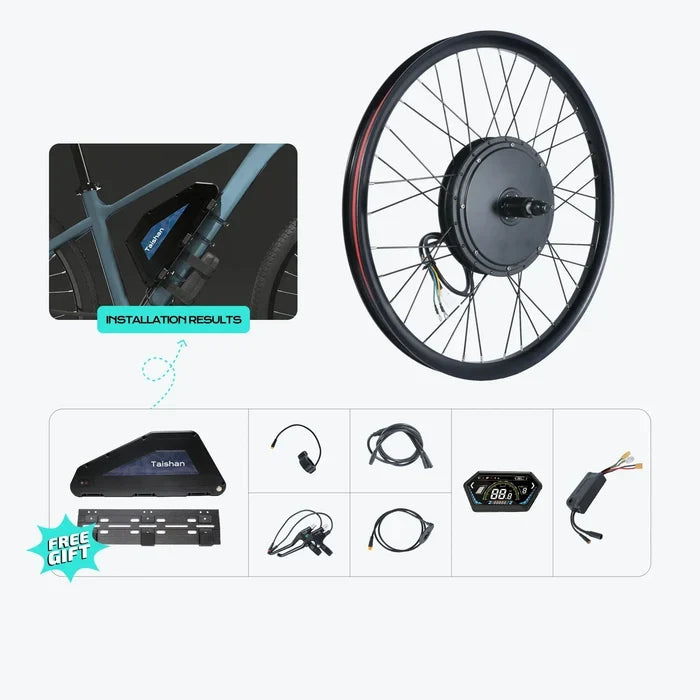
Beste All-Round: 48V 1000W Systeem
![]()

Waarom het uitblinkt:
De 48V 1000W achterwielconfiguratie vertegenwoordigt een optimale balans voor de meeste rijders:
Complete systemspecificaties:
Motorgegevens:
- Vermogen: 48V 1000W borstelloze direct drive
- Type: Achternaafmotor
- Gewicht: 4-6,2 kg afhankelijk van de velg
- Snelheid: Maximaal 45-50 km/u
- Constructie: Afgedicht lagersysteem
- Waterdichtheid: IP65 weersbestendigheid
Batterijconfiguratie:
- Capaciteit: 48V 11,6-16Ah opties
- Cellen: LG merk (premium kwaliteit)
- Bereik: 35-45 km typisch terrein
- BMS: Geïntegreerde bescherming
- Montage: Onderbuis of drager
- Vergrendeling: Geïntegreerde beveiliging
Prestatiecapaciteiten:
- Voldoende vermogen voor gevarieerd terrein
- Hellingen met vertrouwen genomen
- Snelheden van 45-50 km/u bereikt
- Veelzijdige allround-capaciteit
- Betrouwbaar dagelijks vervoer
Ideale toepassingen:
- Dagelijks woon-werkverkeer 10-25 km
- Gemengd vlak en heuvelachtig terrein
- Veelzijdig algemeen rijden
- Eerste achterwielconversie
- Prestaties met een redelijk budget
- Meeste rijders' sweet spot
Beste Hoogwaardig: 52V 2000W MTX Systeem
![]()

Waarom het uitblinkt:
Serieus vermogen voor veeleisend terrein en prestatiegerichte rijders:
Volledige systemspecificaties:
Motorgegevens:
- Vermogen: 52V 2000W borstelloze direct-drive
- Type: MTX velg achternaafmotor
- Gewicht: 5,1-5,3 kg
- Snelheid: 50-60 km/u capaciteit
- Koppel: Uitzonderlijk laagtoerig
- Merk: SHENGYI of gelijkwaardige kwaliteit
Batterijconfiguratie:
- Capaciteit: 52V 20-30Ah opties
- Cellen: LG 21700 hoge ontlading
- Bereik: 40-60 km (20Ah), 50-80 km (30Ah)
- Voltage: Superieur onder belasting
- Prestaties: Constant vermogen
- Kwaliteit: Premium constructie
Prestatiecapaciteiten:
- Serieus heuvelklimvermogen
- Hoge kruissnelheid gehandhaafd
- Zware beladingscapaciteit
- Snelle acceleratie
- Professionele prestaties
Ideale toepassingen:
- Woon-werkverkeer op steil terrein
- Mountainbike conversies
- Prestatieliefhebbers
- Vracht- en bakfietsen
- Langeafstandsreizen
- Rijders die prioriteit geven aan vermogen
Beste Extreme Kracht: 72V 4000W Systeem
Waarom het uitblinkt:
Ultieme prestaties voor maximale capaciteit en extreme toepassingen:
Volledige systemspecificaties:
Motorgegevens:
- Vermogen: 72V 4000W borstelloze direct-drive
- Type: Heavy-duty achternaaf
- Gewicht: 6,8 kg robuuste constructie
- Snelheid: Maximaal 75-85+ km/u
- Koppel: Onverslaanbaar klimvermogen
- Duurzaamheid: Professionele kwaliteit
Batterijconfiguratie:
- Capaciteit: 72V 20Ah met 5A snellader
- Cellen: Premium hoge-ontladingscellen
- Bereik: 40-80 km afhankelijk van gebruik
- Voltage: Efficiëntie bij extreem vermogen
- Prestaties: Motorfietsachtig
- Constructie: Militair-grade
Prestatiecapaciteiten:
- Maximale snelheidsmogelijkheid
- Extreem klimvermogen
- Professionele bezorgdiensten
- Ultieme prestaties
- Ongeëvenaarde acceleratie
Ideale toepassingen:
- Extreem mountainbiken
- Fat tire fiets conversies
- Professionele bezorging
- Maximale prestatie prioriteit
- Ervaren stroomgebruikers
- Ultieme capaciteit gewenst
Installatieproces achterwiel
Werkelijkheid van installatiecomplexiteit
Tijd en vaardigheden vereisten:
Installatie van het achterwiel vereist bescheiden extra stappen vergeleken met het voorwiel:
Complete installatiestappen:
Fase 1: Wiel verwijderen en voorbereiding (10 minuten)
- Verwijder achterwiel
- Cassette overzetten naar motorwiel (5 minuten)
- Ketting indien nodig afstellen
- Motorwiel voorbereiden
- Remcompatibiliteit controleren
Fase 2: Installatie motorwiel (10 minuten)
- Torquearm(en) installeren indien nodig (750W+)
- Motorwiel in de dropouts plaatsen
- As correct vastzetten
- Wielcentrering controleren
- Remuitlijning controleren
- Derailleur afstellen
Fase 3: Accu en componenten (10 minuten)
- Accu op frame monteren
- Display op stuur installeren
- Remsensoren installeren
- Pedaalassistentie sensor bevestigen
- Gashendel monteren indien gebruikt
Fase 4: Elektrische verbindingen (5 minuten)
- Motor op controller aansluiten
- Accu aansluiten
- Alle sensoren aansluiten
- Kabelbeheer
- Alle functies testen
Totale installatietijd: typisch 25-35 minuten
Beoordeling vaardigheidsniveau:
Aanbevolen ervaring:
- Comfortabel met het vervangen van fietsbanden
- Heeft eerder een cassette-verwijderingsgereedschap gebruikt
- Begrijpt derailleurafstelling
- Volgt gedetailleerde instructies
- Geduldige, methodische aanpak
Benodigd gereedschap:
- Cassette-verwijderingsgereedschap (doorgaans inbegrepen)
- Kettingzweep (doorgaans inbegrepen)
- Inbussleutelset
- Verstelbare moersleutel
- Momentsleutel (aanbevolen)
Vereisten voor koppelarm
Cruciaal veiligheidscomponent:
Koppelarmen voorkomen rotatie van de motoras en schade aan de uitvaleinden:
Vereisten koppelarm per vermogen:
250-500W systemen:
- Koppelarm: aanbevolen maar optioneel
- Stalen frames: vaak voldoende zonder
- Aluminium frames: sterk aanbevolen
- Veiligheidsmarge: goede gewoonte
750-1500W systemen:
- Koppelarm: minimaal aan één zijde vereist
- Aluminium frames: absoluut verplicht
- Beide zijden: aanbevolen voor betrouwbaarheid
- Framebescherming: cruciaal
2000W+ systemen:
- Koppelarmen: beide zijden absoluut vereist
- Heavy-duty type: essentieel
- Correcte installatie: niet onderhandelbaar
- Frame-inspectie: regelmatige controles verplicht
Installatie:
- Bevestigen aan het uitvalstuk van het frame
- Correct aanhaalmoment van de bouten cruciaal (15-20 Nm)
- Controleer periodiek de vastheid
- Geen beweging toegestaan
Vergelijking Achterwiel versus Voorwiel
Tabel prestatieverschillen
|
Prestatiefactor
|
Achterwiel
|
Voorwiel
|
Winnaar
|
|
Tractie (alle omstandigheden)
|
Uitstekend
|
Goed (droog), Minder (nat)
|
Achter
|
|
Klimvermogen
|
Superieur
|
Voldoende
|
Achter
|
|
Maximaal vermogen
|
250-4000W
|
250-500W
|
Achter
|
|
Natuurlijke wegligging
|
Uitstekend
|
Zwaar van voren
|
Achter
|
|
Installatietijd
|
25-35 min
|
20 min
|
Voor
|
|
Installatiecomplexiteit
|
Matig
|
Eenvoudig
|
Voor
|
|
Cassette overzetten vereist
|
Ja
|
Nee
|
Voor
|
|
Koppelarm nodig
|
Ja (750W+)
|
Zelden
|
Voor
|
|
Stuurgevoel
|
Natuurlijk
|
Zwaarder
|
Achter
|
|
Kabelbeheer
|
Eenvoudiger
|
Stuurkabels
|
Achter
|
|
Snelheidscapaciteit
|
Onbeperkt
|
Beperkt
|
Achter
|
|
Omkeerbaarheid
|
Matig
|
Compleet
|
Voor
|
|
Professionele prestaties
|
Uitstekend
|
Goed
|
Achter
|
Wanneer achterwiel uitblinkt
Optimale toepassingen:
Prestatieprioriteit: ✓ Vermogen boven 500W gewenst ✓ Snelheidscapaciteit belangrijk ✓ Regelmatig heuvels tegenkomen ✓ Professioneel gevoel gewenst ✓ Serieuze capaciteit nodig
Uitdagend terrein: ✓ Steile langdurige beklimmingen ✓ Off-road trailrijden ✓ Vaak natte omstandigheden ✓ Navigatie op losse ondergrond ✓ Tractie cruciaal
Zware ladingen: ✓ Regelmatig vracht vervoeren ✓ Toeren met fietstassen ✓ Zwaar rijdersgewicht ✓ Een aanhanger trekken ✓ Utiliteitstoepassingen
Ervaren rijders: ✓ Voldoende mechanisch comfort ✓ 25-35 minuten installatie acceptabel ✓ Gereedschap beschikbaar ✓ Prestaties gewaardeerd ✓ Kwaliteit geprioriteerd
Maximaliseren van achterwielprestaties
Optimale componentenkeuze
Overwegingen aandrijflijn:
Cassettekeuze:
- Behoud bestaande indien in goede staat
- Upgrade naar kwaliteit indien versleten
- Stem versnellingsbereik af op het terrein
- 8-11 versnellingen typisch
- Kwaliteit is belangrijk voor levensduur
Kettingvereisten:
- Mogelijk langere ketting nodig
- Kwaliteitsketting essentieel
- Correcte spanning cruciaal
- Regelmatig onderhoud belangrijk
- Vervang bij 0,5-0,75% rek
Derailleurinstelling:
- Afstelling na installatie
- Limietbouten gecontroleerd
- Juiste kabelspanning
- Soepel schakelen
- Professionele afstelling nuttig
Batterijselectiestrategie
Batterij afstemmen op motor:
48V 1000W systeem:
- Batterij: 48V 13-20Ah
- Bereik: 35-60 km
- Toepassing: Meeste rijders
- Waarde: Uitstekende balans
52V 2000W systeem:
- Batterij: 52V 20-30Ah
- Bereik: 40-80 km
- Toepassing: Prestatiegericht
- Waarde: Superieure vermogensafgifte
72V 4000W systeem:
- Batterij: minimaal 72V 20Ah
- Bereik: 40-80 km
- Toepassing: Extreme prestaties
- Waarde: Maximale capaciteit
Onderhoudsprioriteiten
Kritieke onderhoudsgebieden:
Inspectie koppelarm:
- Maandelijkse visuele controle
- Controleer de vastheid van de bouten
- Zoek naar framebeschadiging
- Geen beweging toegestaan
- Vervang indien beschadigd
Motorasasbeveiliging:
- Maandelijks controleren
- Juist aanhaalmoment behouden (35-40 Nm)
- Geen losraken toegestaan
- Regelmatig inspecteren
Cassette en ketting:
- Controle op kettingrek
- Inspectie van cassettenslijtage
- Vervanging indien nodig
- Kwaliteitscomponenten
- Juiste smering
Remsysteem:
- Schijfremmen aanbevolen (1000W+)
- Controle op remblokslijtage
- Rotorconditie gecontroleerd
- Voldoende remkracht
- Upgrade indien nodig
Beslissingskader voor achterwielkeuze
Kies de achterwielset indien:
Prestatie-eisen: ✓ Vermogen boven 500W gewenst ✓ Snelheid boven 35 km/u gewenst ✓ Regelmatig heuvels tegenkomen ✓ Tractie van cruciaal belang ✓ Professioneel gevoel gewaardeerd ✓ Toekomstige vermogensupgrades mogelijk
Terreinuitdagingen: ✓ Steile, aanhoudende beklimmingen ✓ Vaak natte omstandigheden ✓ Terreinvaardigheid nodig ✓ Navigatie op losse ondergrond ✓ Zware lasten dragen ✓ Rijden op gevarieerd terrein
Installatieklaar: ✓ Installatie van 25-35 minuten acceptabel ✓ Basis mechanische vaardigheden aanwezig ✓ Gereedschap beschikbaar of verkrijgbaar ✓ Instructies comfortabel volgen ✓ Cassette overzetten beheersbaar ✓ Leermogelijkheid wordt verwelkomd
Rijderskenmerken: ✓ Prestatiegericht ✓ Serieuze fietservaring ✓ Waarde voor kwaliteit en capaciteit ✓ Langetermijninvesteringperspectief ✓ Natuurlijke bediening gewaardeerd ✓ Professionele resultaten gewenst
Kies in plaats daarvan een voorwielkit als:
Conclusie
Conversiekits voor e-bikes met achterwielaandrijving zijn de optimale keuze voor prestatiegerichte rijders, uitdagende terreintoepassingen, hogere vermogensbehoeften en iedereen die superieure tractie, natuurlijke bediening en een professioneel gevoel verkiest boven eenvoud van installatie. De middenmotor elektrische conversiekit excelleert in efficiëntie bij technische beklimmingen, maar achterwielsystemen leveren ongeëvenaarde vermogenscapaciteit (250-4000W), uitzonderlijke tractie onder alle omstandigheden en een natuurlijke fietsdynamiek die ervaren fietsers kennen.
Klaar om professionele e-bike-prestaties te ervaren via bewezen achterwielvoordelen? Verken het complete assortiment elektrische fietskitaccu's, inclusief uitgebreide achterwielsystemen met gedetailleerde specificaties, installatiehandleidingen, vereisten voor koppelarmen en deskundige ondersteuning die ervoor zorgen dat uw conversie de uitzonderlijke tractie, natuurlijke bediening en krachtige prestaties levert die alleen achterwielmotoren bieden voor veeleisende fietstoepassingen.
Veelgestelde vragen
Waarom zijn achterwielconversiekits beter dan voorwielkits voor prestaties?
Achterwielmotoren leveren superieure tractie (vermogen waar gewicht zich concentreert), een natuurlijk stuurgevoel (onbelast voorwiel), hogere vermogenscapaciteit (250-4000W versus 250-500W) en beter klimvermogen (gewicht verschuift naar achteren).
Hoe moeilijk is de installatie van een achterwielconversiekit vergeleken met een voorwielkit?
De installatie aan de achterkant duurt 25-35 minuten versus 20 minuten aan de voorkant, en vereist het overzetten van de cassette (5 minuten met meegeleverd gereedschap), installatie van een koppelarm voor motoren van 750W+ (5 minuten) en afstelling van de derailleur (5 minuten).
Heb ik echt koppelarmen nodig bij achterwielconversiekits?
Koppelarmen voorkomen rotatie van de motoras en catastrofale schade aan de uitvaleinden: optioneel voor 250-500W op stalen frames, maar sterk aanbevolen; verplicht voor 750-1500W systemen (minimaal één zijde); absoluut vereist aan beide zijden voor 2000W+ motoren.
Wat is het maximale veilige vermogensniveau voor achterwielconversie?
Stalen en chromoly frames kunnen veilig 4000W aan met de juiste koppelarmen en frame-inspectie. Aluminium frames zijn geschikt voor 250-2000W met verplichte koppelarmen en regelmatige monitoring.
Hoe beïnvloedt een achterwielmotor de fietsbesturing en het stuurgedrag?
Achterwielmotoren behouden een natuurlijk stuurgevoel aan de voorkant (geen extra gewicht), creëren een bekende zware balans achteraan, vergelijkbaar met het dragen van fietstassen, en behouden de responsieve manoeuvreerkenmerken die ervaren fietsers waarderen.
: invalid url input)
usmile
Liquid error (snippets/blog-best-product line 36): product form must be given a product
Liquid error (snippets/blog-best-product line 59): product form must be given a product