Ombouwsets voor het voorwiel zorgen voor de eenvoudigst mogelijke elektrische fietstransformatie met een installatie van 20 minuten, universele compatibiliteit, geen aanpassingen aan de aandrijflijn en omkeerbare ombouw, waardoor ze de ideale keuze zijn voor beginners, rijders die eenvoud voorop stellen, of iedereen die zonder mechanische complexiteit probleemloze elektrische ondersteuning wil.
Hoewel de beste ebike kit opties voorwiel-, achterwiel- en middenmotsystemen omvatten, bepaalt het inzicht wanneer de voordelen van een voorwiel opwegen tegen de voordelen van een achterwiel, of deze eenvoudige aanpak aan uw specifieke behoeften en prioriteiten voldoet.
Deze uitgebreide gids onderzoekt top voorwiel ombouwsets, hun unieke voordelen, installatiegemak, prestatiekenmerken en selectiecriteria, zodat u moeiteloos elektrisch kunt fietsen met de eenvoudigste installatiemethode die beschikbaar is.
Waarom voorwiel ombouwsets uitblinken in eenvoud
![]()

Inzicht in de fundamentele voordelen van de plaatsing van de voorwielmotor verklaart hun populariteit onder beginnende ombouwers en rijders die eenvoud voorop stellen.
Voordelen van installatiegemak
Voordelen van minimale complexiteit:
Voorwielombouw vereist slechts een basiswielvervanging — geen interactie met de aandrijflijn:
Vergelijking van installatiestappen:
Voorwielinstallatie (20 minuten):
- Verwijder het bestaande voorwiel
- Installeer motorwiel in de voorvork
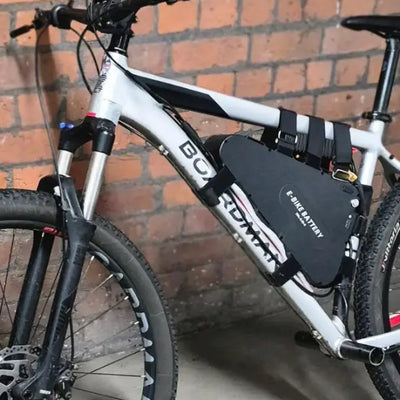
- Bevestig de accu aan het frame
- Verbind motorkabel met controller
- Bevestig het display aan het stuur
- Verbind de remsensoren
- Installeer de trapondersteuningssensor
- Test en rijd
Achterwielinstallatie (25-30 minuten):
- Verwijder het bestaande achterwiel
- Plaats de cassette over op het motorwiel (vereist gereedschap)
- Installeer het motorwiel met torsiearm
- Stel de derailleur af
- Bevestig de accu aan het frame
- Verbind alle componenten
- Kabelbeheer
- Test en stel het schakelen af
Belangrijkste voordeel van eenvoud: Voorinstallatie elimineert cassette-overdracht, derailleurafstelling, kettingbeheer en de complexiteit van de torsiearm – waardoor de installatietijd en technische vereisten aanzienlijk worden verminderd.
Voordelen van universele compatibiliteit
Bredere compatibiliteit met fietsen:
Voorwielmotoren passen op vrijwel elke fiets, ongeacht de configuratie van de aandrijflijn:
Compatibel met:
- Alle versnellingssystemen (derailleur, interne naaf, single-speed)
- Alle cassettetypes (7-12 versnellingen, elk merk)
- Riemoverbrengingssystemen
- Fixed gear en baanfietsen
- Ongewone of vintage aandrijflijnen
- Elke achterwielconfiguratie
Geen compatibiliteitsproblemen:
- Geen verificatie van cassettetype nodig
- Geen controle van de derailleurcompatibiliteit
- Geen rekening houden met kettinglengte
- Geen beperkingen op de overbrengingsverhouding
- Werkt met alles
Omkeerbaarheid Voordelen
Eenvoudig omkeerbaar:
Voorwiel conversies zijn in enkele minuten volledig omkeerbaar:
Waarom dit belangrijk is:
- Altijd terug naar de originele fiets
- Fiets onomgebouwd verkopen indien gewenst
- Kit overzetten naar een andere fiets
- Seizoensgebonden elektrisch/niet-elektrisch gebruik
- Elektrisch proberen zonder verbintenis
- Geen permanente aanpassingen
Omkeerproces:
- Verwijder het motorwiel (5 minuten)
- Plaats het originele voorwiel terug (5 minuten)
- Verwijder accu en accessoires (10 minuten)
- Fiets weer volledig origineel
Top voorwiel ombouwkit: 36V-48V 250W systeem
![]()

De beste voorwiel ombouwsets combineren voldoende vermogen met wettelijke conformiteit, lichtgewicht constructie en maximale eenvoud.
Complete systeem specificaties
Motorconfiguratie:
250W voorwielmotor details:
- Vermogen: 36V 250W of 48V 250W opties
- Type: Borstelloze naafmotor met tandwielaandrijving
- Gewicht: 2,7 kg (zeer lichtgewicht)
- Constructie: Afgedicht lagersysteem
- Waterdichtheid: IP65 weerbestendigheid
- Installatie: 20 minuten eenvoud
Waarom 250W perfect is voor vooraan:
- Wettelijke conformiteit (VK/EU-wegen legaal)
- Lichtgewicht (minimale invloed op de bediening)
- Voldoende vermogen voor ondersteuning
- Voorvork belasting beheersbaar
- Accu efficiëntie uitstekend
- Veilige snelheden gehandhaafd
Prestatiecapaciteiten:
36V 250W systeem:
- Snelheid: 25-30 km/u (wettelijke limiet)
- Bereik: 30-40km typisch gebruik
- Accu: 36V 13Ah LG-cellen
- Klimmen: Geschikt voor lichte hellingen
- Toepassing: Commuten op vlak terrein
- Legaal: Overal conform
48V 250W systeem:
- Snelheid: 30-35 km/u capaciteit
- Bereik: 40-70 km verlengd
- Accu: 48V 11.6-16Ah opties
- Klimmen: Matige heuvels beheersbaar
- Toepassing: Veelzijdige ondersteuning
- Legaal: Met snelheidsbegrenzing
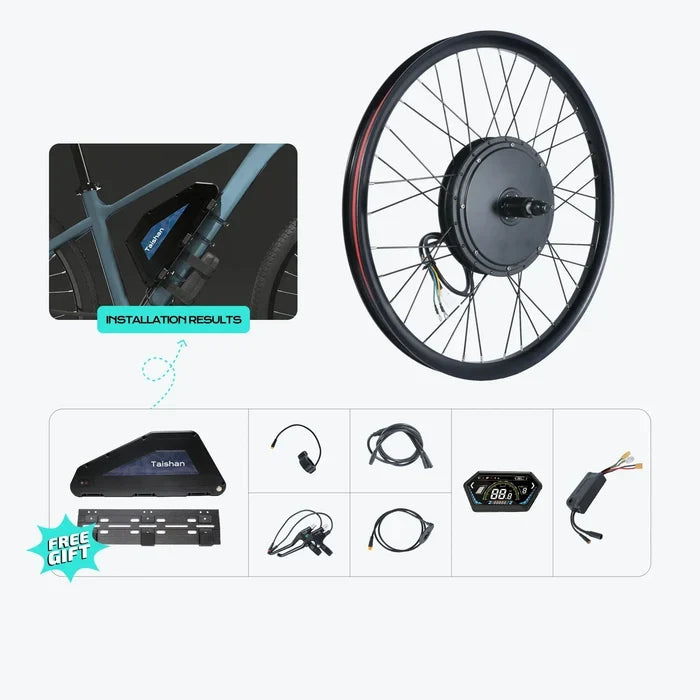
Complete kit bevat
Uitgebreid pakket:
Motoronderdelen:
- 250W borstelloze tandwielnaafmotor voor
- Motorwiel met voorgemonteerde band
- Installatiehardware voor de voorvorkuitval
- Waterdichte motorkabel
- Alle bevestigingsmaterialen
Accu systeem:
- LG cel accupakket (36V of 48V)
- Bevestigingsbeugel voor onderbuis
- Accu slot en sleutels
- 2A lader (standaard)
- Laadkabel
Besturingselektronica:
- LCD-display met essentiële gegevens
- Remschakelaars (beide zijden)
- Pedaalondersteuningssensor (PAS)
- Optionele gashendel
- Complete kabelboom
Installatie-accessoires:
- Bandenlichters (indien nodig)
- Kabelbinders voor beheer
- Installatiehandleiding
- Toegang tot videotutorials
- Alle benodigde gereedschappen
Installatieproces voor voorwiel
Stap-voor-stap eenvoud:
Fase 1: Wielvervanging (5 minuten)
- Verwijdering van voorwiel met snelspanner of bouten
- Verwijder de band van het motorwiel (indien overgezet)
- Plaats de band op het motorwiel
- Plaats het motorwiel in de voorvork
- Bevestig de as goed
- Controleer of het wiel gecentreerd is
Fase 2: Batterijmontage (5 minuten)
- Identificeer de bevestigingsgaten voor de bidonhouder op de onderbuis
- Bevestig de accuhouder
- Bevestig de beugel met de meegeleverde bouten
- Schuif de accu in de beugel
- Vergrendel de accu
- Controleer de veiligheid
Fase 3: Componenteninstallatie (5 minuten)
- Bevestig het display aan het stuur
- Installeer remhendels met sensoren
- Bevestig de pedaalondersteuningssensor
- Positioneer de gashendel (indien gebruikt)
Fase 4: Elektrische aansluiting (5 minuten)
- Verbind motorkabel met controller
- Verbind de accu met de controller
- Verbind het display
- Verbind de remsensoren
- Verbind de PAS-sensor
- Controleer alle verbindingen
Totale installatietijd: typisch 20 minuten
Vergelijking voor- vs. achterwiel conversie
Prestatieverschillen
|
Prestatiefactor
|
Voorwiel (250W)
|
Achterwiel (500-1000W)
|
Winnaar
|
|
Installatietijd
|
20 minuten
|
25-35 minuten
|
Voor
|
|
Installatie moeilijkheidsgraad
|
Zeer eenvoudig
|
Matig
|
Voor
|
|
Benodigd gereedschap
|
Minimaal
|
Matig
|
Voor
|
|
Fiets compatibiliteit
|
Universeel
|
Beperkt door aandrijflijn
|
Voor
|
|
Omkeerbaarheid
|
Compleet (10 minuten)
|
Matig (20 minuten)
|
Voorkant
|
|
Tractie (Droog)
|
Goed
|
Uitstekend
|
Achterkant
|
|
Tractie (Nat/Hellingen)
|
Verminderd
|
Superieur
|
Achterkant
|
|
Gewichtsverdeling
|
Zwaar van voren
|
Zwaar van achteren
|
Gelijk
|
|
Klimvermogen
|
Voldoende (vlak-matig)
|
Superieur (alle terreinen)
|
Achterkant
|
|
Maximale snelheid
|
25-35 km/u
|
35-50+ km/u
|
Achterkant
|
|
Vermogensopties
|
Typisch 250-500W
|
500-4000W beschikbaar
|
Achterkant
|
|
Wettelijke naleving
|
Gemakkelijk (250W)
|
Vereist beperking
|
Voorkant
|
|
Eerste conversie
|
Ideaal
|
Goed
|
Voorkant
|
Wanneer voorwielaandrijving uitblinkt
Optimale toepassingen:
Eerste conversie:
- Leerkervaring prioriteit
- Minimale complexiteit gewenst
- Vertrouwen opbouwen gewenst
- Omkeerbaarheid belangrijk
- Proef van elektrisch fietsen
Eenvoudig woon-werkverkeer:
- Vlak tot licht glooiend terrein
- Korte afstanden (onder 20km)
- Wettelijke naleving cruciaal
- Minimaal onderhoud gewenst
- Eenvoudige bediening
Oudere of recreatieve rijders:
- Milde ondersteuning voldoende
- Eenvoud zeer gewaardeerd
- Niet prestatiegericht
- Veiligheid prioriteit
- Comfort gewenst
Huur- of deel fietsen:
- Eenvoudige installatie/verwijdering
- Snel wisselen van fiets
- Minimale aanpassing
- Omkeerbare conversie
- Meerdere fietsen gebruiken
Budgetvriendelijke start:
- Lagere instapinvestering
- Elektrische voordelen testen
- Toekomstige upgrade mogelijk
- Voldoende voor huidige behoeften
- Slim startpunt
Wanneer achterwielaandrijving een betere keuze is
Voordelen achterwielaandrijving:
Uitdagend terrein:
- Regelmatig heuvels tegenkomen
- Steile hellingen aanwezig
- Prestaties prioriteit
- Vermogen nodig
- Tractie cruciaal
Hogere vermogensbehoeften:
- Hogere snelheden gewenst
- Zware ladingen vervoeren
- Langere afstanden
- Serieuze prestaties
- Toekomstbestendige mogelijkheden
Ervaren convertoren:
- Mechanisch comfort
- Gereedschap beschikbaar
- Installatiecomplexiteit acceptabel
- Prestatie-optimalisatie
- Maximale capaciteit gewenst
Stuureigenschappen voorwiel
Realiteit van gewichtsverdeling
Overwegingen bij zwaar voorwerk:
Het toevoegen van 2,7-4,5 kg motor plus 2-3 kg accu aan de voorkant zorgt voor een merkbare gewichtsverschuiving:
Veranderingen in het rijgedrag:
- Initiële besturing voelt zwaarder aan
- Manouvreren op lage snelheid anders
- Voorwiel optillen moeilijker
- Parkeren/opbergen anders
Aanpassingstijdlijn:
- Eerste rit: Merkbaar verschil
- Na 10km: Begin van aanpassing
- Na 50km: Voelt normaal aan
- Na 200km: Volledig aangepast
- Natuurlijk gevoel hersteld
Impact minimaliseren:
- Kies lichtere motoren (250W met tandwieloverbrenging)
- Plaats accu laag op het frame
- Juiste bandenspanning cruciaal
- Vermijd overmatige snelheid
- Soepele rijtechniek
Overwegingen bij tractie
Dynamiek van voorwielaandrijving:
De aandrijving van de voormotor heeft unieke tractiekarakteristieken:
Droge omstandigheden:
- Uitstekende tractie
- Soepele vermogensafgifte
- Voorspelbaar rijgedrag
- Goede prestaties
- Geen zorgen
Natte omstandigheden:
- Slippen van het voorwiel mogelijk
- Soepele gashendel essentieel
- Lagere ondersteuningsniveaus veiliger
- Voorzichtig bochtenwerk nodig
- Bewustzijn belangrijk
Bergop rijden:
- Gewicht verschuift naar achteren bij het klimmen
- Tractie aan de voorkant vermindert
- Wielspin mogelijk op steile hellingen
- Matige heuvels prima
- Extreme heuvels uitdagend
Oplossingen:
- Soepele vermogensafgifte
- Lagere ondersteuning op gladde ondergronden
- Lichaamspositie naar voren bij het klimmen
- Kwaliteitsbanden met goed profiel
- Bewustzijn en techniek van de rijder
Sturen en handling
Kabelbeheer cruciaal:
De kabelgeleiding van de voorwielmotor beïnvloedt het sturen:
Juiste routing:
- Volledige stuurrotatie mogelijk maken
- Geen kabelspanning aan de uiteinden
- Vlotte kabelgeleiding
- Veilig maar niet strak
- Regelmatige inspectie
Beste praktijken:
- Kabel langs voorvork geleiden
- Elke 15 cm vastzetten
- Volledig stuurbereik testen
- Lichte speling laten
- Controleren na 50 km
Prestaties voorwiel maximaliseren
Optimale rijtechniek
Vermogensafgifte:
Vloeiend accelereren:
- Geleidelijke toename van gas of ondersteuning
- Vermijd plotselinge vermogensstoten
- Anticipeer op tractieomstandigheden
- Pas vermogen aan de situatie aan
- Vloeiend is snel en veilig
Bochtentechniek:
- Vermogen verminderen voor bochten
- Fiets leunen, niet lichaam
- Vloeiende boog door de bocht
- Vermogen opnieuw toepassen bij het rechttrekken
- Oefenen in een veilige omgeving
Klimstrategie:
- Lichaamspositie naar voren
- Constante vermogensafgifte
- Wielspin vermijden
- Gebruik het juiste ondersteuningsniveau
- Ken de systeemgrenzen
Accuselectie en -beheer
Bereikoptimalisatie:
Keuzes accucapaciteit:
36V 13Ah (Budgetoptie):
- Bereik: 30-40 km vlak terrein
- Gewicht: typisch 2,5 kg
- Toepassing: Korte ritten
- Investering: Lager
- Voldoende voor velen
48V 11.6-16Ah (Aanbevolen):
- Bereik: 40-70 km gemengd terrein
- Gewicht: 2,8-3,2 kg
- Toepassing: Veelzijdig gebruik
- Investering: Matig
- Beste algehele waarde
Uitbreidingsstrategieën:
- Lagere ondersteuningsniveaus op vlakke wegen
- Matige snelheid (25-30 km/u)
- Vloeiende rijstijl
- Juiste bandenspanning
- Regelmatig onderhoud van de batterij
Onderhoudsgemak
Voordeel van voorwiel:
Minimaal onderhoud vereist:
Motoronderhoud:
- Schoon en droog houden
- Maandelijks inspecteren
- Geen speciale procedures
- Uitstekende levensduur van de lagers
- In wezen onderhoudsvrij
Aandrijving ongewijzigd:
- Normaal onderhoud van de fietsketting
- Standaard slijtage van de cassette
- Regelmatige afstelling van de derailleur
- Geen elektrische slijtage
- Conventionele fietsreparatie
Batterijverzorging:
- Standaard lithiumbatterijpraktijken
- Opslaan met 50-80% lading
- Vermijd extreme temperaturen
- Regelmatig opladen
- Levensduur van 1000+ cycli
Conclusie
Voorwiel e-bike conversiekits vormen de optimale keuze voor beginners, rijders die zich richten op eenvoud, woon-werkverkeer op vlak terrein, en iedereen die de voorkeur geeft aan een installatie van 20 minuten boven maximale prestaties. De middenmotor elektrische conversiekit en achternaafopties bieden superieure klim- en tractie, maar voorwielsystemen blinken uit door ongeëvenaarde eenvoud, universele compatibiliteit, volledige omkeerbaarheid en voldoende ondersteuning voor de meeste niet-extreme toepassingen.
Klaar om elektrische ondersteuning te ervaren via de eenvoudigste installatiemethode? Ontdek het complete assortiment elektrische fietskit batterijen inclusief voorwielsystemen met uitgebreide specificaties, installatiehandleiding en deskundige ondersteuning, die ervoor zorgen dat uw eenvoudige conversie jarenlang moeiteloos elektrisch fietsplezier oplevert door ongeëvenaarde eenvoud en bewezen betrouwbaarheid.
Veelgestelde vragen
Zijn voorwiel e-bike conversiekits echt eenvoudiger te installeren dan achterwiel?
Ja, aanzienlijk eenvoudiger: voorinstallatie duurt 20 minuten versus 25-35 voor achter, vereist geen cassetteoverdracht (bespaart 10 minuten en speciaal gereedschap), geen afstelling van de derailleur.
Beïnvloeden voorwielmotoren de besturing en het rijgedrag van de fiets?
Het toevoegen van 2,7-4,5 kg motorgewicht aan de voorkant maakt de besturing aanvankelijk zwaarder en verandert het manoeuvreren bij lage snelheden, maar de meeste rijders passen zich binnen 50-200 km volledig aan.
Kunnen voorwielmotoren effectief heuvels beklimmen?
Voorwielmotoren kunnen lichte tot matige heuvels (5-10% hellingen) voldoende aan op droge oppervlakken, maar hebben moeite met steile, aanhoudende beklimmingen door gewichtsoverdracht die de tractie en vermogensbeperkingen aan de voorkant vermindert (250-500W typisch).
Slipt de voorwielmotor bij natte omstandigheden of bij het klimmen?
Voorwielaandrijving kan wielspin ervaren bij natte omstandigheden, losse ondergronden of steile beklimmingen wanneer gewicht naar achteren verschuift, waardoor de tractie aan de voorkant afneemt. Oplossingen omvatten soepele vermogensafgifte (vermijd plotseling gas geven), lagere ondersteuningsniveaus op gladde oppervlakken, voorwaartse lichaamshouding bij het klimmen, kwaliteitsbanden met goed profiel en bewustzijn van tractiegrenzen door de rijder.
Wat is het beste vermogensniveau voor voorwielconversiekits?
250-500W optimaal voor voorwielen: 250W biedt wettelijke conformiteit (VK/EU), voldoende ondersteuning op vlak terrein, lichtgewicht motor (2,7 kg) en beheersbare belasting van de voorvork.
: invalid url input)
usmile
Liquid error (snippets/blog-best-product line 36): product form must be given a product
Liquid error (snippets/blog-best-product line 59): product form must be given a product