Searching for an e-bike conversion kit quickly reveals a bewildering range of options at very different price points. A basic front hub kit might appear to cost a fraction of a premium complete kit—but comparing headline figures without understanding what's included in each leads to costly surprises.
This guide cuts through the confusion with a genuine component-by-component cost breakdown, explains what drives price differences, and shows exactly what you should expect to receive at each budget level.
The Four Cost Components of Any Conversion Kit

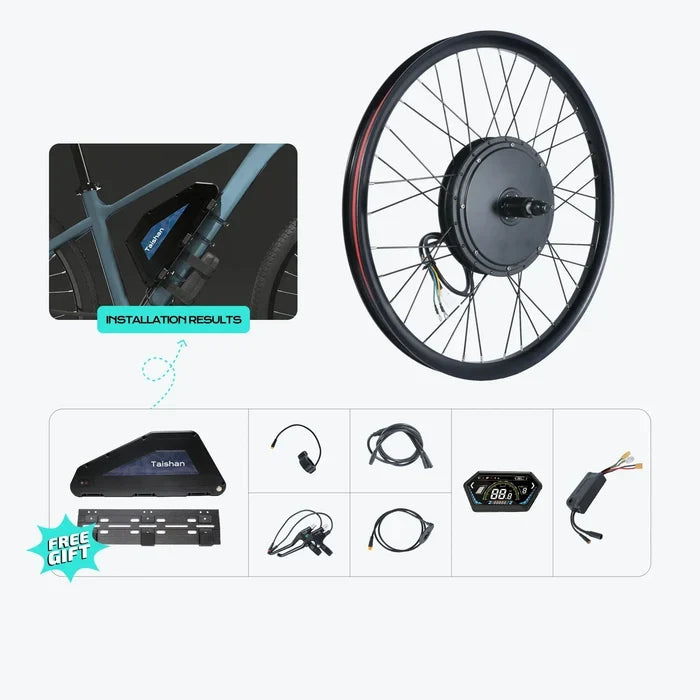
Every complete e-bike conversion kit contains four distinct cost elements. Understanding each separately is the foundation of making a smart buying decision.
1. The Motor
The motor is typically the largest single cost component and the one with the widest quality variation. Two fundamentally different motor types exist, each with different cost structures.
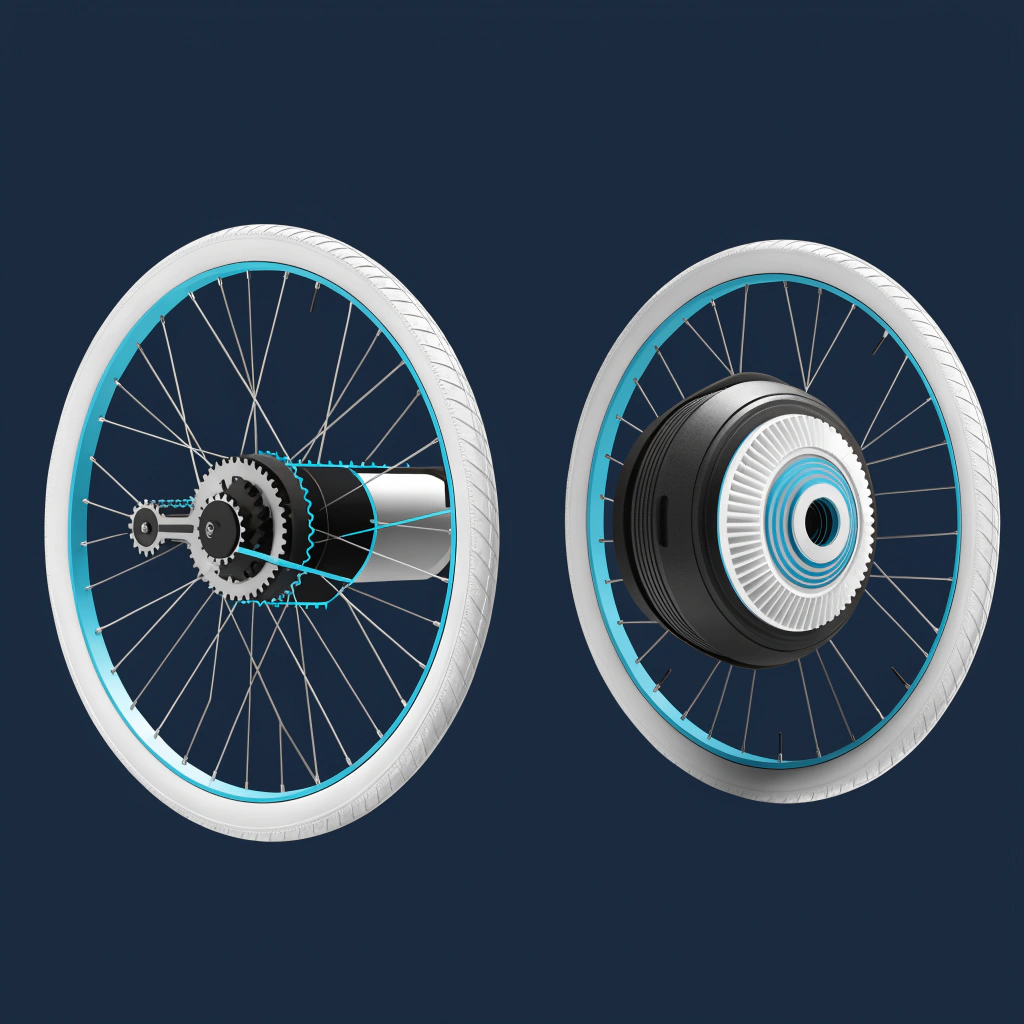
Hub motors are built into the wheel and replace the existing front or rear wheel. Cost drivers include motor weight, winding efficiency, bearing quality, and magnet grade. A 250W geared hub motor weighing 2.7kg costs significantly less to manufacture than a direct-drive 2000W motor weighing over 5kg—the raw materials alone account for a substantial portion of the difference.
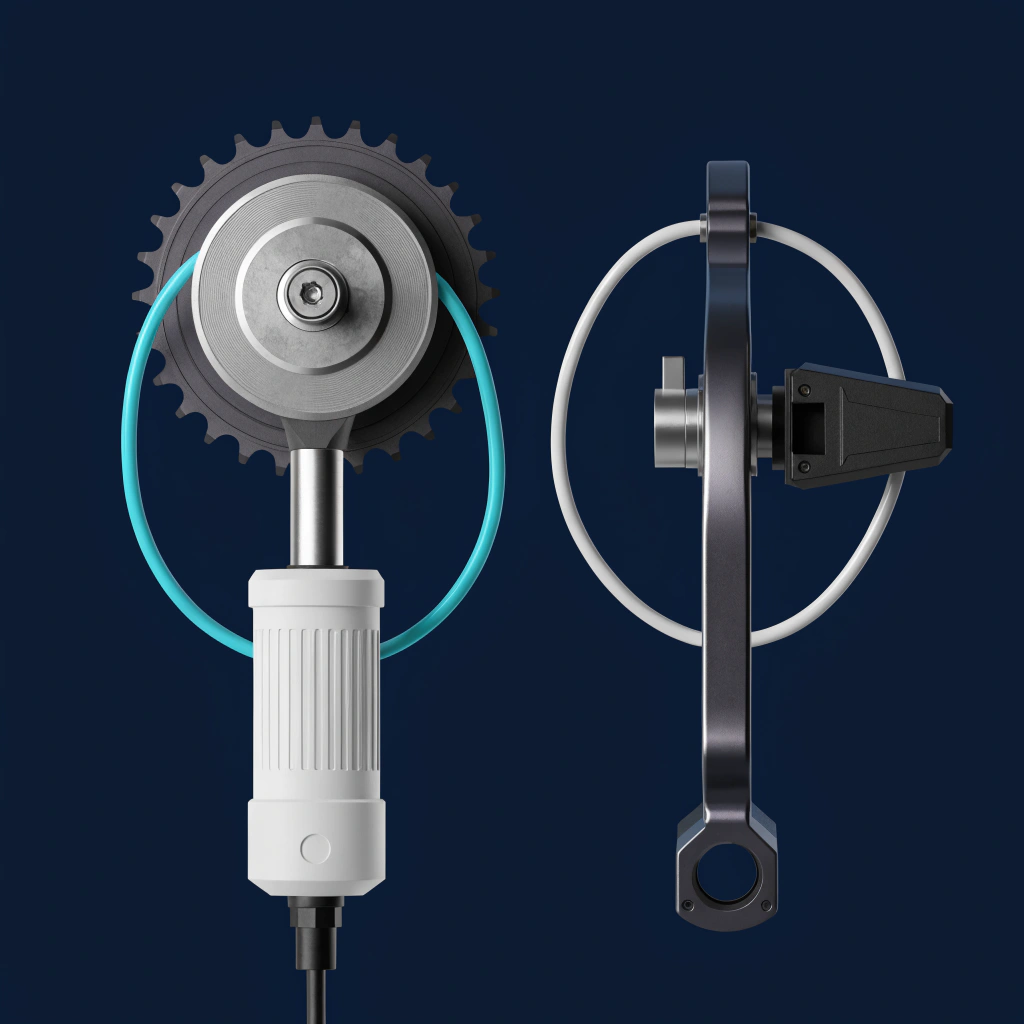
Mid-drive motors like the Tongsheng TSDZ8 are more complex mechanically—they attach to the bottom bracket and drive the chain rather than the wheel—which commands a higher price reflecting the engineering involved. The TSDZ8's dual torque sensor system, 140Nm torque output, and integrated controller are premium features not present in basic hub systems.
Motor cost range across the Kirbebike lineup:
|
Motor Type
|
Power
|
Weight
|
Approximate Kit Position
|
|
Brushless geared hub
|
250W
|
2.7kg
|
Entry/road-legal
|
|
Brushless geared hub
|
500W-750W
|
4.5kg
|
Mid-range
|
|
Direct-drive hub
|
1000W
|
4-6.2kg
|
Performance
|
|
Direct-drive hub
|
2000W
|
5.1-5.3kg
|
High performance
|
|
Direct-drive hub
|
2500W-3000W
|
6.8kg
|
Extreme performance
|
|
Direct-drive hub
|
4000W
|
6.8kg
|
Maximum performance
|
|
Tongsheng TSDZ8 mid-drive
|
500W/750W
|
4.8kg
|
Premium torque
|
2. The Battery
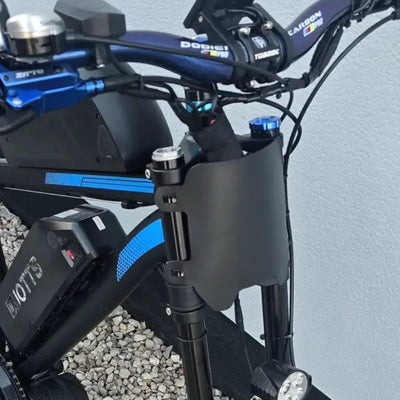
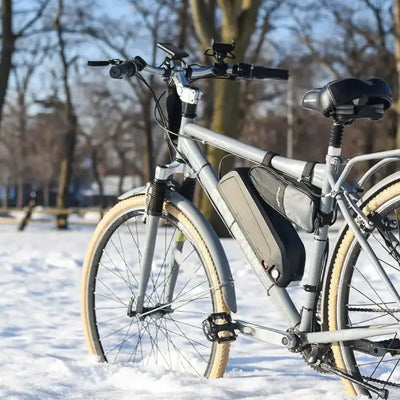
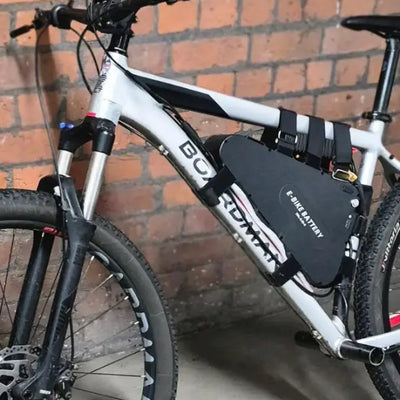
The battery is often the second-largest cost and the component most frequently misrepresented in cheap kit listings. Many low-headline-figure kits exclude the battery entirely—what appears to be a complete kit is actually motor and electronics only.
What determines battery cost:
-
Cell brand and quality — Generic cells vs. brand-name cells (LG, Samsung) represent a meaningful reliability and longevity difference. Kirbebike's batteries use LG cells across the range, providing verified chemistry performance and consistent capacity over 1,000+ charge cycles.
-
Capacity (Ah) — More amp-hours requires more cells, directly increasing cost. A 7Ah battery contains far fewer cells than a 30Ah unit.
-
Voltage — Higher voltage systems (52V, 60V, 72V) require more cells in series, increasing cost proportionally.
-
BMS quality — The Battery Management System protects cells from overcharge, over-discharge, and thermal events. Premium BMS units with intelligent monitoring cost more but extend battery life and improve safety substantially.
-
Casing and mounting — Downtube integrated batteries with locking mechanisms cost more to manufacture than basic rack-mounted alternatives.
Kirbebike battery range:
|
Battery Spec
|
Capacity
|
Best For
|
|
36V 7Ah
|
252Wh
|
EZ Rider/compact commuting
|
|
36V 15Ah
|
540Wh
|
Extended road-legal range
|
|
48V 16Ah
|
768Wh
|
Standard performance kits
|
|
48V 20Ah
|
960Wh
|
Extended range performance
|
|
52V 20Ah
|
1040Wh
|
High-power systems
|
|
52V 30Ah
|
1560Wh
|
Maximum range performance
|
|
60V 20Ah
|
1200Wh
|
2500W-3000W systems
|
|
72V 20Ah
|
1440Wh
|
4000W extreme performance
|
3. The Controller and Electronics
Controllers are often bundled silently into kit pricing without clear specification. The difference between a basic square-wave controller and a quality FOC (Field Oriented Control) unit is significant in both cost and performance—FOC controllers deliver quieter motor operation, smoother power delivery, and better efficiency.
What's included in a complete kit's electronics:
-
Controller — The brain of the system. Quality controllers include thermal protection, phase wire fault detection, and programmable assist parameters.
-
Display/LCD/TFT screen — Entry kits include basic LCD displays; premium kits use colour TFT displays with comprehensive ride data, torque sensor readouts, and programmable settings. Kirbebike's EZ Rider kit includes a TFT colour LCD display with speed, range, assist level, and battery information.
-
PAS (Pedal Assist Sensor) — Cadence sensors are standard; torque sensors (which respond to pedal force rather than just rotation) are a premium feature that dramatically improves ride feel, included in Kirbebike's mid-drive kit as dual torque sensors.
-
Brake sensors — Cut motor power instantly when brakes are applied. Hydraulic vs. mechanical sensor types vary in cost; Kirbebike includes brake sensors free with all kits.
-
Throttle — Thumb throttle included with kits; note that throttle-only operation is not road-legal in the UK for public road EAPC use.
-
Wiring harness — Quality wiring with properly rated connectors vs. undersized wiring with basic connectors is an invisible cost difference that matters significantly for longevity and safety.
4. Charger and Accessories
Every complete kit should include a charger matched to the battery voltage. Kirbebike kits include chargers supporting UK, US, EU, and Australian plugs—relevant for riders who travel internationally.
Free accessories included with Kirbebike kits:
- Brake sensors (valued at approximately £20)
- D12L PAS cadence sensor (valued at approximately £10)
- Installation tool kit including tyre removal tool, wrenches, cable ties, and hex keys (valued at approximately £25)
- Torque arm (for hub motor security)
- Instruction manual and video guide access
These included accessories represent genuine cost savings compared to competitors who sell them separately.
Complete Cost Breakdown by Power Level
This table shows what you're genuinely paying for at each level within the Kirbebike range, with all components bundled into a ready-to-ride package.
|
Kit Level
|
Motor
|
Battery Included
|
Speed
|
Range
|
Key Feature
|
|
36V 250W Front
|
Geared hub, 2.7kg
|
36V 7Ah LG
|
15mph
|
15-25 miles
|
UK road legal, Brompton compatible
|
|
36V/48V 250W Front
|
Geared hub, 2.7kg
|
36V/48V 11.6-13Ah
|
25-30km/h
|
30-40km
|
Dual voltage option
|
|
500W/750W MTX
|
Geared rear, 4.5kg
|
36V 13Ah/48V 11.6Ah
|
35-40km/h
|
40-60km
|
SHENGYI geared motor
|
|
48V 1000W
|
Direct-drive, 4-6.2kg
|
36V 13Ah/48V 11.6Ah
|
45-50km/h
|
35-45km
|
All-black option available
|
|
500W/750W Mid-Drive
|
TSDZ8, 4.8kg
|
36V 15Ah/48V 16Ah LG
|
30-50km/h
|
40-60km
|
Torque sensor, 140Nm
|
|
52V 2000W MTX
|
Direct-drive, 5.1-5.3kg
|
52V 25Ah/30Ah
|
50-60km/h
|
40-60km
|
High performance
|
|
60V 2500W-3000W
|
Direct-drive, 6.8kg
|
60V 20Ah
|
75-85km/h
|
40-80km
|
45MPH+
|
|
72V 4000W
|
Direct-drive, 6.8kg
|
72V 20Ah
|
75-85km/h
|
40-80km
|
Extreme/MTB/Fat tire
|
Why Kirbebike Kits Cost Less Than Equivalent Branded E-Bikes
![]()

The cost structure matters here. Kirbebike sells directly to consumers without retail intermediaries. Traditional e-bike retail involves manufacturer → distributor → bike shop → consumer, with each step adding margin. Kirbebike eliminates the middle steps, which is why customers receive the electrical performance equivalent of e-bikes costing substantially more through retail channels.
This direct model also supports free shipping to the UK (and across Europe, the US, and Australia), UK and US warehouses enabling 2-7 business day delivery, and a 1-year manufacturer warranty with localised after-sales support.
Getting the Best Value: Matching Kit to Actual Need
Overspending on power you don't need is as poor value as buying an underpowered kit that frustrates you.
UK road-legal commuting: The 36V 250W system is road-legal, fits 99% of bicycles across all wheel sizes, and delivers genuine assistance for the daily commute or hilly routes. The EZ Rider kit with LG battery is purpose-built for this use case.
Performance commuting and weekend riding (off-road or private land): The 48V 1000W system hits the sweet spot of meaningful power, wide bike compatibility, and straightforward installation—the highest-reviewed kit in the Kirbebike range with consistent real-world praise.
Hilly terrain with natural feel: The Tongsheng TSDZ8 mid-drive system justifies its premium with genuinely superior hill-climbing ability and torque sensor response that cadence-based systems can't match. For riders on challenging terrain, the performance difference is worth the additional investment.
High-performance off-road: 2000W-4000W systems deliver performance that exceeds most purpose-built e-MTBs at a fraction of their retail cost. The 72V 4000W kit's 55MPH+ capability and fat tire compatibility serves riders for whom performance is the primary consideration.
Conclusion
The ebike conversion kit cost is determined by four real factors—motor quality and power, battery cell quality and capacity, controller and electronics sophistication, and the accessories genuinely included.
Kirbebike's direct-to-consumer model eliminates retail markups, and complete kits include the battery, charger, display, sensors, and tools that competitor listings often add as extras. Whether your budget targets the 250W road-legal entry point or the 4000W extreme performance end, the cost you pay reflects genuine engineering and component quality rather than brand premiums and dealer margins.
Explore the complete range of Kirbebike ebike kits with batteries to find the combination that delivers the best value for your specific bike and riding goals.
Frequently Asked Questions
What is included in a complete ebike conversion kit cost?
A truly complete kit includes the motor wheel, battery, controller, display, charger, PAS sensor, brake sensors, wiring harness, and installation tools. Kirbebike kits include all of these with free shipping and a 1-year warranty.
Why do ebike conversion kit costs vary so much?
Motor weight and power (from 250W to 4000W), battery cell quality (generic vs. LG/Samsung cells) and capacity (7Ah to 30Ah), controller type (basic vs. FOC), and display quality account for most of the variation.
Is a more expensive mid-drive kit worth the extra cost over a hub motor?
For flat-to-moderate terrain, a quality hub motor delivers excellent value. For consistently hilly riding, the Tongsheng TSDZ8 mid-drive's torque sensor system and 140Nm torque deliver a riding experience that justifies the premium—particularly for riders who want the most natural pedal-assist feel.
Do I need to budget for professional installation on top of the kit cost?
Not with Kirbebike kits. Installation takes approximately 20 minutes and requires no specialist tools beyond those included in the kit. Verified reviews consistently confirm successful self-installation by riders with no prior electrical or mechanical experience.
What ongoing costs should I budget for after purchasing a conversion kit?
Chain replacement every 2,000-3,000km (more frequently with mid-drive use), brake pad replacement as needed, and bearing service on the hub motor after high mileage (one customer noted needing hub bearings at approximately 20,000km) are the main ongoing costs..
Can I buy just the battery separately if I want to upgrade capacity later?
Yes. Kirbebike sells batteries separately across the full voltage range from 36V to 72V and capacity from 13Ah to 30Ah. This allows riders to start with a standard capacity battery and upgrade to a higher Ah unit later for extended range, without replacing any other kit components.
: invalid url input)
usmile
Liquid error (snippets/blog-best-product line 36): product form must be given a product
Liquid error (snippets/blog-best-product line 59): product form must be given a product