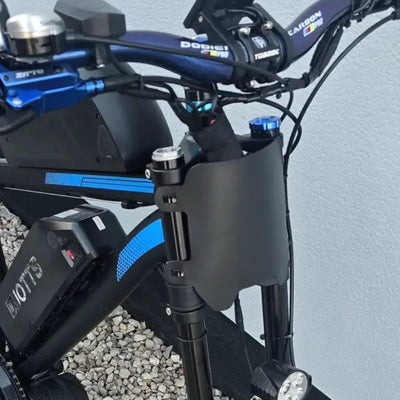
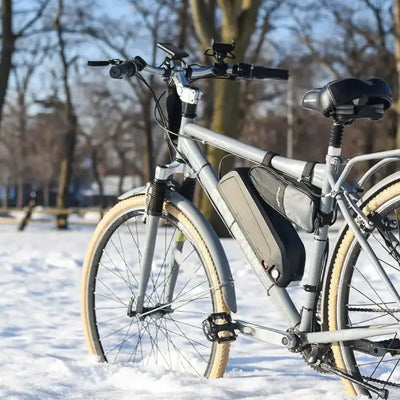
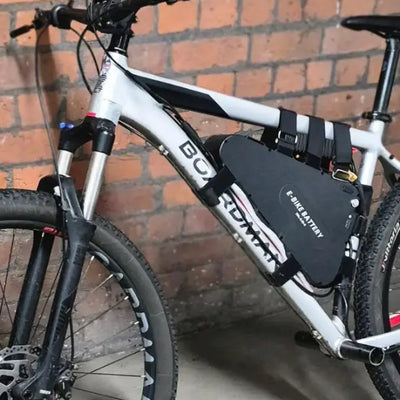
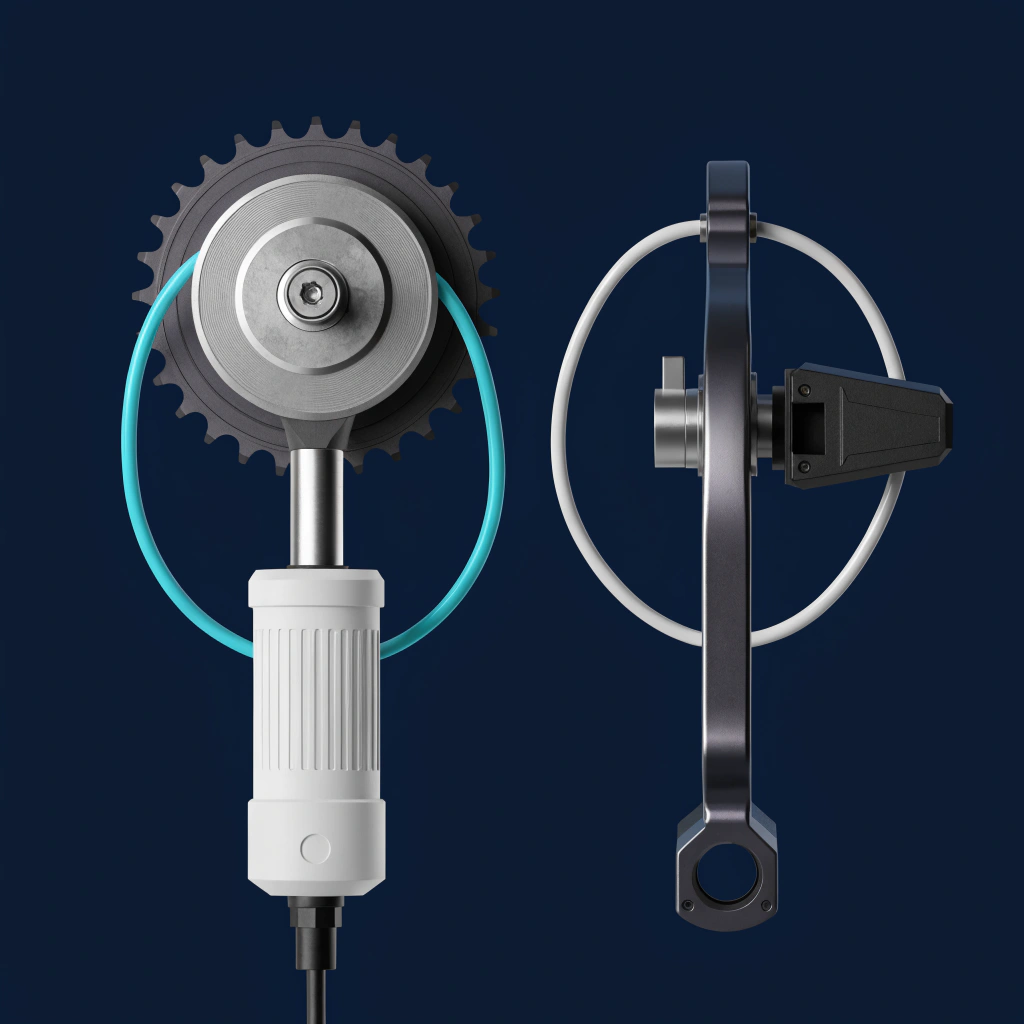
Front-wheel conversion kits deliver the simplest possible electric bike transformation with 20-minute installation, universal compatibility, zero drivetrain modification, and reversible conversion—making them the ideal choice for first-time converters, riders prioritizing simplicity, or anyone wanting hassle-free electric assistance without mechanical complexity.
While the best ebike kit options include front, rear, and mid-drive systems, understanding when front-wheel advantages outweigh rear-wheel benefits determines whether this straightforward approach serves your specific needs and priorities.
This comprehensive guide examines top front-wheel conversion kits, their unique benefits, installation simplicity, performance characteristics, and selection criteria helping you achieve effortless electric cycling through the easiest installation method available.
Why Front-Wheel Conversion Kits Excel for Simplicity
![]()

Understanding the fundamental advantages front-wheel motor placement provides explains their popularity among first-time converters and simplicity-focused riders.
Installation Simplicity Advantages
Minimal Complexity Benefits:
Front-wheel conversions require only basic wheel replacement—no drivetrain interaction whatsoever:
Installation Steps Comparison:
Front-Wheel Installation (20 minutes):
- Remove existing front wheel
- Install motor wheel in front fork
- Mount battery to frame
- Connect motor cable to controller
- Mount display on handlebars
- Connect brake sensors
- Install pedal assist sensor
- Test and ride
Rear-Wheel Installation (25-30 minutes):
- Remove existing rear wheel
- Transfer cassette to motor wheel (requires tools)
- Install motor wheel with torque arm
- Adjust derailleur
- Mount battery to frame
- Connect all components
- Cable management
- Test and adjust shifting
Key Simplicity Advantage: Front installation eliminates cassette transfer, derailleur adjustment, chain management, and torque arm complexity—reducing installation time and technical requirements significantly.
Universal Compatibility Benefits
Broader Bike Compatibility:
Front-wheel motors fit virtually any bicycle regardless of drivetrain configuration:
Compatible With:
- All gear systems (derailleur, internal hub, single-speed)
- All cassette types (7-12 speed, any brand)
- Belt drive systems
- Fixed gear and track bikes
- Unusual or vintage drivetrains
- Any rear wheel configuration
No Compatibility Concerns:
- No cassette type verification needed
- No derailleur compatibility checking
- No chain length considerations
- No gear ratio limitations
- Works with everything
Reversibility Advantages
Easy Reversion:
Front-wheel conversions reverse completely in minutes:
Why This Matters:
- Return to original bike anytime
- Sell bike unconverted if desired
- Transfer kit to different bike
- Seasonal electric/non-electric use
- Try electric without commitment
- No permanent modifications
Reversion Process:
- Remove motor wheel (5 minutes)
- Reinstall original front wheel (5 minutes)
- Remove battery and accessories (10 minutes)
- Bike completely original again
Top Front-Wheel Conversion Kit: 36V-48V 250W System
![]()

The best front-wheel conversion kits balance adequate power with legal compliance, lightweight construction, and maximum simplicity.
Complete System Specifications
Motor Configuration:
250W Front-Wheel Motor Details:
- Power: 36V 250W or 48V 250W options
- Type: Brushless geared hub motor
- Weight: 2.7kg (very lightweight)
- Construction: Sealed bearing system
- Waterproofing: IP65 weather resistance
- Installation: 20-minute simplicity
Why 250W Perfect for Front:
- Legal compliance (UK/EU road legal)
- Lightweight (minimal handling impact)
- Adequate power for assistance
- Front fork stress manageable
- Battery efficiency excellent
- Safe speeds maintained
Performance Capabilities:
36V 250W System:
- Speed: 25-30 km/h (road legal limit)
- Range: 30-40km typical usage
- Battery: 36V 13Ah LG cells
- Climbing: Gentle slopes adequate
- Application: Flat terrain commuting
- Legal: Compliant everywhere
48V 250W System:
- Speed: 30-35 km/h capability
- Range: 40-70km extended
- Battery: 48V 11.6-16Ah options
- Climbing: Moderate hills manageable
- Application: Versatile assistance
- Legal: With speed limiting
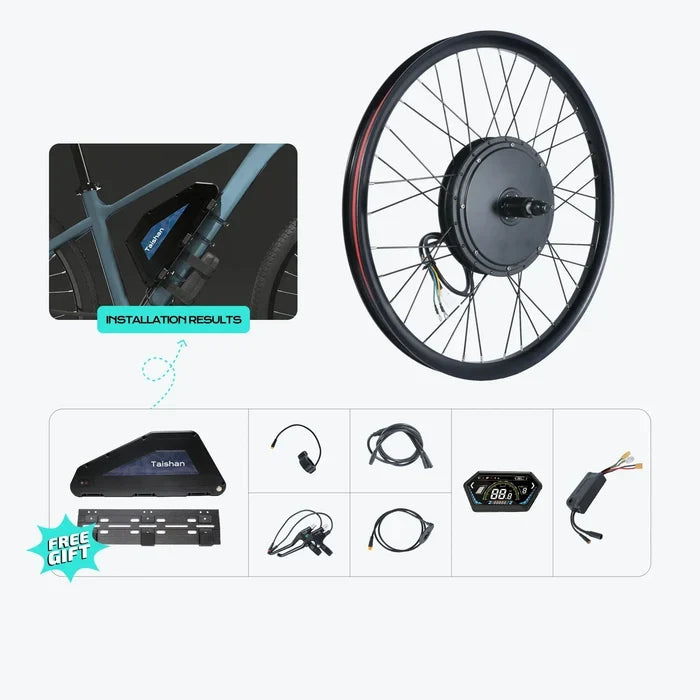
Complete Kit Includes
Comprehensive Package:
Motor Components:
- 250W brushless geared front motor
- Motor wheel with tire pre-installed
- Front dropout installation hardware
- Waterproof motor cable
- All mounting fasteners
Battery System:
- LG cell battery pack (36V or 48V)
- Down tube mounting bracket
- Battery lock and keys
- 2A charger (standard)
- Charging cable
Control Electronics:
- LCD display with essential data
- Brake cut-off levers (both sides)
- Pedal assist sensor (PAS)
- Optional throttle
- Complete wiring harness
Installation Accessories:
- Tire levers (if needed)
- Cable ties for management
- Installation manual
- Video tutorial access
- All tools needed
Front-Wheel Installation Process
Step-by-Step Simplicity:
Phase 1: Wheel Replacement (5 minutes)
- Quick-release or unbolted front wheel removal
- Remove tire from motor wheel (if transferring)
- Install tire on motor wheel
- Insert motor wheel in front fork
- Secure axle properly
- Verify wheel centered
Phase 2: Battery Mounting (5 minutes)
- Identify down tube bottle cage holes
- Attach battery mounting bracket
- Secure bracket with provided bolts
- Slide battery into bracket
- Lock battery in place
- Verify security
Phase 3: Component Installation (5 minutes)
- Mount display on handlebars
- Install brake levers with sensors
- Attach pedal assist sensor
- Position throttle (if using)
Phase 4: Electrical Connection (5 minutes)
- Connect motor cable to controller
- Connect battery to controller
- Connect display
- Connect brake sensors
- Connect PAS sensor
- Verify all connections
Total Installation Time: 20 minutes typical
Front vs Rear Wheel Conversion Comparison
Performance Differences
|
Performance Factor
|
Front-Wheel (250W)
|
Rear-Wheel (500-1000W)
|
Winner
|
|
Installation Time
|
20 minutes
|
25-35 minutes
|
Front
|
|
Installation Difficulty
|
Very simple
|
Moderate
|
Front
|
|
Tools Required
|
Minimal
|
Moderate
|
Front
|
|
Bike Compatibility
|
Universal
|
Limited by drivetrain
|
Front
|
|
Reversibility
|
Complete (10 minutes)
|
Moderate (20 minutes)
|
Front
|
|
Traction (Dry)
|
Good
|
Excellent
|
Rear
|
|
Traction (Wet/Hills)
|
Reduced
|
Superior
|
Rear
|
|
Weight Distribution
|
Front-heavy
|
Rear-heavy
|
Tie
|
|
Climbing Power
|
Adequate (flat-moderate)
|
Superior (all terrain)
|
Rear
|
|
Maximum Speed
|
25-35 km/h
|
35-50+ km/h
|
Rear
|
|
Power Options
|
250-500W typical
|
500-4000W available
|
Rear
|
|
Legal Compliance
|
Easy (250W)
|
Requires limiting
|
Front
|
|
First Conversion
|
Ideal
|
Good
|
Front
|
When Front-Wheel Excels
Optimal Applications:
First-Time Conversion:
- Learning experience priority
- Minimal complexity wanted
- Confidence building desired
- Reversibility important
- Trial of electric cycling
Simple Urban Commuting:
- Flat to gentle terrain
- Short distances (under 20km)
- Legal compliance critical
- Minimal maintenance wanted
- Straightforward operation
Older or Casual Riders:
- Gentle assistance adequate
- Simplicity valued highly
- Not performance focused
- Safety priority
- Comfort desired
Rental or Shared Bikes:
- Easy installation/removal
- Quick bike swapping
- Minimal modification
- Reversible conversion
- Multiple bike use
Budget-Conscious Beginning:
- Lower investment entry
- Test electric benefits
- Future upgrade possible
- Adequate for current needs
- Smart starting point
When Rear-Wheel Better Choice
Rear-Wheel Advantages:
Challenging Terrain:
- Hills regularly encountered
- Steep grades present
- Performance priority
- Power needed
- Traction critical
Higher Power Needs:
- Faster speeds desired
- Heavy loads carried
- Longer distances
- Serious performance
- Future-proof capability
Experienced Converters:
- Mechanical comfort
- Tools available
- Installation complexity acceptable
- Performance optimization
- Maximum capability wanted
Front-Wheel Handling Characteristics
Weight Distribution Reality
Front-Heavy Considerations:
Adding 2.7-4.5kg motor plus 2-3kg battery to front creates noticeable weight shift:
Handling Changes:
- Initial steering feels heavier
- Low-speed maneuvering different
- Lifting front wheel harder
- Parking/storage handling changed
Adaptation Timeline:
- First ride: Noticeable difference
- After 10km: Beginning adaptation
- After 50km: Feeling normal
- After 200km: Completely adapted
- Natural feel restored
Minimizing Impact:
- Choose lighter motors (250W geared)
- Mount battery low on frame
- Proper tire pressure crucial
- Avoid excessive speed
- Smooth riding technique
Traction Considerations
Front-Wheel Drive Dynamics:
Front motor drive presents unique traction characteristics:
Dry Conditions:
- Traction excellent
- Power delivery smooth
- Handling predictable
- Performance good
- No concerns
Wet Conditions:
- Front wheel slip possible
- Smooth throttle essential
- Lower assist levels safer
- Cautious cornering needed
- Awareness important
Hill Climbing:
- Weight shifts rearward climbing
- Front traction reduces
- Wheel spin possible on steep grades
- Moderate hills fine
- Extreme hills challenging
Solutions:
- Smooth power application
- Lower assist on slippery surfaces
- Body position forward when climbing
- Quality tires with good tread
- Rider awareness and technique
Steering and Handling
Cable Management Critical:
Front-wheel motor cable routing affects steering:
Proper Routing:
- Allow full handlebar rotation
- No cable tension at extremes
- Smooth cable path
- Secure but not tight
- Regular inspection
Best Practices:
- Route cable along fork leg
- Secure every 15cm
- Test full steering range
- Leave slight slack
- Check after 50km
Maximizing Front-Wheel Performance
Optimal Riding Technique
Power Application:
Smooth Acceleration:
- Gradual throttle or assist increase
- Avoid sudden power bursts
- Anticipate traction conditions
- Match power to situation
- Smooth is fast and safe
Cornering Technique:
- Reduce power before turns
- Lean bike not body
- Smooth arc through corner
- Reapply power when straightening
- Practice in safe area
Climbing Strategy:
- Body position forward
- Steady power application
- Avoid wheel spin
- Use appropriate assist level
- Know system limits
Battery Selection and Management
Range Optimization:
Battery Capacity Choices:
36V 13Ah (Budget Option):
- Range: 30-40km flat terrain
- Weight: 2.5kg typical
- Application: Short commutes
- Investment: Lower
- Adequate for many
48V 11.6-16Ah (Recommended):
- Range: 40-70km mixed terrain
- Weight: 2.8-3.2kg
- Application: Versatile use
- Investment: Moderate
- Best overall value
Extension Strategies:
- Lower assist levels on flats
- Moderate speed (25-30km/h)
- Smooth riding style
- Proper tire pressure
- Regular battery care
Maintenance Simplicity
Front-Wheel Advantage:
Minimal maintenance required:
Motor Maintenance:
- Keep clean and dry
- Inspect monthly
- No special procedures
- Bearing longevity excellent
- Essentially maintenance-free
Drivetrain Unchanged:
- Normal bike chain maintenance
- Standard cassette wear
- Regular derailleur adjustment
- No electric-related wear
- Conventional bike service
Battery Care:
- Standard lithium battery practices
- Store at 50-80% charge
- Avoid temperature extremes
- Charge regularly
- 1000+ cycle lifespan
Conclusion
Front-wheel e-bike conversion kits represent the optimal choice for first-time converters, simplicity-focused riders, flat terrain commuting, and anyone prioritizing 20-minute installation over maximum performance. The mid motor electric conversion kit and rear hub options deliver superior climbing and traction, but front-wheel systems excel through unmatched simplicity, universal compatibility, complete reversibility, and adequate assistance for most non-extreme applications.
Ready to experience electric assistance through the simplest installation method? Explore the complete electric bike kit battery range including front-wheel systems with comprehensive specifications, installation guidance, and expert support ensuring your straightforward conversion delivers years of effortless electric cycling satisfaction through unmatched simplicity and proven reliability.
Frequently Asked Questions
Are front-wheel e-bike conversion kits really easier to install than rear-wheel?
Yes, significantly easier: front installation takes 20 minutes versus 25-35 for rear, requires no cassette transfer (saving 10 minutes and special tools), no derailleur adjustment.
Do front-wheel motors affect bicycle steering and handling?
Adding 2.7-4.5kg motor weight to front initially makes steering feel heavier and changes low-speed maneuvering, but most riders adapt completely within 50-200km.
Can front-wheel motors climb hills effectively?
Front-wheel motors handle gentle-moderate hills (5-10% grades) adequately on dry surfaces but struggle with steep sustained climbing due to weight transfer reducing front traction and power limitations (250-500W typical).
Will front-wheel motor slip in wet conditions or when climbing?
Front drive can experience wheel spin in wet conditions, loose surfaces, or steep climbs when weight transfers rearward reducing front traction. Solutions include smooth power application (avoid sudden throttle), lower assist levels on slippery surfaces, body position forward when climbing, quality tires with good tread, and rider awareness of traction limits.
What's the best power level for front-wheel conversion kits?
250-500W optimal for front wheels: 250W provides legal compliance (UK/EU), adequate flat terrain assistance, lightweight motor (2.7kg), and manageable front fork stress.
: invalid url input)
usmile
Liquid error (snippets/blog-best-product line 36): product form must be given a product
Liquid error (snippets/blog-best-product line 59): product form must be given a product