Selecting appropriate motor power represents the single most consequential decision in e-bike conversion—too little power creates frustrating inadequate performance, while excessive power wastes investment, increases weight, accelerates component wear, and potentially creates legal complications making informed power selection critical rather than assuming "more is better" regardless of actual cycling needs.
Understanding which best ebike kit power level matches your specific terrain, rider weight, distance requirements, legal constraints, and performance expectations requires examining real-world capabilities, honest limitations, legal implications, and practical trade-offs each power level delivers rather than marketing hyperbole suggesting capabilities disconnected from physics realities and cycling experience across varied conditions.
250W Motors: Legal Compliance and Gentle Assistance

What 250W Delivers
Real-World Performance:
250W provides legal-compliant gentle assistance rather than transformative power:
Capabilities:
- Speed: 25-30 km/h (legal limit enforced)
- Hills: 5-8% grades manageable (gentle inclines)
- Acceleration: Moderate (not rapid starts)
- Range: 30-50km typical
- Feel: Bicycle with assistance (not electric motorcycle)
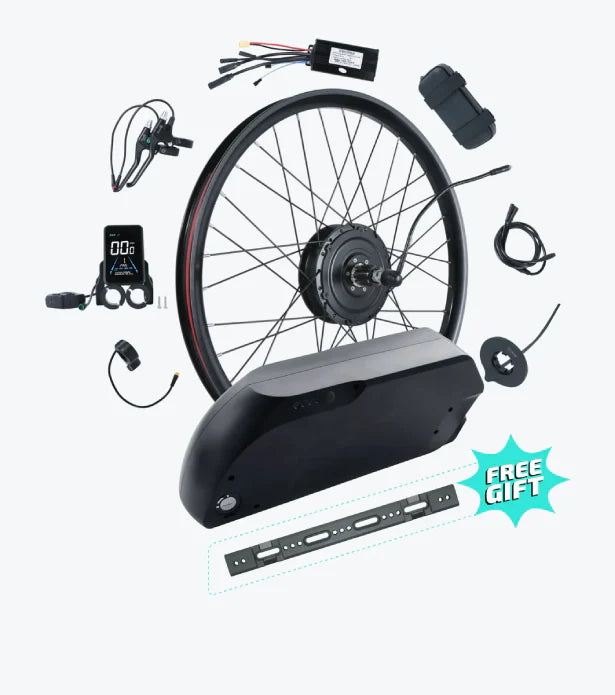
Motor Specifications (Kirbebike 250W):
- Type: Geared hub motor (lightweight)
- Weight: 2.7kg (minimal addition)
- Torque: Adequate gentle assistance
- Efficiency: Good (modest power demands)
- Application: Legal compliance priority
When 250W Works Perfectly
Ideal Scenarios:
✓ Legal compliance mandatory (UK/EU road legal) ✓ Flat urban terrain (under 5% grades typical) ✓ Short commutes (5-15km daily) ✓ Fitness maintenance (still pedaling significantly) ✓ Lightweight riders (under 80kg) ✓ Gentle assistance (not primary propulsion) ✓ No registration/license (bicycle classification maintained)
Who Benefits Most: Urban commuters valuing legal compliance over performance, riders on predominantly flat routes wanting gentle assistance while maintaining fitness, those prioritizing minimal weight addition (2.7kg motor), and cyclists seeking lowest-cost entry to electric cycling accepting performance limitations for regulatory simplicity.
250W Limitations Honestly Assessed
Where 250W Struggles:
✗ Hills over 8%: Inadequate (pedaling hard required) ✗ Heavy riders (90kg+): Marginal performance ✗ Strong headwinds: Noticeable assistance reduction ✗ Cargo/touring loads: Insufficient power ✗ Hilly terrain: Frustratingly inadequate ✗ Longer distances: Range adequate but speed limited
Reality Check: 250W feels like cycling with helpful tailwind—pleasant gentle assistance but NOT transformative power. Expectations of effortless hill climbing or high speeds create guaranteed disappointment regardless of motor quality.
500-750W Motors: Sweet Spot for Most Riders

What 500-750W Delivers
Versatile Capable Performance:
This power range serves vast majority of conversion applications:
When 500-750W Optimal
Ideal Scenarios:
✓ Mixed terrain (flat plus 8-15% hills) ✓ Medium commutes (10-25km daily) ✓ Average riders (70-90kg) ✓ All-around use (commuting, recreation, errands) ✓ Genuine assistance (significant power delivery) ✓ Practical speeds (30-40 km/h adequate) ✓ Reasonable weight (4.5kg acceptable)
Who Benefits Most: Most e-bike converters find 500-750W delivers optimal balance—adequate hills without struggle, reasonable speeds without excess, proven reliability, manageable weight, and versatile capability serving varied applications making this power range the most popular choice representing best value for typical cycling needs.
Mid-Drive Alternative: TSDZ8 750W
Efficiency Through Gears:
The Tongsheng TSDZ8 delivers 750W through bottom bracket:
Advantages:
-
Gear leverage: 750W × low gear = 2000W+ effective wheel power
-
Hill climbing: 15-20% grades conquered efficiently
-
Torque sensor: Natural responsive power delivery
-
Efficiency: 20-30% better battery usage
-
Weight: 4.8kg centered (balanced handling)
Trade-offs:
-
Drivetrain wear: Chains every 1500-3000km (accelerated)
-
Installation: 30-40 minutes (moderate complexity)
-
Maintenance: £70-100 annually (component replacement)
-
Frame compatibility: Threaded bottom bracket required
When TSDZ8 Optimal: Hilly terrain regular (10-20% grades), efficiency priority (maximize range), natural feel valued (torque sensor), accept maintenance costs (drivetrain replacement), mechanically comfortable (moderate installation skills).
What 1000W Delivers
Serious Capability:
1000W provides substantial performance without extreme power:
Capabilities:
- Speed: 45-50 km/h capable
- Hills: 15%+ conquered confidently
- Acceleration: Rapid powerful
- Range: 35-50km (higher consumption)
- Feel: Motorcycle-like power delivery
Motor Specifications (Kirbebike 48V 1000W):
- Type: Direct-drive hub motor
- Weight: 4-6.2kg (moderate)
- Torque: Strong all conditions
- Durability: Robust construction
- Application: Performance focus
When 1000W Makes Sense
Ideal Scenarios:
✓ Steep hills regular (15-20% grades) ✓ Heavy riders (90-110kg) ✓ Cargo/touring (significant loads) ✓ Performance desire (speed capability) ✓ Longer commutes (20-40km requiring speed) ✓ Power reserves (comfortable capability)
Who Benefits Most: Riders facing significant hills daily, heavier cyclists (90kg+) needing adequate power, cargo/touring applications with substantial loads, performance-focused cyclists valuing capability over legal compliance, and those wanting comfortable power reserves rather than constantly maximum motor load.
Legal Considerations
1000W Legal Status:
Power above 250W creates legal complexity:
UK/EU Regulations:
- Road legal maximum: 250W only
- 1000W classification: Not legal public roads
- Usage: Private property only
- Enforcement: Increasingly strict
- Consequences: Fines, confiscation, prosecution possible
Reality: 1000W riders accept legal ambiguity—many ride responsibly without issues, but enforcement risk exists and consequences potentially serious making informed decision about legal risk acceptance essential rather than assuming "everyone does it" eliminates liability.
1500W+ Motors: Maximum Capability

What 1500-4000W Delivers
Extreme Performance:
High power serves specialized applications:
Capabilities 2000W:
- Speed: 50-60 km/h
- Hills: Any grade conquered
- Acceleration: Explosive
- Range: 40-60km aggressive
- Feel: Electric motorcycle
When High Power Necessary
Limited Scenarios:
✓ Very heavy riders (110kg+) ✓ Extreme hills (20%+ sustained) ✓ Heavy cargo (substantial loads regular) ✓ Private property (off-road, tracks) ✓ Performance priority (capability over all else)
Critical Requirements:
-
Legal: Private property use only mandatory
-
Torque arms: Both sides required (safety critical)
-
Brakes: High-performance hydraulic disc (203mm+ rotors)
-
Frame: Quality construction (no budget frames)
-
Maintenance: Vigilant inspection (increased stress)
Power Level Comparison Table
|
Power
|
Speed Capability
|
Hill Climbing
|
Best For
|
Legal Status
|
Range
|
Motor Weight
|
Installation
|
|
250W
|
25-30 km/h
|
5-8% grades
|
Legal compliance, flat terrain
|
Road legal UK/EU
|
30-50km
|
2.7kg
|
Simple (20 min)
|
|
500W
|
30-40 km/h
|
8-12% grades
|
All-around, most riders
|
Private property
|
40-60km
|
4.5kg
|
Simple (25 min)
|
|
750W
|
35-45 km/h
|
12-15% grades
|
Hills, versatility
|
Private property
|
35-55km
|
4.5-4.8kg
|
Moderate (30 min)
|
|
1000W
|
45-50 km/h
|
15-20% grades
|
Performance, heavy riders
|
Private property
|
35-50km
|
4-6.2kg
|
Moderate (30 min)
|
|
2000W+
|
50-85+ km/h
|
Any grade
|
Extreme applications
|
Private property only
|
40-80km
|
5.1-6.8kg
|
Complex (30-40 min)
|
Selecting Your Optimal Power Level
Decision Framework
Answer These Questions:
Terrain Analysis:
- Predominantly flat (under 5%)? → 250-500W adequate
- Mixed with 8-12% hills? → 500-750W recommended
- Regular 12-20% grades? → 750-1000W necessary
- Extreme 20%+ hills? → 1500W+ required
Rider Weight:
- Under 70kg? → 250-500W sufficient
- 70-90kg? → 500-750W optimal
- 90-110kg? → 750-1000W minimum
- 110kg+? → 1500-2000W+ necessary
Distance/Speed Priority:
- Short urban (under 10km)? → 250-500W adequate
- Medium commute (10-25km)? → 500-750W versatile
- Long distance (25km+)? → 750-1000W faster arrival
- Speed priority? → 1000W+ capability
Legal Considerations:
- Road legal mandatory? → 250W only option
- Accept legal ambiguity? → 500-1000W (private property technically)
- Private property only? → Any power acceptable
Budget Implications:
- Minimal investment? → 250W (lowest cost, simplest)
- Moderate budget? → 500-750W (best value)
- Performance investment? → 1000W+ (capability priority)
Quick Recommendations
Most Common Choice: 500-750W Serves 80% of conversion applications—adequate hills, reasonable speeds, versatile capability, proven reliability, manageable weight, and best overall value for typical cycling needs making this power range the default recommendation unless specific circumstances indicate otherwise.
Legal Compliance Priority: 250W No alternative if road legal operation mandatory—accepts performance limitations for regulatory simplicity, registration/license/insurance avoidance, and peace of mind legal compliance provides despite frustrating inadequacy hilly terrain.
Performance Focus: 1000W+ When capability matters more than legal compliance, weight considerations, or efficiency—adequate power for heavy riders, steep hills, cargo applications, and performance priorities justifying legal ambiguity, weight addition, and higher costs serious capability demands.
Real-World Power Experiences
250W Success: Flat Urban Commuter
Rider Profile:
- Weight: 75kg
- Terrain: Completely flat urban
- Distance: 8km each way
- Priority: Legal compliance
- System: 36V 250W front hub
Results (12 Months): Perfect for application—gentle assistance adequate flat terrain, legal compliance peace of mind, 30-40km range exceeds needs, 25-30 km/h sufficient urban cycling, completely satisfied accepting speed/power limitations for legal simplicity.
500W Sweet Spot: Mixed Terrain
Rider Profile:
- Weight: 85kg
- Terrain: Mixed flat plus 8-10% hills
- Distance: 15km hilly commute
- System: 500W SHENGYI rear hub
Results (18 Months): Optimal choice—hills conquered without struggle, 35-40 km/h adequate speeds, 45-50km range comfortable, versatile all applications, proven reliability, no regrets choosing mid-range power serving all needs excellently.
750W Mid-Drive: Hill Conqueror
Rider Profile:
- Weight: 88kg
- Terrain: 12-18% sustained grades daily
- Distance: 18km very hilly
- System: 48V 750W TSDZ8 mid-drive
Results (15 Months): Gear advantage transformative—15-18% grades conquered efficiently, torque sensor natural feel valued, 40-50km range adequate, accept drivetrain wear (2 chains replaced £40), efficiency advantage clear hills, wouldn't choose hub motor this terrain.
1000W: Heavy Rider Solution
Rider Profile:
- Weight: 105kg
- Terrain: Mixed with 12-15% hills
- Previous: 750W inadequate (struggled)
- System: 48V 1000W direct-drive
Results (12 Months): Adequate power finally—hills confident (not struggling), power reserves comfortable (not constantly maxed), thermal management perfect (no overheating), 750W marginal created constant maximum load, 1000W operates 70-80% capacity (optimal thermal conditions).
Cost and Value Analysis
Initial Investment Comparison
500-750W:
- Moderate initial cost
- Minimal maintenance (hub) or moderate (mid-drive)
- Serves long-term (rarely outgrown)
-
Value: Best overall (serves vast majority excellently)
1000W+:
- Higher initial cost
- Moderate maintenance (torque arms, brakes)
- Serves specialized needs
-
Value: Excellent appropriate applications, wasted if unnecessary
Making Your Decision
Motor power selection demands honest terrain assessment, realistic rider weight consideration, and clear priority identification—250W serves legal compliance and flat urban cycling accepting performance limitations, 500-750W delivers versatile capability serving 80% of conversion applications through adequate hill climbing (8-15% grades) and reasonable speeds (30-45 km/h) without legal compliance or excessive weight, 1000W+ addresses performance priorities including heavy riders (90kg+), steep sustained hills (15%+), and cargo applications accepting legal ambiguity and increased complexity for serious capability unavailable lower power levels regardless of marketing claims suggesting otherwise.
Ready to select optimal motor power for your cycling needs? Explore the complete electric bike kit battery range including 250W legal-compliant systems, 500-750W versatile all-around capability, 1000W+ performance options, and expert support ensuring your conversion delivers appropriate power through honest assessment of terrain, rider weight, and performance priorities matching motor capability to cycling reality rather than marketing hyperbole disconnected from practical experience.
Frequently Asked Questions
Is 250W enough power for e-bike conversion?
Depends entirely on terrain and expectations: 250W adequate flat urban cycling (under 5% grades), lightweight riders (under 80kg), legal compliance priority, and accepting gentle assistance (25-30 km/h speeds).
What's the best motor power for most riders: 500W or 750W?
500-750W range serves vast majority excellently: 500W adequate mixed terrain (8-12% hills), average riders (70-90kg), versatile capability, proven reliability—750W better regular hills (12-15%)e.
Do I need 1000W motor if I weigh 100kg (220 lbs)?
Strongly recommended minimum: 100kg rider requires proportionally more power achieving same performance as lighter cyclists—750W marginally adequate flat terrain but struggles sustained hills (inadequate power reserves create thermal stress).
Can I legally ride 750W or 1000W e-bike on UK roads?
No—UK law limits road-legal e-bikes to 250W maximum and 25 km/h speed limit assistance. Systems exceeding these limits legally classify as motor vehicles requiring registration, insurance.
Will 500W motor struggle on hills compared to 1000W?
Depends on hill steepness: 500W conquers 8-12% grades confidently (adequate most urban/suburban hills), struggles 15%+ sustained (inadequate power creates slow speeds, potential overheating)—1000W confident 15-20% grades (power reserves comfortable).