Rear-wheel conversion kits deliver superior traction, natural bicycle handling, powerful performance, and optimal weight distribution—making them the preferred choice for serious riders, challenging terrain, higher power applications, and anyone prioritizing performance over installation simplicity.
While the best ebike kit options include front, rear, and mid-drive configurations, understanding when rear-wheel advantages justify modest installation complexity determines whether this proven approach serves your specific riding needs and performance expectations.
This comprehensive guide examines top rear-wheel conversion kits, their unique benefits for demanding applications, installation considerations, and selection criteria helping you achieve professional e-bike performance through the most popular motor placement worldwide.
Why Rear-Wheel Conversion Kits Excel for Performance
![]()

Understanding the fundamental advantages rear-wheel motor placement provides explains their dominance among performance-focused riders and demanding applications.
Superior Traction Advantages
Weight Distribution Benefits:
Rear-wheel drive concentrates power where natural weight distribution provides maximum traction:
Physics of Traction:
- Rider weight primarily over rear wheel
- Battery weight adds rear traction
- Acceleration shifts weight rearward
- Climbing transfers weight to rear
- Power applied where grip exists
Real-World Traction Benefits:
Dry Conditions:
- Excellent power transfer
- Minimal wheel slip
- Confident acceleration
- Predictable handling
- Professional feel
Wet Conditions:
- Adequate traction maintained
- Better than front-wheel drive
- Smooth power essential
- Quality tires critical
- Rider awareness helpful
Hill Climbing:
- Weight transfers to rear (advantage)
- Traction increases under load
- Powerful acceleration possible
- Steep grades manageable
- Superior to front-wheel
Loose Surfaces:
- Off-road capability excellent
- Gravel roads handled well
- Trail riding capable
- Power when needed
- Confidence-inspiring
Natural Handling Characteristics
Bicycle Feel Preserved:
Rear-wheel motors maintain familiar bicycle handling dynamics:
Steering Precision:
- Front wheel unweighted (responsive)
- Natural steering feel preserved
- Low-speed maneuvering normal
- Parking and storage easy
- Bicycle-like handling
Weight Distribution:
- More natural than front motors
- Lower center of gravity
- Balanced bike feel
- Professional dynamics
- Rider confidence high
Cable Management:
- No steering restriction issues
- Simple cable routing
- No handlebar complications
- Clean front-end appearance
- Professional installation
Top Rear-Wheel Conversion Kits by Application
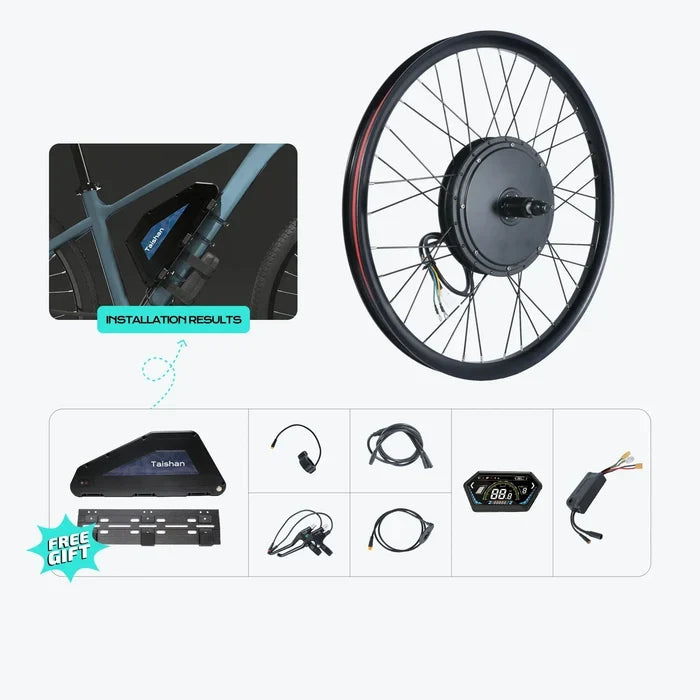
Best All-Around: 48V 1000W System
![]()

Why It Excels:
The 48V 1000W rear-wheel configuration represents optimal balance for most riders:
Complete System Specifications:
Motor Details:
- Power: 48V 1000W brushless direct-drive
- Type: Rear hub motor
- Weight: 4-6.2kg depending on rim
- Speed: 45-50 km/h maximum
- Construction: Sealed bearing system
- Waterproofing: IP65 weather resistance
Battery Configuration:
- Capacity: 48V 11.6-16Ah options
- Cells: LG branded (premium quality)
- Range: 35-45km typical terrain
- BMS: Integrated protection
- Mounting: Down tube or rack
- Lock: Integrated security
Performance Capabilities:
- Adequate power for varied terrain
- Hills handled confidently
- 45-50 km/h speeds achieved
- Versatile all-around capability
- Reliable daily transportation
Ideal Applications:
- Daily commuting 10-25km
- Mixed flat and hilly terrain
- Versatile general riding
- First rear-wheel conversion
- Performance on reasonable budget
- Most riders' sweet spot
Best High-Performance: 52V 2000W MTX System
![]()

Why It Excels:
Serious power for demanding terrain and performance-focused riders:
Complete System Specifications:
Motor Details:
- Power: 52V 2000W brushless direct-drive
- Type: MTX rim rear hub motor
- Weight: 5.1-5.3kg
- Speed: 50-60 km/h capability
- Torque: Exceptional low-end
- Brand: SHENGYI or equivalent quality
Battery Configuration:
- Capacity: 52V 20-30Ah options
- Cells: LG 21700 high-discharge
- Range: 40-60km (20Ah), 50-80km (30Ah)
- Voltage: Superior under load
- Performance: Sustained power delivery
- Quality: Premium construction
Performance Capabilities:
- Serious hill-climbing power
- High-speed cruising sustained
- Heavy load capability
- Quick acceleration
- Professional performance
Ideal Applications:
- Steep terrain commuting
- Mountain bike conversions
- Performance enthusiasts
- Cargo and utility bikes
- Long-distance touring
- Power priority riders
Best Extreme Power: 72V 4000W System
Why It Excels:
Ultimate performance for maximum capability and extreme applications:
Complete System Specifications:
Motor Details:
- Power: 72V 4000W brushless direct-drive
- Type: Heavy-duty rear hub
- Weight: 6.8kg robust construction
- Speed: 75-85+ km/h maximum
- Torque: Unstoppable climbing
- Durability: Professional-grade
Battery Configuration:
- Capacity: 72V 20Ah with 5A fast charger
- Cells: Premium high-discharge
- Range: 40-80km depending on usage
- Voltage: Efficiency at extreme power
- Performance: Motorcycle-like
- Construction: Military-grade
Performance Capabilities:
- Maximum speed capability
- Extreme climbing power
- Professional delivery services
- Ultimate performance
- Unmatched acceleration
Ideal Applications:
- Extreme mountain biking
- Fat tire bike conversions
- Professional delivery
- Maximum performance priority
- Experienced power users
- Ultimate capability desired
Rear-Wheel Installation Process
Installation Complexity Reality
Time and Skill Requirements:
Rear-wheel installation requires modest additional steps versus front:
Complete Installation Steps:
Phase 1: Wheel Removal and Preparation (10 minutes)
- Remove rear wheel
- Transfer cassette to motor wheel (5 minutes)
- Adjust chain if necessary
- Prepare motor wheel
- Check brake compatibility
Phase 2: Motor Wheel Installation (10 minutes)
- Install torque arm(s) if required (750W+)
- Insert motor wheel in dropouts
- Secure axle properly
- Verify wheel centering
- Check brake alignment
- Adjust derailleur
Phase 3: Battery and Components (10 minutes)
- Mount battery to frame
- Install display on handlebars
- Install brake sensors
- Attach pedal assist sensor
- Mount throttle if using
Phase 4: Electrical Connections (5 minutes)
- Connect motor to controller
- Connect battery
- Connect all sensors
- Cable management
- Test all functions
Total Installation Time: 25-35 minutes typical
Skill Level Assessment:
Recommended Experience:
- Comfortable changing bicycle tires
- Used cassette removal tool before
- Understands derailleur adjustment
- Follows detailed instructions
- Patient methodical approach
Tools Required:
- Cassette removal tool (included typically)
- Chain whip (included typically)
- Allen key set
- Adjustable wrench
- Torque wrench (recommended)
Torque Arm Requirements
Critical Safety Component:
Torque arms prevent motor axle rotation and dropout damage:
Torque Arm Requirements by Power:
250-500W Systems:
- Torque arm: Recommended but optional
- Steel frames: Often adequate without
- Aluminum frames: Strongly recommended
- Safety margin: Good practice
750-1500W Systems:
- Torque arm: One side minimum required
- Aluminum frames: Absolutely mandatory
- Both sides: Recommended for reliability
- Frame protection: Critical
2000W+ Systems:
- Torque arms: Both sides absolutely required
- Heavy-duty type: Essential
- Proper installation: Non-negotiable
- Frame inspection: Regular checks mandatory
Installation:
- Secure to frame dropout
- Proper bolt torque critical (15-20 Nm)
- Verify tightness periodically
- No movement allowed
Rear vs Front Wheel Comparison
Performance Differences Table
|
Performance Factor
|
Rear-Wheel
|
Front-Wheel
|
Winner
|
|
Traction (All Conditions)
|
Excellent
|
Good (dry), Reduced (wet)
|
Rear
|
|
Hill Climbing Capability
|
Superior
|
Adequate
|
Rear
|
|
Maximum Power Handling
|
250-4000W
|
250-500W
|
Rear
|
|
Natural Handling
|
Excellent
|
Front-heavy
|
Rear
|
|
Installation Time
|
25-35 min
|
20 min
|
Front
|
|
Installation Complexity
|
Moderate
|
Simple
|
Front
|
|
Cassette Transfer Required
|
Yes
|
No
|
Front
|
|
Torque Arm Needed
|
Yes (750W+)
|
Rarely
|
Front
|
|
Steering Feel
|
Natural
|
Heavier
|
Rear
|
|
Cable Management
|
Simpler
|
Handlebar routing
|
Rear
|
|
Speed Capability
|
Unlimited
|
Limited
|
Rear
|
|
Reversibility
|
Moderate
|
Complete
|
Front
|
|
Professional Performance
|
Excellent
|
Good
|
Rear
|
When Rear-Wheel Excels
Optimal Applications:
Performance Priority: ✓ Power over 500W desired ✓ Speed capability important ✓ Hills regularly encountered ✓ Professional feel wanted ✓ Serious capability needed
Challenging Terrain: ✓ Steep sustained climbing ✓ Off-road trail riding ✓ Wet conditions common ✓ Loose surface navigation ✓ Traction critical
Heavy Loads: ✓ Cargo carrying regular ✓ Touring with panniers ✓ Heavy rider weight ✓ Trailer pulling ✓ Utility applications
Experienced Riders: ✓ Mechanical comfort adequate ✓ 25-35 minute installation acceptable ✓ Tools available ✓ Performance valued ✓ Quality prioritized
Maximizing Rear-Wheel Performance
Optimal Component Selection
Drivetrain Considerations:
Cassette Selection:
- Keep existing if good condition
- Upgrade to quality if worn
- Match gear range to terrain
- 8-11 speed typical
- Quality matters for longevity
Chain Requirements:
- May need longer chain
- Quality chain essential
- Proper tension critical
- Regular maintenance important
- Replace at 0.5-0.75% stretch
Derailleur Setup:
- Adjustment after installation
- Limit screws verified
- Cable tension proper
- Shifting smooth
- Professional tune helpful
Battery Selection Strategy
Matching Battery to Motor:
48V 1000W System:
- Battery: 48V 13-20Ah
- Range: 35-60km
- Application: Most riders
- Value: Excellent balance
52V 2000W System:
- Battery: 52V 20-30Ah
- Range: 40-80km
- Application: Performance focus
- Value: Superior power delivery
72V 4000W System:
- Battery: 72V 20Ah minimum
- Range: 40-80km
- Application: Extreme performance
- Value: Maximum capability
Maintenance Priorities
Critical Maintenance Areas:
Torque Arm Inspection:
- Monthly visual check
- Verify bolt tightness
- Look for frame damage
- No movement allowed
- Replace if damaged
Motor Axle Security:
- Check monthly
- Proper torque maintained (35-40 Nm)
- No loosening allowed
- Inspect regularly
Cassette and Chain:
- Chain stretch monitoring
- Cassette wear inspection
- Replacement as needed
- Quality components
- Proper lubrication
Brake System:
- Disc brakes recommended (1000W+)
- Pad wear monitoring
- Rotor condition checked
- Brake power adequate
- Upgrade if necessary
Rear-Wheel Selection Decision Framework
Choose Rear-Wheel Kit If:
Performance Requirements: ✓ Power over 500W wanted ✓ Speed over 35 km/h desired ✓ Hills regularly encountered ✓ Traction critical importance ✓ Professional feel valued ✓ Future power upgrades possible
Terrain Challenges: ✓ Steep sustained climbing ✓ Wet conditions common ✓ Off-road capability needed ✓ Loose surface navigation ✓ Heavy load carrying ✓ Varied terrain riding
Installation Readiness: ✓ 25-35 minute installation acceptable ✓ Basic mechanical skills present ✓ Tools available or obtainable ✓ Following instructions comfortable ✓ Cassette transfer manageable ✓ Learning opportunity welcomed
Rider Characteristics: ✓ Performance-focused mindset ✓ Serious cycling experience ✓ Quality and capability valued ✓ Long-term investment perspective ✓ Natural handling appreciated ✓ Professional results desired
Choose Front-Wheel Kit Instead If:
Conclusion
Rear-wheel e-bike conversion kits represent the optimal choice for performance-focused riders, challenging terrain applications, higher power requirements, and anyone prioritizing superior traction, natural handling, and professional feel over installation simplicity. The mid motor electric conversion kit excels for technical climbing efficiency, but rear-wheel systems deliver unmatched power capability (250-4000W), exceptional traction all conditions, and natural bicycle dynamics familiar to experienced cyclists.
Ready to experience professional e-bike performance through proven rear-wheel advantages? Explore the complete electric bike kit battery range including comprehensive rear-wheel systems with detailed specifications, installation guidance, torque arm requirements, and expert support ensuring your conversion delivers the exceptional traction, natural handling, and powerful performance only rear-wheel motors provide for demanding cycling applications.
Frequently Asked Questions
Why are rear-wheel conversion kits better than front-wheel for performance?
Rear-wheel motors deliver superior traction (power where weight concentrates), natural steering feel (front wheel unweighted), higher power capability (250-4000W vs 250-500W), and better climbing (weight transfers rearward).
How difficult is rear-wheel conversion kit installation compared to front-wheel?
Rear installation takes 25-35 minutes versus 20 minutes front, requiring cassette transfer (5 minutes with included tools), torque arm installation for 750W+ motors (5 minutes), and derailleur adjustment (5 minutes).
Do I really need torque arms with rear-wheel conversion kits?
Torque arms prevent motor axle rotation and catastrophic dropout damage: optional for 250-500W on steel frames but strongly recommended, mandatory for 750-1500W systems (one side minimum), absolutely required both sides for 2000W+ motors.
What's the maximum power level safe for rear-wheel conversion?
Steel and chromoly frames safely handle 4000W with proper torque arms and frame inspection. Aluminum frames suitable for 250-2000W with mandatory torque arms and regular monitoring.
How does rear-wheel motor affect bicycle handling and steering?
Rear-wheel motors maintain natural front-end steering feel (no added weight), create familiar rear-heavy balance similar to carrying panniers, and preserve responsive maneuvering characteristics experienced cyclists appreciate.
: invalid url input)
usmile
Liquid error (snippets/blog-best-product line 36): product form must be given a product
Liquid error (snippets/blog-best-product line 59): product form must be given a product