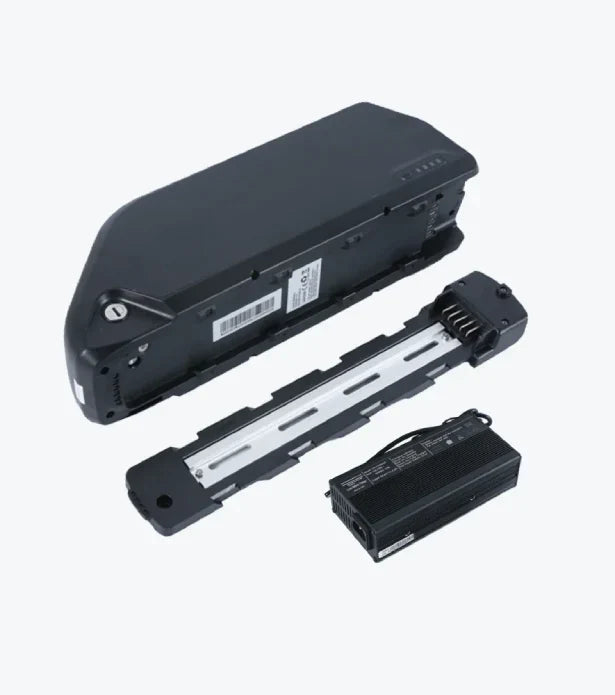
The promise of fast charging is tempting—plug in your e-bike battery during lunch and ride home fully charged. But before you rush to purchase that high-amperage charger, understanding the science behind lithium battery charging becomes critical.
The difference between safe fast charging and battery-damaging practices can mean the difference between years of reliable service and premature battery replacement.
When it comes to fast charging e-bike batteries safely, the answer isn't simply "yes" or "no"—it's about understanding your battery's capabilities, respecting manufacturer specifications, and recognizing the trade-offs between charging speed and long-term battery health. Let's explore what works, what doesn't, and how to maximize both convenience and battery lifespan.
Understanding Lithium Battery Charging Fundamentals

How Lithium Batteries Accept Charge
Lithium-ion batteries used in e-bikes charge through a precisely controlled two-stage process managed by both the charger and the Battery Management System (BMS).
Stage 1: Constant Current (CC) Phase
- Battery accepts maximum safe current
- Voltage gradually rises toward full charge
- Represents approximately 80% of total charge time
- Most efficient charging occurs during this phase
Stage 2: Constant Voltage (CV) Phase
- Voltage held at maximum safe level
- Current gradually decreases as battery approaches full capacity
- Final 20% of charge takes disproportionate time
- Critical for cell balancing and complete charging
This two-stage process protects battery cells from damage while ensuring complete, balanced charging across all cell groups.
The C-Rating System Explained
Charging speed is measured using the C-rating system, where "C" represents the battery's capacity.
C-Rating Definitions:
-
1C charging: Fully charges the battery in 1 hour
-
0.5C charging: Fully charges the battery in 2 hours (standard rate)
-
0.25C charging: Fully charges the battery in 4 hours (slow rate)
-
2C charging: Fully charges the battery in 30 minutes (fast rate)
Practical Examples with Kirbebike Batteries:
|
Battery Capacity
|
0.5C (Standard)
|
1C (Moderate Fast)
|
2C (Fast)
|
|
7Ah
|
3.5A charger
|
7A charger
|
14A charger
|
|
13Ah
|
6.5A charger
|
13A charger
|
26A charger
|
|
16Ah
|
8A charger
|
16A charger
|
32A charger
|
|
20Ah
|
10A charger
|
20A charger
|
40A charger
|
Most Kirbebike systems ship with 2A chargers, representing conservative 0.25-0.5C charging rates that prioritize battery longevity over speed.
What Qualifies as "Fast Charging"?
Industry Standard Charging Rates
Slow Charging (0.25C):
- Gentlest on battery cells
- Minimal heat generation
- Maximizes cycle life
- Typical overnight charging scenario
Standard Charging (0.5C):
- Balanced approach to speed and longevity
- Moderate heat generation
- Industry-standard for e-bike applications
- Completes charge in 4-6 hours from empty
Fast Charging (1C-2C):
- Significantly reduced charge times
- Increased heat generation
- Requires battery designed for higher charge rates
- Typically 1-2 hours for full charge
Ultra-Fast Charging (2C+):
- Reserved for specially designed batteries
- Substantial heat generation
- Requires advanced thermal management
- Risk of reduced cycle life without proper engineering
For most e-bike applications, anything above 0.5C (standard charging) qualifies as fast charging, with associated benefits and trade-offs.
Safe Fast Charging: What Your Battery Can Handle

BMS-Protected Charging Limits
Every quality e-bike battery includes a Battery Management System that provides critical charging protection:
BMS Charging Functions:
- Monitors individual cell voltages during charging
- Prevents overcharging beyond safe voltage limits
- Balances cell groups for uniform charging
- Monitors temperature and reduces current if overheating occurs
- Cuts charging completely if dangerous conditions detected
The BMS acts as your first line of defense against charging damage, but it operates within the parameters it's designed for—exceeding these can overwhelm protection systems.
Temperature Considerations
Battery temperature dramatically affects safe charging rates and overall battery health.
Optimal Charging Temperature Range:
-
Ideal zone: 15-25°C (59-77°F)
-
Acceptable range: 10-30°C (50-86°F)
-
Reduced rate zone: 0-10°C or 30-40°C
-
No charging zone: Below 0°C or above 45°C
Temperature-Related Guidelines:
- Cold batteries (below 10°C): Reduce charging rate by 50% or warm battery to room temperature first
- Warm batteries (30-40°C): Allow cooling period before charging or reduce charge rate
- Hot batteries (above 40°C): Wait until battery cools to below 30°C before charging
- Frozen batteries (below 0°C): Never charge; permanent damage can occur
Kirbebike batteries with LG cells include temperature sensors that work with the BMS to prevent out-of-range charging, but environmental awareness remains important.
Manufacturer Specifications Matter
Always consult your battery's documentation for maximum safe charging current.
Kirbebike Battery Charging Specifications:
|
Battery System
|
Standard Charger
|
Maximum Safe Fast Charge
|
Full Charge Time (Standard)
|
|
36V 7Ah
|
2A (0.29C)
|
5A (0.71C)
|
3-4 hours
|
|
36V 13Ah
|
2A (0.15C)
|
7A (0.54C)
|
6-7 hours
|
|
48V 16Ah
|
2A (0.125C)
|
8A (0.5C)
|
8-10 hours
|
|
52V 20Ah
|
2A (0.1C)
|
10A (0.5C)
|
10-12 hours
|
|
72V 20Ah
|
5A (0.25C)
|
10A (0.5C)
|
4-6 hours
|
Note that the 72V system includes a 5A fast charger as standard, reflecting its high-performance application where charging speed matters more.
Upgrading to Fast Chargers: What to Know
Compatibility Verification
Before purchasing any fast charger, verify complete compatibility with your battery system.
Critical Compatibility Factors:
-
Voltage matching: Must precisely match battery voltage (36V, 48V, 52V, 60V, 72V)
-
Connector type: Physical connector must mate with battery charging port
-
BMS amperage rating: Battery's BMS must support higher charging current
-
Charge profile: Charger must use correct CC/CV charging algorithm
Using an incompatible charger can damage your battery, void warranties, and create safety hazards.
Quality Matters Immensely
Not all chargers are created equal, and cheap fast chargers pose significant risks.
Quality Charger Features:
-
Accurate voltage regulation: Prevents overcharging
-
Temperature compensation: Adjusts charging based on battery temperature
-
Multiple protection circuits: Overcurrent, overvoltage, short circuit protection
-
LED indicators: Clear status communication
-
Proper certification: CE, UL, or equivalent safety certifications
Red Flags for Low-Quality Chargers:
- Significantly cheaper than comparable chargers
- No safety certifications marked on device
- Generic packaging without specifications
- Excessive heat generation during operation
- Inconsistent charging times
Kirbebike batteries are designed to work optimally with their supplied chargers. If considering upgrades, contact Kirbebike support for compatible fast charger recommendations.
DIY Fast Charger Modifications: Don't
Some online sources suggest modifying standard chargers for higher output. This is extremely dangerous.
Why DIY Charger Modifications Fail:
- Altered voltage regulation can overcharge and damage batteries
- Increased current without proper components causes overheating
- Safety circuits may be bypassed or overwhelmed
- No warranty coverage after modifications
- Potential fire hazards from unstable charging
Always use manufacturer-approved chargers or professionally designed alternatives, never modified equipment.
Frequently Asked Questions
Is it safe to use a 5A charger instead of the standard 2A charger that came with my Kirbebike battery?
This depends on your specific battery's BMS rating and capacity. A 5A charger represents fast charging for batteries below 10Ah capacity and may reduce lifespan. For larger batteries (16Ah+), 5A charging is moderate and generally acceptable. Always verify your battery's maximum charge current specification before upgrading chargers, and contact Kirbebike support if uncertain about compatibility.
How much faster will my battery charge with a fast charger?
Charging speed depends on both charger output and battery capacity. Doubling amperage (2A to 4A) roughly halves charging time for the first 80% of charge, but the final 20% still takes proportionally longer due to the constant-voltage charging phase. A 16Ah battery taking 8 hours with a 2A charger would take approximately 4-5 hours with a 4A charger, not exactly half due to CV phase.
Can I leave my battery on a fast charger overnight?
Modern quality chargers automatically stop charging when the battery reaches full capacity, so overnight charging won't overcharge the battery. However, fast chargers should be monitored during use, and overnight charging defeats the purpose of fast charging. If charging overnight, use the standard charger for better battery health and equivalent results.
Will fast charging void my Kirbebike battery warranty?
Using non-approved chargers or exceeding manufacturer-specified charging parameters may void warranties. Kirbebike warranties cover batteries used with supplied chargers or approved alternatives. Before using any fast charger, verify it meets manufacturer specifications and consider contacting Kirbebike support to confirm warranty coverage with your intended charger.
How can I tell if fast charging is damaging my battery?
Key warning signs include: excessive heat during or after charging (battery too hot to comfortably hold), reduced range compared to when new, significantly longer charging times than expected, battery swelling or case deformation, or BMS frequently cutting power during charging. If experiencing these symptoms, immediately revert to standard charging and have the battery inspected.
Is it better to fast charge to 100% or standard charge to 80%?
Standard charging to 80% is significantly better for battery longevity than fast charging to 100%. The combination of fast charging plus charging to full capacity creates maximum stress on battery cells. If you must fast charge, stopping at 80% reduces heat generation and stress. For longest battery life, standard charge to 80% whenever possible.
Can cold weather make fast charging more dangerous?
Yes, cold temperatures significantly increase fast-charging risks. Below 10°C, lithium plating can occur during fast charging, permanently reducing capacity and creating safety hazards. Always allow cold batteries to warm to room temperature before charging, and reduce charge rates in cool conditions. Never fast charge a battery below 5°C or charge at all below 0°C.
Conclusion
Fast charging e-bike batteries represents a trade-off between immediate convenience and long-term battery health. While modern lithium batteries with quality BMS systems can handle occasional fast charging safely, making it your default charging method will measurably reduce battery lifespan—potentially cutting years of service from your investment.
For most riders, the supplied standard chargers that come with Kirbebike conversion systems provide the optimal balance of charging speed and battery longevity. Overnight charging eliminates any practical downtime while maximizing the 800-1,000+ charge cycle lifespan that quality batteries deliver.