Selecting the right battery capacity is arguably the most crucial decision you'll make when converting your traditional bicycle to electric power. The battery determines not just how far you can travel, but also impacts weight, cost, and overall riding experience.
Understanding the relationship between amp-hours (Ah) and watt-hours (Wh) will empower you to make an informed choice that perfectly matches your riding needs.
When exploring <a href="https://kirbebike.com/collections/electric-bike-kit-battery">e-bike conversion kit battery options</a>, you'll encounter various specifications that might seem confusing at first.
This comprehensive guide will demystify battery capacity measurements and help you calculate exactly what you need for your specific riding scenarios.
Understanding Battery Capacity: Ah vs Wh Explained
![]()

Before diving into selection criteria, let's clarify what these measurements actually mean and why both matter.
Amp-Hours (Ah): The Fuel Tank Size
Amp-hours represent the total amount of electrical current a battery can deliver over time. Think of it as the size of your fuel tank—a larger Ah rating means more stored energy available for your motor to consume.
How Ah Works:
- A 10Ah battery can theoretically deliver 10 amps for one hour
- Or 5 amps for two hours
- Or 2 amps for five hours
The actual runtime depends on how much current your motor draws, which varies based on power consumption, terrain, and riding style.
Watt-Hours (Wh): The True Energy Measure
Watt-hours provide a more complete picture of battery capacity because they account for both voltage and amp-hours. This is the most accurate way to compare batteries with different voltage ratings.
The Critical Formula:
Watt-Hours (Wh) = Voltage (V) × Amp-Hours (Ah)
Real-World Examples from Kirbebike Systems:
- 36V 7Ah battery = 252 Wh (EZ Rider Kit)
- 36V 13Ah battery = 468 Wh (250W conversion kits)
- 48V 16Ah battery = 768 Wh (1000W systems)
- 52V 20Ah battery = 1,040 Wh (2000W high-performance kits)
- 72V 20Ah battery = 1,440 Wh (4000W extreme performance systems)
The higher the watt-hour rating, the farther you can travel on a single charge—but also the heavier and more expensive the battery becomes.
Essential Factors Influencing Battery Capacity Selection
Your Typical Riding Distance
This is the primary consideration when choosing e-bike battery capacity. Calculate your most common trip distances and add a safety margin.
Distance-Based Recommendations:
|
Daily Riding Distance
|
Minimum Recommended Wh
|
Suitable Kirbebike Systems
|
|
15-25 miles (24-40 km)
|
250-300 Wh
|
36V 7Ah EZ Rider
|
|
30-40 km
|
400-500 Wh
|
36V 13Ah or 48V 11.6Ah
|
|
40-60 km
|
650-800 Wh
|
48V 16Ah or 52V 15Ah
|
|
60-80 km
|
900-1,100 Wh
|
52V 20Ah or 60V 20Ah
|
|
80+ km
|
1,200+ Wh
|
72V 20Ah or dual battery setup
|
Always choose capacity that exceeds your typical needs by 20-30% to account for battery degradation over time and unexpected detours.
Motor Power Rating
![]()

Your motor's wattage directly impacts energy consumption. Higher-powered motors drain batteries faster, requiring larger capacity batteries to maintain reasonable range.
Power-to-Capacity Matching:
-
250W motors: 250-500 Wh batteries provide excellent range for urban commuting
-
500-750W motors: 500-750 Wh batteries balance performance and weight
-
1000-1500W motors: 750-1,000 Wh batteries needed for adequate range
-
2000-3000W motors: 1,000-1,500 Wh batteries recommended for serious riding
-
4000W+ motors: 1,400+ Wh batteries essential for extended high-performance use
The Kirbebike 72V 4000W system, for example, pairs with a 72V 20Ah (1,440 Wh) battery to deliver 40-80 km range despite its extreme power output.
Terrain and Riding Conditions
Your riding environment dramatically affects energy consumption and should influence your capacity choice.
Terrain Impact on Battery Requirements:
-
Flat urban routes: Standard capacity sufficient; energy consumption predictable
-
Rolling hills: Add 25-30% extra capacity to compensate for climbing
-
Mountainous terrain: Increase capacity by 40-50% for sustained hill climbing
-
Off-road trails: Factor in 30-40% additional capacity for variable resistance
-
Windy conditions: Headwinds can increase consumption by 15-25%
If you regularly face challenging terrain, choosing a high-capacity e-bike battery becomes essential rather than optional.
Rider and Cargo Weight
Total system weight affects energy consumption significantly. Heavier loads require more power to accelerate and maintain speed, especially on inclines.
Weight Considerations:
-
Solo rider (under 80kg): Standard capacity recommendations apply
-
Heavier riders (80-100kg+): Increase capacity by 15-20%
-
Regular cargo hauling: Add 20-30% capacity for consistent loads
-
Child passengers: Factor in additional 25-35% capacity
Charging Infrastructure Access
Consider how frequently you can recharge during your typical riding day.
Charging Scenario Planning:
-
Single daily trip: Battery capacity must cover full round-trip distance
-
Multiple short trips: Smaller battery with midday charging opportunity works well
-
Multi-day touring: Maximum capacity or dual battery system recommended
-
Limited charging access: Oversized capacity provides peace of mind
How to Measure E-Bike Battery Capacity Requirements
![]()

Step 1: Calculate Your Baseline Consumption
Most e-bike systems consume approximately 10-20 Wh per kilometer, depending on conditions. Use this formula:
Required Wh = Distance (km) × Average Consumption (Wh/km)
Example Calculation:
- Daily commute: 30 km
- Average consumption: 15 Wh/km (moderate terrain, 500W motor)
- Required capacity: 30 km × 15 Wh/km = 450 Wh
- Recommended battery: 500+ Wh (adding safety margin)
Step 2: Apply Real-World Multipliers
Adjust your baseline calculation based on your specific conditions:
Consumption Multipliers:
- Flat terrain, pedal assist level 1-2: × 0.8
- Mixed terrain, moderate assist: × 1.0 (baseline)
- Hilly terrain, higher assist levels: × 1.3
- Steep hills, throttle-only riding: × 1.6
- Heavy cargo or passengers: × 1.2
Step 3: Factor in Battery Degradation
Lithium batteries lose capacity over time. Plan for the future:
-
New battery: 100% capacity
-
After 200 cycles: ~95% capacity
-
After 500 cycles: ~85% capacity
-
After 800 cycles: ~75% capacity
Choose capacity that will still meet your needs at 80% efficiency to maximize useful battery lifespan.
Battery Capacity Options in Kirbebike Systems
Kirbebike offers carefully matched battery capacities for each motor configuration, ensuring optimal performance and range.
Compact Capacity Systems
36V 7Ah (252 Wh) - EZ Rider Kit
-
Range: 15-25 miles (24-40 km)
-
Best for: Short urban commutes, Brompton conversions
-
Motor pairing: 250W front hub motors
-
Weight advantage: Lightweight, easy to remove and carry
36V 13Ah (468 Wh)
-
Range: 30-40 km
-
Best for: Daily commuters with moderate distances
-
Motor pairing: 250W systems, some 500W applications
-
Features: Good balance of weight and capacity
Mid-Range Capacity Systems
48V 11.6Ah (556 Wh)
-
Range: 35-45 km
-
Best for: Mixed-use riders, moderate terrain
-
Motor pairing: 750-1000W motors
-
Sweet spot: Popular choice for balanced performance
48V 16Ah (768 Wh)
-
Range: 40-60 km
-
Best for: Longer commutes, hilly terrain
-
Motor pairing: 1000-1500W systems
-
Versatility: Handles varied riding conditions confidently
High-Capacity Systems
52V 20Ah (1,040 Wh)
-
Range: 40-60 km at higher speeds
-
Best for: Performance riders, challenging terrain
-
Motor pairing: 1500-2000W motors
-
Performance edge: Maintains voltage better under load
52V 30Ah (1,560 Wh)
-
Range: 50-100 km
-
Best for: Long-distance touring, extended off-road adventures
-
Motor pairing: 2000-2600W systems
-
All-day capability: Maximum range without recharging
Extreme Performance Systems
60V 20Ah (1,200 Wh)
-
Range: 40-80 km
-
Best for: High-speed applications, steep terrain
-
Motor pairing: 2500-3000W motors
-
Power delivery: Excellent voltage stability
72V 20Ah (1,440 Wh)
-
Range: 40-80 km
-
Best for: Extreme performance, off-road dominance
-
Motor pairing: 4000W systems
-
Maximum capability: Highest voltage for peak performance
Physical Considerations: Size, Weight, and Mounting
Battery capacity doesn't just affect range—it also impacts the physical aspects of your conversion.
Weight Impact
Battery weight increases proportionally with capacity:
-
36V 7Ah: Approximately 1.5-2 kg
-
36V 13Ah: Approximately 2.5-3 kg
-
48V 16Ah: Approximately 3.5-4 kg
-
52V 20Ah: Approximately 4.5-5 kg
-
72V 20Ah: Approximately 6-7 kg
Consider your bike's frame strength and your ability to handle the additional weight, especially if you need to carry the bike up stairs or lift it onto racks.
Mounting Options
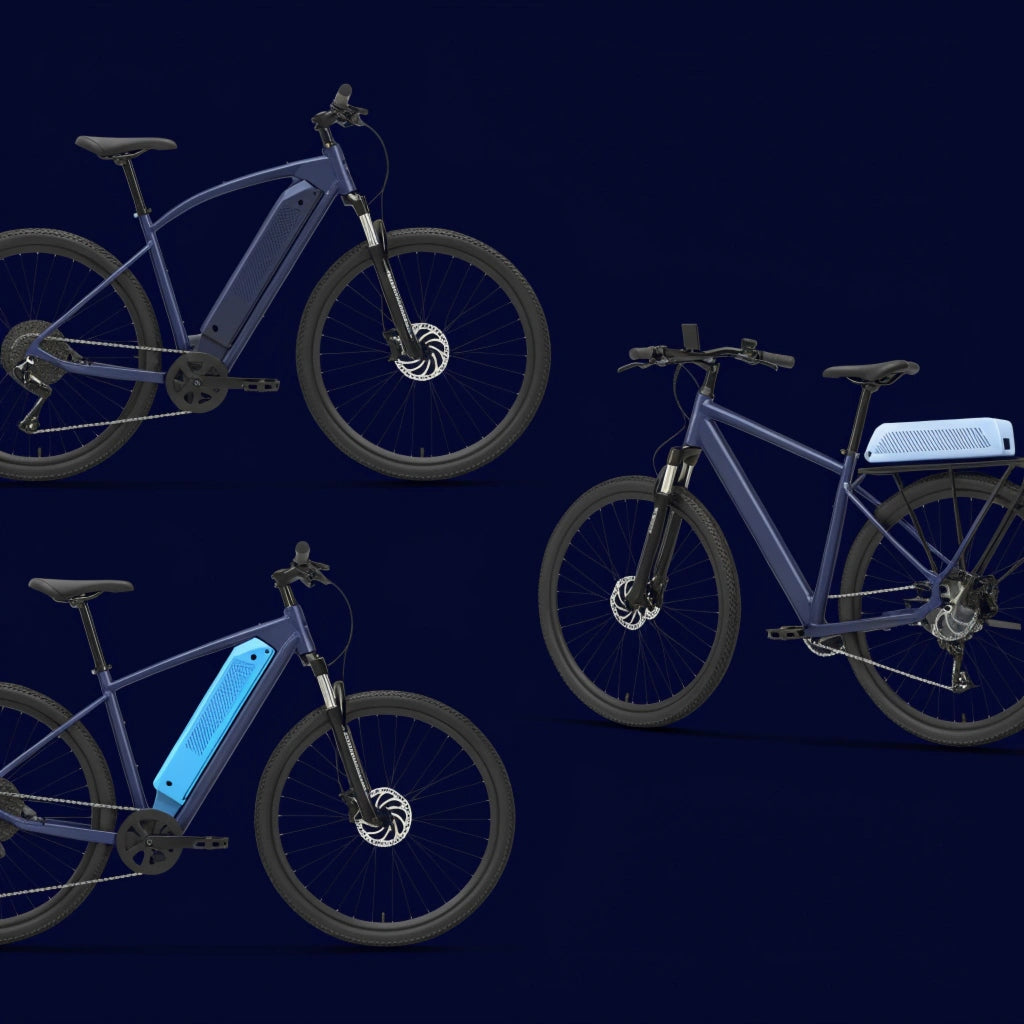
Different capacity batteries use various mounting configurations:
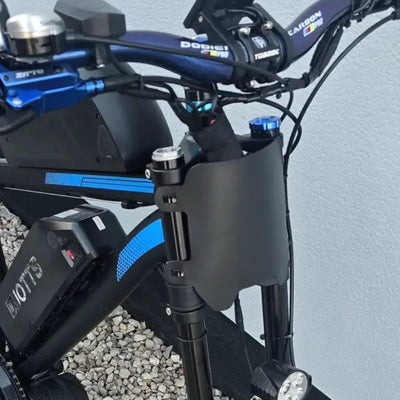
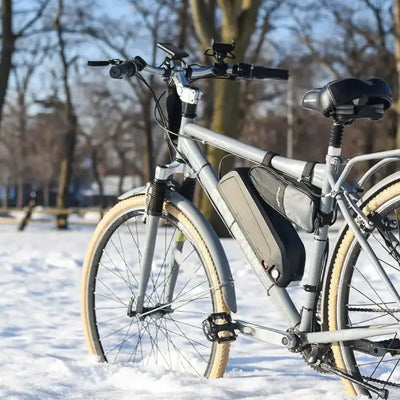
Down Tube Batteries:
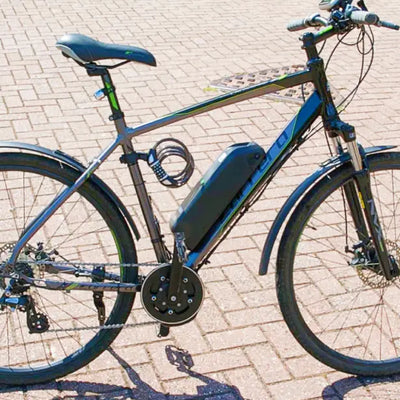
- Most common placement for 36V-52V systems
- Good weight distribution
- Requires adequate frame triangle space
- Available in multiple capacities from Kirbebike
Rear Rack Batteries:
- Ideal when frame space is limited
- Slightly affects handling (rear weight bias)
- Excellent for cargo bikes
- Easy removal for charging
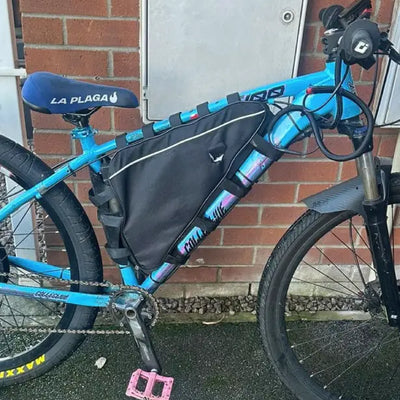
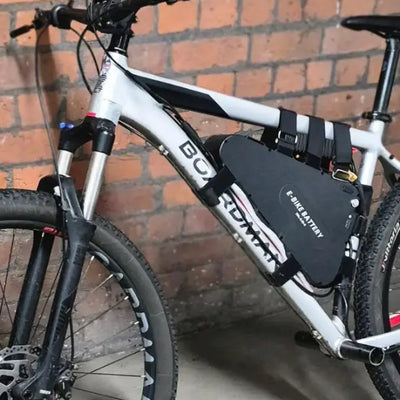
Frame Triangle Bags:
- Compact batteries only
- Keeps center of gravity low
- Limited capacity options
- Good for minimalist builds
Frequently Asked Questions
How do I accurately measure my current e-bike battery capacity?
Check your battery's voltage and amp-hour ratings (printed on the battery casing), then multiply them together to get watt-hours. For example, a 48V 16Ah battery contains 768 Wh. You can also use a watt meter during charging to measure actual capacity, which may be slightly less than rated capacity on older batteries.
Can I use a higher capacity battery than originally specified for my motor?
Yes, using higher capacity (Ah) at the same voltage is perfectly safe and won't damage your motor or controller. It simply provides longer range. However, ensure the battery voltage matches your system's requirements—don't use a 52V battery on a system rated only for 48V maximum unless specifically compatible.
What's the difference between rated capacity and usable capacity?
Rated capacity is the total energy storage at full charge, while usable capacity is what you can practically access without damaging the battery. Most systems use 80-90% of total capacity to preserve battery health, meaning a 1,000 Wh battery provides approximately 800-900 Wh of usable energy.
How much does battery capacity degrade over time?
Quality lithium batteries from manufacturers like LG typically retain 85-90% capacity after 500 charge cycles and 75-80% after 800-1,000 cycles. This translates to roughly 3 years of lifespan with proper care. Kirbebike batteries with LG cells are designed for 1,000+ cycles of reliable performance.
Is it better to get one large battery or two smaller batteries for the same total capacity?
This depends on your priorities. One large battery is simpler, lighter (less redundant casing/BMS), and less expensive. Two smaller batteries offer redundancy, easier charging (smaller chargers), weight distribution flexibility, and the option to carry just one for shorter rides. Many riders prefer the single battery simplicity.
How does cold weather affect battery capacity?
Lithium batteries lose temporary capacity in cold temperatures—expect 15-30% reduction in freezing conditions. The capacity returns once the battery warms up. For winter riding, choose higher capacity to compensate, keep the battery indoors when not riding, and insulate it during use if possible.
What's the minimum battery capacity I should consider for hill climbing?
For significant hill climbing, don't focus solely on capacity (Ah/Wh) but ensure adequate voltage and motor power. A 48V or 52V system with at least 500-750 Wh works well for moderate hills, while serious mountain terrain benefits from 1,000+ Wh batteries paired with 1500W+ motors that can sustain high power output during climbs.
Conclusion
Selecting the right e-bike battery capacity fundamentally comes down to understanding your riding patterns and honestly assessing your needs. While it's tempting to always choose maximum capacity, the added weight and cost may not benefit riders with shorter, predictable routes. Conversely, undersizing your battery leads to range anxiety and frequent charging frustration.
The sweet spot lies in choosing capacity that handles your typical rides comfortably while providing a buffer for occasional longer adventures or battery degradation over time. Most riders find that 600-900 Wh batteries offer excellent versatility across varied riding conditions.
: invalid url input)
usmile
Liquid error (snippets/blog-best-product line 36): product form must be given a product
Liquid error (snippets/blog-best-product line 59): product form must be given a product